The screams that shattered the dawn silence of Asgard on that fateful morning could be heard across all nine realms. Sif, the golden-haired goddess and beloved wife of Thor, had awakened to discover her most prized possession—hair so lustrous it rivaled fields of wheat kissed by summer sun—completely shorn from her head. As she ran trembling fingers across her bare scalp, one name echoed through the great halls of the gods with thunderous fury: Loki.
What followed would become one of the most consequential pranks in Norse mythology, setting in motion events that would gift the gods with their most powerful artifacts—and reveal the complex relationship between chaos and creation that defined the Viking worldview.
The Beauty That Outshone the Sun
To understand the magnitude of Loki's transgression, one must first grasp what Sif's hair represented in the Norse cosmos. According to the Prose Edda, compiled by Snorri Sturluson around 1220 CE, Sif's golden tresses weren't merely beautiful—they were supernaturally magnificent, described as finer than the finest gold thread and more radiant than the Northern Lights dancing across Midgard's sky.
In Viking Age Scandinavia (roughly 793-1066 CE), a woman's hair held profound cultural significance. Archaeological evidence from sites like Birka in Sweden reveals elaborate hair ornaments and combs crafted from antler, bone, and precious metals. For Viking women, long, well-maintained hair was a symbol of fertility, status, and divine favor. To cut a woman's hair without permission was not merely an insult—it was a form of spiritual violence.
But Sif was no mortal woman. As a goddess associated with the earth's fertility and the golden harvest, her hair was believed to represent the grain fields that sustained human civilization. Some scholars theorize that the myth originated from observations of wheat stalks being cut during harvest—a necessary destruction that preceded renewal and abundance.
The Trickster's Midnight Blade
Why would Loki commit such an audacious act? The sources offer no clear motive, which perhaps makes the crime even more chilling. Unlike his other schemes, which often served some twisted purpose, this appears to have been pure malicious whim—the act of a bored deity amusing himself at others' expense.
Picture the scene: Asgard sleeping peacefully under the ethereal glow of the Bifrost. Loki, the shape-shifting son of giants, creeping through the halls with supernatural stealth. His blade—likely crafted from enchanted metal—making no sound as it slices through strand after strand of hair that had never known mortal shears.
Archaeological finds from Gotland, Sweden, include remarkably preserved hair from the Viking Age, revealing that Norse people possessed sophisticated knowledge of hair care and styling. Iron shears discovered in burial sites show the tools existed to perform such a deed. But for Loki to accomplish this task without waking either Sif or Thor suggests he employed magic to deepen their slumber—making his crime premeditated rather than impulsive.
Thor's Earth-Shaking Rage
When Thor discovered his wife's condition, his reaction was immediate and terrifying. The god of thunder—whose name derives from the Old Norse Þórr, meaning "thunder"—flew into such a rage that his hammer Mjolnir crackled with lightning, and the very foundations of Asgard trembled.
Contemporary sagas describe Thor as possessing strength that surpassed all other gods combined. When he gripped Loki by the throat and threatened to "break every bone in his body," this wasn't mere hyperbole. Archaeological evidence from Iceland's Þingvellir, where the Althing parliament met from 930 CE, shows that Viking legal codes treated such threats with deadly seriousness—and among gods, the consequences would be infinitely more severe.
The confrontation between Thor and Loki reveals fascinating insights into Norse concepts of justice and responsibility. Rather than simply pulverizing the trickster, Thor demanded restoration—Loki must find a way to undo the damage, or face consequences that would echo through eternity.
A Journey to the Heart of Darkness
Faced with Thor's ultimatum, Loki embarked on a desperate journey to Svartalfheim, the realm of the dark elves (also called dwarves in some translations). These beings, dwelling in underground caverns beneath the roots of Yggdrasil, possessed unmatched skills in craftsmanship and magic.
Archaeological parallels exist in the sophisticated metalwork discovered throughout Scandinavia, from the intricate silver arm rings of Gotland to the elaborate weapons found in Norwegian burial mounds. Viking smiths were renowned across medieval Europe, suggesting that the mythological dwarf-smiths reflected real cultural values about the near-magical nature of skilled craftsmanship.
Loki sought out the Sons of Ivaldi, master craftsmen whose abilities bordered on the divine. But here's a detail often overlooked in popular retellings: Loki didn't merely commission replacement hair. In his typical fashion, he turned the situation into an opportunity for chaos, challenging different groups of dwarven smiths to compete against each other in creating the most magnificent treasures for the gods.
The Treasures That Changed Everything
What emerged from this competition would reshape the balance of power in Norse mythology forever. The Sons of Ivaldi not only created new golden hair for Sif—spun from actual gold yet finer and more beautiful than her original locks—but also crafted Gungnir, Odin's unerring spear, and Skidbladnir, Freyr's miraculous ship that could be folded up and carried in a pocket.
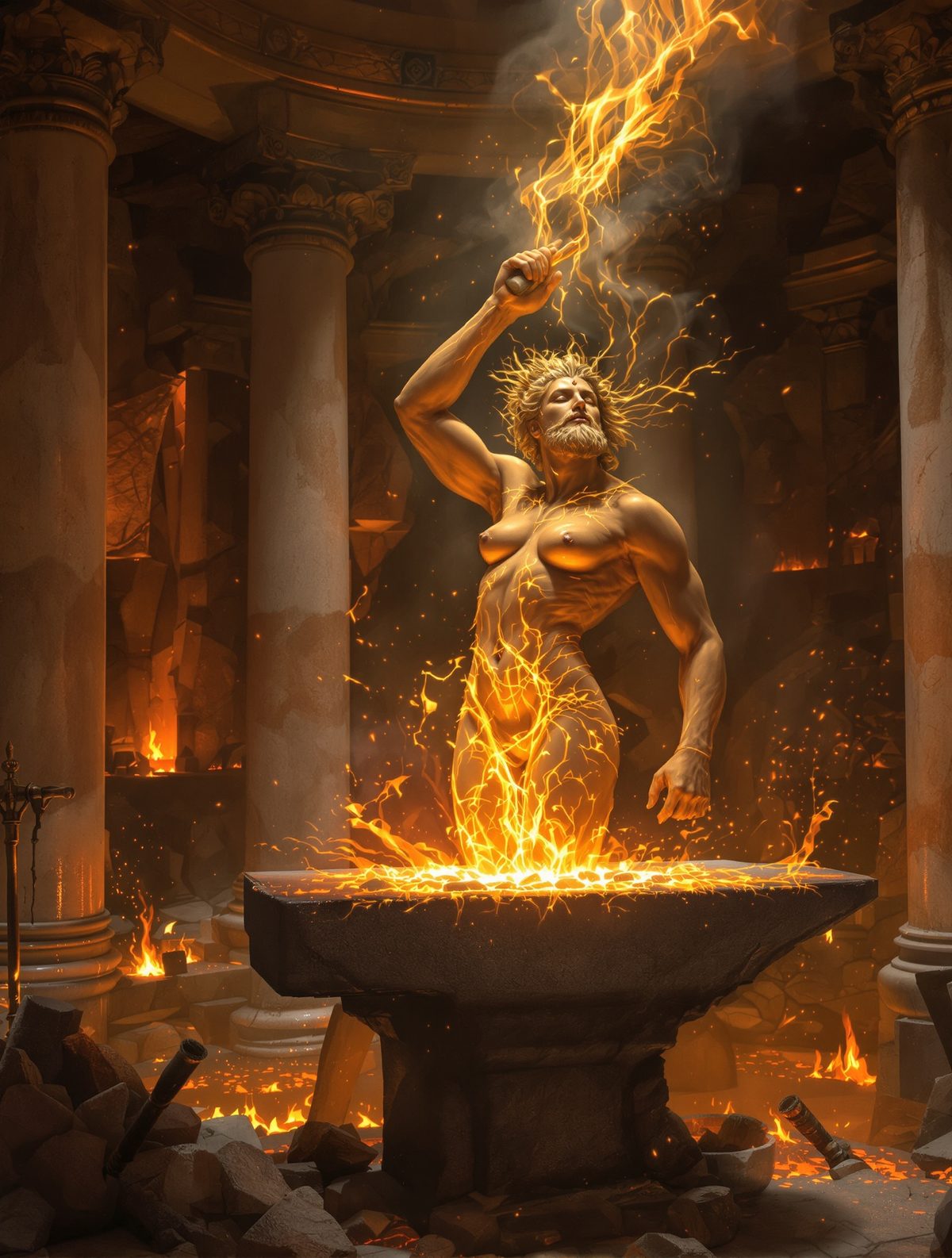
But Loki wasn't finished. He challenged another group, the brothers Eitri and Brokkr, to create even more wondrous gifts. Their response included three artifacts that would become legendary: Gullinbursti, Freyr's golden boar that could run through air and water faster than any horse; Draupnir, Odin's arm ring that would produce eight identical rings every ninth night; and most famously, Mjolnir, Thor's hammer—arguably the most recognizable symbol from Norse mythology.
Here's a fascinating detail rarely mentioned: Mjolnir's famous short handle resulted from Loki's interference during its creation. Transforming into a fly, he stung Brokkr while the dwarf worked the bellows, causing a slight imperfection that made the handle shorter than intended. This "flaw" actually made the hammer more maneuverable in combat—perhaps the ultimate example of how chaos can inadvertently create perfection.
The Golden Threads of Meaning
When we examine this myth through modern eyes, its relevance becomes strikingly apparent. In our age of social media pranks and viral humiliation, Sif's story resonates with uncomfortable familiarity. How often do we witness someone's dignity destroyed for the amusement of others? How frequently does "harmless" mischief inflict genuine trauma?
Yet the Norse understanding was more complex than simple victim-and-villain dynamics. Loki's cruelty ultimately led to creations of unprecedented beauty and power. The gods emerged stronger, better equipped to face the coming Ragnarök. This suggests a worldview that recognized destruction and creation as inextricably linked—perhaps offering wisdom for navigating our own chaotic times.
The myth also reveals sophisticated thinking about justice and redemption. Rather than meeting violence with violence, the Norse gods demanded that wrongdoers find creative solutions to repair the damage they'd caused. Loki couldn't simply apologize or pay compensation—he had to venture into dangerous realms and risk everything to make genuine amends.
Most profoundly, Sif's story reminds us that even in mythology's most fantastic tales, we find deeply human truths: the violation of trust, the pain of loss, the possibility of transformation, and the strange alchemy by which our greatest treasures sometimes emerge from our darkest moments. In the golden threads of her new hair, we glimpse the eternal Norse conviction that from winter's death comes spring's rebirth—and that sometimes, what grows back is even more beautiful than what was lost.