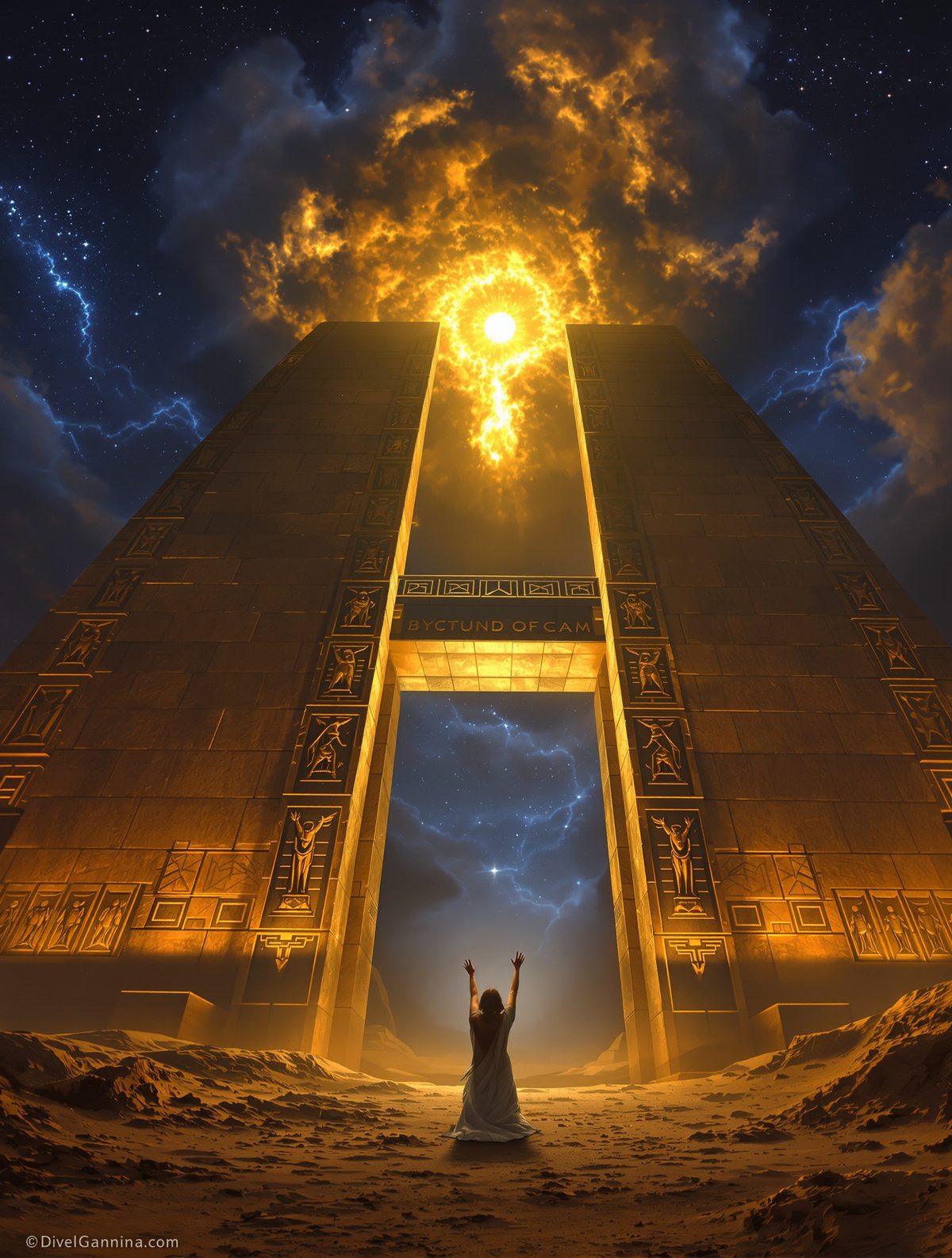
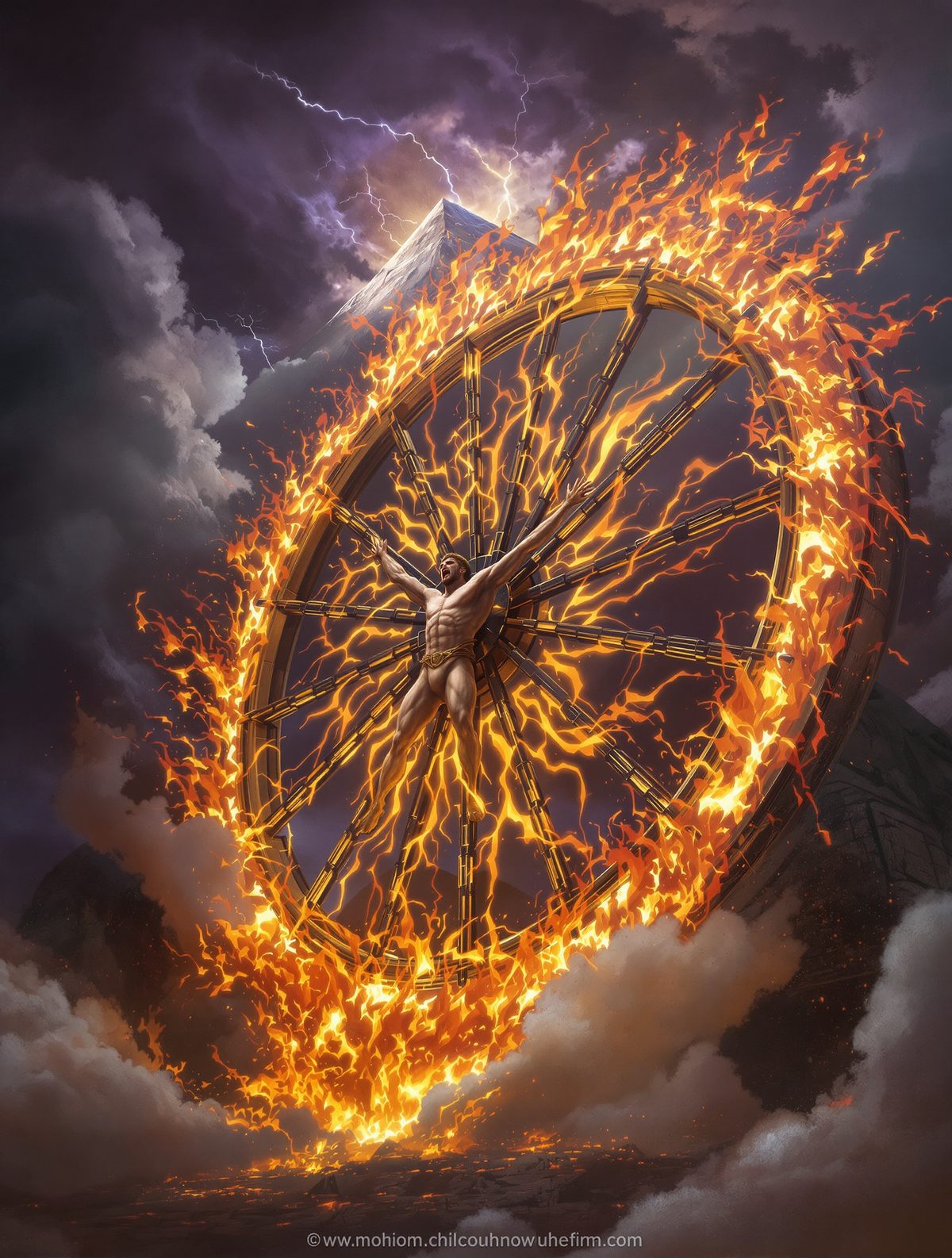
The Olympian summit is a place where mortal dreams often crash against divine reality. It is a realm where gods weave the fates of men with impossible threads, crafting tapestries of destiny that shimmer with both grandeur and folly. Among these tales is that of Ixion - a figure who stands apart as both a cautionary tale and a tragic figure of extraordinary hubris. Today, we delve into the ancient saga of how such a man, once pardoned by the powerful Zeus, ended up in eternal torment, spinning ceaselessly on a fiery wheel in the sky.
The First Sin: A Mortal Crime Unseen Before
Long before Ixion's name echoed in the annals of divine punishment, he was just a mortal king in Thessaly. In many ways, his tale begins with blood—his father, Phlegyas, was a Lapith king, a tribe known for their warrior prowess. Maybe it was in Ixion's blood to transgress, but his famously recorded crime was unprecedented: the murder of his own father-in-law. According to the myth, Ixion invited his father-in-law over under the pretext of friendship and hospitality, only to cast him into a fiery pit, breaking one of the most sacred obligations of Greek society—the guest-host relationship, or *xenia*.
Such an act would have called down the wrath of any mortal king’s peers, but for Ixion, there was no immediate retribution from above. Abandoned by his own people, haunted by the stench of kin-slaying, his soul was blackened by the miasma—an unholy pollution that marked his guilt. Perhaps it was this turning point that made him desperate enough to wager his fate against the whims of the gods.
A God’s Mercy: The Unlikely Invitation
Enter Zeus, the king of the gods and arbiter of justice in both celestial and mortal realms. Aware of Ixion's plight, Zeus did something quite unprecedented—he took pity on him. Curiously, even scholars have mused why Zeus chose to extend such mercy, positing that the god saw both potential in Ixion and wished to uphold the cosmic order by rehabilitating the fallen king.
Striking was this divine intervention. Not only did Zeus wash the blood from Ixion's hands, but he also offered him a place at the eternal banquet of Olympus. Invited to dine amongst the deities, Ixion found himself amid an illustrious assembly—Aphrodite with her unmistakable allure, Ares displaying an aura of ferocity, and Hera, the queen herself, a portrait of dignified beauty.
Reaching for Hera: A Temptation Too Far
It was there, amid the ambrosial feast and celestial splendor, that human nature faltered once more. Amidst a banquet of gods, Ixion's attentions turned to Hera, the queen of the gods and wife to Zeus himself. His eyes lingered too long and his desires obscured his common sense, as he schemed to seduce the divine Hera. Did he forget where he was? Or was it simply temptation that made him blind to the consequences?
Perhaps what ensued is an ancient tale's commentary on human folly—how power, once tasted, can eclipse reason. Hera, discerning his intentions, reported the matter directly to Zeus. It was not a matter of jealousy, but one of dignity and respect for divine order.
The Deceptive Cloud: Zeus’s Ingenious Retribution
Zeus, ever the architect of fate, concocted a unique response to Ixion’s audacity. In an act both crafty and metaphorically rich, he created Nephele, a cloud uniquely crafted to resemble Hera. Overcome by his desires, Ixion fell for the ruse and embraced the cloud, believing it to be the queen of Olympus herself.
This deception served a singular purpose. Through Nephele, Zeus could not only expose Ixion’s true intentions but also ensure that his punishment would serve as a stark warning to mortals everywhere—the recompense for presumption against the gods. In the union with Nephele, Ixion unwittingly fathered the Centaurs, wild beings whose violent nature epitomized their father’s ignoble desires.
Ixion’s Eternal Punishment: A Fiery Wheel in the Sky
For a crime so severe, the punishment was equally perpetual. Ixion was bound to a flaming wheel that revolved endlessly through the heavens—a punishment as illustrative as it was inescapable. This fiery wheel became a symbol visible even to mortals on earth, a testimony to his error and eternal suffering.
The wheel itself, spinning eternally, symbolized not just physical agony but an existential reminder—forever turning, as if a mimicry of time itself, reminding those who gaze upon it of the folly of hubris. In the end, Ixion was made a cautionary emblem: the first mortal to be damned not out of mortal justice, but divine decree.
Lessons from the Wheel: The Continuing Relevance
So, why does Ixion's tale matter to us today? Beyond the mesmerizing weave of mythology, the story tells us something universal about ambition, arrogance, and respect. It is a myth that warns of overreaching and teaches humility in the face of greater powers—be they divine, natural, or societal. As humans continually strive beyond their limits, Ixion's spinning wheel reminds us to tread with care.
Moreover, the tale of Ixion holds a mirror to our own time, a period ripe with its own blend of ingenuity and folly. As modern society gazes skyward to carve its mark on the cosmos, let us not forget the wisdom that ancient myths can impart. Whether gods or the universe itself, there exist powers against which human endeavor must be measured with humility. Ixion’s tale is not merely myth—it is a cautionary echo whispering through eternity.