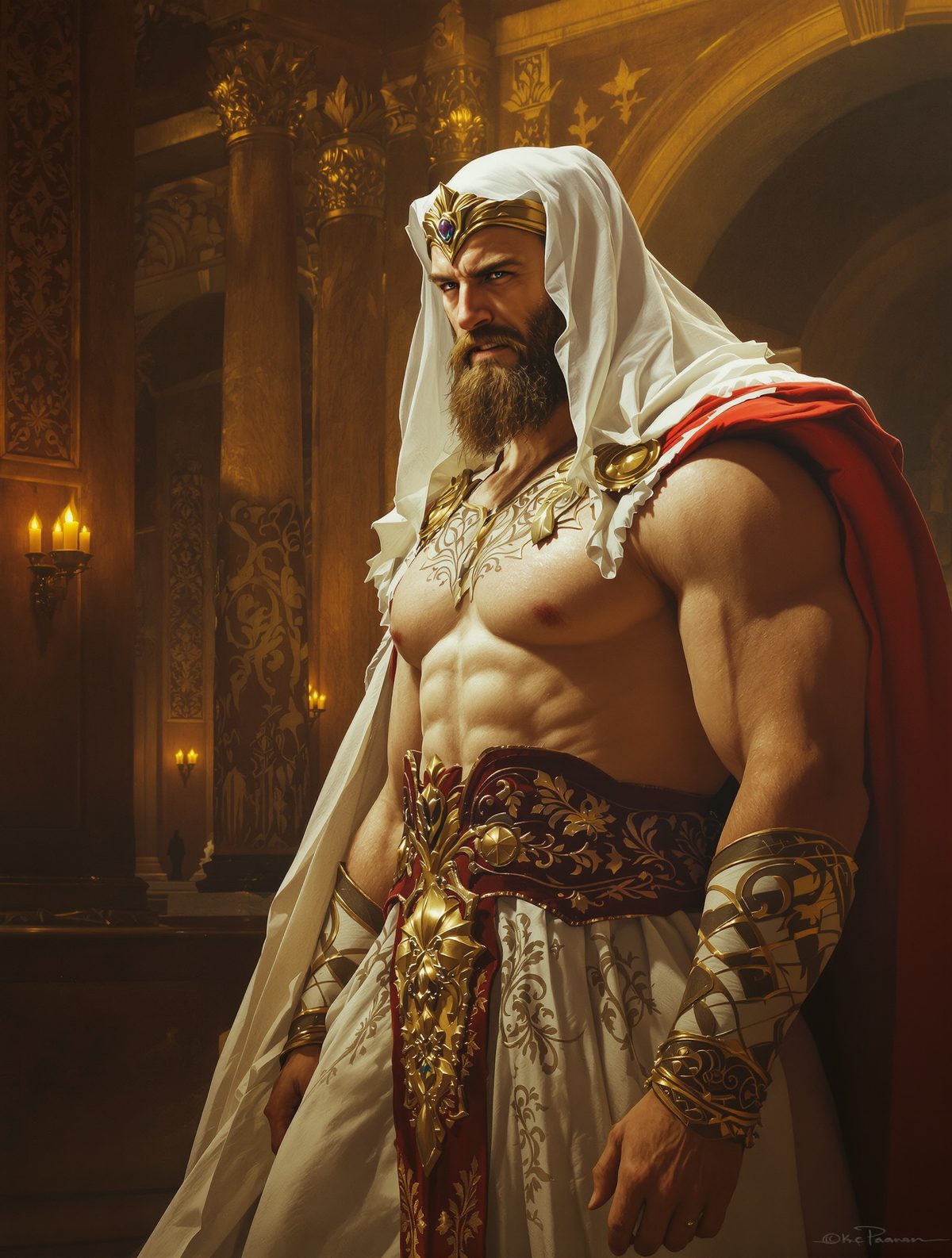
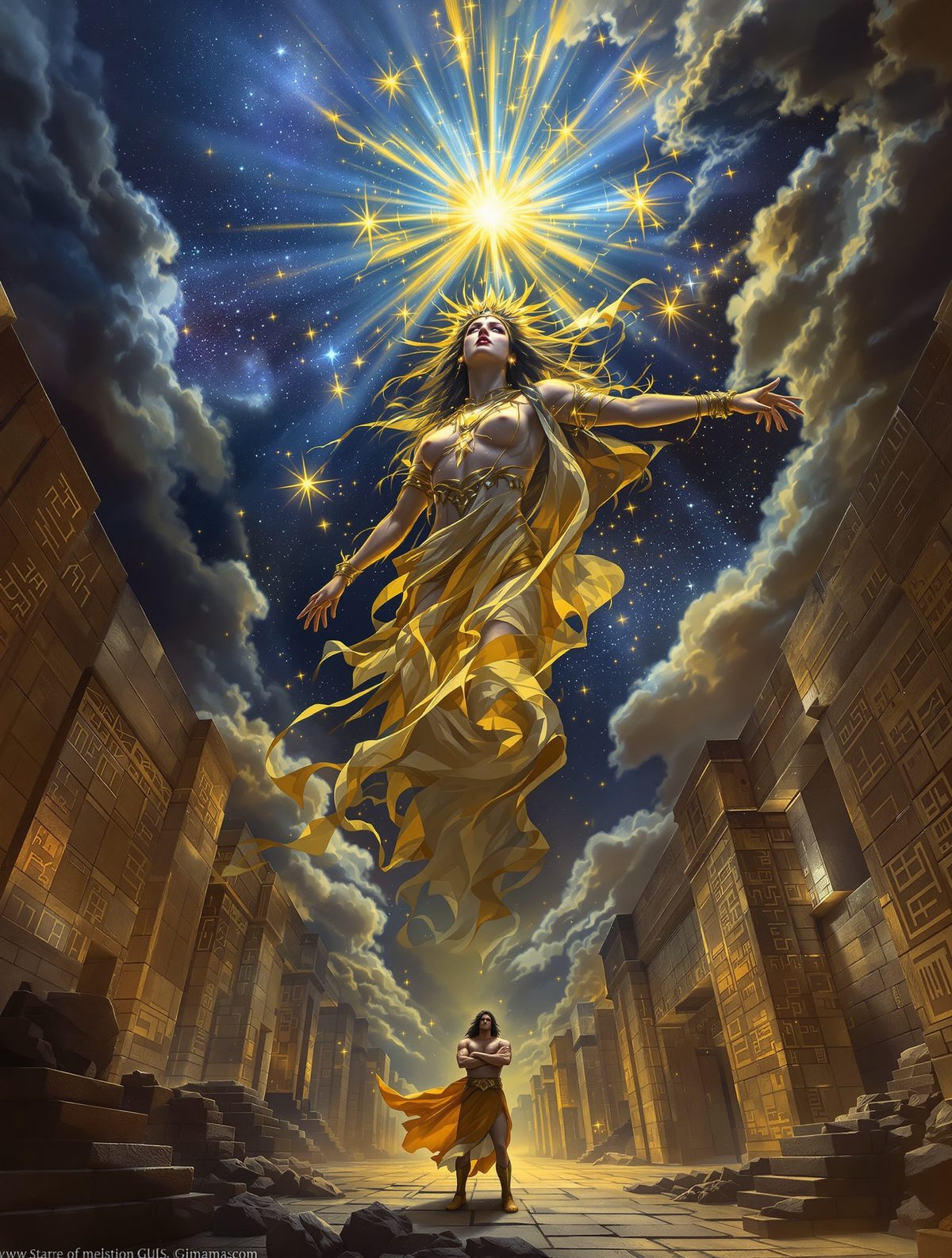
In the ancient streets of Uruk, around 2700 BCE, the most powerful goddess in the Mesopotamian pantheon descended from her celestial throne with desire burning in her immortal heart. Ishtar, mistress of love and war, queen of heaven and earth, had set her sights on the one man who dared to be her equal: Gilgamesh, the legendary king whose strength could topple mountains and whose beauty outshone the morning star. But what happened next would shake the very foundations of heaven and earth, unleashing a cosmic tantrum that nearly destroyed humanity itself.
This is the story of the ultimate rejection—and the apocalyptic revenge that followed.
The Goddess Who Owned Everything
To understand the magnitude of what was about to unfold, you must first grasp who Ishtar truly was. This wasn't some minor deity nursing hurt feelings. Ishtar commanded the very forces that governed human existence: love, fertility, and warfare. In the cuneiform tablets discovered in the ruins of ancient libraries, she's described as "she who walks among the gods as a queen," and archaeological evidence suggests her worship spanned over 4,000 years across multiple civilizations.
Her temples dominated the skylines of every major Mesopotamian city. In Babylon alone, her ziggurat rose nearly 300 feet into the sky, while her sacred prostitutes—both male and female—served thousands of worshippers who believed that coupling in her honor would ensure prosperity and protection. The goddess literally controlled the bedroom and the battlefield, making her arguably the most feared and revered deity in the ancient world.
But Ishtar had one weakness that would prove catastrophic: she was utterly unused to being told "no."
The Hero Who Feared Nothing
Gilgamesh ruled Uruk during what historians call the Early Dynastic Period, somewhere between 2700-2500 BCE. Archaeological excavations at modern-day Iraq have revealed that Uruk was a marvel of its age—a sprawling metropolis of perhaps 50,000 inhabitants, protected by massive walls that Gilgamesh himself allegedly built. These weren't ordinary fortifications: the walls stretched for nearly six miles and stood over 30 feet high, constructed from millions of mud bricks.
But it wasn't just his architectural achievements that made Gilgamesh legendary. According to the epic poems inscribed on clay tablets throughout the ancient world, he stood head and shoulders above ordinary men—literally. Described as "two-thirds divine and one-third human," his physical prowess was unmatched. He could wrestle wild bulls barehanded, run faster than horses, and his stamina in both battle and bed was the stuff of legends whispered in taverns from Babylon to Assyria.
More importantly, Gilgamesh possessed something that would prove dangerous when facing a goddess: an absolutely fearless tongue and a memory like a steel trap.
The Proposal That Shook Heaven
Picture the scene: Gilgamesh, fresh from his victory over the monster Humbaba, returns to Uruk covered in glory. His bronze armor gleams in the Mesopotamian sun, his black hair flows like a lion's mane, and his subjects cheer from the walls of their great city. This is when Ishtar makes her move.
Descending in all her divine splendor, adorned with the cosmic jewelry of the stars themselves, she offers Gilgamesh what no mortal had ever been offered: herself, along with unimaginable power. "Come, Gilgamesh, be my lover!" she declares, promising him a chariot of gold and lapis lazuli, a palace of cedar wood, and dominion over kings and princes who would kneel before him like cattle.
For any other mortal, this would have been the ultimate fantasy made real. The goddess of love herself, offering not just her divine body but cosmic power beyond imagination. Kings across the ancient world would have murdered their own families for such an opportunity.
Gilgamesh looked at the most beautiful being in creation and said, essentially, "Thanks, but no thanks."
The Brutal Rejection That Changed Everything
But Gilgamesh didn't stop at a polite refusal. What happened next was the ancient equivalent of a devastating public roast, delivered with surgical precision in front of the entire court of Uruk. The hero began methodically listing every single one of Ishtar's previous lovers—and their horrific fates.
"You loved Tammuz, the shepherd," Gilgamesh declared, his voice carrying across the courtyard, "and ordained for him mourning every year." This wasn't just an insult—it was a reference to the most sacred mystery in Mesopotamian religion. Tammuz, Ishtar's greatest love, had been condemned to spend half the year in the underworld, causing the seasons of death and rebirth that governed all agriculture.
He continued relentlessly: "You loved the colorful roller bird, then struck him and broke his wing." "You loved the stallion, magnificent in battle, then ordained for him the whip, the goad, and the lash." One by one, Gilgamesh recited the names of lovers transformed into animals, driven mad, or destroyed outright by Ishtar's capricious affection.
The message was crystal clear: Ishtar didn't love—she consumed. And Gilgamesh had just declared this truth in front of everyone who mattered in the ancient world.
Hell Hath No Fury Like a Goddess Scorned
The silence that followed Gilgamesh's rejection was broken by something no one in Uruk had ever heard before: the sound of a goddess screaming in rage. Ishtar's fury was so intense that it reportedly shook the very pillars of heaven, causing the other gods to cower in their celestial palaces.
She immediately flew to the highest heaven, to the court of her father Anu, the supreme sky god. Bursting into his presence with tears of rage streaming down her divine face, she demanded the most devastating weapon in the cosmic arsenal: Gugalanna, the Bull of Heaven.
This wasn't just any monster. The Bull of Heaven was a creature of such destructive power that its very breath could crack the earth and create pits so vast that hundreds of men could fall into them at once. According to the tablets, each snort from its nostrils could kill a hundred men instantly. It was essentially a weapon of mass destruction, and Ishtar wanted to turn it loose on an entire city because one man had hurt her feelings.
Initially, Anu refused. Even the king of the gods understood that unleashing such a creature would cause suffering on an unimaginable scale. But Ishtar made him an offer he couldn't refuse: if he didn't give her the Bull, she would break down the gates of the underworld and "let the dead go up to eat the living." She would literally end the world rather than let Gilgamesh's insult go unpunished.
Faced with choosing between targeted devastation and universal apocalypse, Anu handed over the cosmic bull.
When Gods Throw Tantrums, Mortals Die
What followed was exactly the catastrophe Anu had feared. The Bull of Heaven descended to earth like a living earthquake, its hooves cracking the ground so violently that the Euphrates River changed course. With each breath, it created craters that swallowed dozens of Uruk's citizens. The beast was essentially conducting geological warfare against an entire civilization.
But here's where the story takes an unexpected turn: Gilgamesh and his companion Enkidu didn't just survive the attack—they killed the Bull of Heaven. Working together, they brought down a creature that was meant to be unstoppable, then added insult to injury by throwing the bull's haunches directly at Ishtar herself.
The goddess's ultimate revenge had not only failed—it had been turned into the ultimate humiliation.
The Lesson That Echo Through Time
This ancient tale might seem like just another colorful myth, but it reveals something profound about human nature that resonates just as powerfully today. In an age of social media pile-ons, cancel culture, and viral shaming, the story of Ishtar and Gilgamesh feels remarkably contemporary. How often do we see powerful figures respond to perceived slights with disproportionate fury? How many times have we witnessed someone with influence try to destroy another person's life over a wounded ego?
The ancient Mesopotamians understood something we're still grappling with: that power without emotional maturity is perhaps the most dangerous force in the universe. They created this story as a warning about what happens when those with the ability to cause mass destruction prioritize their personal feelings over the greater good. Four thousand years later, as we navigate a world where a single tweet can destroy careers and nations can wage economic war over diplomatic slights, perhaps it's time we remembered the lesson of the Bull of Heaven.
Sometimes the most powerful act isn't revenge—it's having the wisdom to walk away.