Picture this: a young prince stands by a moonlit river, his voice cutting through the silence like a blade. With a handful of words, he destroys his own future so completely that the gods themselves stop what they're doing to listen. Flowers begin falling from the clear night sky—not in celebration, but in mourning. What could drive someone to such devastating self-sacrifice?
This is the story of Devavrata, a prince who loved his father so much that he chose to end his own bloodline forever. In doing so, he became Bhishma—one of the most tragic and revered figures in all of Hindu mythology, a man whose terrible vow would echo through generations and ultimately shape the greatest war ever fought.
The King Who Fell in Love Again
King Shantanu of Hastinapura was no ordinary monarch. According to the Mahabharata, he possessed a divine gift—anyone who touched him would have their youth restored. But despite his supernatural abilities, Shantanu carried the weight of profound loss. His beloved queen, the mysterious river goddess Ganga, had vanished after giving birth to their son Devavrata, leaving behind only cryptic promises and the sound of flowing water.
For years, the king ruled with his extraordinary son by his side. Devavrata wasn't just any prince—he was trained by the legendary warrior Parashurama himself, making him virtually invincible in combat. The kingdom's future seemed secure, its succession clear. But fate, as it often does in epic tales, had other plans.
One day, while hunting near the Yamuna River, Shantanu caught a scent so intoxicating it stopped him in his tracks. Following the fragrance through the forest, he discovered its source: Satyavati, a young woman of extraordinary beauty who worked as a ferryman's daughter. The king, despite his divine nature and royal status, fell completely and utterly in love.
But Satyavati carried secrets of her own. Born Matsyagandhi, she had once possessed such a strong fishy odor that people avoided her. Only through the blessing of a sage had she acquired her current divine fragrance—and the promise that she would mother kings.
The Price of Love
When Shantanu approached Satyavati's father, Dashraj, to ask for her hand in marriage, he expected the usual negotiations about dowry and ceremony. Instead, the fisherman-king delivered a demand so outrageous it left the mighty Shantanu speechless.
"Your Majesty," Dashraj said with calculated boldness, "I will give you my daughter's hand, but only if you guarantee that her son—not Prince Devavrata—will inherit your throne."
The demand was impossible. In ancient India, the principle of primogeniture was sacred. The eldest son inherited everything. To bypass Devavrata would not only break tradition but potentially plunge the kingdom into civil war. Moreover, there was no guarantee that Satyavati would even bear a son.
Shantanu returned to his palace, torn between love and duty. The once-vibrant king became a shadow of himself, losing weight and interest in royal affairs. His mysterious melancholy didn't escape the sharp eyes of his son. Devavrata had inherited not just his mother's divine nature, but also her intuitive understanding of human hearts.
A Son's Devastating Devotion
Unable to watch his father waste away, Devavrata launched his own investigation. Through a network of spies and loyal servants, he discovered the truth about Satyavati and Dashraj's impossible demand. The young prince faced a choice that would have broken lesser men: watch his beloved father slowly die of heartbreak, or sacrifice everything he had ever been promised.
For Devavrata, there was no choice at all.
On the night of the new moon—a time considered inauspicious for major decisions—Prince Devavrata rode alone to Dashraj's humble dwelling by the river. The fisherman-king was initially overjoyed, assuming the prince had come to accept his terms and renounce the throne. But Devavrata had come to offer something far more terrible.
"I renounce my claim to the throne of Hastinapura," he declared, his voice carrying across the water. "Let Satyavati's sons rule after my father."
Dashraj, however, wasn't satisfied. What if Devavrata's future sons challenged this decision? What if they waged war to reclaim what they saw as their birthright? The fisherman pressed for more guarantees.
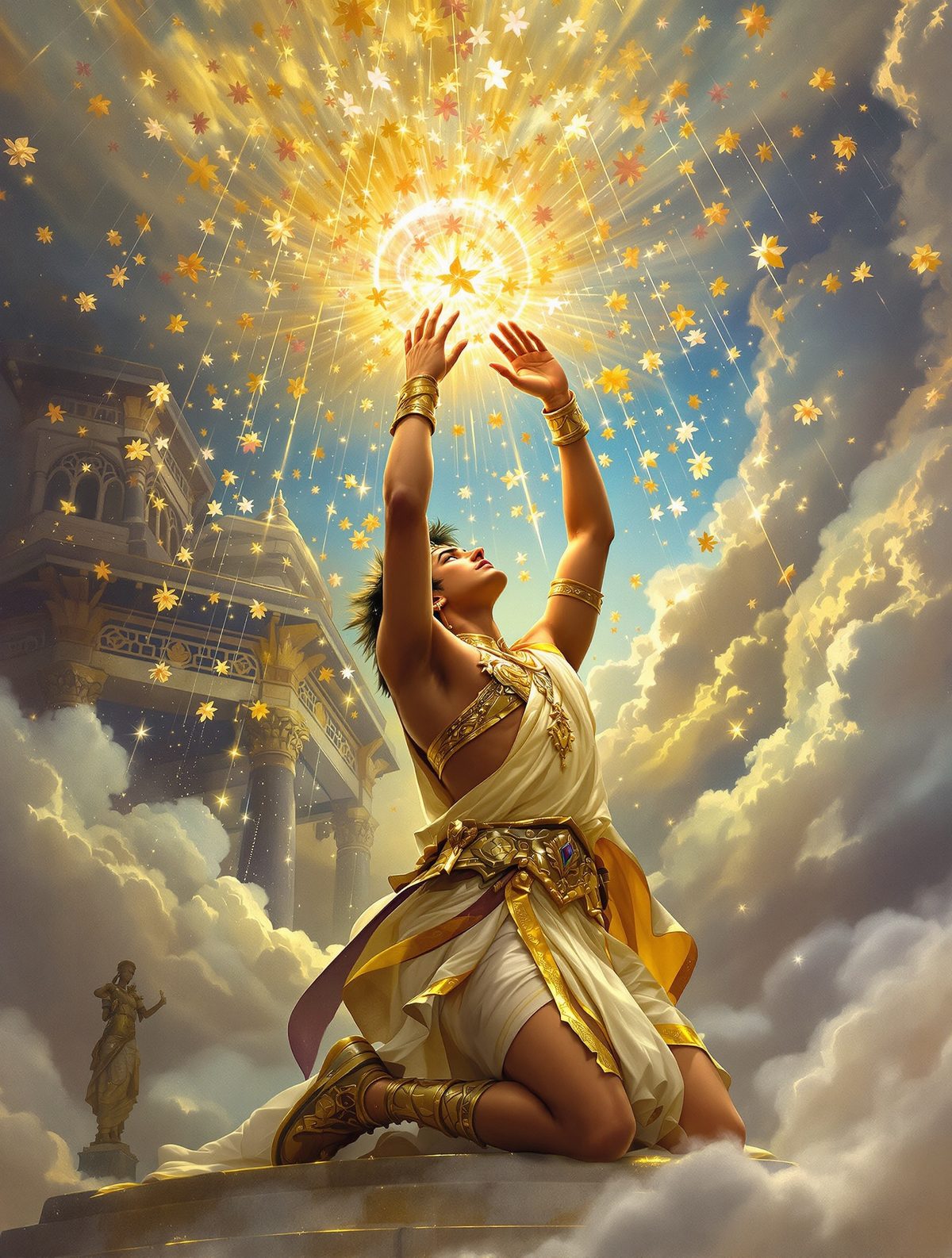
It was then that Devavrata spoke the words that would define him forever. Standing with his hands raised to the heavens, he proclaimed: "I take this vow before gods and men—I shall never marry, never father children, never continue my lineage. I choose the path of Brahmacharya for life."
When Heaven Wept
The moment those words left his lips, the impossible happened. From a clear, starlit sky, flowers began to rain down—jasmine, roses, and celestial blossoms that don't exist in the mortal world. The gods themselves, moved by such selfless sacrifice, had begun weeping tears of divine flowers.
A voice echoed from the heavens—some say it was Indra himself, others claim it was the collective voice of all the gods: "From this day forward, you shall be known as Bhishma, the one who has taken a terrible vow. And because your sacrifice is so complete, we grant you this boon: death shall not claim you until you choose to accept it."
The gift of Iccha Mrityu—death by one's own will—was perhaps the cruelest blessing ever bestowed. Bhishma would live to see kingdoms rise and fall, watch his family line tear itself apart, and witness the very war his sacrifice was meant to prevent.
Dashraj, witnessing this divine intervention, fell to his knees. Never had he imagined that his demand would lead to such a sacrifice. He immediately agreed to the marriage, and Satyavati became Queen of Hastinapura that very month.
The Unintended Consequences
Shantanu's joy at his son's sacrifice was bittersweet. While he gained the woman he loved, he had also lost his dynasty's future. Satyavati did indeed bear sons—Chitrangada and Vichitravirya—but fate seemed determined to mock Devavrata's sacrifice. Both princes died without leaving heirs.
To continue the lineage, Satyavati called upon her eldest son from before her marriage—the sage Vyasa, born of her union with the wandering hermit Parashar. Through the ancient practice of Niyoga, Vyasa fathered the next generation: the blind Dhritarashtra and the pale Pandu.
Bhishma found himself in the ironic position of being grandfather-figure to princes who weren't his blood, guardian of a throne he could never claim, protector of a dynasty he had saved but could never continue.
The Legacy of the Terrible Vow
Bhishma's story resonates across millennia because it captures something timeless about sacrifice and its unintended consequences. His vow, meant to bring peace and happiness, instead set in motion the very conflicts it sought to prevent. The Kauravas and Pandavas—his great-grandnephews—would eventually destroy each other in the Kurukshetra War, with Bhishma himself forced to fight against those he loved most.
In our modern world, Bhishma's tale offers profound lessons about the complexity of family loyalty and personal sacrifice. How often do our well-intentioned actions create unforeseen ripple effects? When does selflessness become self-destruction? The prince who gave up everything for love reminds us that sometimes the most noble intentions can lead to the most tragic outcomes.
Perhaps most powerfully, Bhishma's story challenges our assumptions about heroism itself. In a world that celebrates individual achievement and personal success, here stands a figure who chose the opposite path—and paid a price that lasted lifetimes. His flowers still fall from heaven in the stories we tell, a reminder that some sacrifices are so profound they change the very nature of the universe itself.