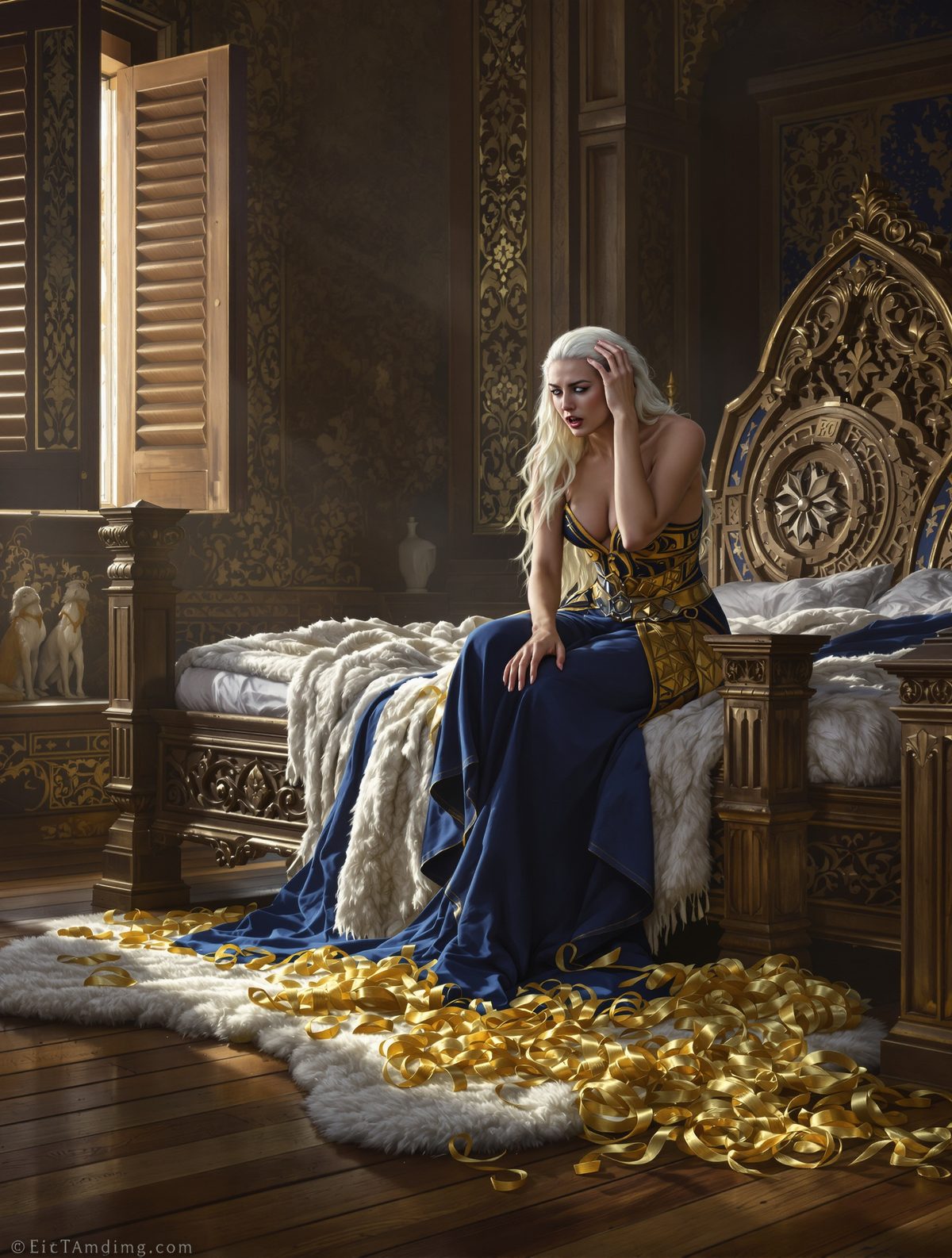
In the predawn darkness of Asgard, the realm of the gods trembled. Not from earthquake or invasion, but from something far more personal—and infinitely more dangerous. Sif, wife of Thor and possessor of the most magnificent golden hair in all nine realms, ran her fingers across her scalp and felt only stubble. Her legendary locks, said to shimmer like fields of wheat under summer sun, were gone. Cut. Stolen while she slept.
What happened next would shake the very foundations of the Norse cosmos and set in motion a chain of events that would forever change the relationship between gods and the master craftsmen of the other realms. This wasn't just a prank—it was an act that would birth some of the most powerful artifacts in Norse mythology.
The Golden Crown of Asgard
To understand the magnitude of this violation, one must first grasp what Sif's hair represented in the Norse cosmic order. According to the Prose Edda, compiled by Snorri Sturluson in the 13th century, Sif's hair wasn't merely beautiful—it was a symbol of fertility, abundance, and the golden harvest that sustained both gods and mortals. Some scholars suggest her flowing locks represented the wheat fields of Midgard, making her not just Thor's wife but a goddess intimately connected to agricultural prosperity.
The Norse placed enormous cultural significance on hair. Archaeological evidence from Viking Age graves shows that both men and women were buried with combs, hair pins, and other grooming implements, suggesting that one's hair was considered essential even in the afterlife. For a goddess, particularly one whose golden tresses were celebrated throughout the nine realms, the theft of her hair was tantamount to stealing her very identity.
Sif's hair was so renowned that it had become a standard of comparison among the Æsir. When the gods wished to describe something as perfectly golden, they would say it was "bright as Sif's hair." Poets across Midgard composed verses celebrating her luminous locks, with one skaldic poem describing them as "threads spun by the sun itself, woven into a crown more precious than all of Asgard's gold."
Thunder's Wrathful Awakening
When Thor discovered his wife's shorn head, his reaction was immediate and terrifying. The thunder god's rage didn't merely echo through Asgard's golden halls—it reverberated across all nine realms. Lightning split clear skies, and thunder rolled continuously for three days and nights. The very foundations of Gladsheim, Odin's great hall, shook with the force of Thor's fury.
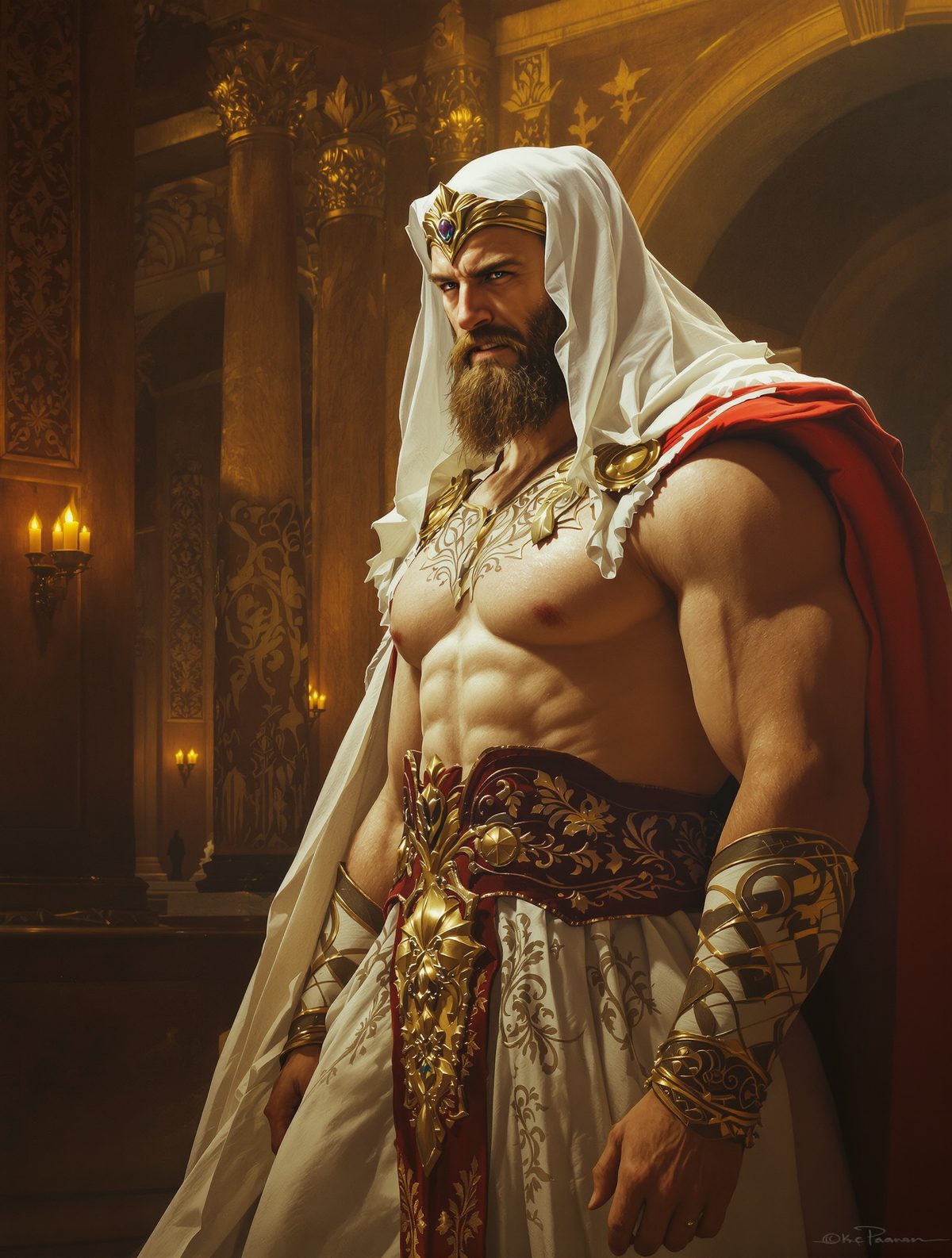
But Thor's anger wasn't random or unfocused. The god of thunder possessed a keen intellect beneath his reputation for brute force, and he knew immediately who was responsible. Only one being in all the realms would dare commit such an audacious act: Loki, the shape-shifting trickster whose pranks had grown increasingly bold and dangerous.
What makes this incident particularly fascinating is how it reveals the complex relationship between Thor and Loki. Despite their frequent conflicts, Thor didn't immediately strike down the trickster god. Instead, he hunted him through Asgard with the methodical determination of a predator, his hammer Mjolnir crackling with barely contained lightning. Ancient sources suggest this chase lasted for hours, with Loki transforming into various animals and creatures to evade Thor's wrath—a salmon, a seal, even a fly—but the thunder god's fury was too intense to be escaped by mere shapeshifting.
The Trickster's Terrible Gamble
When Thor finally cornered Loki in the shadow of Yggdrasil, the World Tree, the confrontation was unlike their usual verbal sparring matches. According to the Skáldskaparmál, Thor seized Loki by the throat and threatened to break every bone in his body, then cast him into the void beyond the nine realms where even the gods' power could not reach.
What drove Loki to commit such an seemingly senseless act? Modern interpretations of the myth suggest multiple motivations. Some scholars argue that Loki's prank was rooted in jealousy—not of Thor, but of Sif herself. As a fertility goddess, Sif represented stability and natural order, everything that Loki, as a force of chaos and change, fundamentally opposed. By cutting her hair, he was striking at the very concept of unchanging, eternal beauty.
Others propose a more cunning motivation: Loki may have orchestrated the entire incident to manipulate the gods into acquiring powerful new artifacts. The trickster's intimate knowledge of the dwarven craftsmen and their capabilities suggests this wasn't a spontaneous prank but a calculated scheme with far-reaching consequences.
Faced with Thor's murderous rage, Loki did what he did best—he talked his way out of immediate death by promising something even better than what he had destroyed. He swore by the roots of Yggdrasil itself that he would journey to Alfheim and commission the dark elves to create new hair for Sif, hair so beautiful and magical that it would surpass even her original golden locks.
Into the Realm of Master Craftsmen
Loki's journey to Alfheim—specifically to Svartalfheim, the realm of the dark elves or dwarfs—opens a fascinating window into Norse cosmology's most skilled artisans. These weren't the diminutive, bearded figures of later fairy tales, but powerful magical beings whose craftsmanship could reshape reality itself.
The Sons of Ivaldi, the particular clan of craftsmen Loki approached, were renowned throughout the nine realms for their impossible creations. They had previously crafted Odin's spear Gungnir, which never missed its target, and Freyr's ship Skidbladnir, which could be folded up and carried in a pocket despite being large enough to hold all the gods.
Creating replacement hair for a goddess presented unique challenges. The new locks needed to be more than merely beautiful—they had to possess the magical properties of the original hair while somehow surpassing it. Working with threads of the finest gold, the Sons of Ivaldi wove magic into every strand. The resulting hair was so thin it was lighter than air itself, yet so perfectly crafted that it would attach to Sif's scalp and grow as if it were her natural hair.
But Loki, ever the opportunist, saw a chance to accomplish more than just saving his own skin. While the Sons of Ivaldi worked, he commissioned additional treasures: Odin's spear Gungnir and Freyr's golden boar Gullinbursti. However, his boasting about these magnificent creations reached the ears of another clan of craftsmen, the Sons of Ivaldi's rivals, and sparked a competition that would produce some of the most powerful artifacts in Norse mythology.
The Contest of Creation
What happened next transformed a simple mission of atonement into one of the most consequential events in Norse mythology. The rival craftsmen, Eitri and his brothers, challenged the Sons of Ivaldi to a contest of skill, with Loki foolishly wagering his head on the outcome.
This competition produced artifacts that would define the gods' power for the remainder of their existence: Thor's hammer Mjolnir, Odin's eight-legged horse Sleipnir, and the unbreakable chain Gleipnir that would eventually bind the wolf Fenrir. Each creation represented the absolute pinnacle of magical craftsmanship, items so perfectly made they seemed to bend the laws of reality.
The irony wasn't lost on the gods—Loki's petty prank had inadvertently armed them with weapons and tools that would prove essential in the coming Ragnarök. His theft of Sif's hair, meant as a moment of chaotic mischief, had strengthened the very order he sought to disrupt.
Legacy of Golden Threads
When Loki returned to Asgard with Sif's new hair, the goddess's reaction was everything he had promised Thor it would be. The magical golden threads attached themselves to her scalp seamlessly, growing and flowing as if they had always been part of her. But these new locks possessed properties her original hair had lacked—they could never be cut by mortal weapons, they glowed with their own inner light, and they changed hue with Sif's emotions, shifting from pale gold to deep amber to brilliant white-gold.
This myth resonates today because it explores themes that remain startlingly contemporary: violation of personal autonomy, the complex relationship between destruction and creation, and the unintended consequences of our actions. Loki's "prank" was, in modern terms, an assault—a violation of Sif's body while she was vulnerable and unconscious. Yet from this violation came creations of unprecedented beauty and power.
Perhaps most intriguingly, the story suggests that some of our greatest innovations emerge not from careful planning but from the necessity of fixing catastrophic mistakes. Loki's theft forced the gods to reach beyond their realm and forge new relationships with master craftsmen, ultimately strengthening Asgard in ways that careful diplomacy never could have achieved. In our modern world of rapid technological change and creative destruction, the myth of Sif's hair reminds us that sometimes our greatest disasters become the catalysts for our most remarkable achievements—though that hardly excuses the initial violation that set everything in motion.