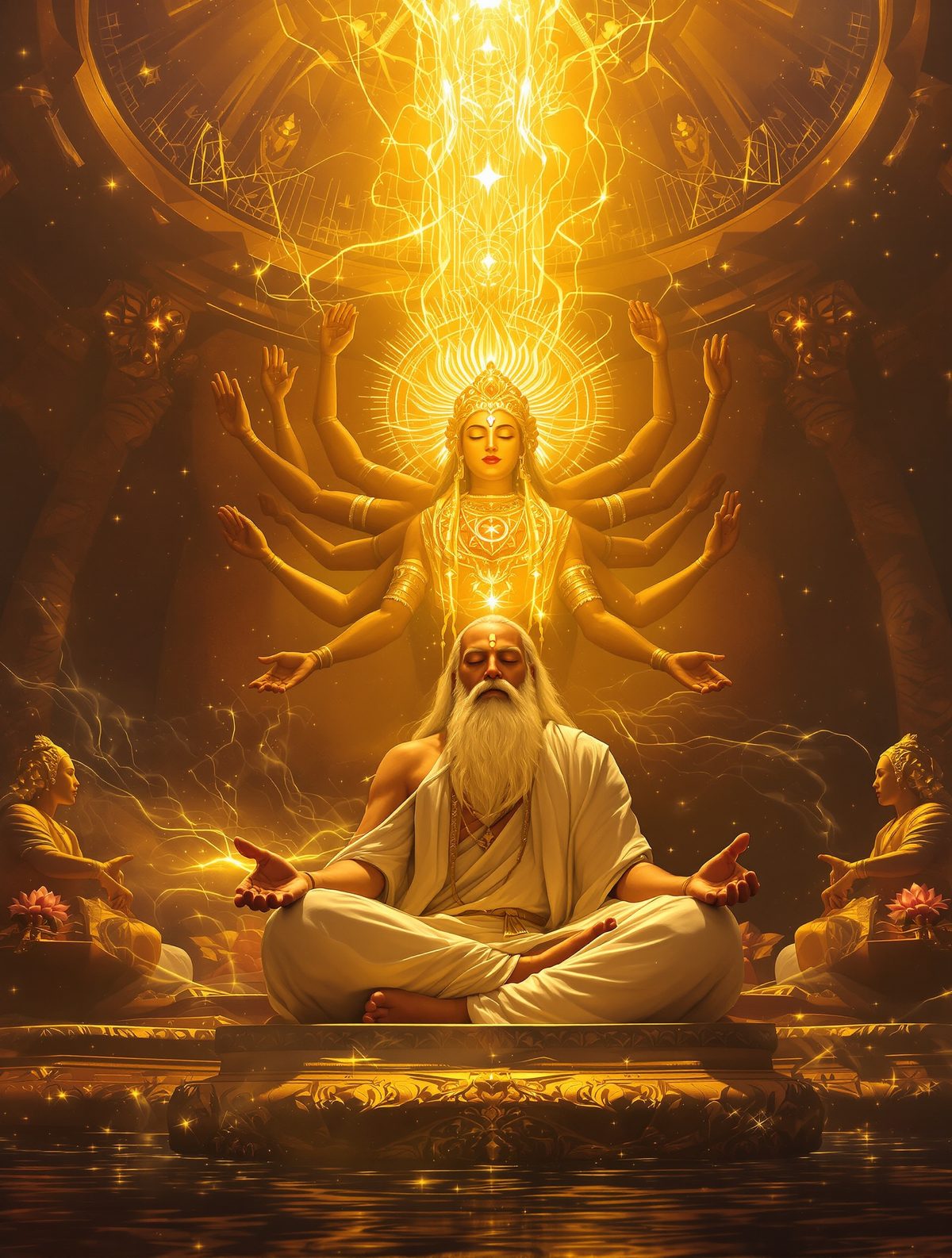
The morning sun cast long shadows across the sacred grove where Sage Dadhichi sat in perfect meditation, his weathered hands resting peacefully on his knees. For decades, he had maintained this pose, so still that birds nested in his flowing hair and vines grew around his ankles. The very air around him hummed with accumulated spiritual power. He had no idea that within hours, the gods themselves would come begging for his life—and that he would give it willingly, changing the course of cosmic history forever.
This is not the sanitized tale of noble sacrifice you might expect. This is the raw, visceral story of daana—the ultimate gift—where a sage's willingness to die would forge the most powerful weapon in Hindu mythology and reveal truths about sacrifice that still challenge us today.
When Heaven Itself Hung in the Balance
The crisis began with Vritra, a demon whose very name meant "obstacle" or "encloser." This was no ordinary asura—he was a cosmic force of drought and darkness who had done the unthinkable. He had stolen the waters of the world, imprisoning them in his massive serpentine coils, and was now advancing on Svarga, the realm of the gods, with an army that made the heavens tremble.
What made Vritra truly terrifying wasn't just his size—ancient texts describe him as so vast that when he moved, mountains crumbled like pebbles—but his invincibility. The Rig Veda tells us he had been granted a boon that made him immune to weapons made of wood, stone, iron, or any earthly metal. Every thunderbolt in Indra's arsenal, every divine weapon in the cosmic armory, bounced off him like raindrops.
The gods gathered in emergency council in their crystal halls, and for the first time in cosmic memory, they knew fear. Brahma, the creator himself, delivered news that chilled them to their divine cores: only one substance in all existence could pierce Vritra's defenses. The bones of Sage Dadhichi.
Here's what the textbooks rarely mention: Dadhichi wasn't chosen randomly. His bones had been transformed through centuries of the most intense spiritual practice imaginable. He had performed tapas—ascetic meditation—so severe that his skeletal system had literally been alchemized into a substance harder than diamond yet charged with pure spiritual energy. Ancient texts suggest he had remained motionless for over 10,000 years, converting his very marrow into crystallized prana (life force).
The Sage Who Made Gods Tremble
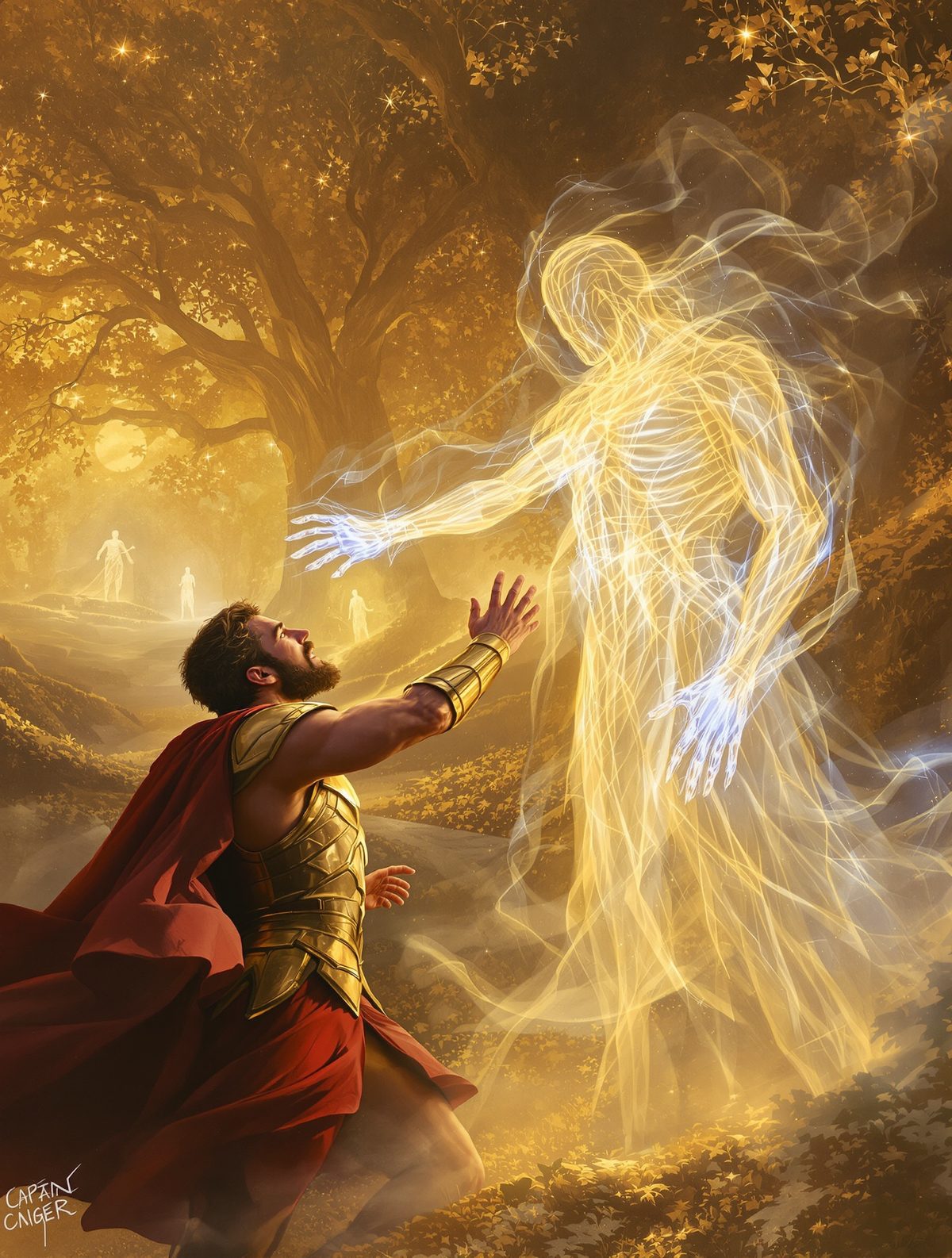
When the divine delegation approached Dadhichi's grove, they came with all the pomp their desperate situation would allow. Indra, king of the gods, led the procession mounted on Airavata, his white elephant whose trumpeting usually announced victory. Behind him came Varuna, lord of waters; Vayu, master of winds; and Surya, the blazing sun god. Their combined radiance should have illuminated the forest like a second dawn.
Instead, as they drew near the meditating sage, their divine light seemed to dim in the presence of his accumulated spiritual power. Here was a mortal who had achieved something that made even gods hesitate—complete mastery over death itself. Dadhichi had transcended the cycle of fear and desire that bound even divine beings.
The conversation that followed reveals something extraordinary about ancient Indian concepts of duty and sacrifice. When Indra explained their need, he didn't try to hide the truth or dress it up in noble language. "We need your bones," he said simply. "We need you to die so that we might live, so that the cosmic order might be preserved."
What happened next defies every natural instinct. Without hesitation, without negotiation, without even asking for time to consider, Dadhichi smiled. Ancient texts record his exact words: "This body is but a clay pot. If its destruction can serve the greater good, then it is already yours."
The Sacrifice That Shook Reality
What followed was unlike any death in mythological history. Dadhichi didn't simply agree to die—he orchestrated his own departure from life with the precision of a master craftsman completing his greatest work.
First, he performed the Prayopavesa—the conscious departure of life through meditation. But here's where the story takes a turn that most retellings skip: Dadhichi didn't just stop breathing. He systematically withdrew his life force from each part of his body, starting from his feet and moving upward, preserving and concentrating all his accumulated spiritual power in his bones while allowing his flesh to simply... dissolve.
Witnesses described the scene as otherworldly. As his consciousness departed, his body began to glow from within, and the bones became visible through his skin like white-hot metal. The very air around him crackled with released energy. When the process was complete, his skeleton remained intact but transformed—no longer mere calcium and minerals, but a lattice of crystallized spiritual force that hummed with power.
Then came the moment that gave this story its visceral title. Indra himself, with tears streaming down his divine face, had to sever Dadhichi's head from his spine. The thunderbolt weapon—the famous Vajra—would be forged from the sage's backbone, but tradition demanded that the head be separated by the one who would wield the weapon. It was Indra's burden to carry, the weight of taking a life given freely.
The Forging of Ultimate Power
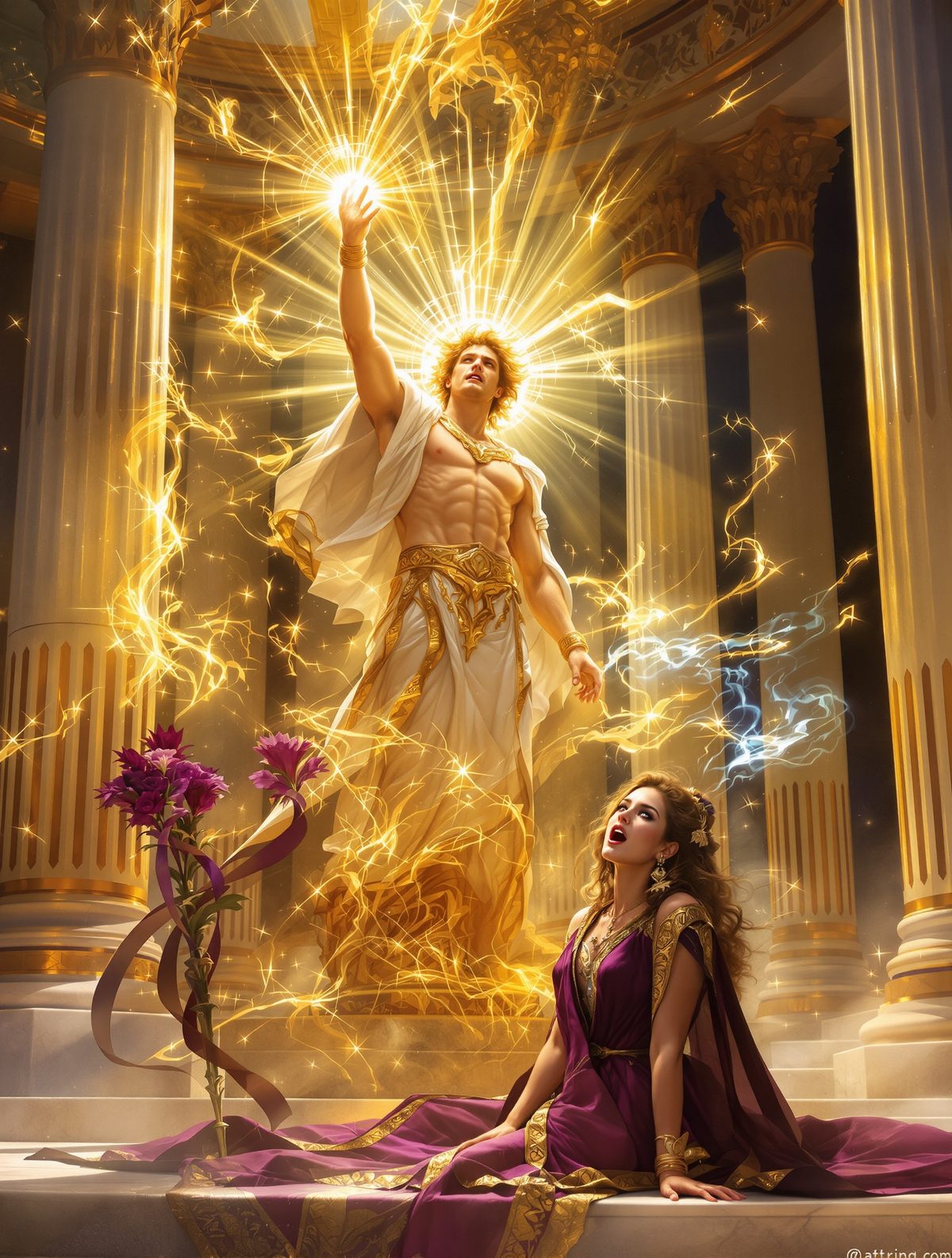
The creation of the Vajra was overseen by Tvashtar, the divine architect, but even his cosmic forge had never processed materials like this. Dadhichi's bones didn't simply melt—they transformed, releasing centuries of stored meditation energy in a process that lit up the heavens for seven days and nights.
The finished weapon was unlike anything that had existed before or since. Ancient descriptions suggest it wasn't just physically powerful but spiritually active—it could think, choose its targets, and contained within it some essence of Dadhichi's consciousness. The Vajra could shatter mountains, split the earth, and most importantly, pierce any defense born of ego or attachment.
When Indra finally faced Vritra in cosmic combat, the demon's confidence evaporated the moment he saw the weapon. He could sense what it was made of—not just bone, but willing sacrifice, selfless love, and the conscious choice to serve something greater than oneself. These were forces his selfish power simply couldn't comprehend or counter.
The battle lasted only moments. The Vajra didn't just destroy Vritra's physical form—it shattered the very concept of absolute selfishness that he represented, releasing the hoarded waters back to the world and restoring cosmic balance.
The Weapon That Lives Forever
Here's something that will surprise you: the Vajra still exists. Not just in museums as a Buddhist and Hindu symbol, but as a living weapon in continuous use. Tibetan Buddhism adopted the Vajra as the "diamond thunderbolt" of enlightenment—the same force that can cut through the ego's defenses and ignorance itself.
Every time a Buddhist monk holds a vajra during ritual, they're wielding the spiritual descendant of Dadhichi's sacrifice. The weapon has evolved from a tool of physical warfare to one of inner transformation, but its essential nature remains: it's powered by the willing sacrifice of the ego for the greater good.
Modern archaeological evidence suggests that ritual vajras found in ancient Indian sites contain traces of actual bone, leading some scholars to wonder if the mythological and historical might be more intertwined than we assumed.
Why This Ancient Sacrifice Still Matters
In our age of carefully calculated self-interest and personal branding, Dadhichi's story feels almost alien. Here was someone who achieved the ultimate success—spiritual mastery over life and death itself—and immediately gave it all away for others' benefit. He didn't negotiate, didn't ask for recognition, didn't even ensure his story would be remembered.
But perhaps that's exactly why this legend has survived for millennia. In a world where we're constantly asked to optimize, accumulate, and protect what we've built, Dadhichi represents something our souls recognize as authentically powerful: the freedom that comes from holding everything lightly enough to let it go when needed.
His sacrifice created more than just a weapon—it forged a template for transformation that operates as effectively today as it did in mythological time. Every act of genuine service, every moment when we choose others' welfare over our own comfort, every time we "die to ourselves" for something greater, we're wielding our own version of the Vajra, powered by the same force that once saved the heavens themselves.
The gods may have needed Dadhichi's bones, but we need his example: the radical possibility that our greatest power might lie not in what we can accumulate, but in what we're willing to freely give away.