In the depths of the Roman underworld, where the river Styx carries the whispers of the dead, a living man walks among shadows. His bronze armor gleams impossibly bright against the eternal twilight as he searches for a face he's carried in his heart since the flames of Troy consumed his world. Aeneas, the hero who once bore his elderly father on his shoulders through burning streets, has descended into Hades itself for one final meeting—a reunion that will reveal the glorious destiny of an empire not yet born, and the heartbreaking truth that even love cannot conquer death.
The Hero Who Wouldn't Let Go
The image seared into Roman memory was unforgettable: Aeneas carrying his frail father Anchises from the inferno of Troy while leading his young son Ascanius by the hand. This wasn't just a story about filial duty—it became the founding myth of Roman pietas, the sacred obligation between generations that would define their civilization for a thousand years.
But Virgil's Aeneid, written between 29 and 19 BCE, reveals something textbooks often gloss over: Anchises died during their journey to the promised land, never seeing Rome's glory. The old man who had once been blessed by Venus herself passed away in Sicily, leaving his son to face destiny alone. For Aeneas, this wasn't acceptable. The hero who had defied gods and monsters wasn't ready to let his father slip into the silent realm of the dead.
What drives a man to literally move heaven and earth—or in this case, breach the boundary between life and death? Ancient Roman sources suggest Aeneas was tormented by unfinished business. His father had been his anchor, his connection to Troy's sacred past and the divine prophecies that promised their descendants would rule the world. Without Anchises, how could Aeneas be certain he was fulfilling his cosmic destiny correctly?
Into the Mouth of Hell
The entrance to the underworld wasn't some mystical portal hidden in the mists of legend—it was a real place the Romans could visit. Near modern-day Naples, the cave at Cumae served as the gateway to Hades, tended by the most feared oracle in the Mediterranean world: the Cumaean Sibyl.
Archaeological evidence suggests this wasn't just literary invention. Excavations at Cumae have revealed a 131-meter-long tunnel cut through volcanic rock, leading to a chamber where the Sibyl delivered her prophecies. The tunnel's acoustics create an otherworldly echo that would have terrified ancient visitors—exactly what you'd expect from a passage to the realm of the dead.
The Sibyl's price for guiding Aeneas wasn't gold or treasure, but something far more precious: a golden bough sacred to Diana, hidden in the dark woods surrounding Lake Avernus. This wasn't just any tree branch—ancient sources describe it as a living key to the underworld, gleaming like fire and singing in the wind when touched by someone destiny had chosen. Only those with divine favor could even see it, let alone pluck it from its tree.
But here's what makes the story even more remarkable: Aeneas had to do this alone. His loyal companions, veterans who had followed him from Troy to Italy, could only watch as their leader disappeared into the cave's black mouth. Even heroes, it seemed, had to face their deepest fears without backup.
The Geography of the Dead
Virgil's underworld wasn't the simplified "good place/bad place" afterlife that popular culture often depicts. It was a vast, complex realm with its own geography, laws, and social structure—a shadow empire that reflected Roman understanding of justice, hierarchy, and cosmic order.
First came the vestibule of Hell, where personified horrors like Grief, Disease, and War lurked alongside actual monsters. Here prowled the Hydra, the Chimera, and the hundred-armed giant Briareus—not metaphors, but real guardians that had to be faced with steel nerves and divine protection.
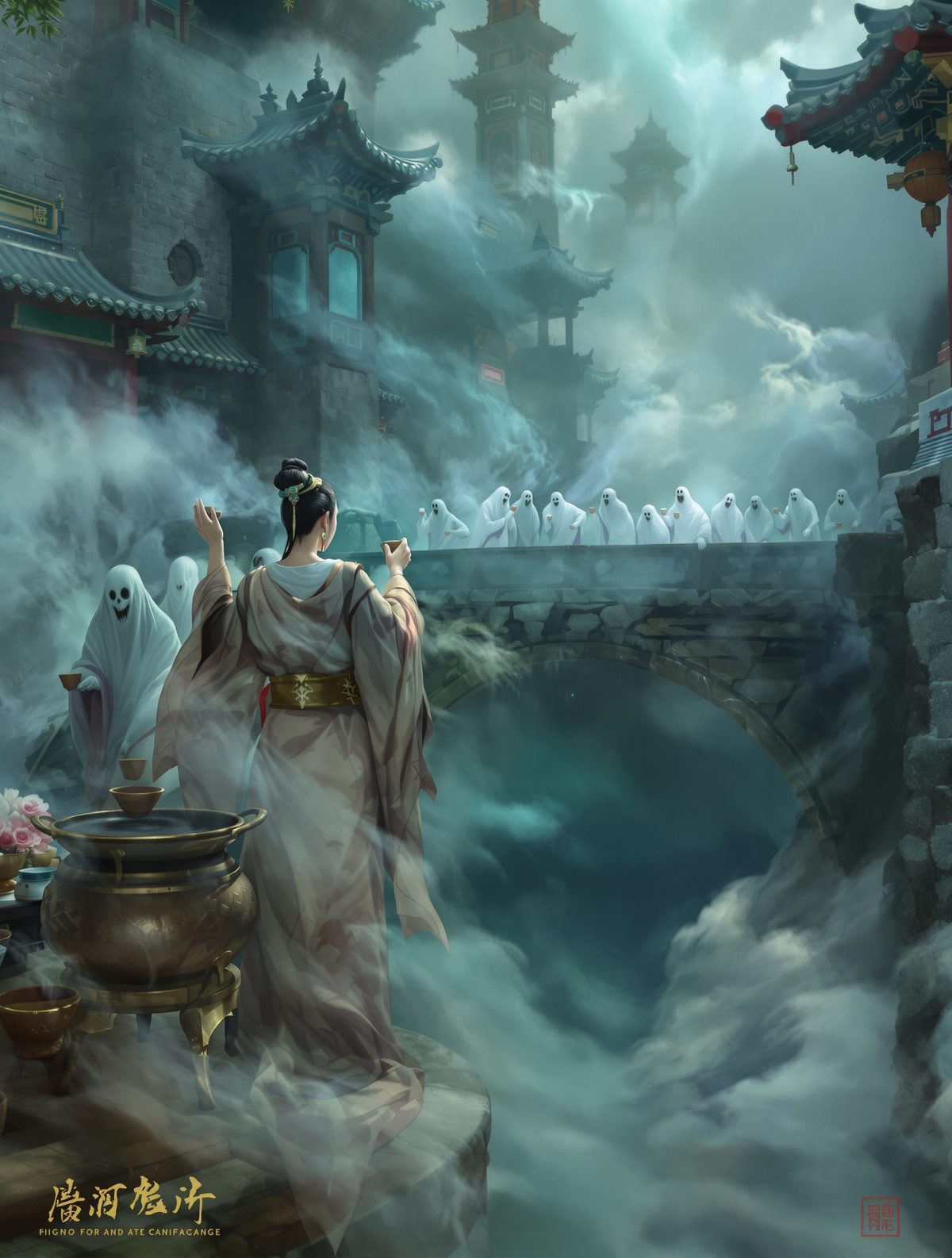
Beyond this lay the true marvel: Charon's ferry across the river Styx. The ancient sources are specific about this river's properties—its waters were so toxic that they could dissolve any container except a horse's hoof, and the gods themselves feared to break oaths sworn upon its current. Charon, the ferryman, had been working this route since before human memory began, his boat heavy with the weight of every soul who had ever died.
But the most fascinating region was where Aeneas found what he was looking for: Elysium, the blessed realm reserved for heroes, poets, and those who had made the world better. Unlike the Christian heaven that would later replace it in Western imagination, Elysium was described as an actual place—complete with its own sun, stars, and physical landscape where the righteous dead could enjoy eternal versions of earthly pleasures.
The Vision of Empire Unborn
When father and son finally reunited beside the river Lethe—the water of forgetfulness—their meeting wasn't just personal. It was a cosmic briefing on the future of Western civilization.
Anchises had spent his time in death learning the universe's deepest secrets. He revealed to his son the doctrine of reincarnation that most Romans never heard about: how souls were purified through successive lifetimes, eventually earning the right to return to the pure divine fire from which they came. But some souls, he explained, were too important for this cycle. They waited in Elysium for their appointed time to be born and change history.
Then came the parade of the unborn—a procession of souls that read like a who's who of Roman greatness. Romulus, the city's founder, blazing with the light of his divine father Mars. Augustus Caesar, destined to establish a golden age and rule an empire stretching from Britain to the Euphrates. Marcellus, Augustus's nephew, whose early death would plunge Rome into mourning.
Ancient sources suggest Virgil included this vision not just for dramatic effect, but as political propaganda. Writing under Augustus's patronage, he was creating a divine genealogy for Roman power—proof that their empire wasn't built on conquest and ambition alone, but on cosmic destiny itself. Every Roman citizen could see themselves as part of this grand design, chosen by fate to bring civilization to a barbarian world.
But Anchises had one final, crucial message for his son: "Remember, Roman, these will be your arts: to impose the ways of peace, to spare the conquered, and to battle down the proud." This wasn't just military advice—it was the moral foundation upon which Rome would justify ruling the known world.
The Embrace That Never Was
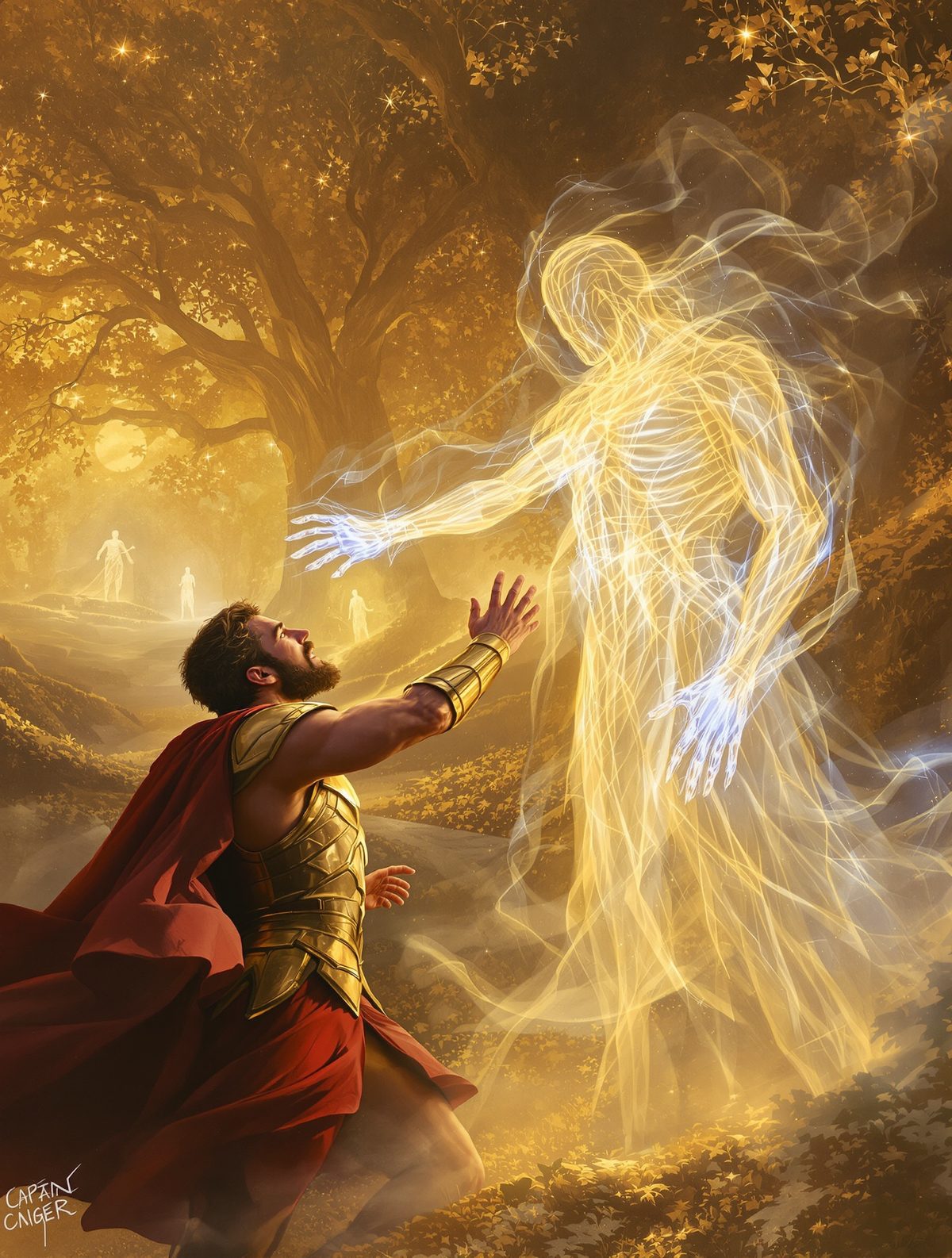
After hours of revelation and prophecy, Aeneas reached out to embrace his father—and grasped nothing but empty air and shadow. Three times he tried, three times his arms closed on emptiness. The dead, no matter how beloved, remained forever beyond the touch of the living.
This moment reveals something profound about Roman attitudes toward death that differs sharply from both earlier Greek traditions and later Christian beliefs. The Greeks had always accepted death as natural, even desirable—their heroes often chose glorious death over long, obscure life. Christians would later promise resurrection and physical reunion with loved ones.
But Romans occupied a middle ground of tragic realism. Death was neither welcome nor fully conquered. The dead could speak, could love, could offer guidance—but they remained fundamentally other, separated by a gulf that even the strongest bonds couldn't bridge. This wasn't pessimism; it was the acknowledgment that made Roman stoicism so powerful. Life was precious precisely because it was brief and unrepeatable.
The scene also explains something crucial about Roman ancestor worship. When Romans maintained household shrines to their deceased family members, they weren't expecting literal conversations or physical presence. They were maintaining relationships with benevolent shadows who could offer wisdom and protection but could never again share a meal or offer a comforting touch.
Shadows That Shaped an Empire
Aeneas's journey to the underworld became more than literature—it became a template for how Romans understood their relationship with both the past and the future. Every Roman leader would claim guidance from ancestral spirits; every Roman family would maintain that their dead continued to watch over and influence the living world.
But perhaps the story's most enduring power lies in its recognition of a universal human truth: that love persists beyond death, even when physical connection cannot. In our age of medical advances and life-extending technologies, we still face the same heartbreaking reality that confronted Aeneas in the shadowy realm of Elysium. No matter how far we're willing to journey, no matter what powers we're willing to invoke, there comes a moment when we must accept that our beloved dead remain forever just beyond our embrace—present in memory and influence, but absent from the world of touch and breath and shared tomorrows.
The hero who carried his father from burning Troy had to learn the hardest lesson of all: sometimes the greatest act of love is learning to let go. Even when you're destined to found the eternal city, even when the gods themselves have blessed your mission, you still have to face your grief alone and find the strength to return to the world of the living, carrying only shadows and the echo of voices that will never again call your name.