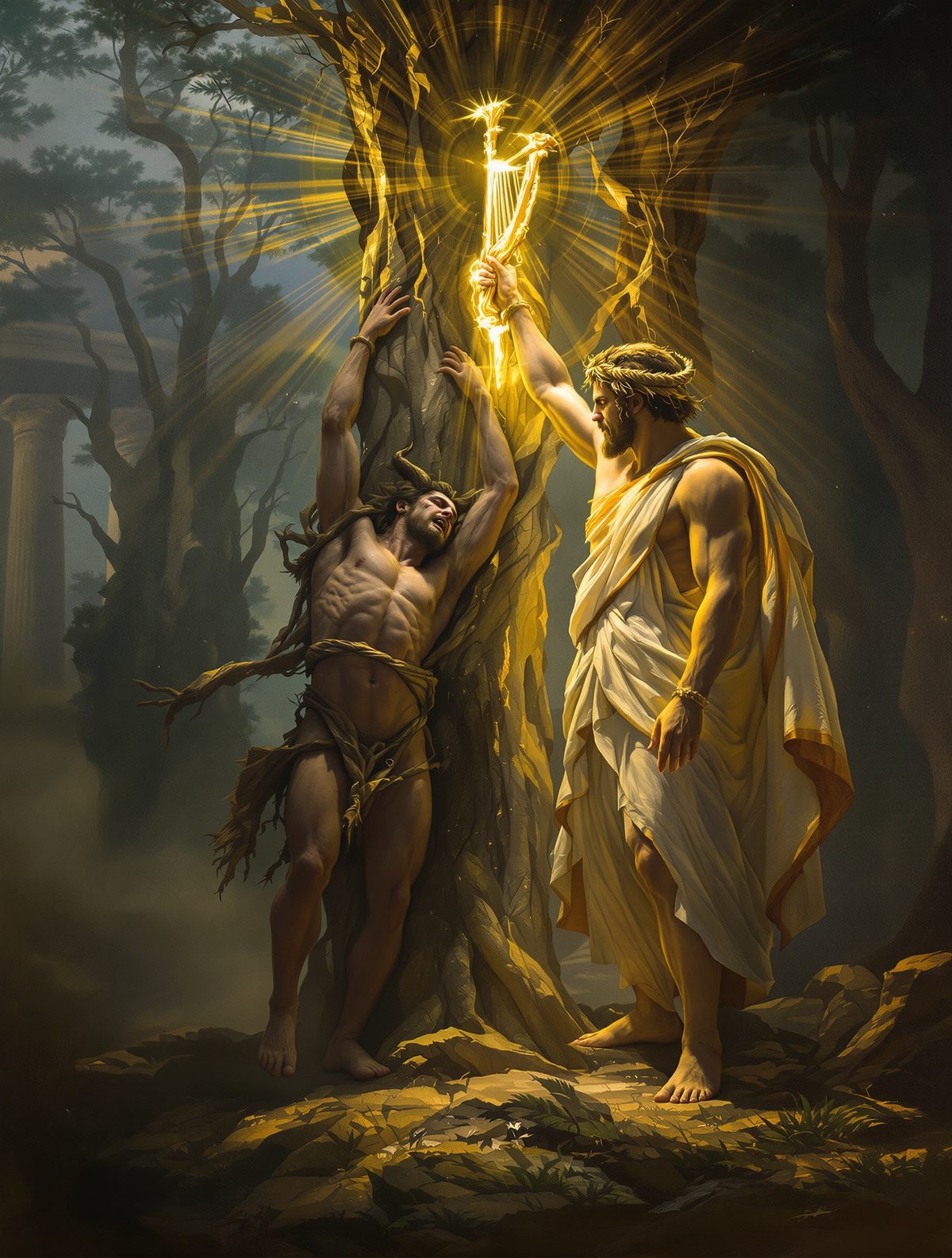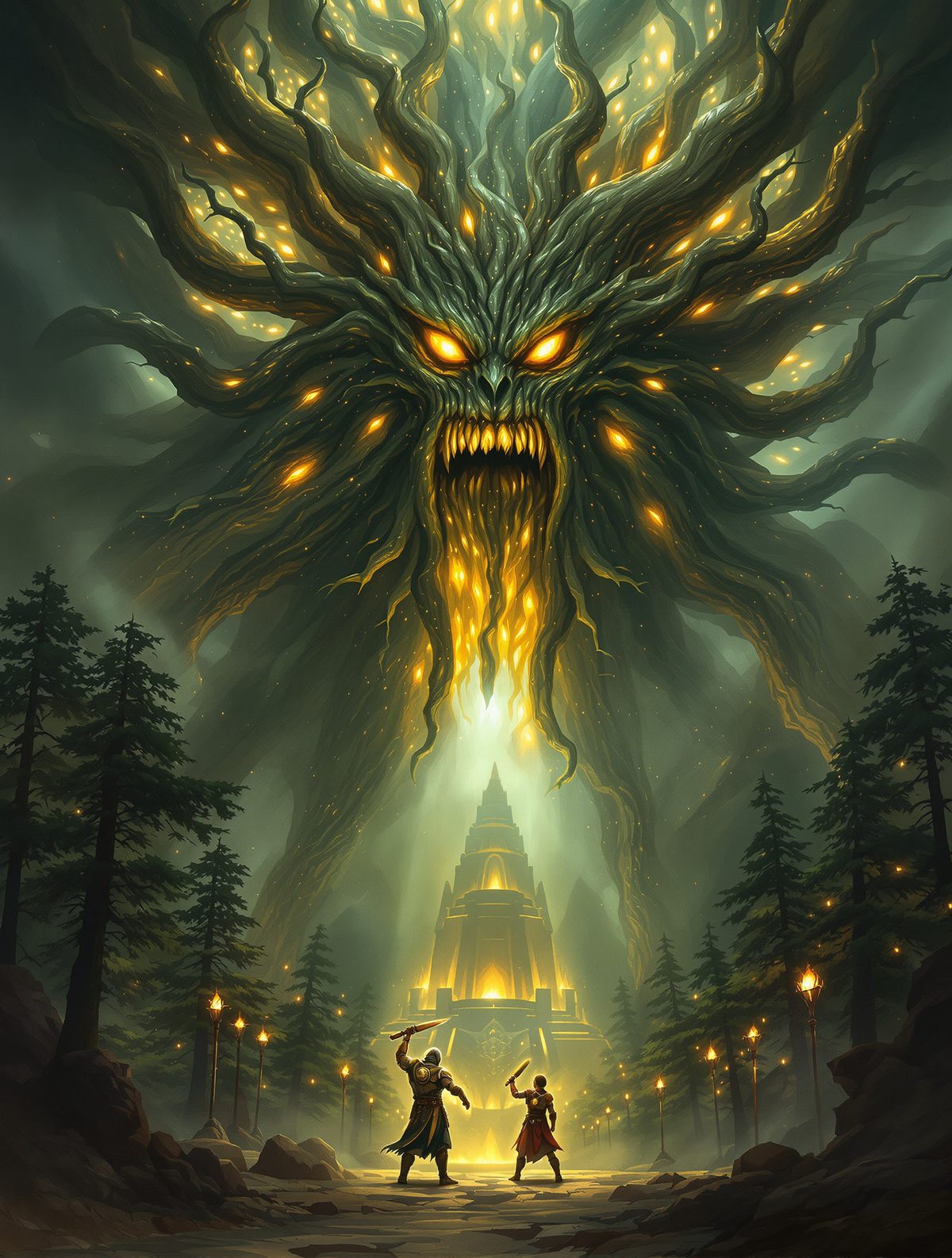
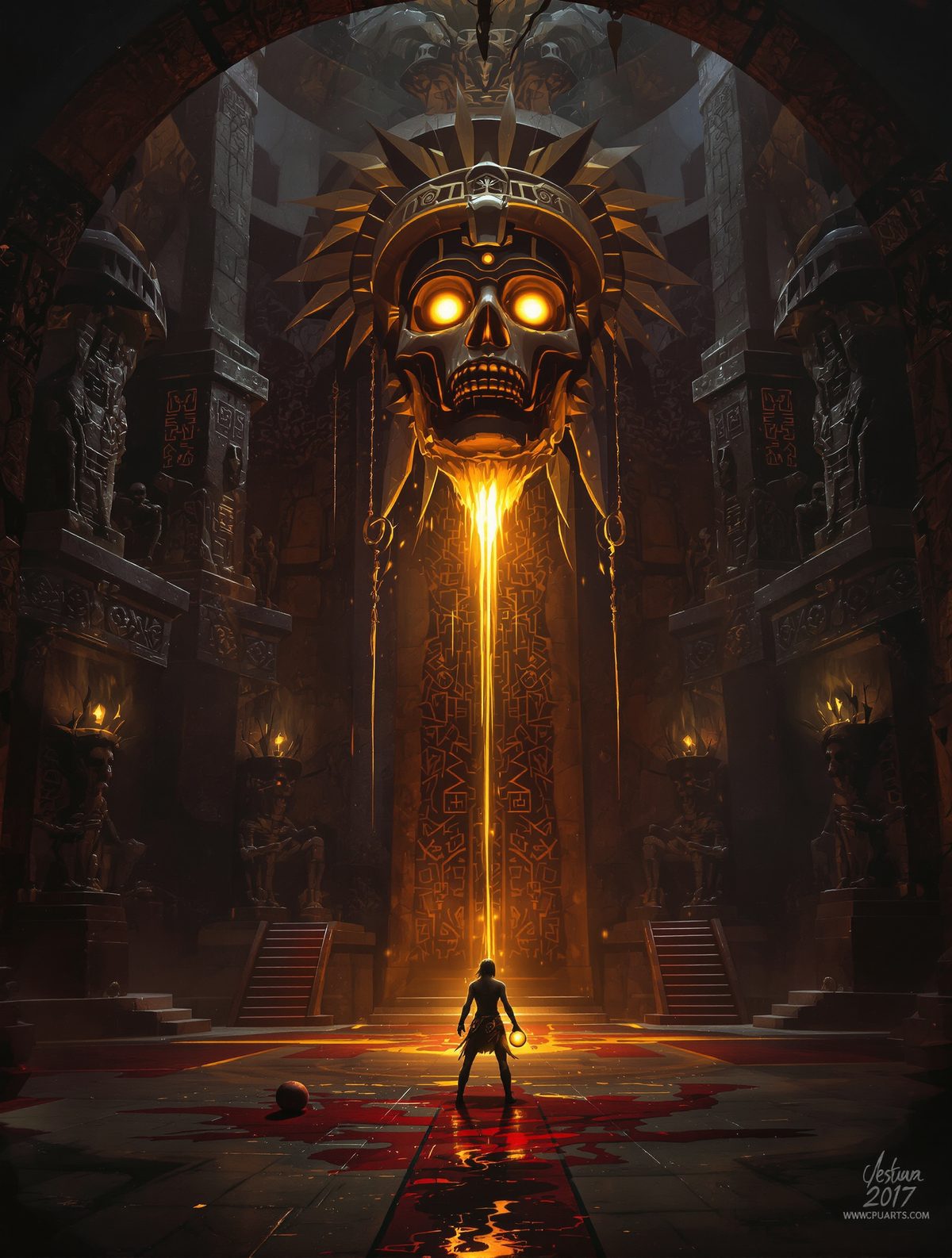
In the shadowy realms of Mesoamerican mythology, where jaguars prowl and ancient gods conduct tournaments of life and death, there lies a ball court—a place where the lines between worlds blur and destinies are forged. Welcome to Xibalba, the feared underworld governed by the lords of death, where the fate of the Hero Twins unfolds amidst intrigue and deception. At the center of this mythological saga is Hunahpu's head, severed from his body yet alive with promise, setting the stage for a tale that pulses with cunning, bravery, and ultimately, triumph over death itself.
The Realm Beneath: Xibalba, the Seat of Death
In the pantheon of Mayan mythology, Xibalba holds a unique and formidable presence. Considered by the ancient Maya as a literal underworld, it was a place both feared and respected. Xibalba, often depicted as a cold and dark realm, was governed by twelve menacing deities known collectively as the Lords of Death. Their names, such as Hun-Came and Vucub-Came, evoke the formidable nature of their rule. This subterranean world was reached through a descent, believed to reside beneath the earth or for some interpretations, through the depths of caves and cenotes, natural sinkholes common to the Mesoamerican landscape.
Among the many sinister features of Xibalba, none were more fearsome than the ball court, where eternal battles between gods and mortals played out. For the ancient Maya, the ball game, known as Pok-a-Tok, was more than mere sport. It was a ceremonial confrontation between good and evil, life and death—a realization of cosmic order and balance. When the Lords of Death issued their deadly challenge, it was understood that the stakes were the highest possible: victory meant life and honor, defeat meant humiliation and death.
The Game Begins: The Hero Twins Answer the Call
Central to our narrative are the Hero Twins: Hunahpu and Xbalanque, the legendary figures whose exploits are immortalized in the sacred text of the Popol Vuh. Their story begins with an invitation—or rather, a summon—from the Lords of Xibalba, who had grown weary of the noise from the twins’ incessant ballgame on Earth and saw a chance to eliminate these mortal upstarts.
Journeying to Xibalba meant navigating a gauntlet of challenges designed to break spirits and claim lives. Before stepping onto the court, the twins had to pass the trials of the Dark House, Cold House, Jaguar House, and most terrifyingly, Razor House. Yet, armed with cleverness and courage, they overcame obstacles, inching ever closer to their showdown in the ball court.
The night before the game, however, the stakes shifted dramatically when the Lords of Death, known for their trickery, captured Hunahpu. In a chilling move meant to break Xbalanque’s spirit, they decapitated him, displaying his head on the court like a macabre trophy. The air hung heavy with dread, yet within this brutal act laid the seeds of the ultimate trick.
A Most Ingenious Plan: Xbalanque's Gambit
Alone on the court, with Hunahpu’s head overseen by mocking lords, Xbalanque steadied himself not in despair but with determination. Having anticipated betrayal, the twins’ plan unfurled with Xbalanque as its orchestrator. Using their mastery of magic and transformation, Xbalanque summoned the assistance of forest creatures. A rabbit became his ally, imbued with a glimmer of hope amidst the gloom.
As the game with the Lords of Death resumed, Xbalanque played with agility and precision, his acts deliberate and calculated. Suddenly, in a seemingly desperate maneuver, he struck the ball not toward the goal but out of bounds, where the waiting rabbit mimicked the trajectory, leading the lords into disarray—a chaos that concealed the true magic at play.
Seizing the moment, Xbalanque conjured an enchanted gourd fashioned by his twin from the blood-red flora of Xibalba, which he expertly fitted onto his brother’s body. Through their twin bond and divine cleverness, Hunahpu was restored, his body reanimated, turning the very symbol of their demise into an icon of their resurgence. Together again, standing defiantly, the twins subverted the narrative of oppression, challenging the lords’ facade of power.
Rewriting the Rules: Victory and Transcendence
The Lords of Death, outmaneuvered, capitulated to the inevitability of their defeat. Deprived of their trophy and witnessing the resurrection they deemed impossible, their grip on the game, and symbolically, on death itself loosened. The story of Hunahpu and Xbalanque stands as a powerful testament to resilience and ingenuity—the transcendence of life over the seeming permanence of death.
For the ancient Maya, this tale was more than mere legend; it served as a compass guiding the living in their ephemeral dance between realms. Hunahpu's head, once an emblem of victory for dark deities, became instead a beacon of mortal potential to surmount adversity and redefine destiny.
The Enduring Legacy: Why Hunahpu's Head Matters Today
Thousands of years later, the story of Hunahpu's head continues to resound within our understanding of life, death, and the cycle that binds them. The allegory of the Hero Twins speaks volumes of human capacity to challenge and change preordained outcomes using wit, creativity, and unity. In today's world, where uncertainty and conflict often seem insurmountable, their legend offers an inspiring narrative of perseverance and the transformative power of collaboration and intelligence—a legacy not just of survival, but triumph.
Drawing from these ancient tales, we are reminded of our own intrinsic potential to face the shadows that lie ahead. Like Xbalanque and Hunahpu, the power to transform our narrative rests within us, urging us to play not just for survival, but to redefine the very rules of our destinies.