The mountain trembled as four hundred warriors climbed its slopes, their obsidian blades gleaming in the pre-dawn darkness. At the summit, their mother Coatlicue—the earth goddess herself—writhed in the throes of labor, her serpent skirt coiling around her massive form. The warriors had come to commit the ultimate sin: matricide. But as they reached the peak of Coatepec, Serpent Mountain, something impossible happened. The child she was birthing didn't emerge as a helpless infant. Instead, Huitzilopochtli burst forth fully grown, armored for war, and seething with divine rage that would reshape the cosmos itself.
This is the story your mythology textbooks skipped—too violent, too strange, too magnificently brutal for sanitized education. Yet for the Aztecs, this wasn't just another creation myth. It was the foundational moment that explained everything: why the sun rises each day, why war is sacred, and why their empire was destined to rule through blood and fire.
The Goddess Who Swept Up Feathers
Coatlicue wasn't your typical earth goddess. Known as "She of the Serpent Skirt," she was already the mother of the moon goddess Coyolxauhqui and four hundred sons called the Centzon Huitznahua—the "Four Hundred Southerners." These weren't ordinary children; they were star deities, powerful and proud, ruling the southern sky with their sister.
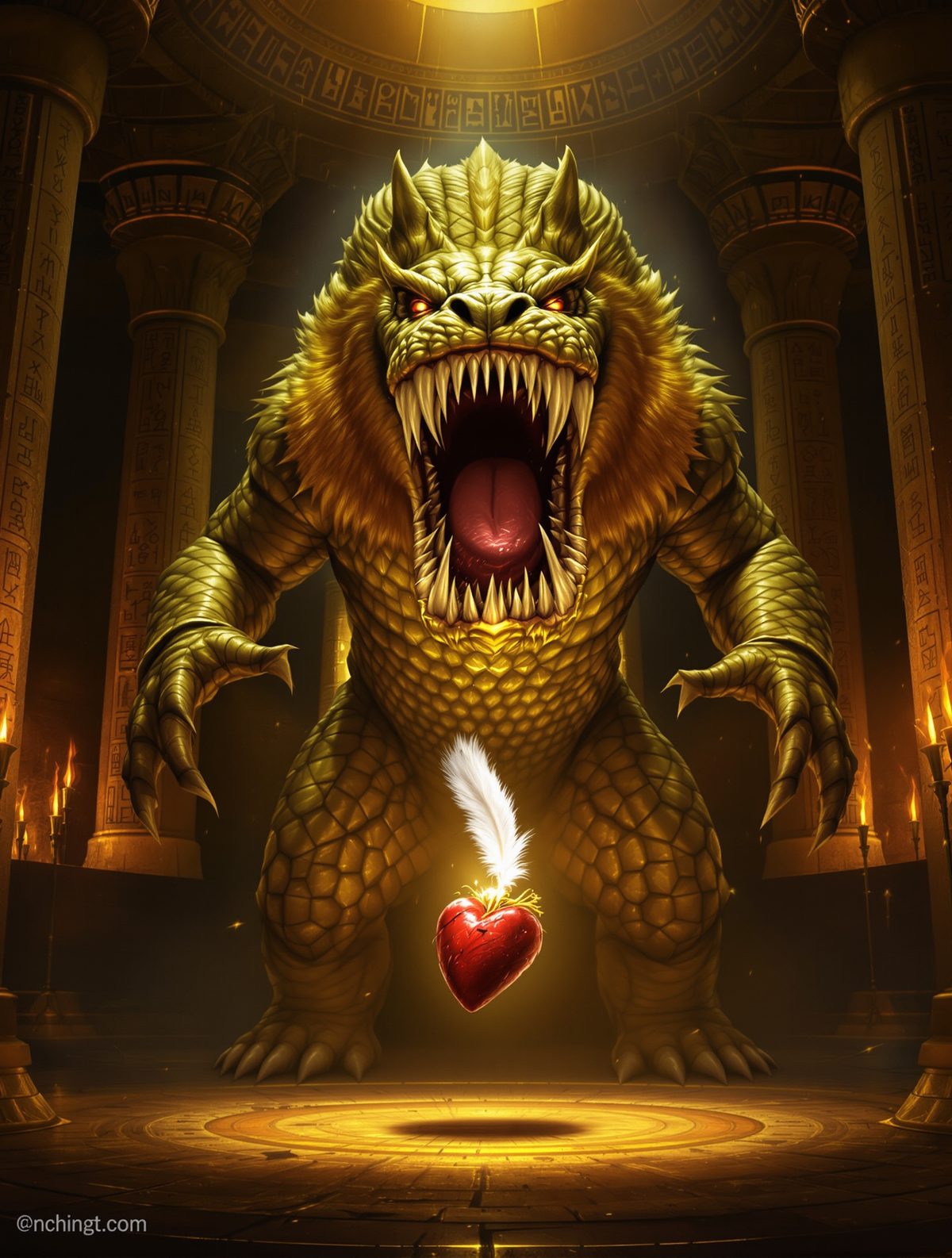
The trouble began with something as mundane as housework. While sweeping the sacred temple atop Coatepec, Coatlicue discovered a bundle of hummingbird feathers—beautiful, iridescent plumes that seemed to pulse with otherworldly energy. In a moment that would change everything, she tucked them into her breast. The feathers dissolved instantly, and Coatlicue found herself mysteriously pregnant.
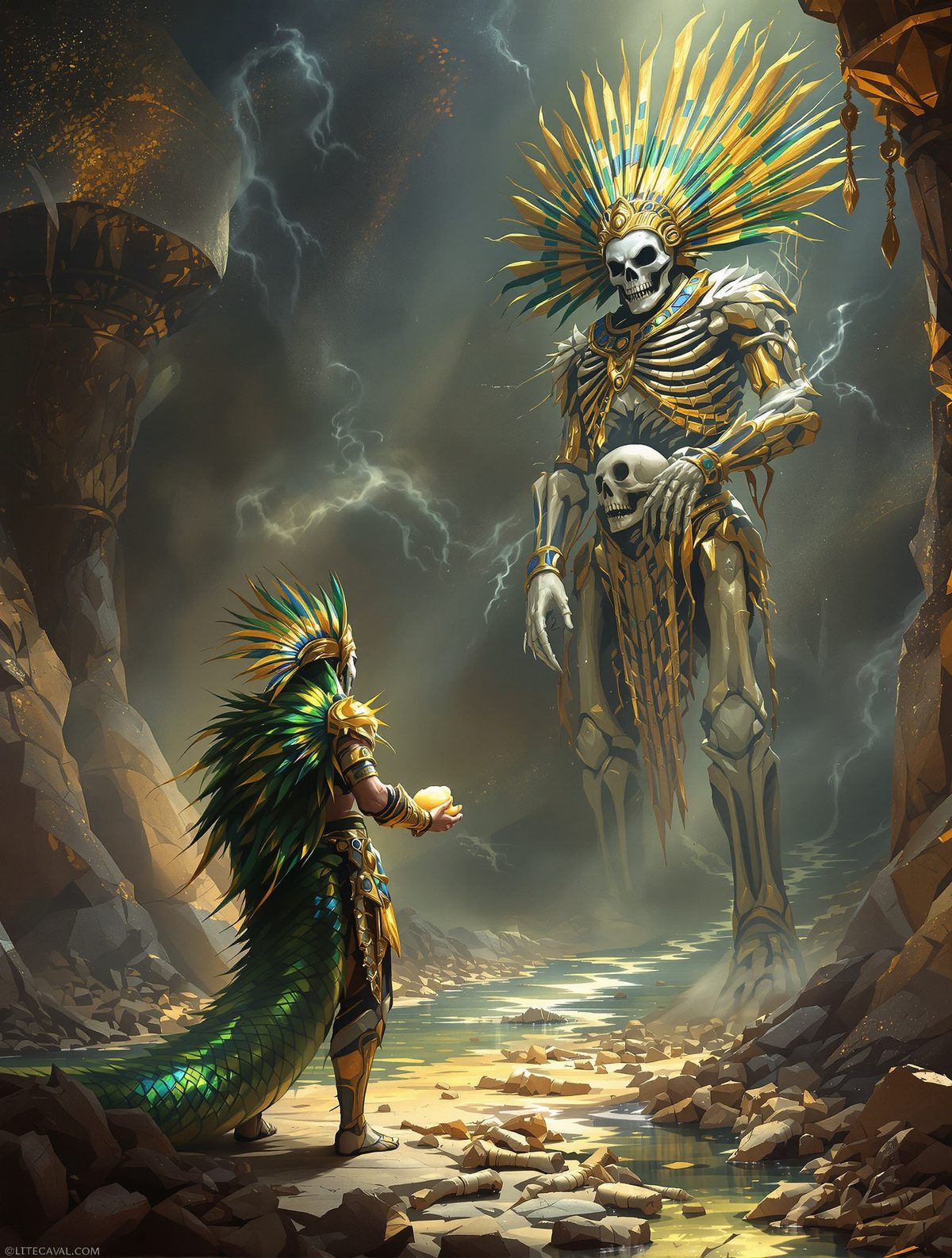
Here's what most people don't realize: in Aztec cosmology, hummingbirds weren't just pretty birds. They were symbols of the sun, of warriors who died in battle, of resurrection itself. The name "Huitzilopochtli" literally means "Hummingbird of the Left" or "Hummingbird of the South"—the left being the side associated with war and the underworld. Those feathers weren't random; they were the essence of the war god himself, seeking birth through divine intervention.
The Conspiracy of Stars
When Coyolxauhqui learned of her mother's pregnancy, she didn't celebrate the coming of a new sibling. Instead, she saw an insult that demanded blood. In her mind, their mother had dishonored herself—and by extension, dishonored them all. The pregnancy was impossible, shameful, and had to be ended along with Coatlicue's life.
The moon goddess gathered her four hundred brothers in what can only be described as the first recorded family conspiracy. These weren't petty siblings squabbling over inheritance; they were cosmic forces plotting deicide. Each of the Centzon Huitznahua commanded legions of stars, and together they represented the entire southern sky. When they decided to march on their mother, it was quite literally a stellar army mobilizing for war.
Archaeological evidence from Teotihuacan and later Aztec sites suggests this myth was so central to Mesoamerican culture that it was carved into temple walls and reenacted in elaborate ceremonies as early as 200 CE. The story wasn't just told—it was lived, with priests taking the roles of the various deities in ritual dramas that could last for days.
What makes this conspiracy particularly chilling is that Coyolxauhqui convinced her brothers that killing their mother was not just justified, but necessary for cosmic order. She argued that Coatlicue's mysterious pregnancy threatened their status and power. It's a twisted logic that would echo throughout Aztec culture: sometimes destruction is required to maintain balance.
Birth of the War God
As the four hundred warriors climbed Serpent Mountain, their mother received an impossible message. From within her womb, the unborn Huitzilopochtli spoke to her, his voice carrying the promise of protection. "Do not be afraid, mother," the fetal god whispered. "I know what I must do."
The climb up Coatepec wasn't quick. The mountain was steep, treacherous, and the warriors were weighed down with weapons and armor. This gave Huitzilopochtli time to prepare for what would become the most spectacular birth in mythological history. He wasn't just being born—he was forging himself into a weapon of divine justice.
When Coyolxauhqui and her brothers finally reached the summit, they found Coatlicue in the final stages of labor. They raised their weapons, obsidian blades catching the starlight, ready to end two lives with a single strike. But at that exact moment, Huitzilopochtli burst forth—not as a crying infant, but as a fully grown warrior god dressed for battle.
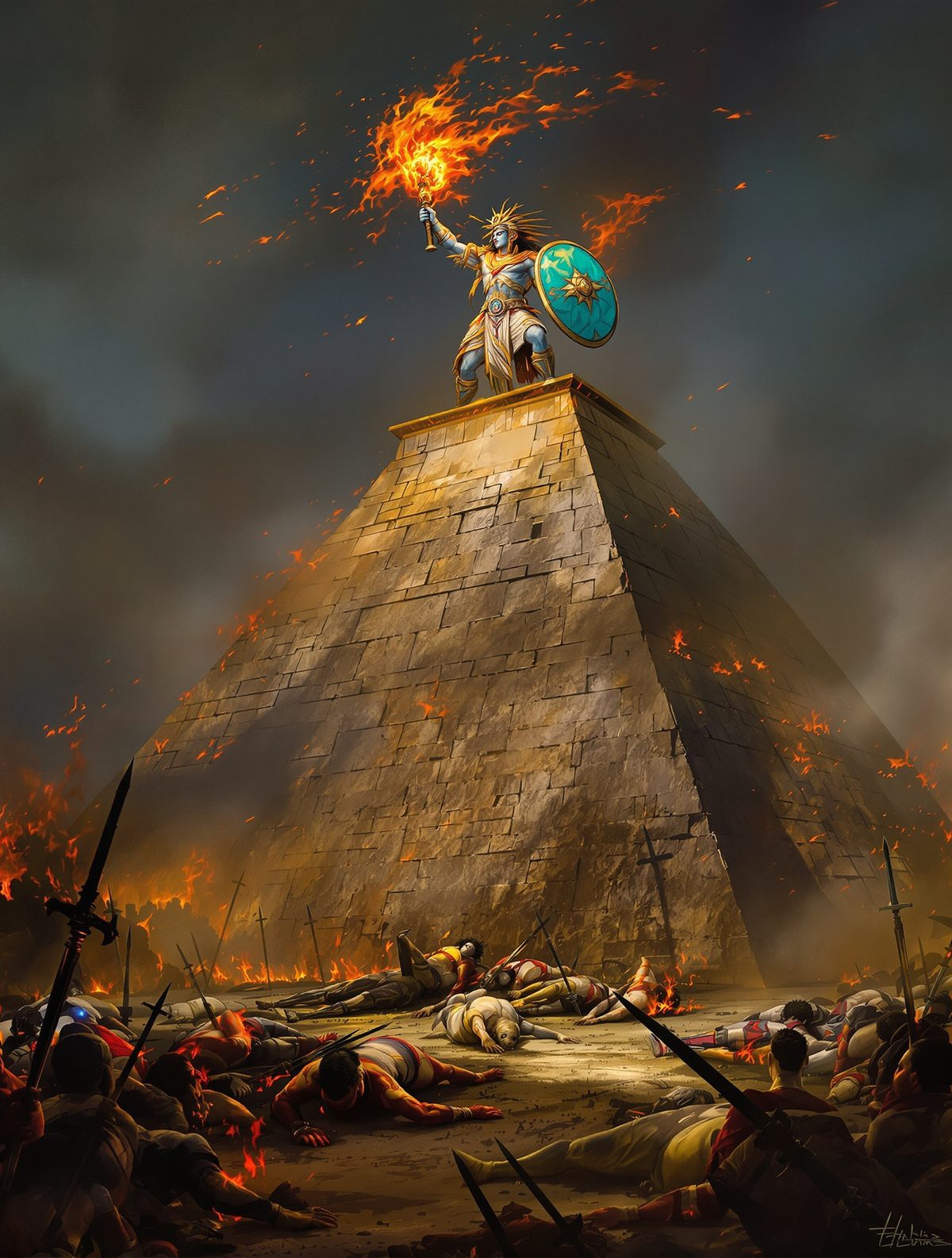
The descriptions of his appearance are breathtaking. He wielded the Xiuhcoatl—the fire serpent—a weapon that burned with the heat of solar fire and could cut through anything in creation. His shield was made of turquoise, a stone so sacred to the Aztecs that it was worth more than gold. His skin was painted blue, the color of war and sacrifice, and his body was adorned with hummingbird feathers that shimmered with supernatural light.
But perhaps most terrifying of all: he emerged with the full memories and rage of a god who had listened to his siblings plot his mother's murder for months. This wasn't a newborn learning to walk—this was vengeance incarnate, ready to rewrite the cosmic order.
The Divine Massacre
What happened next was less a battle than a cosmic slaughter. Huitzilopochtli moved with the speed and fury of a solar flare, his fire serpent cutting through his brothers like they were mere mortals instead of star gods. The four hundred warriors—who had climbed the mountain as conquerors—were reduced to cosmic debris in a matter of moments.
But Coyolxauhqui, the moon goddess and architect of the conspiracy, received special attention. Huitzilopochtli didn't just kill his sister—he dismembered her, cutting off her head and limbs before hurling her broken body down the mountain. Her corpse tumbled down Coatepec, bouncing off rocks and leaving a trail of divine blood, until it came to rest at the base as a reminder of what happens to those who threaten the cosmic order.
Here's a detail that will make you see the moon differently: according to Aztec belief, Coyolxauhqui's dismembered body became the moon. Every night when you look up at that cratered surface, you're seeing her broken form, forever tumbling through the sky as punishment for her betrayal. The dark spots aren't just shadows—they're the scars from her brother's divine wrath.
The four hundred brothers didn't fare much better. Their broken bodies were scattered across the sky, becoming the stars of the southern heaven—dim, distant, and forever subservient to their younger brother who had destroyed them. Every night, they're forced to witness Huitzilopochtli's victory as the sun rises to chase their sister's broken moon across the sky.
This wasn't random violence—it was the establishment of cosmic hierarchy through superior force. Huitzilopochtli's massacre created the order that Aztec civilization would follow for centuries: the strong rule through violence, the sun conquers the moon and stars daily, and war is not just acceptable but sacred.
The Solar Engine of Empire
The ramifications of this mythological massacre extended far beyond family drama. Huitzilopochtli's victory became the template for Aztec society, justifying everything from daily human sacrifice to imperial conquest. If the god of war had to kill his own siblings to maintain cosmic order, then certainly mortal rulers could wage endless wars to feed the sun with blood.
The Aztecs believed that every dawn was Huitzilopochtli being reborn, every sunrise was him chasing his sister's broken moon across the sky, and every day was a reenactment of that first divine victory on Serpent Mountain. This meant the sun god needed constant nourishment—human hearts, preferably from warriors captured in battle—to maintain the strength to repeat his cosmic triumph daily.
At the height of their power, the Aztecs were sacrificing an estimated 20,000 people annually to feed Huitzilopochtli's hunger. The Templo Mayor in Tenochtitlan, their capital city, was built to represent Coatepec itself, with dual shrines at its peak representing the birthplace of their patron deity. Prisoners of war were marched to the top and sacrificed exactly where Huitzilopochtli had emerged victorious, their hearts offered to ensure the sun would rise again.
But here's what's truly remarkable: this wasn't seen as cruelty but as cosmic necessity. The Aztecs genuinely believed they were preventing the end of the world through these sacrifices. Without them, Huitzilopochtli would weaken, the sun would fail to rise, and existence itself would collapse into the darkness that preceded creation.
The Legend That Refused to Die
When Spanish conquistadors arrived in 1519, they were horrified by Aztec religious practices but grudgingly impressed by their sophistication. Hernán Cortés himself wrote about the "diabolical" ceremonies atop temple pyramids that recreated Huitzilopochtli's birth through ritual sacrifice and theatrical performance. The Spanish destroyed most Aztec codices, but enough fragments survived to piece together this incredible story.
What's fascinating is how this myth continues to resonate today. Modern Mexico's flag features an eagle perched on a cactus—a direct reference to the spot where the Aztecs built Tenochtitlan after seeing a vision of Huitzilopochtli's sacred bird. The god who murdered his siblings to establish cosmic order became the foundation myth of an entire nation.
Even more intriguingly, recent archaeological discoveries at the Templo Mayor have uncovered offerings that directly reference the Coatepec myth—including a massive stone carving of dismembered Coyolxauhqui, found at the base of the pyramid exactly where her body would have landed after being hurled from the summit. The Aztecs weren't just telling this story; they were living it, building it, and literally constructing their capital city as a three-dimensional recreation of their most important myth.
Perhaps most remarkably, DNA analysis of sacrificial remains found at Aztec sites shows that many victims were brought from hundreds of miles away—suggesting that the entire Mesoamerican world participated in feeding Huitzilopochtli, either willingly or through conquest. A family quarrel on a mythological mountain had become the organizing principle for millions of people across an entire continent.
The story of Huitzilopochtli's birth reveals something uncomfortable about human nature: our tendency to sanctify violence when it serves our purposes, to find cosmic justification for earthly power, and to build entire civilizations around the idea that some people must die so others can thrive. The Aztecs were hardly unique in this—they were simply more honest about it, more theatrical in their presentation, and more systematic in their implementation.
Today, as we grapple with questions about justified violence, necessary wars, and the price of maintaining order, perhaps we should remember the god who emerged from his mother's womb ready for battle, who established his authority through fraternal massacre, and who demanded daily blood sacrifice to keep the world spinning. The Aztecs believed the sun itself was powered by divine rage and cosmic violence. Looking at our modern world, sometimes it's hard to argue they were wrong.