In the heart of ancient Egypt, where the Nile's fertile banks whispered secrets to the souls of gods and men alike, a tale unfolded that would shape the destiny of a civilization. Here, the vibrant sun illuminated not just the golden sands but the complex weave of divine narratives that clothed the Egyptian cosmos. And amidst these cosmic dramas, one story stands as a beacon of healing and redemption: the saga of Horus and the restoration of his eye, the Wedjat. It is a story that begins in darkness only to blaze forward with a light new born, never to be extinguished by the shadows of chaos again.
The Cosmic Battle: Set and Horus Clash
In a time lost to both history and myth, the celestial stage was set for an epic battle. Set, the god of storms, violence, and chaos—whose very breath could stir desert sandstorms—sought supreme power. Standing against him was Horus, the falcon-headed god, the embodiment of royal lineage and the avenger of his father Osiris’s murder. This was no mere skirmish; it was a war for the very soul of Egypt, a country that viewed its rulers as not just monarchs, but earthly gods responsible for maintaining the intricate balance known as ma'at—the way things ought to be.
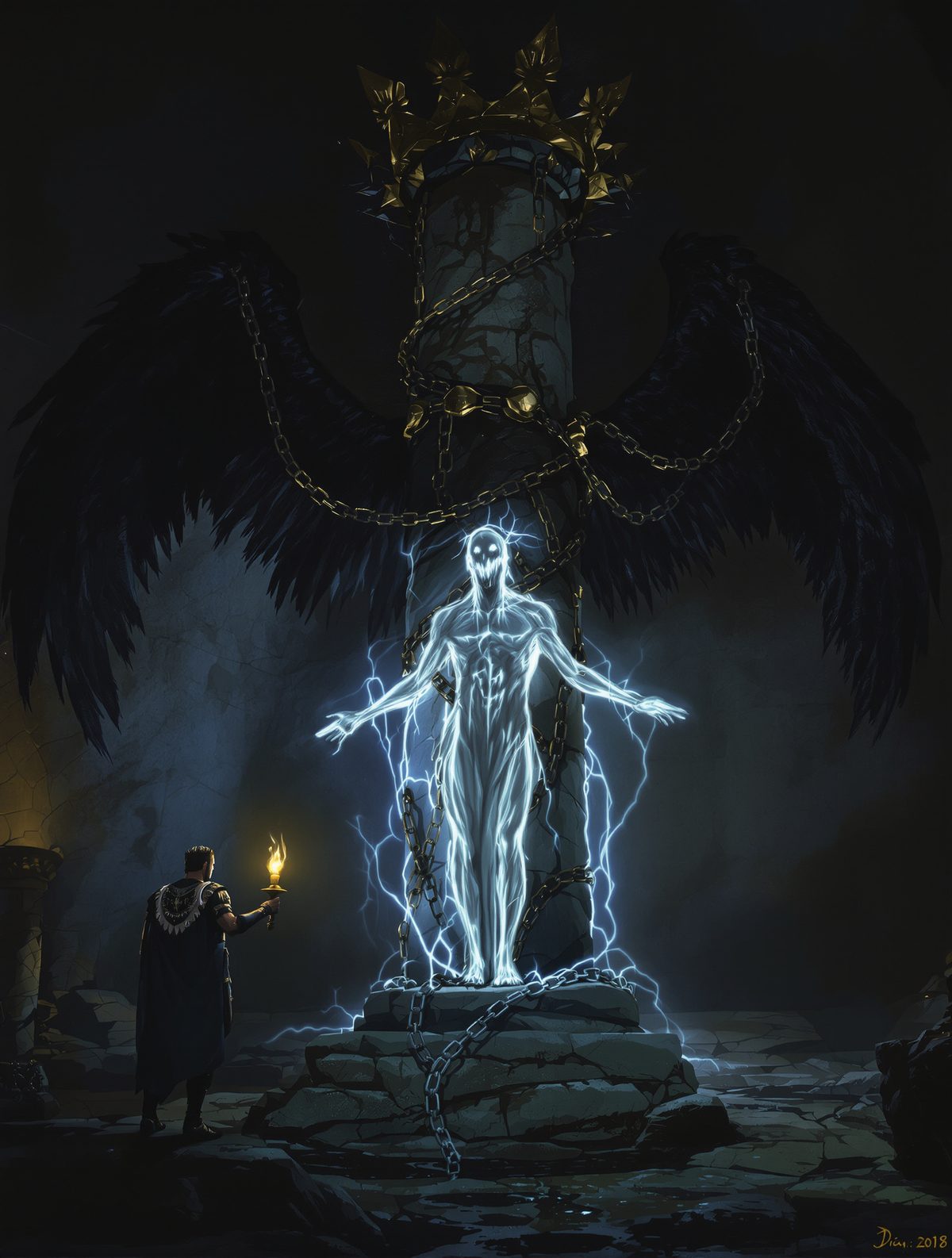
Their battle was fierce and unbridled, echoing across the heavens. Set, with his fearsome strength, sought to unravel Horus not just in spirit but in form, spurred by envy and a thirst for ultimate power. In a savage turn of events, Set tore out Horus's eye—a gruesome trophy of his attempt to sever the line of Osiris forever. This was more than a physical blow; it was a symbolic strike at the heart of Egypt’s harmony. For in Horus's eye lay power and providence, a beacon of hope for all who lived beneath the sunlit skies of the Nile.
The God of Wisdom: Thoth's Divine Intervention
As Horus lay wounded, the cosmos seemed to teeter towards chaos. But in those moments of despair, another figure emerged from the mists of time—a god as serene as he was wise. Thoth, the ibis-headed god of wisdom and knowledge, the patron of scribes and keeper of secrets, undertook an arduous mission. He journeyed through the echoes of time and chaos to gather the scattered fragments of Horus's shattered eye.
In a meticulous process both mystical and surgical, Thoth did the unthinkable—he pieced together the essence of sight, healing what was thought beyond repair and crafting a symbol of protection, health, and restoration. This recreation was not merely an act of divine kindness but a necessity to restore balance to a world rent asunder by Set’s ambitions.
The Rebirth of the Wedjat: A Symbol Enduring
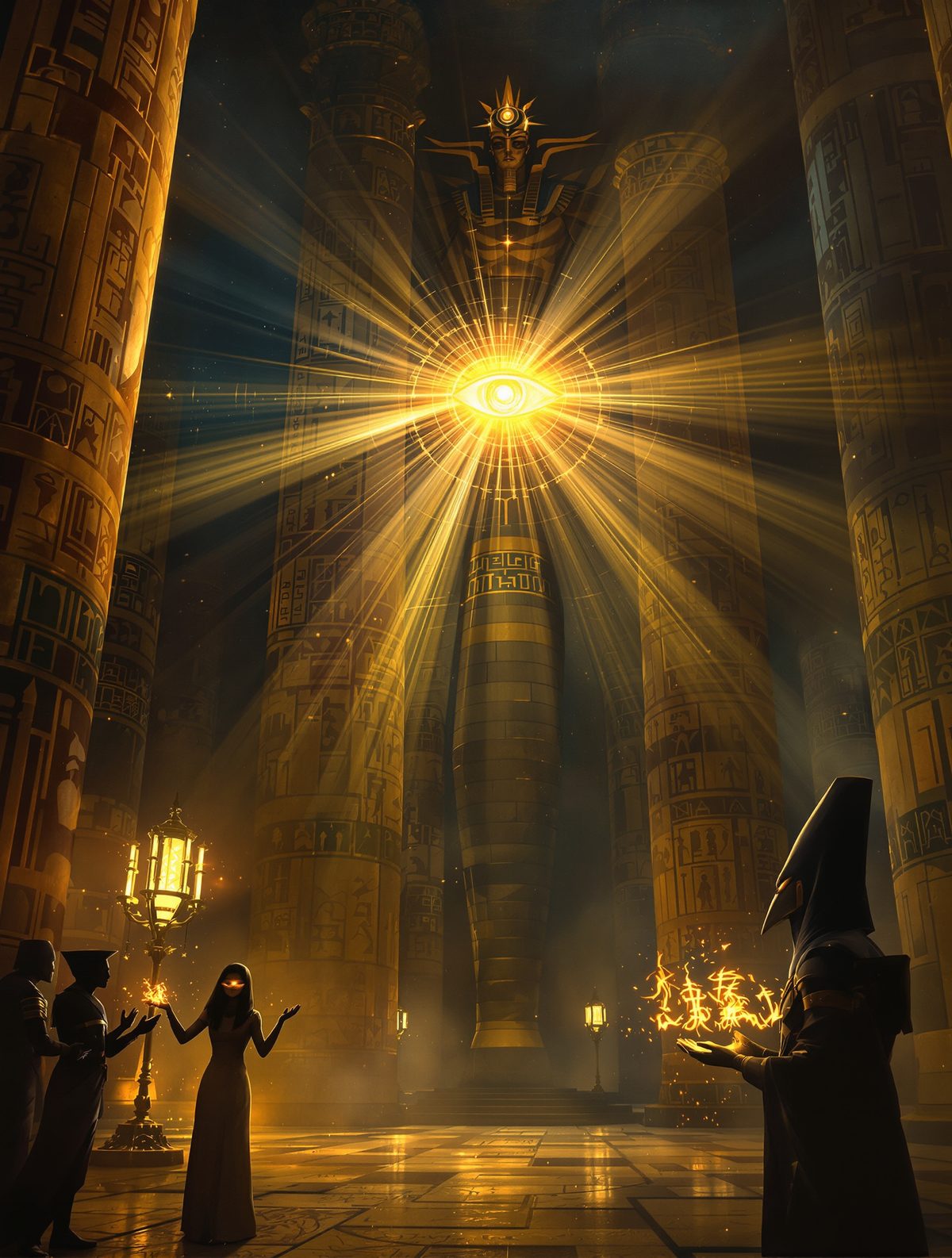
The eye reconstructed, now returned to Horus, came back not as it was, but as something new altogether. It became the Wedjat, also known by modern scholars as the Eye of Horus. More than just a restored organ, it embodied regeneration and wholeness—a divine emblem of healing. Adorning the walls of tombs and temples and resting upon amulets worn by thousands, the Wedjat symbolized protection against the malevolent forces that prowled the afterlife and the living world alike.
Interestingly, ancient Egyptians believed that the eye's design also represented a mathematical fraction, with each of its parts symbolizing different senses and wholes. When combined, these segments didn't simply recreate the whole—each new part, like a piece of a magical jigsaw, formed 63 out of 64. The missing part was considered sacred, reserved for Thoth himself, bridging the world of men with the divine.
The Ever-Watchful Eye: Protector of Pharaohs and People
For over three millennia, the Wedjat held its place as a cornerstone of Egyptian spiritual life. Pharaohs carried this symbol into battle, confident that Horus’s unblinking eye watched over them. Thousands of times, it appeared in hieroglyphics, inscriptions, and the seals of sacred relics—its presence a protective barrier against forces seen and unseen.
Not just consigned to royalty, commoners embraced the Wedjat as their own beacon of security, a perpetual defense against illness, ill fortune, and ill intent. To the artisans who crafted these enduring symbols, to priests who invoked its power, and to farmers who wore it as they tended their fields, the Eye of Horus was a daily reminder that light can indeed swallow the darkness.
The Wedjat's Legacy: Relevance in the Modern Age
The journey of Horus's eye from devastation to restoration is more than an ancient legend—it is a parable that transcends time. In a contemporary world often marred by strife and disorder, the tale of the Wedjat embodies the eternal human yearning for healing and hope. It tells us that no matter how fragmented our reality becomes, healing is not only possible, but inevitable, with persistence and wisdom.
Today, the Wedjat's symmetry and symbolism remain potent, carving space in modern iconography and pop culture. From tattoos to jewelry, people continue to wear the symbol as a talisman and embellishment, unaware perhaps of the millennia of history it encapsulates. As societies grapple with their own chaos and reconstruction, the legend of Horus and Set speaks profoundly to us across the ages, reminding us of the resilient spirit within us all that reaches for balance and redemption.