In the vast, silent primordial void before the Norse cosmos drew its first breath, there was motion. Not the clash of titanic forces nor the whisper of cosmic winds, but the simple, rhythmic action of a bovine tongue caressing ice. From this unassuming beginning arose the spark of divine lineage, as a sacred cow named Auðumbla gave life to a god from frozen salt—the first among gods, Búri. This is the tale of creation that predates even the famed giants and gods like Odin, reminding us that the roots of magic often emerge from the most unexpected sources.
The Cosmic Cow in the Ginnungagap
The Ginnungagap was a primordial void, a yawning chasm that bridged the fiery realm of Muspelheim to the south and the icy world of Niflheim to the north. In this enigmatic space where extremes lay dormant, Auðumbla, a mystical cow, stood solitary. Her presence was both baffling and crucial, marking her as the first nurturer in a universe still unformed. Without her, the canvas for creation might have remained blank, bereft of legend and life.
Unlike other mythologies that rely on celestial beings to ignite the spark of existence, Norse creation begins with this humble yet mythical creature. Auðumbla is a testament to the ancient belief that life does not always spring from chaos or conflict, but sometimes from serene persistence. Her form, ethereal yet robust, stood firm against the silence of the cosmos, her hunger a driving force against frozen eternity.
Licking Life from the Ice
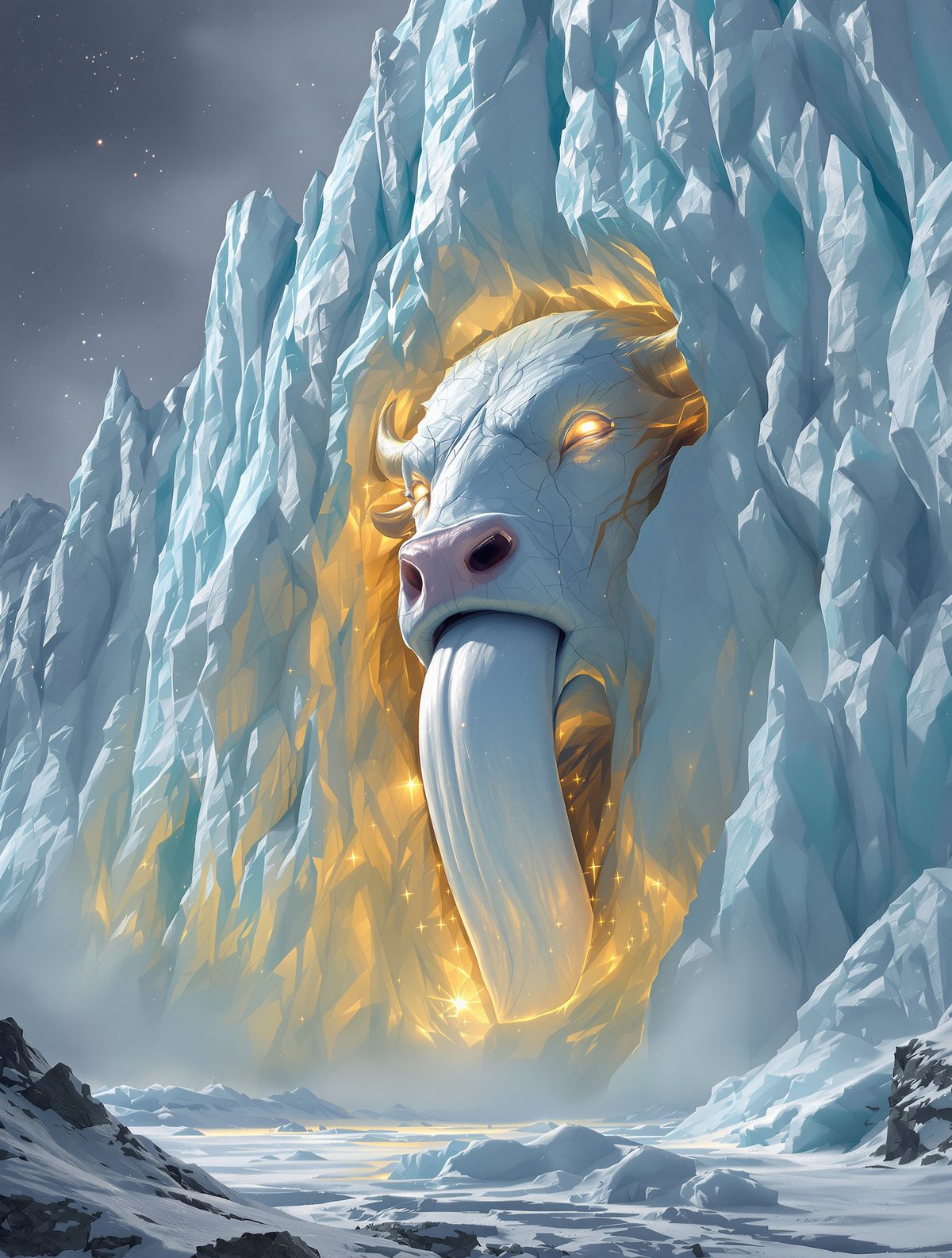
Driven by a hunger as ancient as the universe itself, Auðumbla found sustenance in a block of primordial salt that had emerged from the collision of frost and flame. Each day, her tongue glided across the salt, a simple act of nourishment that unwittingly nurtured something much greater. It was an act that carried the weight of destiny, though sitting in the void, who could have foretold?
The rhythmic motion of her licking revealed a transformation on the very first day—a single strand of hair emerged from the block. It was a singular, electrifying moment, marking the inception of the divine. On the second day, a head took form, leaving mystics to ponder whether gods are born from thought. By the third day, the full form of a god emerged, an entire being birthed from icy imprisonment, with a vigor no sculptor could imbue. This was Búri, whose name echoes as the forebearer of divine bloodlines.
Búri: The Forefather of Gods
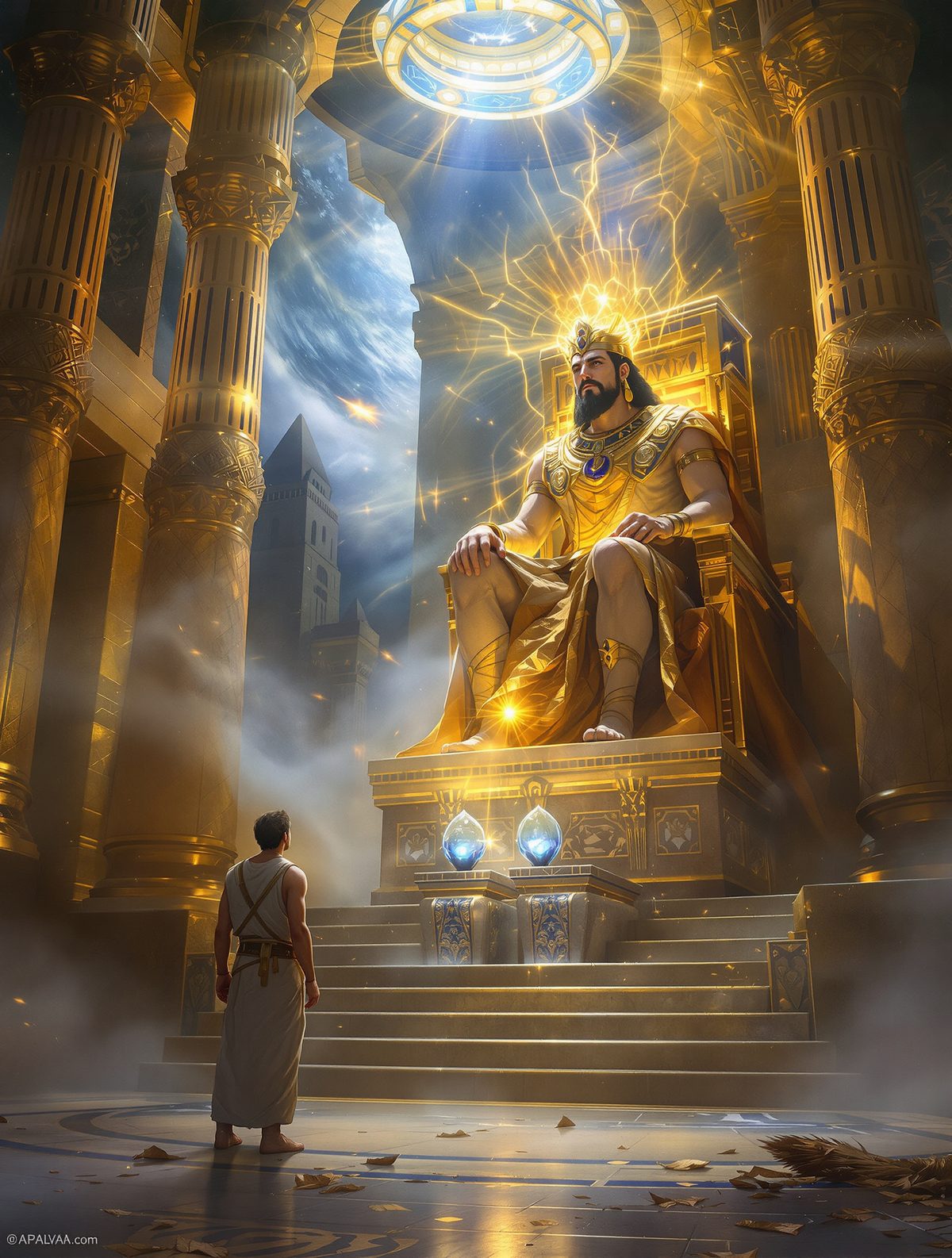
Búri, the first of the gods, stood resplendent and vigorous as he shook off the remnants of his icy cocoon. There are no intricate tales of his reign nor great deeds etched in the mythological canon, but his significance is nonetheless monumental. Through him began the lineage of the Æsir, the pantheon of Norse deities that would come to rule over Asgard—and beyond.
Búri's son Bor, whose nature is as suffice with mystery as his father, furthered the line by joining with the giantess Bestla. Their union bore three sons who would shape destiny: Odin, Vili, and Vé—names that became synonymous with the molding of worlds. Imagine that in this lineage of gods steeped in epic battles and sagas, their origins lay in the quiet, meticulous action of a cow’s tongue against the ice. A humbling thought, indeed.
The Silent Craftsmanship of Auðumbla
Often overshadowed by the grandeur of her progeny, Auðumbla's role in creation commands admiration for its silent craftsmanship. Yet, in the forgotten lore of Norse legends, it's revealed she did more than just carve a being from ice; she nourished the primordial giant Ymir. Her udders produced four rivers of milk, feeding the giant whose own form would catalyze the shaping of the world from his body—a fact that leaves many readers in awe of how roles as caregiver interlink with spheres of cosmic productivity.
In Norse mythology, where valor and warfare typically steal the scene, Auðumbla stands as a relic of life’s quieter virtues: perseverance, nourishment, and humble beginnings. Her presence therein offers a more holistic view of creation, where providence and care are as fundamental as force or intellect.
The Legacy of Creation in Modern Time
Why does this creation myth, steeped in bovine labor and elemental interaction, matter today? The story of Auðumbla and Búri transcends its mythological confines to speak to the power of patience and the unassuming facets of life that shape history. It suggests that not all monumental achievements are born of conflict or announce themselves with grandiosity. Sometimes, the roots of greatness lie in persistence and forethought, as illustrated through the quiet diligence of a tongue on ice.
In our modern search for meaning amidst chaos, the tale of a cow and a creator reminds us to consider the often-overlooked power of everyday actions. It teaches that sometimes, the future rests in the simplest of gestures—a teaching remarkably resonant as society grapples with its own genesis, continuously seeking to parse out the ordinary from the extraordinary.