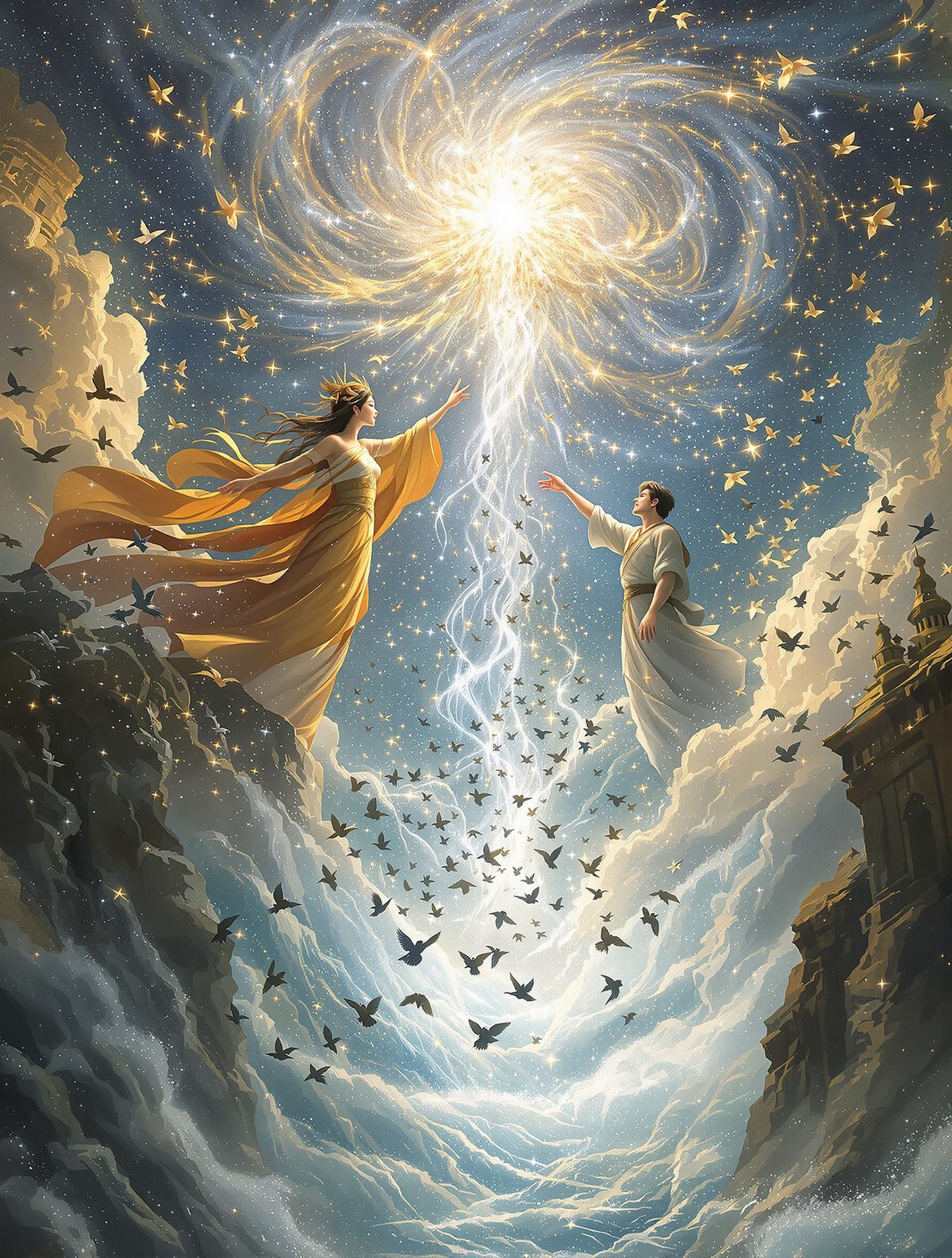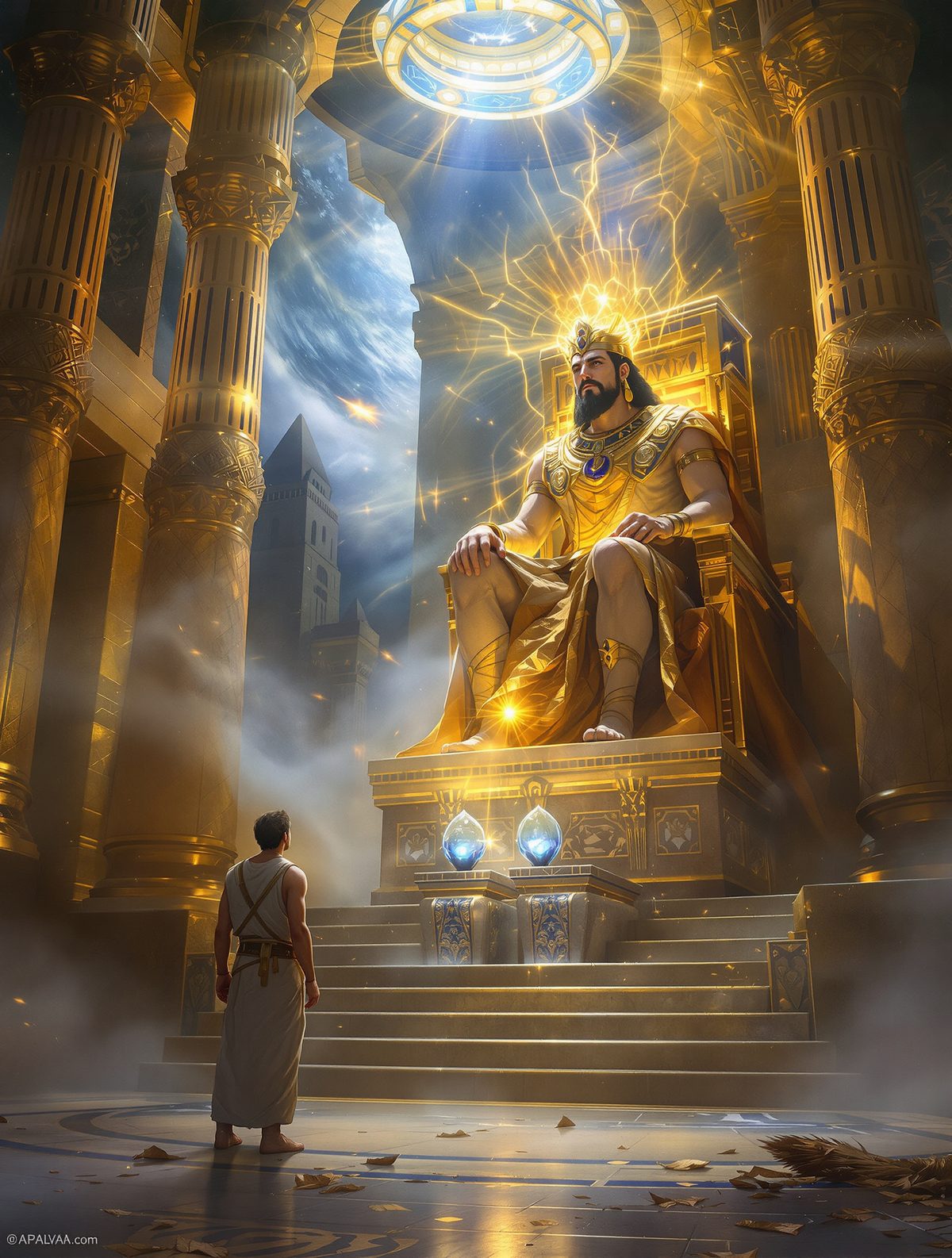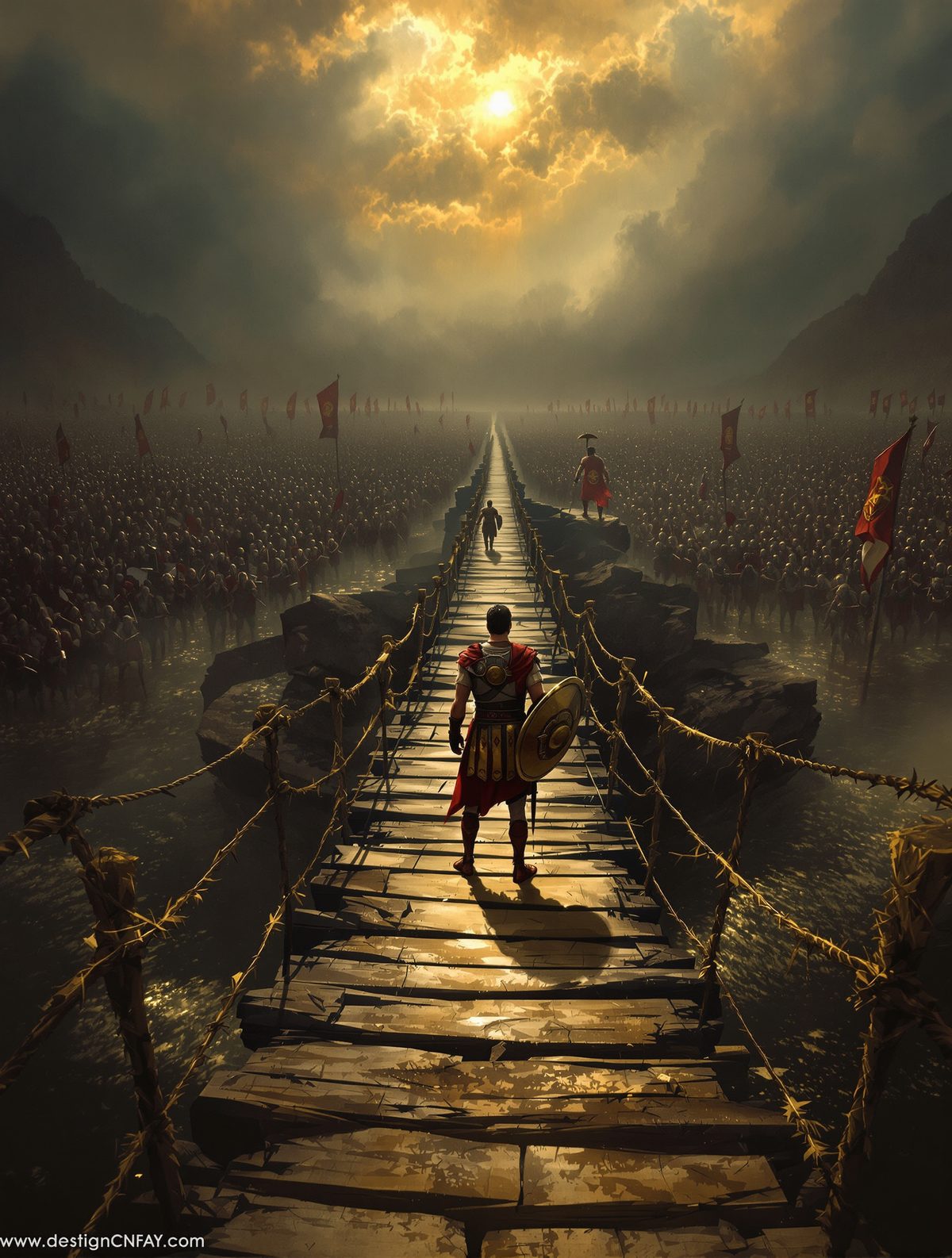
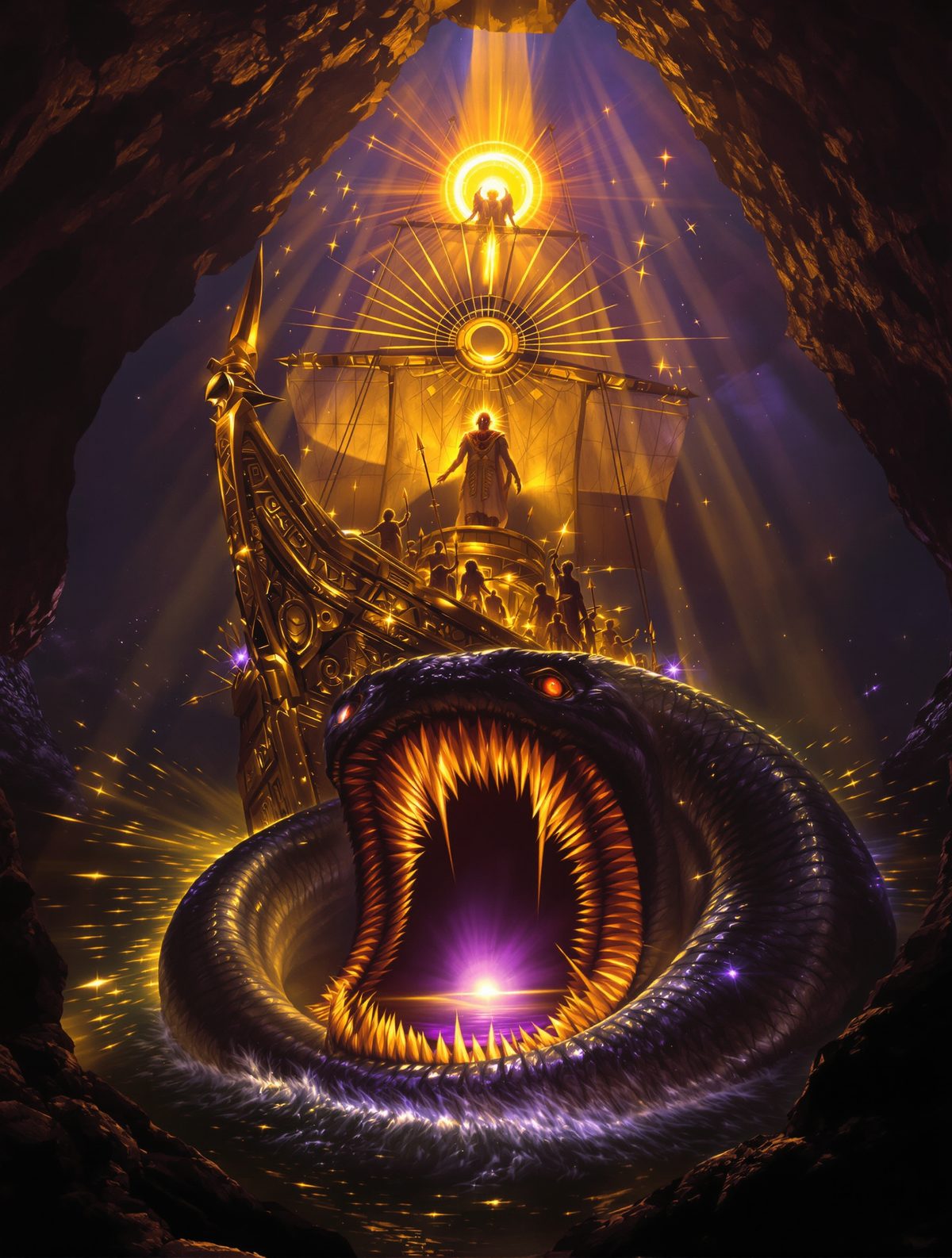
In the shadowed depths of ancient Egypt, when the scorching sun would dip below the horizon, a silent fight erupted. One of cosmic stakes, played in the black abyss of Duat, the Egyptian underworld. This was no ordinary battle; it was a nightly clash between light and impending, eternal darkness. It was Ra’s journey on his solar barque, endlessly navigating the perilous waves of the underworld. His archenemy, the vast serpent Apep, lurked in ambush, ever intent on swallowing the sun, consigning the world to an eternal night.
The Cosmic Voyage Begins
As the sun sank in ancient Egyptian cities like Thebes and Heliopolis, Ra boarded his divine vessel, the Mandjet, a golden ship resplendent as the day’s fading light. Ra’s passage into the Duat marked the onset of the 12-hour journey through perilous night. This voyage was critical; each night was a potential apocalypse—a battle to ensure the sun's rebirth at dawn. With a crew of valiant deities, including Ma’at, the goddess of truth and order, and Set, the god of chaos, Ra faced the nightly trials with steadfast determination.
The Serpent Eternal: Meet Apep
The Egyptians named him Apep, or Apophis to the Greeks, a colossal serpent born of the primeval waters of Nu. Described with vivid detail in texts like the Book of the Dead, Apep's very nature was chaos. Historically, Apep was said to be 50 meters long (or 164 feet), his scales impenetrable and eyes glowing with a malevolent hunger for light. Many Egyptians felt Apep's threat closely tied to natural phenomena; sudden tempests, unnatural eclipses, and earthquakes were reminders of Apep’s frequent attempts to obliterate the sun.
Battles in the Dark
Ra’s nightly journey was divided into 12 separate stages, each an hour of the Duat—a cycle meticulously cataloged in texts such as the Amduat. Every stage presented distinct challenges, where Ra’s crew had to be ever vigilant against the ambushes of Apep. These battles were not theoretical; temples like Karnak often had priests perform rituals to aid in Ra’s defense. Of particular note, the priests would recite spells from the Book of Overthrowing Apep, symbolically enacting the crushing of a metaphorical clay effigy of the serpent.
The Thin Line Between Order and Chaos
Amongst Ra’s defenders was the unexpected ally, Set—the god best known for his tumultuous relationship with Osiris. But in the realm of the underworld, Set’s chaotic force was an invaluable weapon against the embodiment of primordial disorder. In Egyptian lore, Set would cleave through the air with his spear, driving it into Apep’s flesh, forcing the beast into retreat. This cooperation highlights the duality of Egyptian gods, reflecting the need for balance between chaos and order to sustain the cosmos.
The Dawn That Almost Wasn't
Even with divine allies, Ra’s journey was not without peril. On particular nights, Apep nearly succeeded in its cosmic goal. It was believed that an unwanted eclipse was Apep momentarily removing the sun from the sky—a notion so feared that entire communities would rally, making noise to scare Apep away. This collective mystical defense added an element of participation for people, intimately connecting the divine struggle to the mortal realm.
The Eternal Struggle’s Lesson
Why, after all these centuries, should the ritualistic voyage of Ra matter? This myth encapsulates the ancient Egyptians' understanding of universal dualism—the concept that balance depends on opposing forces in perpetual struggle. It also serves as an allegory; facing one’s own darkness with a belief in triumph. Today, it compels us to consider our daily battles and the larger cosmic play we unwittingly partake. The tale of Ra and Apep is more than myth—it’s a testament to resilience, starkly echoing the modern desire for illumination amid prevailing darkness.
As a reader of Ancient Legends, you now journey through time, inspired by Ra's tenacity against Apep’s despair. Next time you glimpse the sun staking its golden claim in the morning sky, imagine that nightly battle won yet again. It's a testament to the undying spirit of light—a legend that textbooks might omit, but one that the shadows of our times would do well to remember.