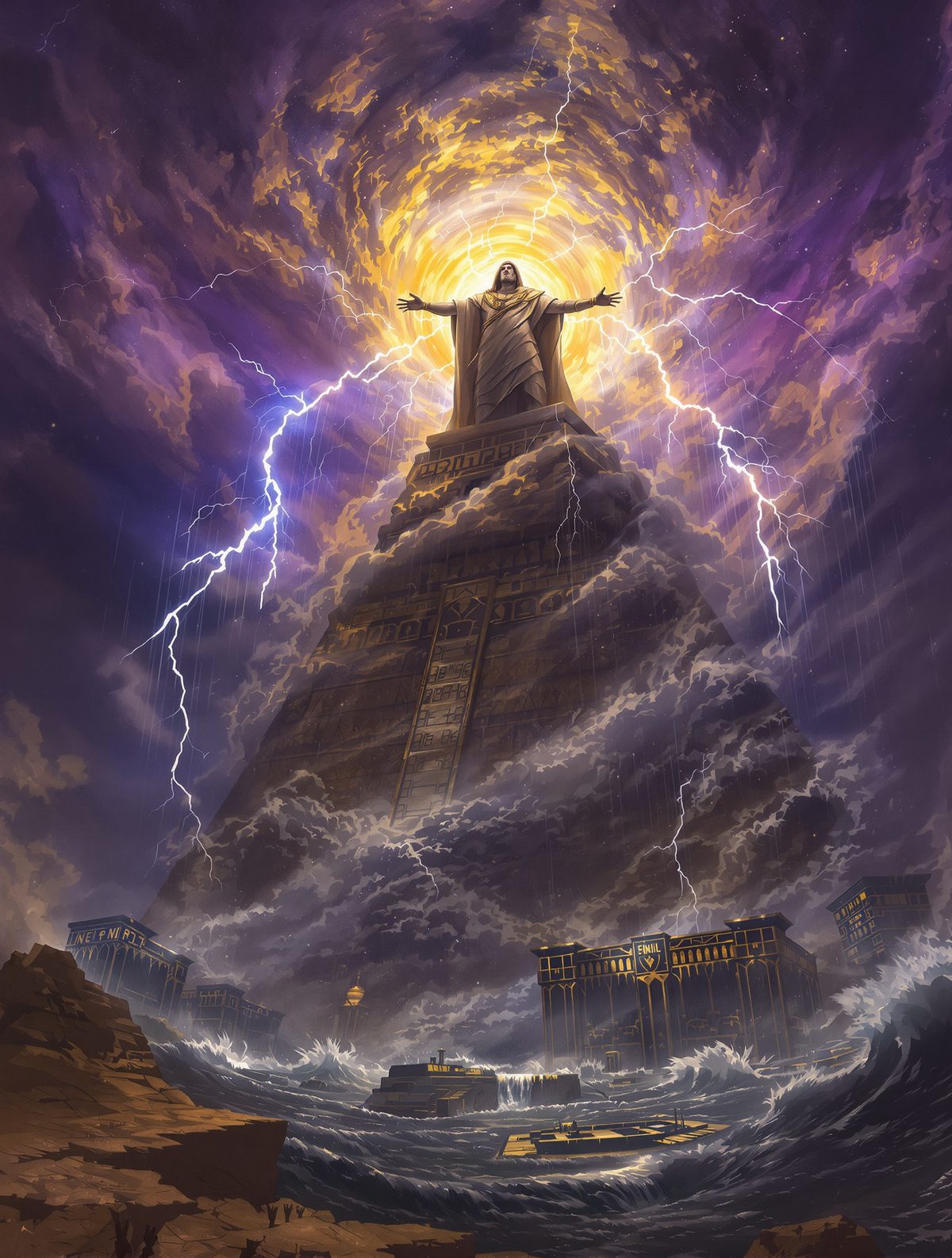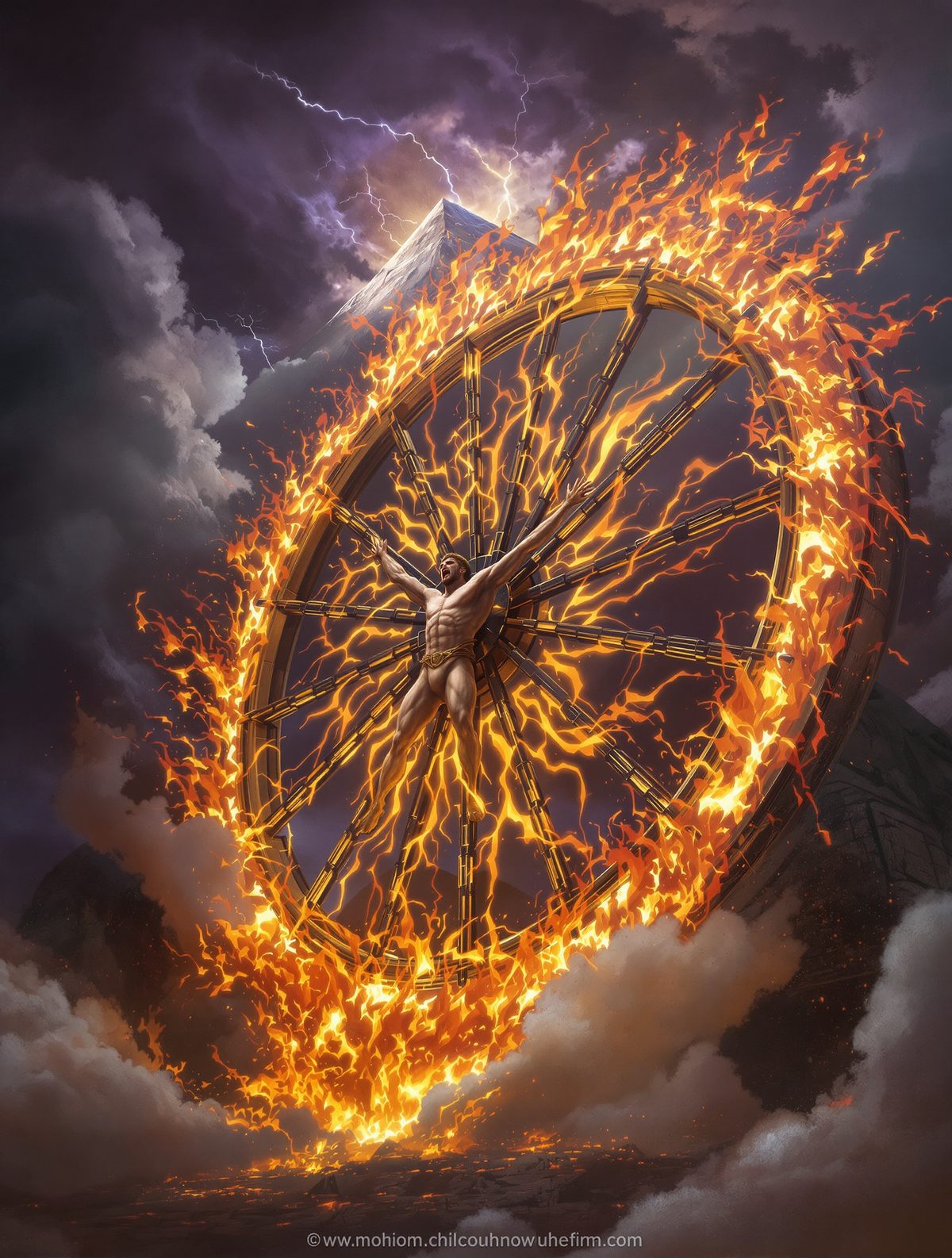
In the ancient world, the Greeks wove myths as grand as the cosmos they observed. Their pantheon of gods lived, loved, and schemed with intense vibrancy, their stories echoing through time. Among these, the tale of Athena's unusual birth is a narrative of power, fear, and providence that stands out like a bolt of divine lightning. Picture the scene: the peaks of Mount Olympus—a god like no other in torment, a craftsman god poised with an axe, and a warrior goddess springing forth in a blaze of glory. Welcome to the legend they left out of the textbooks, a tale that questions the very nature of creation and dominion.
Thunderous Fear: Zeus and the Prophecy of Overthrow
Zeus, the ruler of Olympus, was not unfamiliar with the fears that can grip even the mightiest of deities. The myth tells us that he had swallowed Metis, the goddess of wisdom and cunning, to thwart a chilling prophecy. The oracle had foreseen a child born of Metis and Zeus who would surpass him, much like Zeus had toppled Cronus, his own father. Eager to sidestep fate, Zeus took the drastic measure of devouring Metis whole. But as myths often affirm, destiny has a penchant for winding roads—what Zeus hoped was a permanent solution soon began unraveling within him.
Fast forward to 550 BCE when the Greeks were consolidating these myths into oral traditions. Zeus found himself plagued by an excruciating headache, the kind mortal physicians would have deemed apocalyptic. But for Zeus, it was more than pain; it was the murmurings of fate within his very being.
The Divine Blacksmith: Hephaestus Takes the Stage
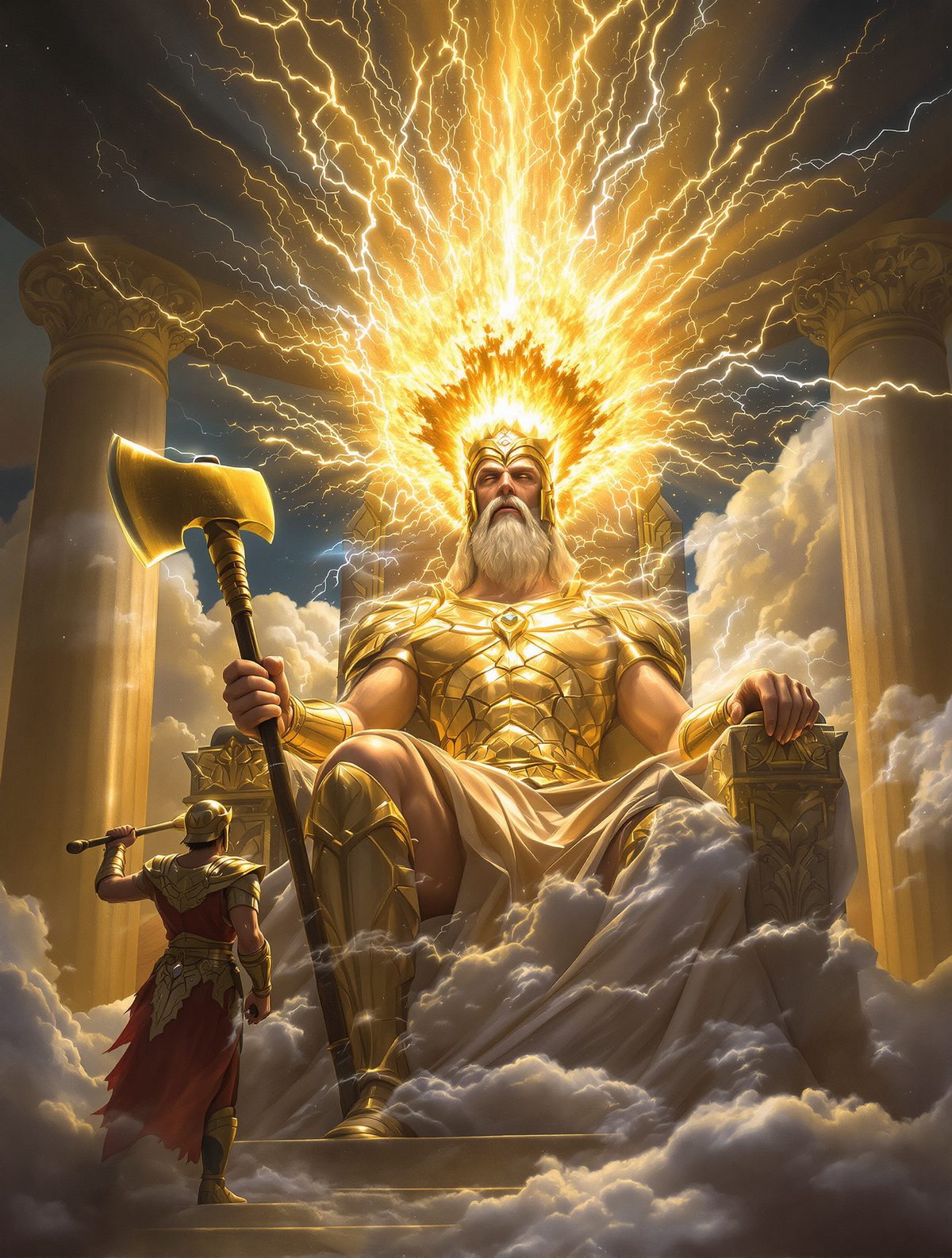
Enter Hephaestus, the god of fire and forge, one of Zeus's own brood and ironically, often viewed as the divine misfit due to his physical deformities. Known for his craftsmanship, Hephaestus was the Armory of Olympus, forging weapons and armor for gods and heroes alike. The scene was set: amidst the tumultuous tops of Olympus, Hephaestus approached Zeus reluctantly yet resolutely.
With his mighty double-headed axe raised, Hephaestus hesitated not out of defiance, but with the obedience of a craftsman recognizing a task of unparalleled significance. His axe came crashing down, splitting open the skull of the thunderbearer, in what could be deemed the most unconventional act of midwifery in mythic history.
The Birth of Athena: A Goddess in Full Battle Gear
As the heavens held their breath, the wound in Zeus's forehead widened, giving birth not just to a goddess, but to a legend. With a dazzling flash of light and a deafening war cry that resounded across Olympus, Athena emerged. Fully grown, clad in shimmering armor from head to toe, brandishing a spear, she was the epitome of wisdom and warfare—attributes she would carry with unparalleled fierceness across mythological history.
Athena's birth is unique among the pantheon's divine births. Her immediate emergence as a full adult warrior stands in stark contrast to the typical infant deity tales. She did not cry for her mother but announced her presence with the certainty of the ages, exemplifying what the Greeks would come to revere as the ideal blend of intellect and martial prowess. Athena was not only born but born ready, a beacon of what divinity looked like in its purest form.
The Symbolism: Beyond Flesh and Bone
To the ancient Greeks, Athena's birth was more than a spectacle; it was a metaphor laden with their philosophical ideals. This myth was told and retold, its nuances pondered in the agora and the symposium. Yet, it hides a deeper layer of meaning beneath its polished surface. Athena's emergence from Zeus's head signals the birth of thought and strategy—it champions the mind's supremacy over brute force.
Moreover, her arrival in full armor underscores the idea that wisdom and warfare are intertwined—a notion that would influence Greek culture profoundly, shaping their art, literature, and politics. While Greece had its share of battles, it was their philosophical and strategic prowess that left an indelible mark on history.
Conclusion: A Lesson from the Myths
As we draw this ancient tale back through the folds of history, one might ponder: why does it matter how a goddess was born? It speaks to a universal truth—an understanding that fear can drive even the mightiest to desperate acts, yet it's precisely these acts that often precipitate what was feared most. The myth also serves as a reminder of the triumph of intellect and strategic thought, a lesson as relevant in today's world as it was in ancient Greece.
In Athena, we see the embodiment of balance, the harmony between head and heart, strategy and strength. In a world that often skews towards power alone, it's a narrative that resonates through millennia, urging us to weave wisdom into our endeavors. Let this myth remain in our stories, not for its fantastical nature, but for its enduring insights into the complexity of power and creation—a legend indeed worth sharing.