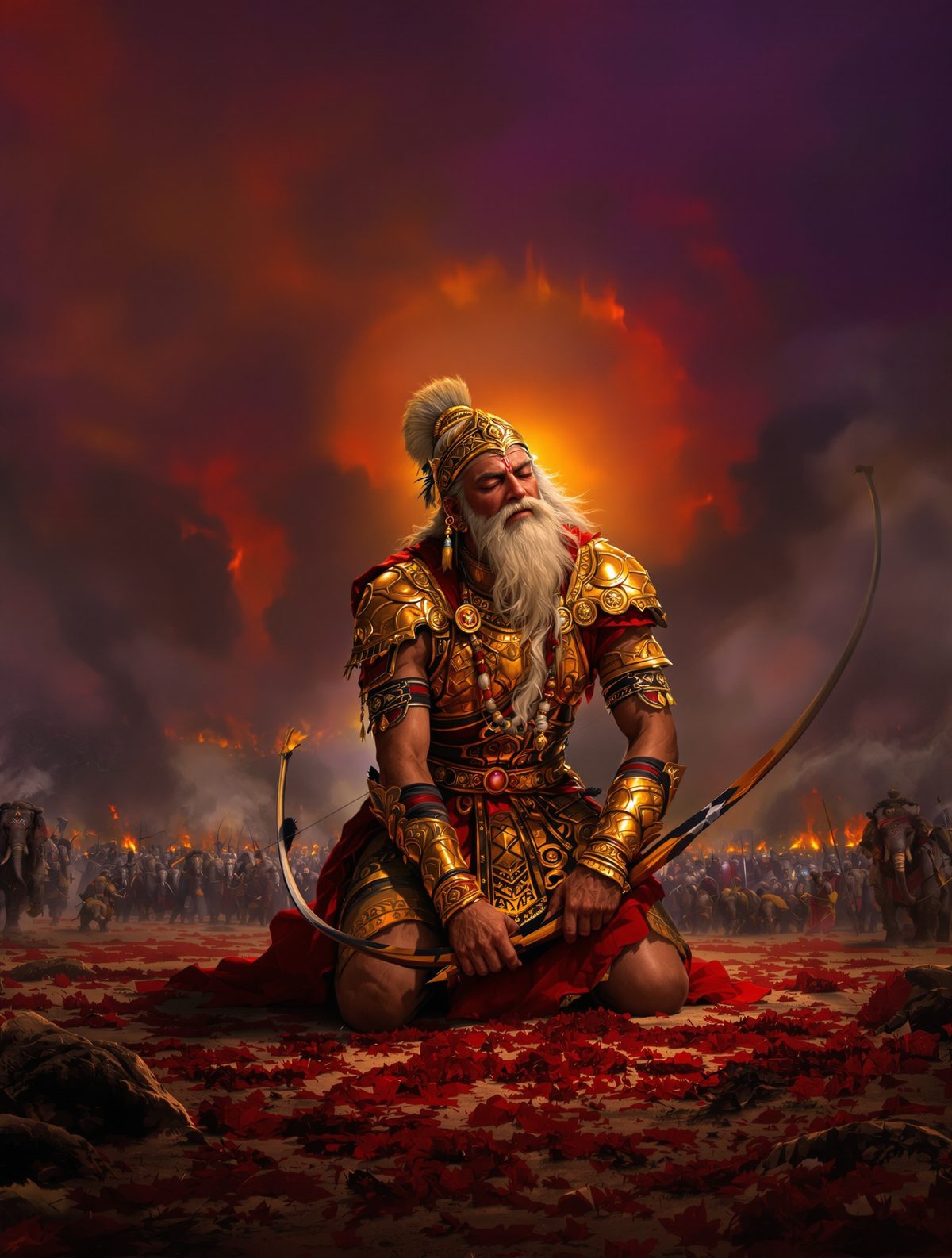
The sun shone brightly on the vast expanse of ocean before him. Gilgamesh, the mighty king of Uruk, stood at the edge of the waters — the waters of death, in fact — having traversed lands only gods had dared to tread. Behind him, countless adventures and immortal longings. Before him lay immortality itself. Or so he thought.
The Quest Beyond Mortality: Gilgamesh's Unyielding Pursuit
The legend of Gilgamesh, a tale etched into clay over 4000 years ago, is one of humanity's first great sagas. This Mesopotamian hero-king's epic journeys, stitched through the crumbling remnants of history, take us to the heart of humankind's universal quest for eternal life. In those ancient lands, where the Tigris and Euphrates rivers gave birth to civilization, a king dared to challenge destiny itself.
Gilgamesh's journey to find the plant of immortality was spurred by grief. His beloved companion, Enkidu, had succumbed to death, reminding the mighty king of his own mortality. The realization that even a king as great as he could die gnawed at him. This wasn't just a quest for himself but a desperate, passionate plea against the natural order of life and death.
Encouraged by the stories of his ancestors and ancient deities, Gilgamesh traveled far and wide, ultimately arriving at the mountains of Mashu, where he was granted passage by the fearsome Scorpion Men. He then crossed the Sea of Death with Urshanabi the ferryman — a voyage that no mortal could survive without divine guidance.
The Ocean Floor: Wrestling with the Depths
At long last, Gilgamesh arrived at the waters that held the secret of everlasting life. This was a place beyond the lands of men, a domain claimed by myth and mystery. Holding stones to pin him down, he dove into the cold, dark depths of the ocean floor, where the fabled plant of immortality lay guarded, beckoning his courage and resolve.
This was no ordinary sea dive. Gilgamesh defied nature, tying stones to his feet as weights to reach the depths where the plant awaited. History tells us that this was not a god's task. It was the effort of a man scared of death, emboldened by the visions of what might lie beneath — a fleeting chance to find what is most elusive to all of humankind: immortality.
Triumphant, Gilgamesh seized the plant, a miraculous treasure noted in ancient texts for its promise to "restore youth to an old man." He held it up to the shimmering light, the water cascading off it like scattered jewels. Immortality was now within his grasp.
The Snake's Theft: A Moment's Rest, a Timeless Loss
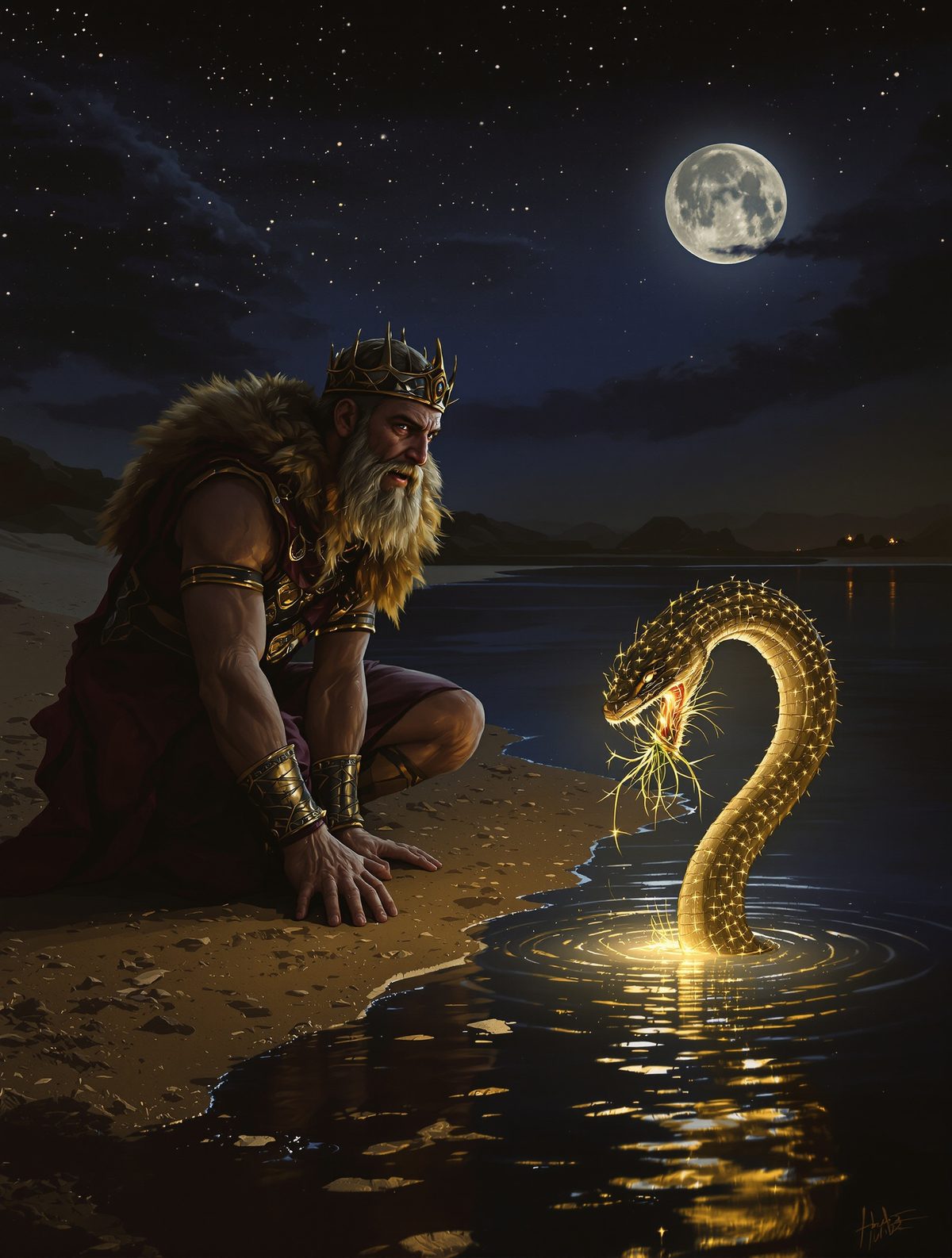
Joyous yet wearied by his undertaking, Gilgamesh emerged from the waters to rest. On the shore, he placed the fabled plant, if only for a moment as he succumbed to fatigue. He closed his eyes, perhaps pondering over the triumph he would share with his people.
But destiny had other plans. In his brief respite, a snake, sinuous and silent, approached. Mesopotamian lore often associates serpents with transformation and rebirth — symbols not unknown to the ancients who first heard this story. The snake devoured the plant quickly, slithering away as it shed its skin, seemingly mocking man's grasp over the ephemeral.
Gilgamesh awoke to watch in disbelief as the serpent retreated into the wilds, taking with it his hopes of immortality. It was a profound moment of realization. The quest had ended not in the battle or the glory he had known, but in an unexpected, humbling encounter with nature.
The Eternal Message: A Legacy of Transient Journeys
Gilgamesh returned to Uruk, not empty-handed but with wisdom that only such a journey could bring. He came home to his people, having faced the inevitable cruelty of mortality not as a conqueror, but as a man transformed by experience. His profound loss echoed the cycle of life they all inevitably faced.
This tale, carved onto the clay tablets of ancient Mesopotamia, does more than recount the adventures of a hero; it captures the fragile essence of life that every human, irrespective of power and might, must accept. Gilgamesh's journey, though filled with divine encounters and mythical essences, remains deeply human at its core.
Why It Matters: The Timeless Pursuit of Immortality
In the 21st century, the story of Gilgamesh still resonates. With advances in technology, medicine, and our unceasing quest to prolong and enhance life, the ancient king's endeavor finds echoes in our own society. We continue to challenge the boundless unknowns in hopes of conquering death.
Yet, the ancient lesson of Gilgamesh reminds us of the humbling power of nature and the truth that binds all: the fleeting beauty inherent in mortality. While we may never stop reaching for the stars, it is the journey, the bonds we form, and the wisdom we gather across lifetimes that define our existence.
In a world that often forgets the legends left out of textbooks, the epic of Gilgamesh endures, calling us to embrace the limited time we have — to live bravely, love openly, and accept the legacy we leave behind for future generations.