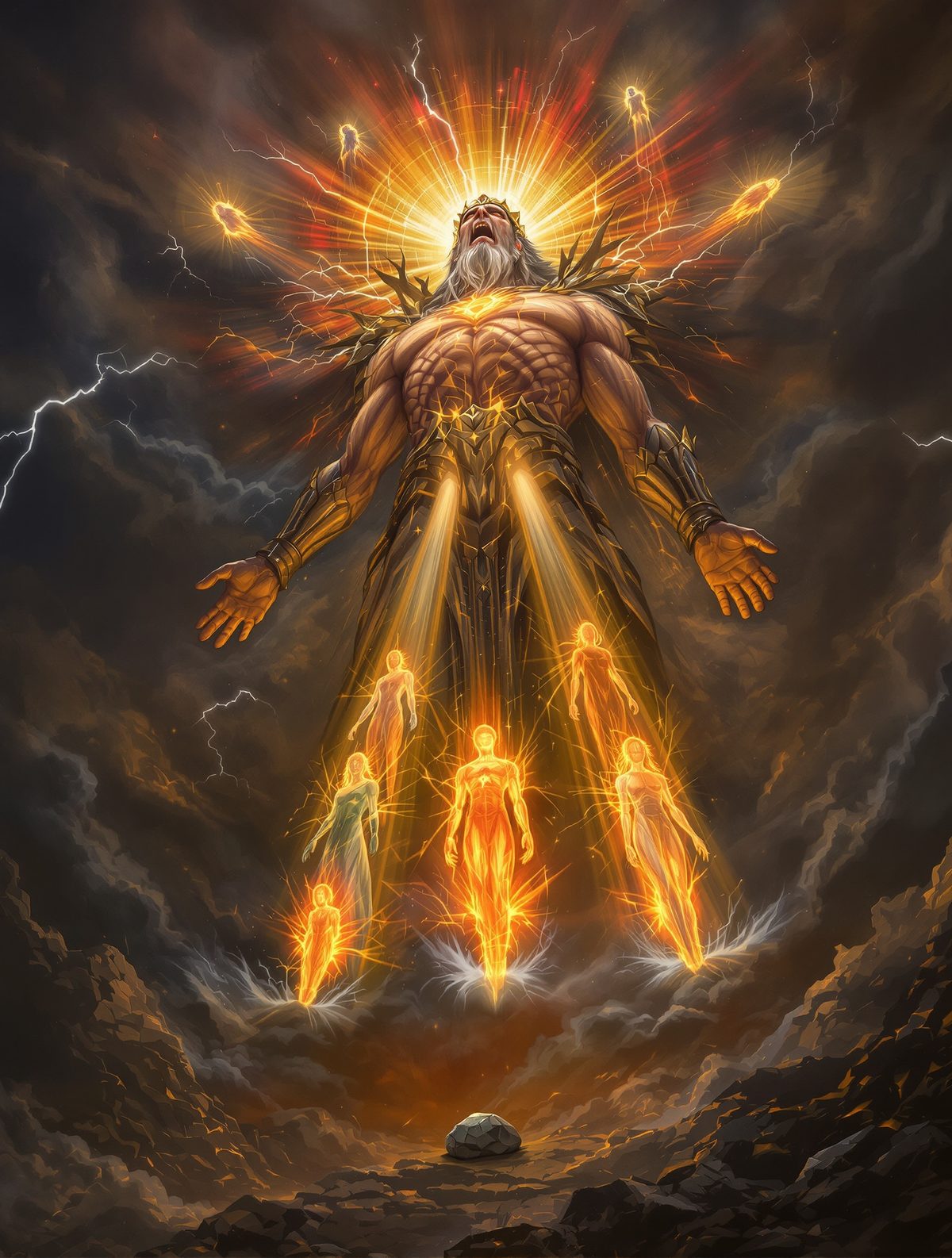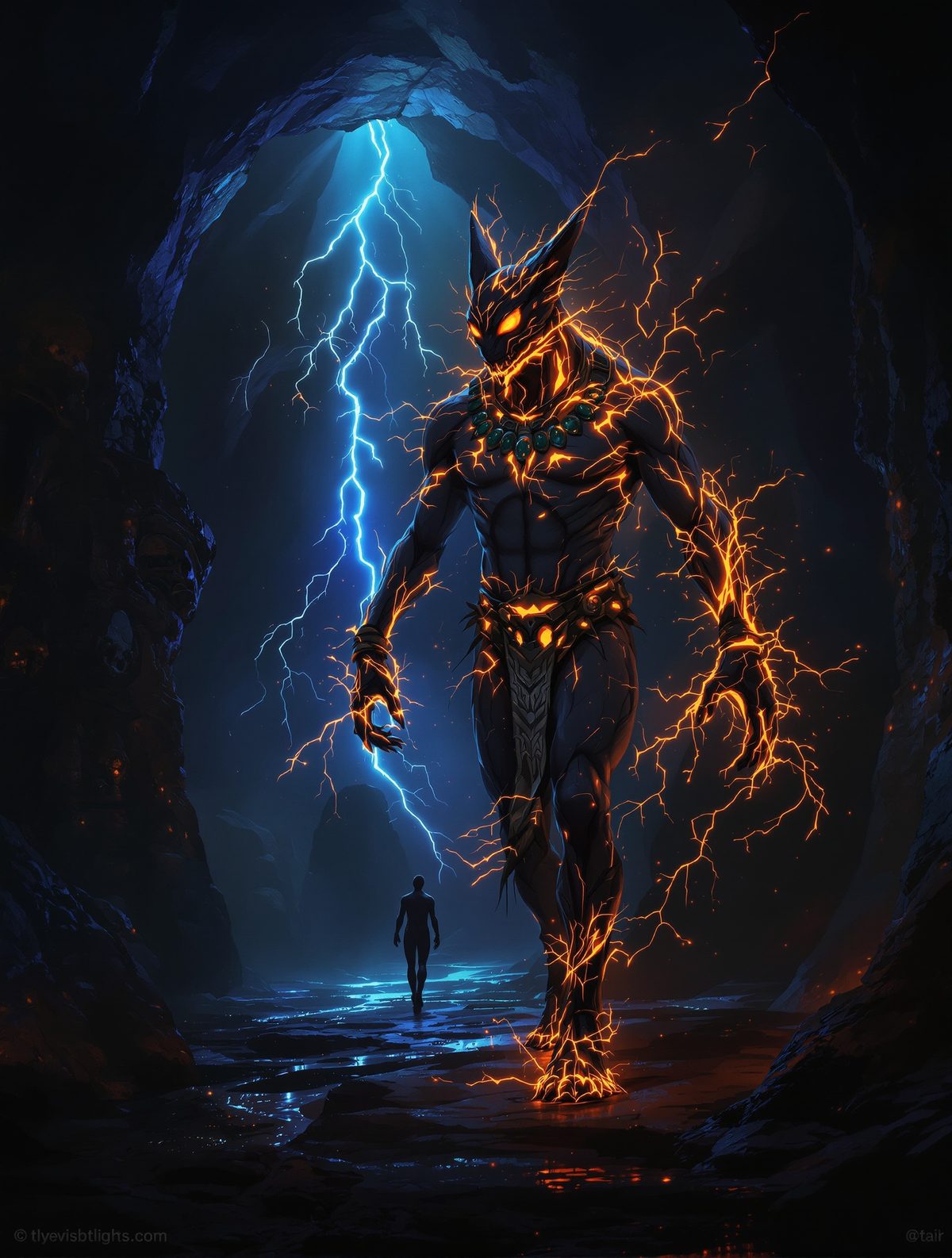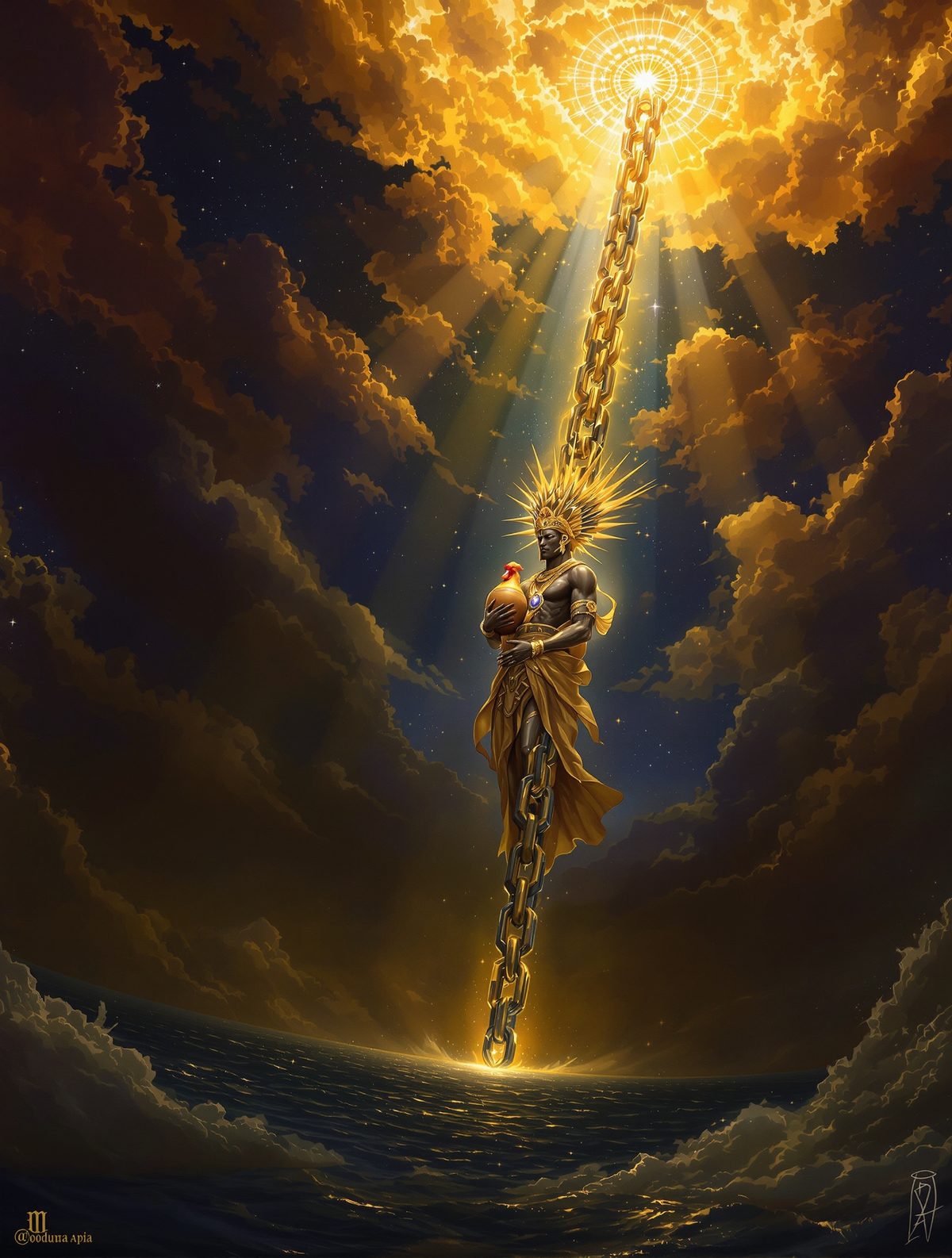
Amidst the frosty expanse of mythic Scandinavia, where ancient gods walked and giants lurked in shadow, a story unfolds—one woven with deceit, desperation, and the shimmer of golden apples. It is a tale that has been whispered across time in smoky halls and by crackling fires. Imagine Asgard, the mighty realm of the Norse gods. Its towers scrape against the sky, eternal and unyielding. But beneath this veil of immortality lies a secret—a vulnerability.
The Perilous Pact
Once, Odin, the Allfather, and his kin were untouched by time. With skin fair as the morning sun and strength unmarred by age, the gods of Asgard reigned supreme. Yet, their eternal youth was not a gift unto themselves but rather kept in delicate balance by Idunn, the goddess of youth, and her precious golden apples. These were no mere fruits but treasures beyond compare, granting perpetuity to those who partook of their nectar.
But as with many a tale, pride and folly invite chaos. Enter Thiazi, a giant with ambition as boundless as his stature. Through cunning and might, he saw an opportunity to challenge the divine order, a chance delivered unwittingly by Loki, the trickster whose allegiances were as shifting as the Northern Lights. Drawn into a trap during one of his ill-advised escapades, Loki was coerced under the threat of his life into a bargain with Thiazi. Under immense duress, Loki agreed to deliver what should never have been promised—the goddess Idunn herself.
Flight of the Golden Apples
As the sun dipped low behind the jagged teeth of the Jotunheim mountains, perhaps even the birds felt the tremor of what was to come. Using his guile, Loki lured Idunn out of Asgard under the guise of discovering more magnificent apples beyond their borders. Trusting yet cautious, Idunn heeded his words, stepping unwittingly into Thiazi’s snare.
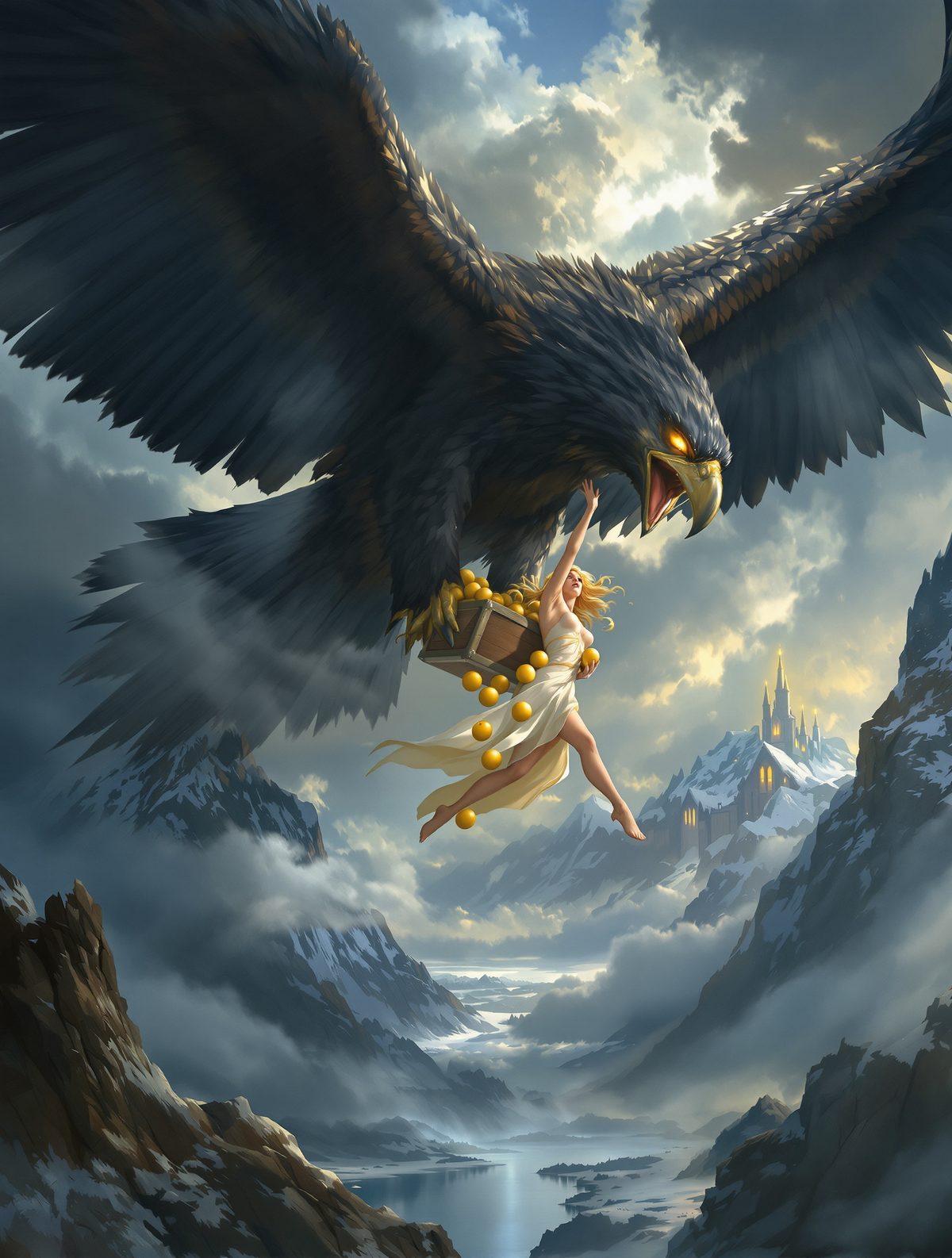
In a moment of breathtaking alchemy typical of giant-magicks, Thiazi transformed into an enormous eagle. His form cast a shadow as vast as a moonless night upon the earth below. With Talons like iron and a wingspan that rippled through the air, he snatched Idunn and her apples, soaring away to his fortress of Thrymheim, set amidst treacherous snowbound heights.
The Descent into Mortality
Gone were Idunn and her fruits, and with them, the gods’ vitality waned. Days turned to weary weeks, and the once-immortal figures of Asgard were now but husks of their former grandeur. Odin’s one piercing eye dimmed, Thor’s hammer, Mjölnir, felt heavy in his weakened grasp. Even the beautiful hair of Sif began to silver. Panic gripped the ensemble of gods, for without Idunn’s golden apples, the specter of mortality grasped at their heels.
The gods convened, their hall—usually a cacophony of revelry—now pregnant with the sobering weight of despair. Who among them could ever have imagined the invincible mighty Aesir brought low by the machinations of a lone giant? The finger of blame, sharpened by fear and anger, naturally turned toward Loki, for it was he who last ventured with Idunn and returned alone.
Loki's Redemption and the Rescue Mission
Faced with divine judgment, Loki was cornered between wrath and redemption. Yet, Loki’s gift was not in strength but in the art of cunning, and where brute force failed, cleverness might succeed. Pleading for one last chance, Loki swore to retrieve Idunn—and he had his pride and his survival to compel him.
With Freyja's falcon cloak bestowed upon him, Loki took to the skies, a gleaming speck against the endless horizon. Through biting winter winds and over the foreboding crags of Thrymheim he flew, unerring toward the giant’s lair. There, amidst the icy stillness, he found Idunn, still guarded fiercely by Thiazi.
Loki worked a trick most elegant, transforming Idunn into a nut—a simple but ingenious ruse. Clutching this precious morsel in his talons, he sped back to Asgard, with Thiazi, now in furious eagle form, chasing in his tumultuous wake.
The Fire-lit Heimdall and Thiazi’s End
The chase culminated in a display of divine ingenuity and power. As Loki neared the safe haven of Asgard, the gods enacted a desperate plan. A pyre of immense proportions was set, and as Loki crossed into the boundaries of Asgard, the pyre blazed to life. Thiazi, in his speed and rage, found himself trapped within—a giant tethered by hubris, meeting a fiery fate that would echo through eternity.
With Thiazi vanquished, Idunn was restored to her gleaming human form, and with her return, the apples of youth. Rejoice resounded across the celestial halls as the gods tasted once more of their nectar. The withering grasp of age was banished from Asgard, and order, precarious yet resplendent, resumed its rightful place.
Legacy of a Trickster’s Folly
The story of Thiazi’s Eagle Wings serves as a profound lesson etched into the mythic consciousness. It is a testament to the thin line between immortality and the mortal coil, a reminder of the fragility that lies even within the divine. Even gods are not immune to the perils of deceit and ambition, embodying truths as relevant today as they were in ancient sagas.
In a world driven by the pursuit of eternal youth and power, one must conjure images of golden apples and ponder the costs. The legend tells not just of gods and giants, but of the inescapable truths entwined within human nature—greed, fallibility, redemption, and resilience. For as long as these tales endure, whispered in windswept valleys or in the lines of a scholarly tome, the lessons will never be consigned to mere myth. Indeed, as Loki learned, eternal youth, like trust, is perhaps the most perilous of treasures.