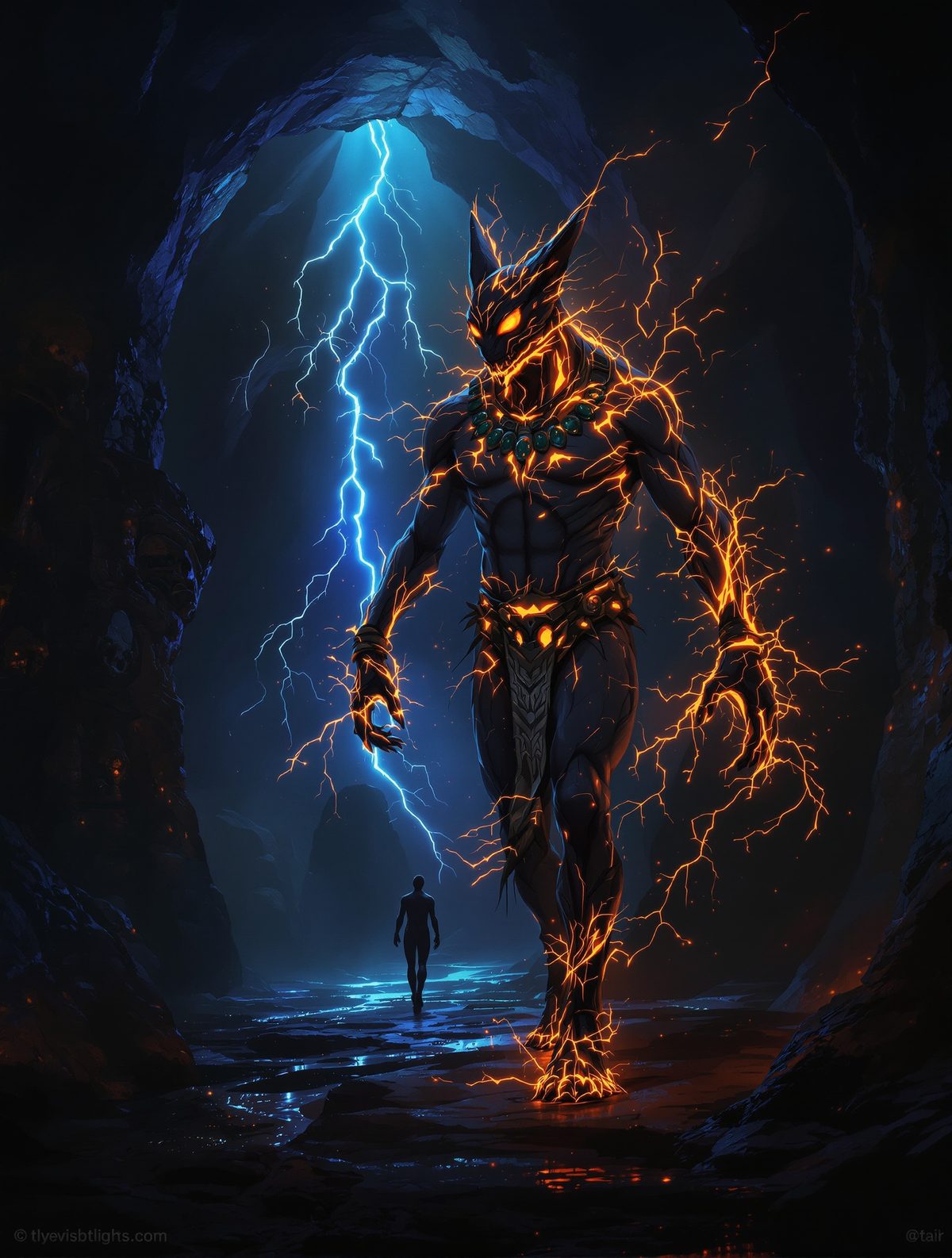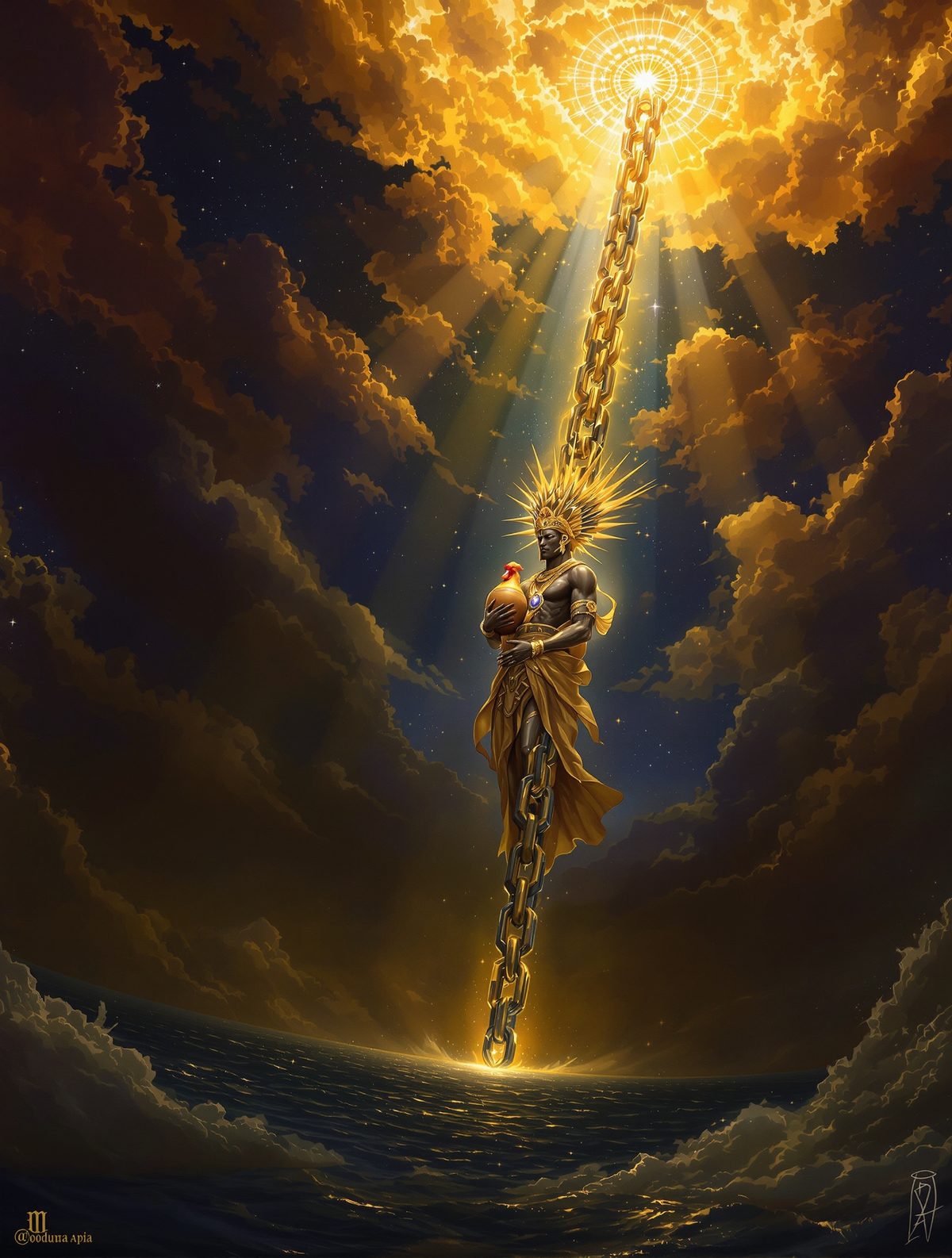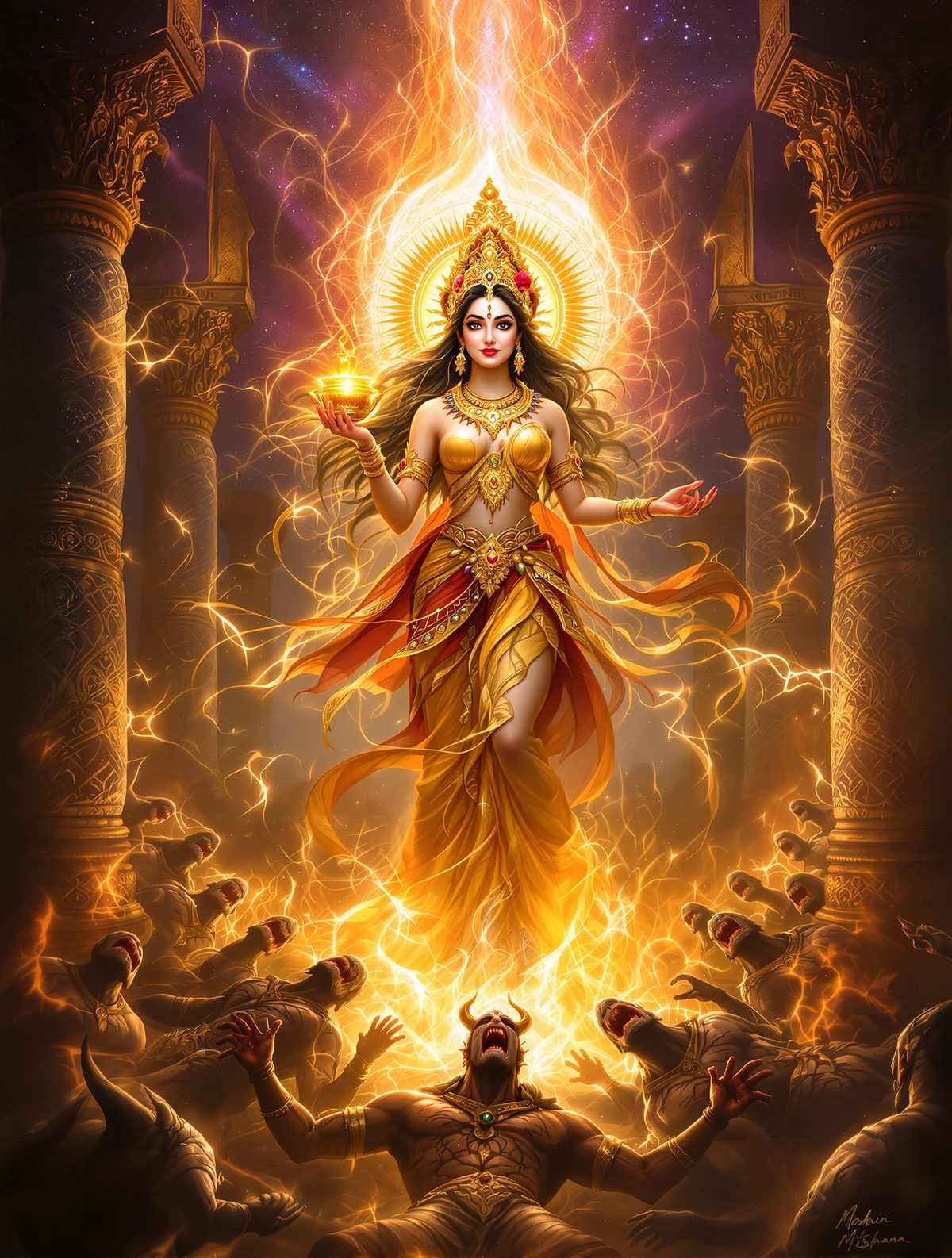
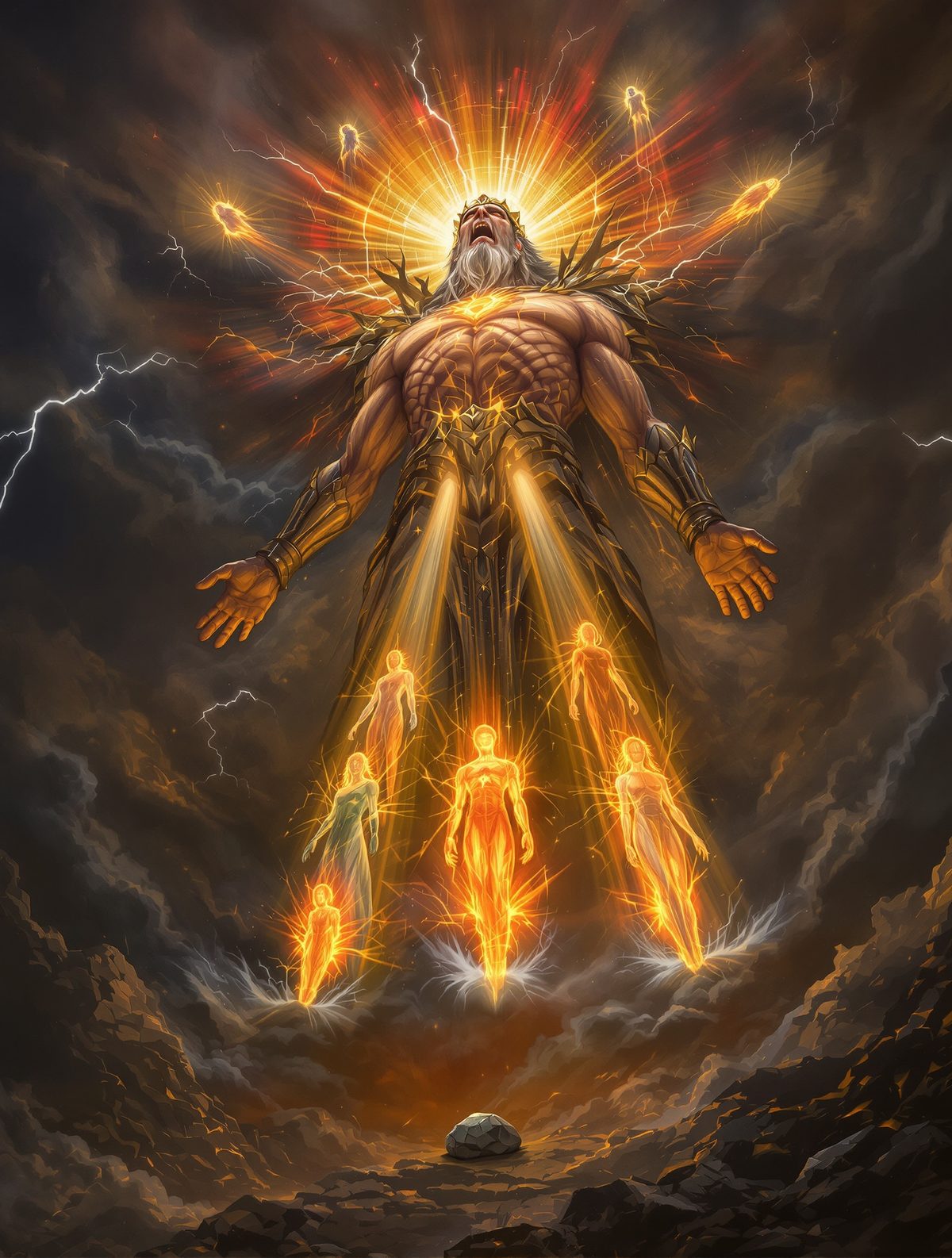
In the realm of sky and stone, where gods and titans clashed and coalesced in furious conflict, Cronus stood imperious, a titan of unmatched might. Here was a ruler who would swallow the future before letting it devour him—a fate prophesied, yet seemingly inevitable. Imagine a scene where power and fear dance a deadly tango: the moment when Cronus consumed his own progeny to avert the end foretold. It is within this maelstrom of betrayal, forewarnings, and divine retribution that the origins of Olympian supremacy were forged.
The Usurper of the Heavens
Cronus, the youngest of the twelve primordial Titans, was no stranger to the cutthroat politics of the ancient cosmos. Born to Gaia and Uranus, he found his ascension not through inheritance but in rebellion. Uranus's oppressive rule had grown insufferable, and Gaia seethed with fury. She implored her children to exact revenge, and Cronus emerged as their champion, armed with a sickle of adamantine forged from Earth's own bones.
In a scene of unspeakable violence that echoed across the heavens, Cronus ambushed his father, castrating him and casting his remains into the wild seas—a cataclysm that birthed the ferocious Furies and divine Aphrodite from the sea foam. With Uranus vanquished, time itself—Cronus's dominion—began its relentless march. But power secured through blood is rarely safe.
A Father’s Grim Feast
The sage warning hung heavy over Cronus like a storm cloud promising rain: one of his own children would dethrone him, echoing the very betrayal he had orchestrated. In his paranoia, Cronus watched as Rhea, his queen and sister, bore him children: Hestia, Hera, Demeter, Poseidon, and Hades. Each infant was seized and swallowed whole, their immortal cries stifled in the darkness of his insatiable stomach.
This ghastly feast stretched over the span of ages, its horror known only to those who dared whisper it. Yet Cronus, in his arrogance, never sensed the growing seeds of rebellion within his own household. The plight of these gods, when mentioned, often elicits disbelief, but within the divine hymns and murmurings of forgotten odes, their agony was immortalized—a testament to the lengths one might go in the futile attempt to rewrite destiny.
The Rock That Changed History
Rhea, tormented by the loss of her children and determined to save her youngest, devised a ruse that would alter the destiny of the cosmos. In the cave of Mount Ida, beneath the crested waves of the Cretan wind, she birthed Zeus, hiding him from Cronus's voracious grasp. In place of her newborn, she wrapped a sturdy rock in swaddling cloth and offered it to her husband.
And Cronus swallowed it whole, unaware that his gluttony had been finally duped. The rock, still revered in Delphi as the Omphalos—navel of the world—became a beacon of hope for the shattered future. Zeus, spirited away to grow in safety, was suckled by the divine goat Amalthea and lulled by the sounds of clashing cymbals, whose noise drowned out his cries, preventing Cronus from discovering the infant's survival.
The Rise of the Olympians
Years passed, and Zeus matured into a god whose ambitions matched the height of the heavens. Allied with Metis, the cunning Titaness, Zeus devised a plan to free his siblings. Metis presented Cronus with a potion that induced violent nausea. Cronus, overcome by its power, disgorged the swallowed children; untouched by time, they emerged, fully formed and mighty, hungry for justice.
The unity of Zeus and his siblings heralded the dawn of a seismic conflict: the Titanomachy. This epic war, waged over a decade, saw earth-shattering battles where mountains crumbled and oceans boiled. Zeus secured the allegiance of the Hecatoncheires and Cyclopes, unearthing allies scorned by Cronus in his hubris. Armed with thunder, lightning, and unwavering resolve, the Olympians stood at the precipice of a new order.
The Eclipsed Age of Titans
The defeat of Cronus and the Titans didn't just mark the triumph of the Olympians; it redefined the celestial hierarchy, echoing throughout the annals of myth and legend. Bound and imprisoned in the shadowy ravines of Tartarus, the once-mighty Cronus, emblematic of unchallenged dominance, lay impotent, the ultimate cautionary tale of power's fragility.
Yet, Cronus's story transcends time as a vivid reminder of the cyclical nature of fate and the unyielding passage of time—elements as constant as the titans themselves. In the mythic tapestry of the ancient Greeks, this tale of cosmic upheaval underscored the belief in a natural order, where even the mightiest must fall and where change is the ever-present essence of existence.
The story of Cronus and his children resonates beyond ancient myth, casting a light on the tenacity of free will against oppressed fate. It churns with the wonder of creation and the chaos of rebellion, asking us to ponder: Are we trapped by the inevitability of destiny or empowered to alter it? Though the lessons drawn from these ancient myths remain enshrouded in cryptic wonder, they speak loudly in metaphors for the ages—a divine drama forever played out across the very fabric of time.