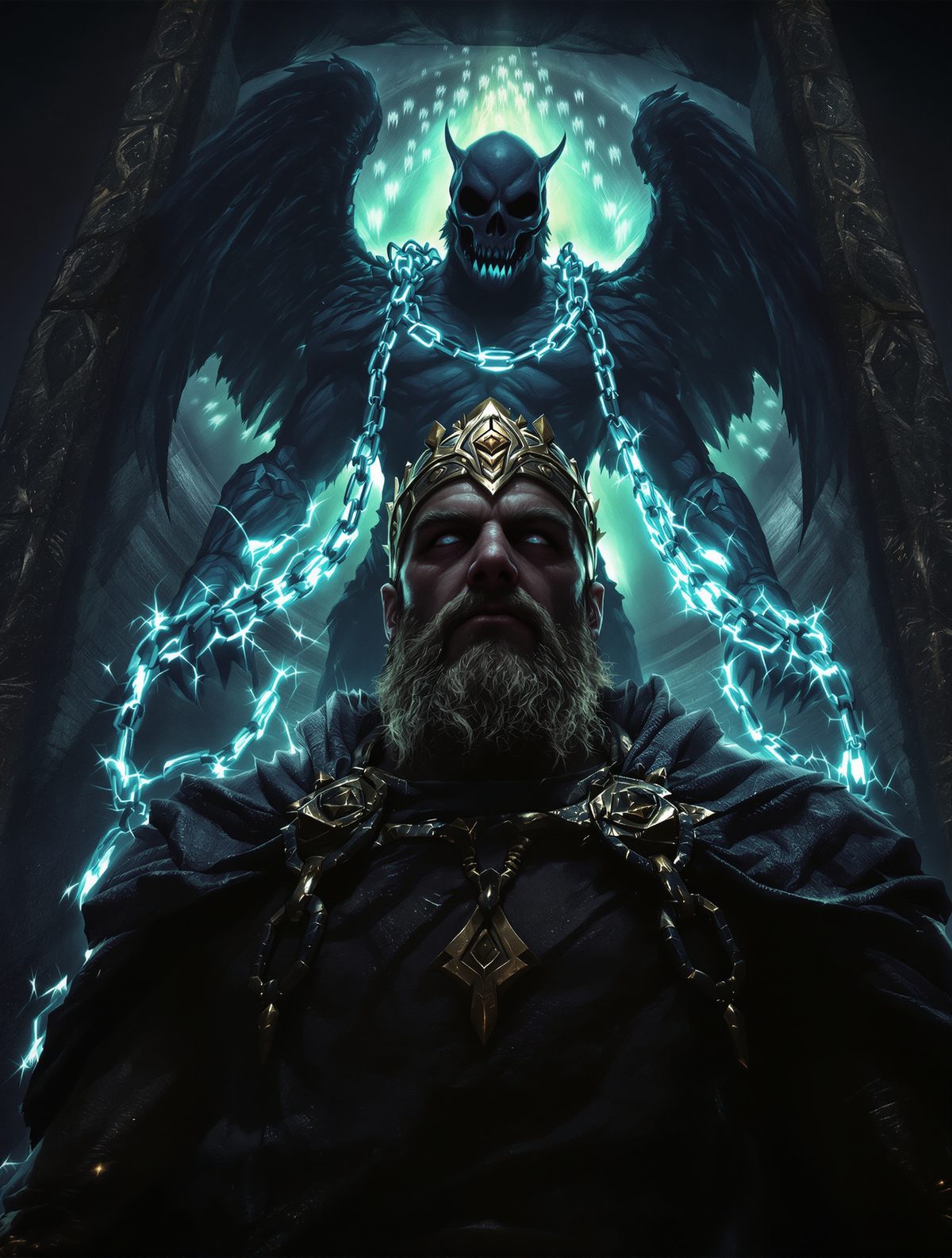
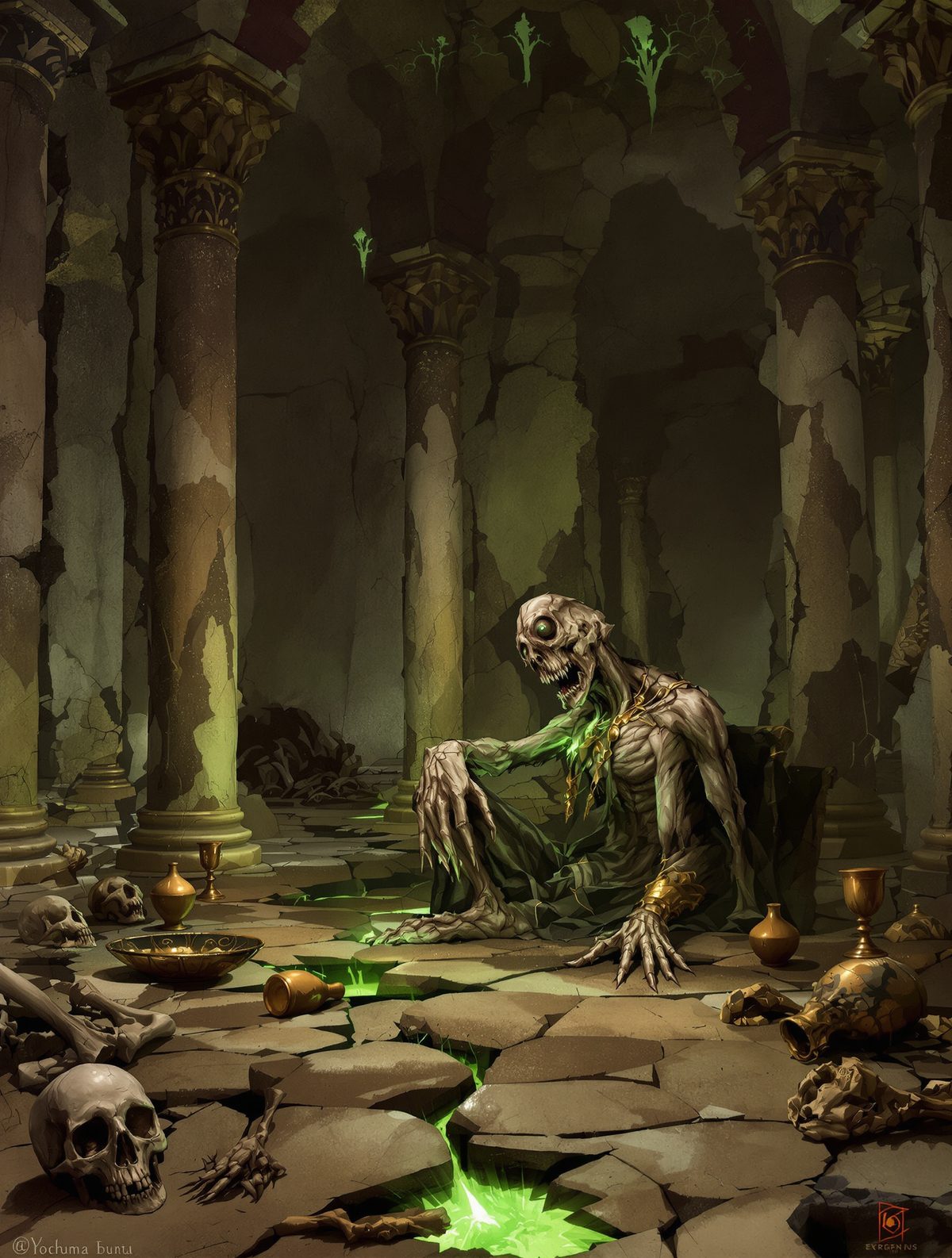
Imagine the echoing silence of a sacred grove, broken only by the whisper of leaves and the solemn presence of ancient trees standing vigil over centuries. Now, hear the savage bite of an axe as it rends this tranquility apart, followed by a piercing scream — not of fear, but of agony. This is where our tale of hunger, hubris, and horror begins.
The Laughing King — Erysichthon's Arrogance
In the bustling days of Greek antiquity, when mortals and gods frequently crossed paths in stories both triumphant and tragic, there lived a king named Erysichthon. He ruled over Thessaly, a fertile land known for its rich, bountiful fields and abundant pastures. Yet, Erysichthon was a man driven not by the prosperity of his people, but by a reckless pride that mocked the divine.
Famed for his scorn of the sacred, Erysichthon soon turned his derision towards Demeter, goddess of the harvest and the sanctity of life itself. No sooner had he set his eyes upon a particular sacred grove, renowned for its connection to Demeter, than he resolved to bring it down. The heart of this grove was an ancient oak, a living testament to a time when gods still walked the earth. Little did Erysichthon know, this was no mere tree.
The Horrific Consequence — Demeter's Curse Unleashed
Erysichthon's assault upon the grove was not just an act of deforestation; it was an affront to the divine. With each swing of the axe, the very air seemed to wail in protest. According to legend, the voice of the tree itself issued from the depths of the wood, its cries resonating with impending doom. Yet, the king was not deterred. Instead, he laughed, wielding the axe with even greater fervor as if to mock the gods.
Demeter, outraged by such impudence, decided that Erysichthon would understand the folly of his arrogance in a manner he could not ignore. She cursed him with an insatiable hunger. A hunger so profound and primal that no amount of food could quell it. To eat was no longer a pleasure or necessity; it became an agony.
The Devourer's Descent — A Kingdom Consumed
As the days turned into nights, Erysichthon's hunger grew into a ravenous beast, consuming everything in its path. He emptied not only his personal larder but also ravaged the food stores of his entire kingdom. The people watched in horror as their king sat amongst the ruin of their harvests, consuming grain, meat, and anything edible with desperate abandon. Yet, no matter the quantity, nothing sufficed.
The once-prosperous kingdom found itself on the brink of ruin, not by natural calamity, but by the appetite of one man. The opulence of Thessaly shrank to a shadow as Erysichthon’s belly expanded without satisfaction. With desperation clawing at the edge of his mind, the king turned to unfathomable measures.
A Daughter Sold — The Tragic Betrayal
Mestra, Erysichthon's daughter, was more than a beloved child; she was a bridge to salvation or so he thought. Blessed by Poseidon with the power to shapeshift, Mestra could become any creature she desired. Erysichthon, blinded by hunger, saw in her an opportunity to stave off his curse. He sold her into slavery, and when Mestra would escape by transforming into some creature, he would simply sell her again.
Time and again, Mestra found herself traded, a precious pawn in a father's maddened game for survival. This endless cycle spoke not only of Erysichthon’s desperation but the depths to which his spirit had fallen. For in his callous pursuit to fill an unfillable void, he betrayed the very bonds of kinship and love.
The Final Repast — Devouring One’s Own Flesh
Even after expending his kingdom’s wealth and his daughter’s dignity, Erysichthon's hunger persisted, more monstrous than ever. No longer content with mere food, the madness drove him towards a grotesque finale. In a ghastly twist of fate, Erysichthon began to consume his own flesh. Piece by agonizing piece, he devoured his body, ultimately annihilating himself in a grotesque illustration of divine retribution.
Thus ended the tale of Erysichthon, a man whose prideful defiance of the gods led him down a path of self-destruction. His story, though ancient, carries a heavy moral weight that continues to echo through the ages.
A Legend's Legacy — Lessons from Erysichthon's Fate
In the modern lens, Erysichthon's tale might seem like a far-off myth, an ancient exaggeration not relevant to today’s world. Yet, his legend holds a mirror to contemporary society, highlighting the perils of unchecked consumption. In an age of vast industrialization and environmental disregard, Erysichthon’s legacy remains a sage cautionary tale.
By neglecting the sanctity of nature and placing individual greed above all, Erysichthon reminds us of the potential horrors awaiting those who dismiss the delicate balance of our world. As we grapple with environmental crises and unsustainable practices, perhaps there is no greater time to reflect on the insatiable hunger of a king who learned too late the cost of mocking powers beyond his comprehension. The story invites us to wonder: at what point does our own consumption become self-cannibalization?