Picture this: You're eavesdropping on what you think is a private conversation, only to realize the speaker wants you to overhear every word. Now imagine the fate of humanity hangs in the balance, and this elaborate charade is the only thing standing between our species and total annihilation. Welcome to one of history's most ingenious divine deceptions—a tale buried in cuneiform tablets that predates Noah's ark by over a thousand years.
In the shadow of ancient Babylon, around 2100 BCE, the gods had reached their breaking point with humanity. But one deity refused to let mortals perish without a fight. His weapon of choice? Not lightning or earthquake, but the most powerful force in any mythology: a loophole.
When Gods Swear Oaths, Lawyers Tremble
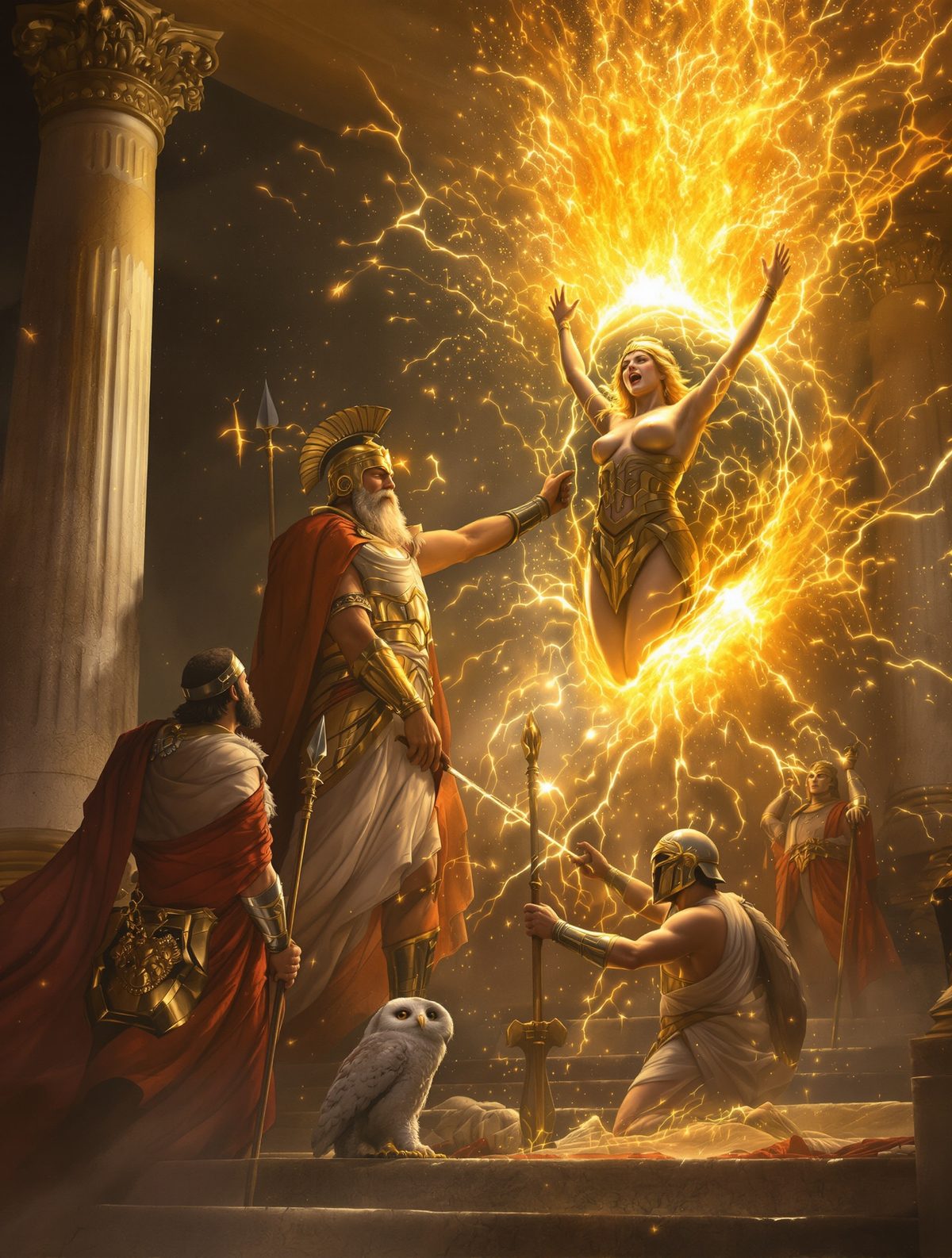
The scene opens in the divine council chamber, where the Mesopotamian pantheon has gathered for what amounts to humanity's trial—and execution. Enlil, the hot-tempered god of wind and storms, has had enough. Humans are too noisy, too numerous, too... human. Their constant chatter keeps the gods awake at night. The solution? A flood so devastating it would make the Mediterranean look like a puddle.
But here's where ancient mythology gets surprisingly legalistic: the gods didn't just agree to this genocide—they swore a binding oath of absolute secrecy. No deity could directly warn any human about the coming deluge. This wasn't just a pinky promise between cosmic beings; in Mesopotamian theology, divine oaths carried the weight of natural law. Break one, and the very fabric of reality might unravel.
Ea, the god of wisdom and fresh water (known as Enki to the Sumerians), found himself in an impossible position. Unlike his fellow deities, he genuinely cared about humanity—after all, he had helped create them from clay and divine blood. But his hands were tied by sacred oath. Or were they?
The Reed Wall Gambit: Divine Semantics at Their Finest
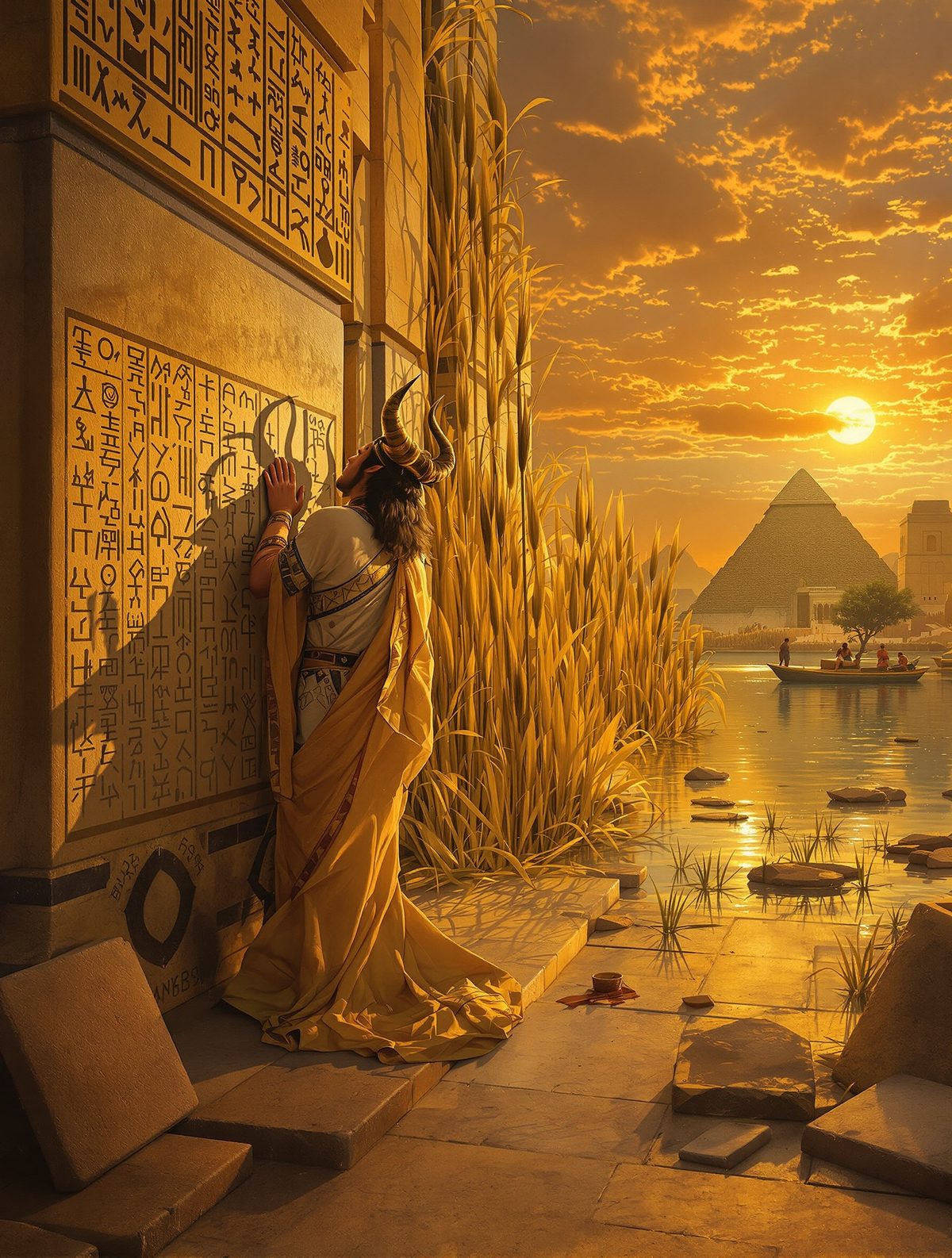
What happened next reads like something from a cosmic legal thriller. Ea made his way to the reed hut of Utnapishtim, a righteous man living in the ancient city of Shuruppak (modern-day Tell Fara in Iraq). But instead of knocking on the door like any normal visitor, divine or otherwise, Ea positioned himself on the outside of the dwelling and began speaking to the wall.
"Reed wall, reed wall," he whispered urgently, his divine voice carrying through the woven barrier. "Wall, listen to me. Man of Shuruppak, son of Ubara-Tutu, demolish your house and build a boat. Abandon your possessions and seek life. Despise property and save life. Bring up the seed of all living things into the boat."
The brilliance of this maneuver cannot be overstated. Technically, Ea hadn't spoken to any human—he had addressed a wall made of reeds. If pressed in divine court, he could argue with a straight face that he had merely been having a private conversation with some vegetation. The fact that Utnapishtim happened to be eavesdropping was purely coincidental. Purely.
But Ea wasn't finished with his elaborate deception. When Utnapishtim, understandably confused, asked through the wall how he could possibly convince his neighbors to help with such a massive construction project, Ea provided him with the ancient world's most diabolical riddle.
The Riddle That Saved the World
Ea instructed Utnapishtim to tell his fellow citizens: "Enlil hates me, so I must leave and go down to the watery depths to live with Ea. But on you he will shower down abundance, the choicest birds, the rarest fish. The land will have its fill of harvest richness. At dawn, bread-cakes he will shower down, and in the evening, wheat rain."
Every word was technically true, but the truth was wrapped in layers of linguistic misdirection that would make a politician weep with admiration. The "bread-cakes" and "wheat rain" weren't metaphors for abundance—they were literal descriptions of the hail and debris that would fall during the storm. The "abundance" of birds and fish would indeed come, but only as corpses floating after the flood.
The people of Shuruppak, hearing only promises of prosperity, eagerly helped Utnapishtim build his vessel. For seven days and nights, they labored, constructing an ark whose dimensions—120 cubits on each side and 120 cubits high (roughly 180 feet)—made it a floating skyscraper by ancient standards.
Loading the Ultimate Life Insurance Policy
The specifications Ea provided were remarkably detailed. The vessel was to have six decks divided into seven compartments each, with walls smeared in bitumen both inside and out to ensure waterproofing. Utnapishtim was to bring "the seed of all living things"—pairs of every animal species, along with craftsmen to preserve human knowledge and skills.
But perhaps the most touching detail comes from the epic itself: Utnapishtim also brought his family, his servants, and even his household goods. This wasn't just about species survival—it was about preserving the texture of human life, the small details that make existence more than mere biological function.
On the seventh day, as the last pitch dried on the hull, Shamash the sun god gave the agreed-upon signal: "At dawn, bread-cakes will shower down, and in the evening, wheat rain. Enter the boat and close the door." Utnapishtim didn't need to be told twice. As the sun set, he sealed himself and his precious cargo inside the massive vessel.
When Heaven's Plumbing Exploded
What followed was meteorological mayhem on a scale that defies imagination. For six days and seven nights, the storm raged with supernatural fury. The epic describes waters rising from below while torrents fell from above, as if the very boundaries between earth, sea, and sky had dissolved. Even the gods, safe in their heavenly realm, cowered like dogs and pressed themselves against the outer wall of heaven.
The description in the Epic of Gilgamesh is hauntingly poetic: "The wide land was shattered like a pot... For six days and seven nights, the wind blew, the downpour, the tempest, and the flood overwhelmed the land." When the seventh day dawned, the storm subsided, and an eerie silence fell over a world transformed into an endless ocean.
Utnapishtim's ark eventually came to rest on Mount Nimush (possibly modern-day Pir Omar Gudrun in Iraq). After seven more days, he released a dove, which returned finding no dry land. Then a swallow, which also returned. Finally, a raven—which didn't come back, indicating it had found food and land somewhere in the receding waters.
The Loophole That Loops Through Time
This ancient tale of divine deception and bureaucratic creativity offers more than just an entertaining story—it provides a window into how our ancestors understood the relationship between law, ethics, and survival. Ea's reed wall gambit represents something profoundly human: the belief that rigid systems, even divine ones, must sometimes bend in service of a higher good.
The story also reveals the Mesopotamian understanding that wisdom often lies not in brute force or direct confrontation, but in cleverness and lateral thinking. Ea couldn't break his oath, but he could interpret it so creatively that the spirit of compassion survived while the letter of the law remained technically intact.
Today, as we face our own existential challenges—climate change, pandemic, social upheaval—perhaps there's something to learn from this 4,000-year-old tale of creative problem-solving. Sometimes salvation comes not from those who wield the most power, but from those wise enough to find the cracks in seemingly insurmountable obstacles. And sometimes, the most important conversations happen through walls, whispered to those who know how to listen for what isn't quite being said.
In our age of literal interpretation and rigid thinking, Ea's reed wall reminds us that survival—whether of individuals, communities, or species—often depends on our ability to think around problems rather than through them. The gods may make the rules, but wisdom finds the loopholes.