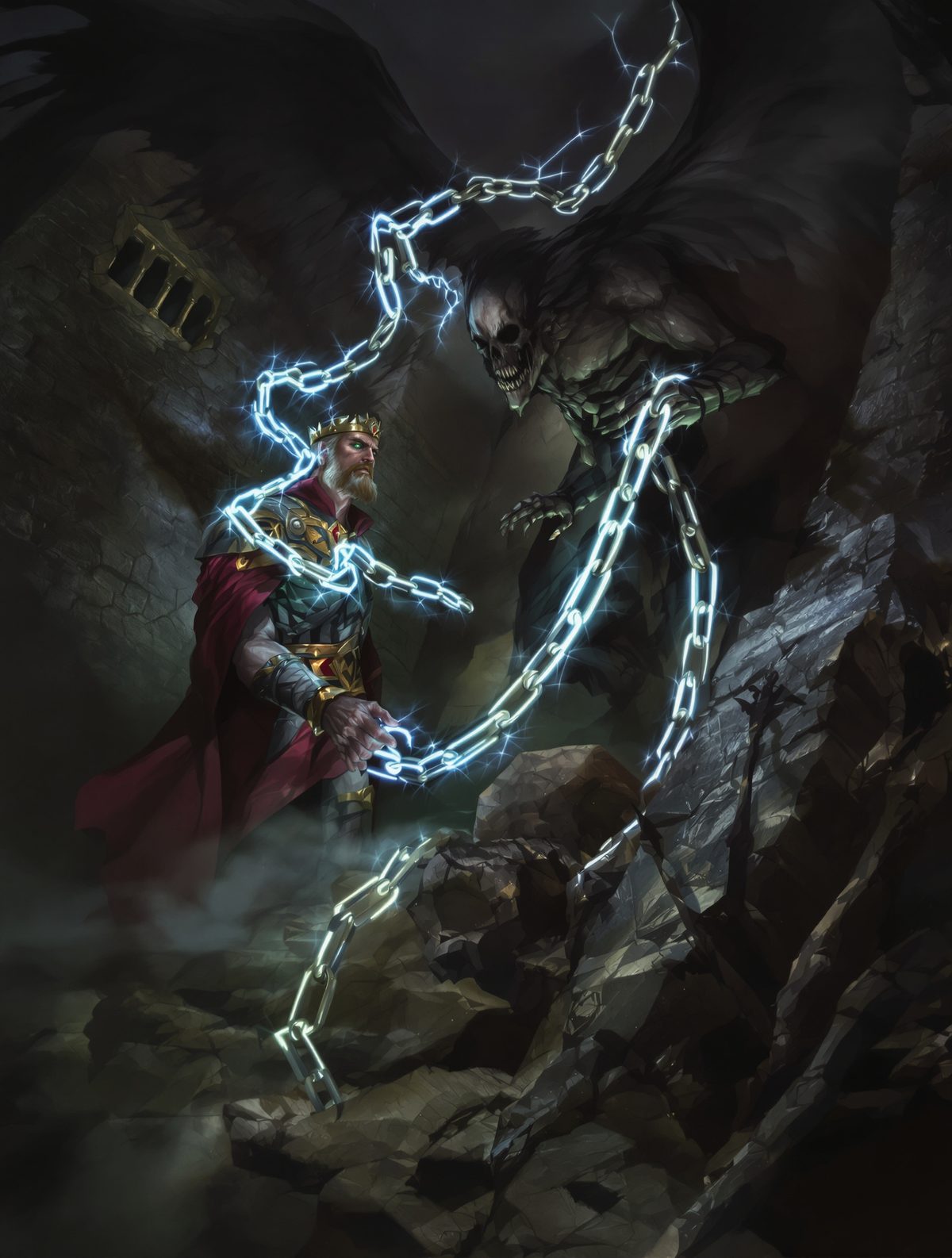
Picture this: You're a god bound by an unbreakable oath never to warn humanity about their impending doom. The flood waters are coming, every mortal soul will perish, and your divine lips are sealed by sacred law. What do you do? If you're Ea, the Mesopotamian god of wisdom and water, you get creative. Very creative.
In the shadow of ancient ziggurats, along the fertile banks of the Euphrates River around 2100 BCE, scribes were recording what would become one of history's most ingenious divine loopholes. The Epic of Gilgamesh, carved into cuneiform tablets that would survive empires and millennia, tells us how the god Ea saved humanity not by breaking his word, but by bending it so cleverly that even his fellow deities had to admire the audacity.
The Divine Conspiracy Against Humanity
The Mesopotamian pantheon was fed up with humanity, and their leader Enlil had reached his breaking point. According to the ancient texts, humans had become too numerous, too noisy, too troublesome. The constant din of human activity was keeping the gods awake at night—a complaint that sounds almost petty until you realize these were beings who could reshape reality with a thought.
Enlil's solution was characteristically extreme: a flood to end all floods, one that would wipe every breathing soul from the face of the earth. But this wasn't to be a rash act of divine fury. The gods would do this properly, with unanimous consent and binding oaths. Every deity swore a sacred vow of secrecy—no warnings, no hints, no mercy. Humanity would face their doom in complete ignorance.
Every god agreed, including Ea. But Ea, whose domain encompassed both the sweet waters that gave life and the wisdom that preserved it, was already three steps ahead of his divine colleagues. While the other gods saw an oath as a limitation, Ea saw it as a puzzle to be solved.
The Whisper Campaign That Saved the World
Enter Utnapishtim, a righteous man living in the ancient Sumerian city of Shuruppak (modern-day Tell Fara in Iraq). Archaeological evidence suggests Shuruppak was a major urban center around 2900-2600 BCE, positioned strategically along the Euphrates with a population that may have reached 50,000 souls. Utnapishtim was likely a priest or civic leader—someone important enough to have a substantial reed-walled house near the riverbank.
It was to this reed wall that Ea came in the pre-dawn darkness. The god's approach was masterful in its technical precision. He had sworn not to warn humans about the flood, but he had said nothing about speaking to architecture. So Ea pressed his divine lips close to the woven reeds and whispered his secret:
"Reed wall, reed wall! Wall, O wall! Hearken reed wall, reflect upon, O wall! Man of Shuruppak, son of Ubartutu! Tear down your house and build a boat! Abandon possessions and look for life! Despise worldly goods and save your soul alive!"
The reeds rustled with divine breath, and on the other side, Utnapishtim heard every word. Technically, Ea had warned a wall. Practically, he had just saved the human species.
Blueprint for Survival: The Ark Specifications
What followed was perhaps history's most detailed disaster preparedness plan, delivered through agricultural materials. Ea's instructions, still preserved in the ancient tablets, were remarkably specific. The vessel was to be a perfect cube: 120 cubits in each dimension—roughly 200 feet by 200 feet by 200 feet. This wasn't the boat-shaped ark familiar to most modern readers, but a massive floating box designed for maximum stability and storage capacity.
The construction requirements were staggering: seven stories, each divided into nine compartments, creating 63 separate chambers. The walls were to be reinforced with bitumen—the same tar-like substance that waterproofed the famous hanging gardens of Babylon. Ea even specified the workforce: skilled craftsmen who would be paid in beer, oil, and wine for their labor.
But here's where the story takes a darker turn that most retellings omit: Utnapishtim was instructed to lie to his workers. When they asked why he was building such a massive vessel, he was to tell them it would bring prosperity and abundance, promising that Enlil would soon "rain down upon you a rich harvest." The bitter irony was intentional—there would indeed be something raining down, but it wouldn't be grain.
The Day Heaven Broke Open
When the appointed day arrived, even the gods were terrified by what they had unleashed. The Mesopotamian flood wasn't just rain—it was a complete breakdown of the cosmic order. The sluices of heaven opened, the fountains of the deep burst forth, and the boundary between sky-water and earth-water dissolved entirely.
For six days and seven nights, the deluge continued. The tablets describe a darkness so complete that "no one could see his fellow." The storm was so violent that even the gods fled to the highest heavens, "cowering like dogs." Most remarkably, the goddess Ishtar, who had initially supported the plan, began to wail in regret, crying: "The olden days are alas turned to clay!"
But Ea's impossible ark rode the waves. Its cubic design, initially seeming ungainly, proved perfect for the conditions. While a traditional boat might have been swamped or capsized, this floating fortress remained stable, its 63 compartments housing not just Utnapishtim's family but representatives of every species, skilled craftsmen, and the seeds of civilization itself.
When the Waters Receded: Divine Damage Control
On the seventh day, the storms ceased, and Utnapishtim's ark came to rest on Mount Nisir (possibly Mount Pir Omar Gudrun in modern-day Iraq). The survival test involved three birds: first a dove, which returned finding no dry land, then a swallow with the same result, and finally a raven that found food and never returned—the first sign that the world was healing.
When Utnapishtim offered sacrifices on the mountaintop, the gods smelled the sweet savor and realized what they had almost lost forever. Enlil was initially furious that anyone had survived, but Ea's defense of his technicality was brilliantly argued. He hadn't broken his oath, he reasoned—and besides, wasn't divine wisdom meant to preserve rather than destroy?
The other gods, perhaps impressed by Ea's cleverness or simply relieved that they wouldn't have to start over with creation, accepted this logic. Utnapishtim and his wife were granted immortality, becoming the ancestors of the new human race.
The Loophole That Changed Everything
This ancient tale reveals something profound about how our ancestors understood divine justice, legal reasoning, and the relationship between letter and spirit of the law. Ea's solution wasn't just clever—it was revolutionary. It suggested that even divine commands could be interpreted creatively when wisdom and compassion demanded it.
The story of Ea's whispered warning has echoed through millennia, influencing flood narratives from Genesis to the Hindu Puranas. But its deeper lesson transcends religion: sometimes the most important rules to follow aren't the ones written down, but the ones written on our hearts. When faced with absolute authority demanding absolute obedience to an absolute wrong, Ea showed that wisdom finds a way.
In our modern world of corporate policies, legal technicalities, and bureaucratic red tape, Ea's reed wall whisper remains surprisingly relevant. It reminds us that the most crucial human values—compassion, wisdom, preservation of life—sometimes require us to be as clever as serpents while remaining as harmless as doves. After all, the god who saved humanity didn't break the rules. He just read them more carefully than anyone expected.