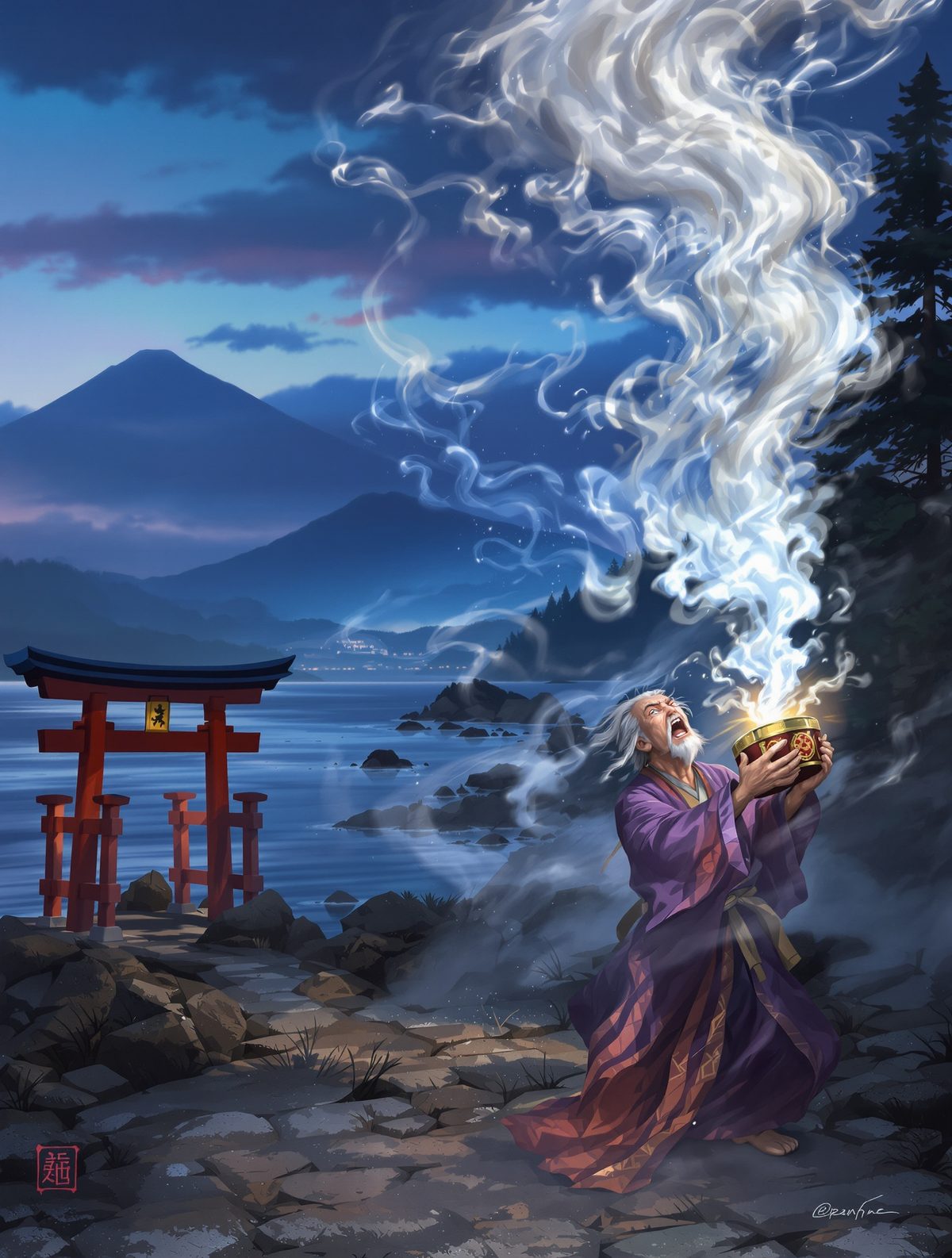
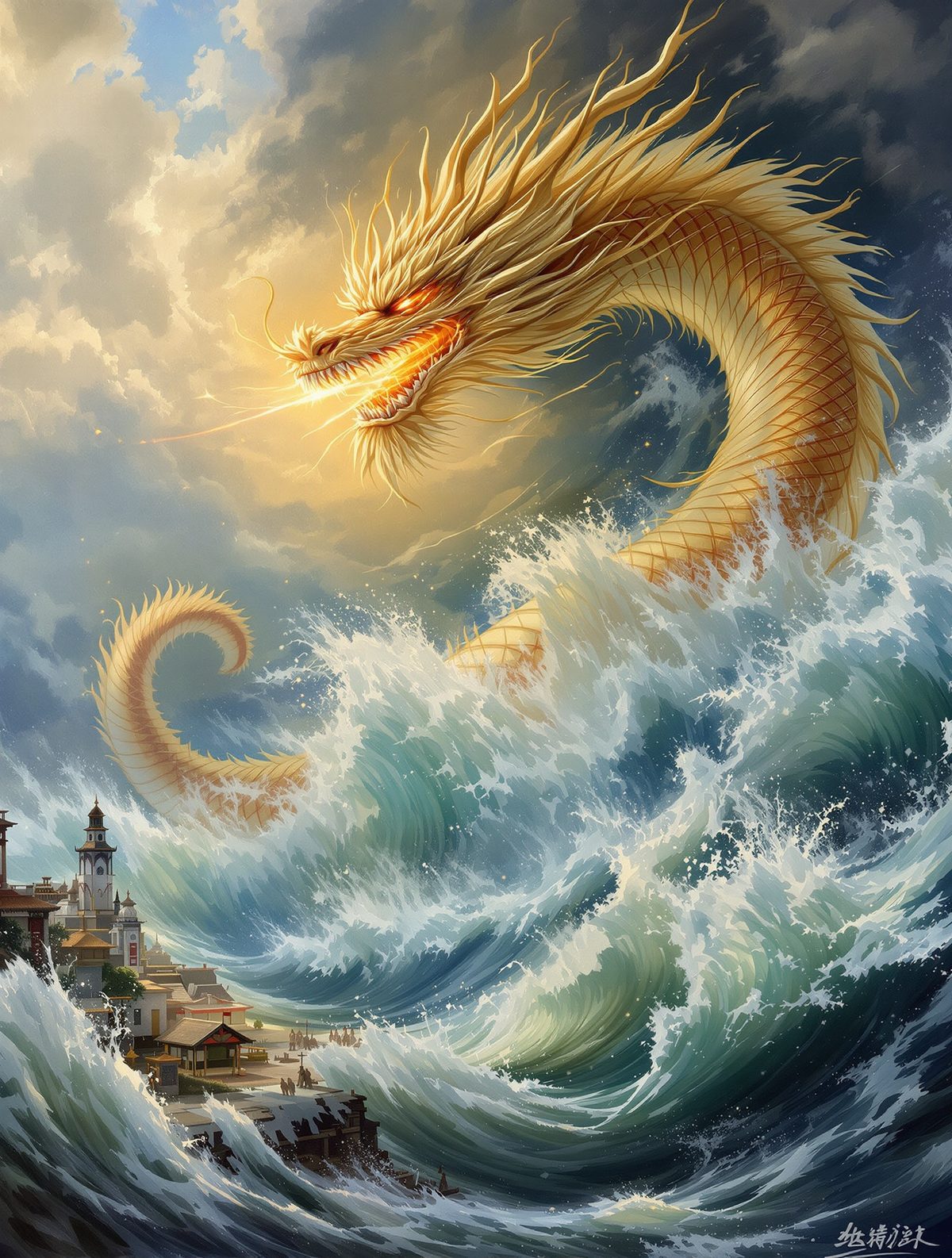
The ancient chronicles speak of a moment when the very heavens wept salt water. In the depths of the Eastern Sea, where dragon palaces glittered with pearls and coral thrones, a father cradled the broken body of his son. Prince Ao Bing lay lifeless, his dragon tendons—the source of his divine power—brutally torn from his flesh like golden threads ripped from silk. The young prince's killer was no demon or rival deity, but a seven-year-old boy named Nezha, armed with divine weapons and terrible innocence. As Ao Guang, the mighty Dragon King of the Eastern Sea, held his heir's mutilated form, something fundamental shifted in the cosmic order. The time for mercy had drowned in grief.
The Boy Who Slayed Dragons Without Knowing Their Names
To understand the deluge that would follow, we must first glimpse the child who sparked it. Nezha wasn't born—he was manifested. According to the Fengshen Yanyi (Investiture of the Gods), composed during the Ming Dynasty but drawing from far older oral traditions, Nezha emerged from his mother's womb after a three-year pregnancy, already walking and speaking. His father, Li Jing, was a military commander under the Shang Dynasty, but Nezha's true parentage traced to the celestial realm itself.
The fatal encounter began innocently enough. Playing by the seaside near his home in Chentang Pass, young Nezha decided to bathe in the Eastern Sea using his divine treasures: the Universe Ring and the Red Armillary Sash, gifts from his immortal master Taiyi Zhenren. These weren't ordinary toys—when Nezha dipped the magical sash into the water and began washing, the entire Eastern Sea trembled. Waves crashed against the Crystal Palace far below, sending the Dragon King's court into panic.
Prince Ao Bing, barely older than Nezha in appearance but ancient by mortal standards, rose from the depths to investigate this unprecedented disturbance. What the young dragon prince found was a child playing with forces that could reshape coastlines. The confrontation that followed would echo through Chinese literature for over a millennium, inspiring countless retellings, operas, and modern films.
When Divine Children Clash: The Physics of Mythological Violence
The battle between Nezha and Ao Bing wasn't the clash of equals—it was cosmic mismatch disguised as child's play. Ao Bing arrived in human form, perhaps hoping to reason with what he assumed was another young immortal. He couldn't have known that Nezha possessed the Universe Ring, a weapon forged in the fires of creation itself, capable of striking down even celestial beings.
Ancient texts describe the fight with the clinical precision of a military report. Nezha's first strike with the Universe Ring shattered Ao Bing's human disguise, forcing the prince to reveal his true dragon form—a serpentine creature of scales that gleamed like polished jade, stretching nearly a hundred li (roughly thirty miles) across the sea's surface. But size meant nothing against celestial weapons. The second blow from the Universe Ring cracked the dragon's skull, sending him crashing beneath the waves.
Here's where the tale takes its darkest turn, revealing something profound about the nature of childhood innocence unchecked by wisdom. Nezha, seeing the magnificent dragon's body, was seized by what we might today recognize as a collector's impulse. The dragon's tendons, glowing with internal fire and tougher than any earthly material, seemed perfect for crafting a belt. With methodical precision that chills modern readers, the seven-year-old set about extracting them, unaware that he was desecrating the body of a prince whose father commanded the loyalty of every sea creature from the Yellow River to the South China Sea.
The Dragon King's Terrible Mathematics of Grief
When servants brought Prince Ao Bing's mutilated corpse to the Crystal Palace, witnesses reported that Ao Guang's roar of anguish boiled the water for a thousand li in every direction. Fish floated belly-up to the surface. Whales beached themselves rather than endure the sound of a father's breaking heart. The Dragon King, whose dominion over the Eastern Sea had remained unquestioned for over three millennia, found himself confronting a loss that no amount of divine power could reverse.
But Ao Guang's response revealed the sophisticated nature of dragon justice in Chinese mythology. He didn't strike immediately. Instead, he dispatched emissaries to the other Dragon Kings—Ao Qin of the Southern Sea, Ao Shun of the Northern Sea, and Ao Run of the Western Sea. This wasn't mere familial obligation; it was the mobilization of a supernatural alliance that controlled every major body of water in the Chinese world. Together, these four dragon monarchs commanded not just seas, but rivers, lakes, and the rain clouds themselves.
The Dragon Kings' power over precipitation wasn't metaphorical—it was the fundamental mechanism by which Chinese agricultural civilization survived. When they withheld rain, crops withered and dynasties fell. When they released their fury, the Yellow River changed course and cities vanished beneath flood waters. Archaeological evidence from various periods in Chinese history shows flood patterns that correlate remarkably well with dynastic transitions, suggesting these myths may preserve genuine memories of catastrophic weather events.
The Siege That Drowned the Sky
What followed was perhaps the most systematic divine siege in Chinese mythology. Ao Guang didn't simply unleash random destruction—he orchestrated a campaign of escalating pressure designed to force one specific outcome: the surrender of Nezha for judgment. The Dragon King appeared first at the gates of Chentang Pass in human form, demanding an audience with Commander Li Jing. His proposition was simple and terrifying—deliver the boy, or watch every mortal settlement from the coast to the capital disappear beneath the waves.
When Li Jing attempted to negotiate, the demonstrations began. First came the precise flooding—water that rose exactly to the height of city walls before stopping, a display of supernatural control that left no doubt about the Dragon King's restraint. Citizens woke to find their streets transformed into canals overnight, but their homes mysteriously untouched. It was a message written in flood water: this is what mercy looks like.
But Nezha, despite his youth, possessed the prideful nature of his celestial heritage. Rather than submit, he challenged the Dragon King directly, leading to a confrontation that contemporary accounts describe in terms that sound almost like natural disaster reporting. Waterspouts appeared along the entire eastern coast. Rivers ran backward. Rain fell upward in some areas while others experienced drought conditions that cracked the earth like broken pottery.
The siege reached its crescendo when all four Dragon Kings converged on Chentang Pass, their combined presence creating meteorological chaos that extended far beyond the local region. The Journey to the West includes references to this event, noting that the imperial court in the Shang capital received reports of simultaneous flooding in all four cardinal directions—an impossibility under normal circumstances that convinced the emperor himself that the natural order had been fundamentally disturbed.
The Price of Resolution: When Gods Sacrifice Their Children
The resolution of this cosmic standoff reveals one of the most psychologically complex moments in Chinese mythology. Nezha, finally understanding the scale of destruction his actions had unleashed, made a choice that resonates through Chinese culture to this day. Rather than continue a conflict that would eventually drown the mortal world, he chose ritual suicide—not as defeat, but as the ultimate expression of filial responsibility.
But this wasn't the end of Nezha's story; it was his transformation. His master Taiyi Zhenren, using lotus roots and flowers, reconstructed the boy's body in a form that was simultaneously more and less human than before. The new Nezha retained all his powers but gained something he'd previously lacked: an understanding of consequences that came at the price of death and resurrection.
Ao Guang's response to this sacrifice demonstrates the sophisticated moral framework underlying Chinese dragon mythology. The Dragon King's rage wasn't mere vengeance—it was the cosmic principle of balance seeking restoration. When Nezha voluntarily paid the ultimate price, that balance was restored, and the floods receded as swiftly as they had risen.
The Eternal Tide: Why Ancient Floods Still Matter
The story of Ao Guang's great flood operates on multiple levels that remain startlingly relevant to contemporary readers. On its surface, it's a tale about the consequences of unchecked power—a theme that resonates in our age of technological capability unmatched by wisdom. Nezha's casual destruction of Prince Ao Bing mirrors humanity's often thoughtless impact on natural systems, while the Dragon King's measured response reflects the kind of environmental consequences that build slowly before arriving with devastating force.
But perhaps most importantly, this ancient tale preserves a sophisticated understanding of justice that transcends simple revenge. Ao Guang's flood wasn't random destruction—it was a precisely calibrated response designed to restore cosmic balance. In our current climate crisis, as rising sea levels threaten coastal cities worldwide, the Dragon King's flood reads less like fantasy and more like prophecy. The mythology suggests that natural forces, when sufficiently provoked, respond not with blind fury but with the terrible logic of consequences finally coming due.
The flood waters have long since receded from this ancient tale, but the questions it raises continue to surge against the foundations of how we understand power, responsibility, and the price of redemption. In every coastal city that watches rising tides with growing concern, in every child who wields influence without understanding consequences, the Dragon King's grief-born flood continues to whisper its eternal warning: some debts can only be paid in the currency of sacrifice, and the sea always, eventually, collects what it's owed.