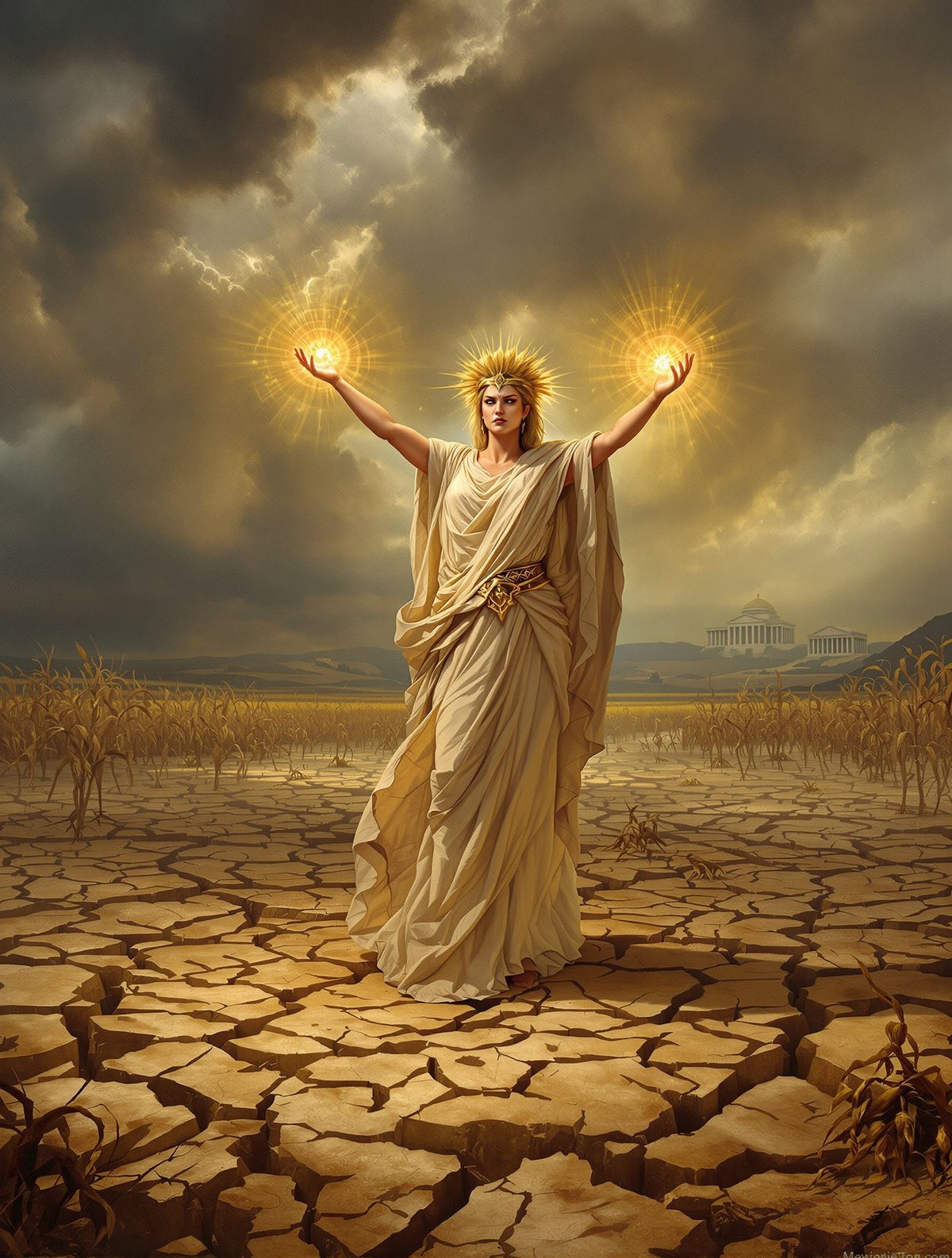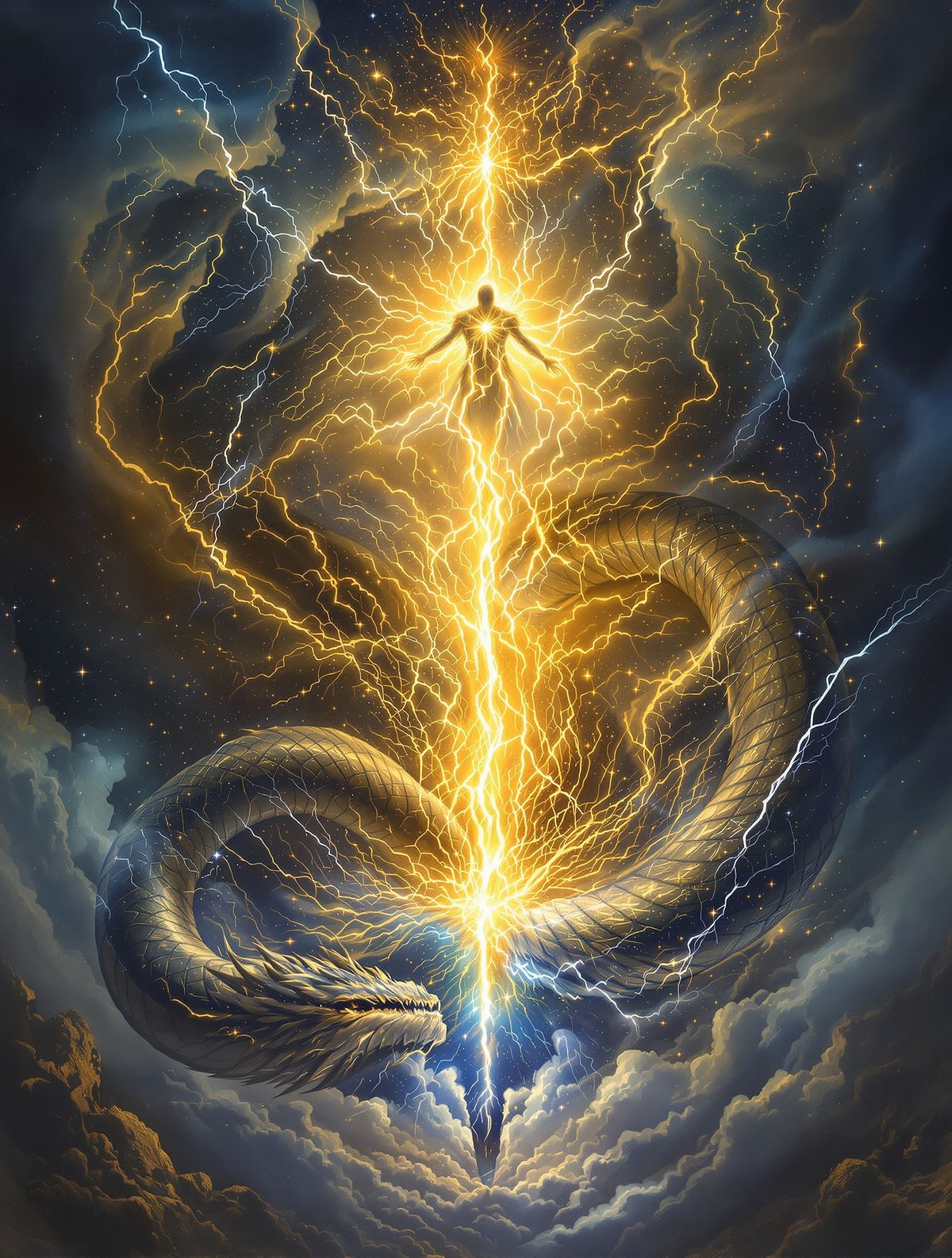
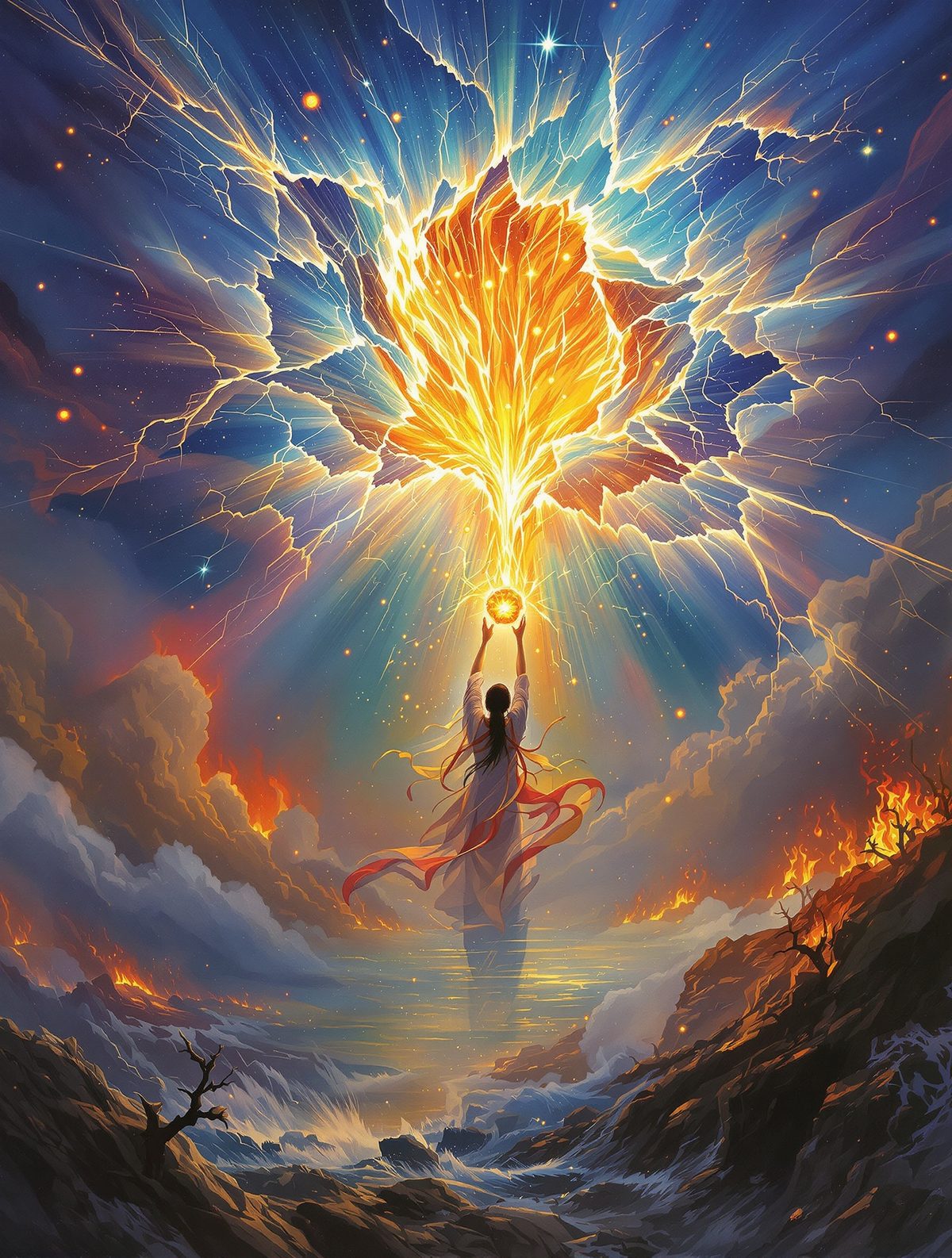
Picture this: the sky is literally falling. Not metaphorically, not poetically—but actually cracking open like a broken eggshell, spilling cosmic fire and endless torrents of water onto the world below. Rivers reverse their course, mountains crumble, and humanity huddles in terror as creation itself comes undone. This isn't the plot of a disaster movie—it's one of China's oldest and most dramatic creation myths, starring a serpent-bodied goddess who would literally move heaven and earth to save the world.
While most people know the biblical story of Noah's flood or the Greek tale of Pandora's box, few in the West have heard of Nüwa—the Chinese goddess who didn't just survive an apocalypse, but rolled up her sleeves and fixed one. Her story, preserved in texts dating back over 2,000 years, reveals a fascinating glimpse into how ancient Chinese civilization understood cosmic order, divine responsibility, and the delicate balance between heaven and earth.
The Rage That Shattered Heaven
Our story begins with what might be mythology's most catastrophic temper tantrum. Gonggong, the fearsome water god with the body of a serpent and the head of a man, had just suffered a humiliating defeat in battle against Zhurong, the god of fire. Ancient texts describe Gonggong as a creature of pure chaos—imagine a divine toddler with the power to control all the world's waters, and you'll get the picture.
Unable to accept his defeat, Gonggong flew into a rage so spectacular that it would make modern road rage look like a mild disagreement. In his fury, he hurled himself headfirst into Buzhou Mountain—not just any mountain, but the cosmic pillar that held up the entire northwestern corner of the sky. The Huainanzi, a Han dynasty text from around 139 BCE, describes the moment with chilling precision: "The pillar of heaven broke, the cord of earth snapped."
The physics of this cosmic catastrophe were immediate and terrifying. With its primary support gone, the sky tilted dramatically toward the northwest, while the earth lurched in the opposite direction. This ancient explanation actually corresponds to observable phenomena that puzzled early Chinese astronomers: why do the sun, moon, and stars appear to move from east to west? Why do China's great rivers flow from west to east? The ancients had their answer—the world was still recovering from Gonggong's cosmic tantrum.
When Heaven Fell to Earth
What happened next makes every disaster movie ever made look like a gentle spring shower. The Fengsu Tongyi, a Han dynasty encyclopedia, describes the scene: "The sky cracked open, the earth split apart, fires blazed without end, and waters flooded without cease." Imagine the worst natural disasters you've ever seen, then multiply by infinity and add cosmic horror.
Fire rained from the gaping wounds in the sky—not ordinary fire, but the raw essence of celestial yang energy, scorching everything it touched. Simultaneously, underground waters burst forth in endless torrents, as if every aquifer on earth had been punctured at once. The very elements that make life possible had become instruments of annihilation.
Wild beasts, driven mad by the chaos, emerged from their hiding places to prey on helpless humans. The Shanhaijing (Classic of Mountains and Seas) mentions creatures like the Taotie, a gluttonous monster with an insatiable appetite, and the Qiongqi, a winged tiger that fed on human flesh. With the cosmic order shattered, even the natural hierarchy between humans and beasts had collapsed.
Here's a detail that might surprise you: ancient Chinese texts suggest this wasn't just a local catastrophe, but a universal one. The destruction affected not just China, but the entire world. Some modern scholars have speculated whether this myth preserves cultural memories of actual catastrophic events—massive floods, volcanic eruptions, or even asteroid impacts that occurred during humanity's early history.
The Goddess Who Wouldn't Give Up
Enter Nüwa, whose very name means "woman" or "female"—a linguistic hint at her fundamental role as the nurturing, creative force in Chinese cosmology. Unlike the wrathful male gods whose conflicts had caused this mess, Nüwa represented something different: practical wisdom, maternal protection, and the determination to fix what was broken rather than simply destroy it.
Ancient depictions show her as a being of dual nature—human from the waist up, with a long serpentine tail below. This wasn't meant to be monstrous, but divine: the human torso represented her connection to humanity and civilization, while the snake body symbolized her mastery over the earth's primal forces. In Han dynasty tomb paintings, she's often shown holding a compass and square, the tools of architects and builders.
But here's what makes Nüwa truly remarkable among world mythologies: she didn't just have the power to save the world—she had the will to do it. While other gods fled or despaired, she surveyed the damage and made a decision that would echo through Chinese culture for millennia. This wouldn't be a passive rescue or a magical quick fix. She would rebuild the sky itself, stone by stone, with her own hands.
The Divine Workshop: Melting Rainbow Stones
What Nüwa did next reads like the world's first engineering project. She gathered stones of five colors from riverbanks across the world—not just any stones, but specific colored rocks that corresponded to the five elements of Chinese philosophy: black for water, red for fire, green for wood, white for metal, and yellow for earth. Each color represented not just an element, but an entire cosmic principle that needed to be restored.
The numbers in the original texts are staggering. According to the Huainanzi, she collected exactly 36,501 stones, then melted 36,500 of them to patch the sky. That one remaining stone? It would later become central to Chinese literature—the author of Dream of the Red Chamber, one of China's greatest novels, claimed his entire story was carved on that leftover stone by a Taoist monk.
But how do you melt stones? Nüwa built a divine furnace that burned not with ordinary fire, but with the concentrated essence of yang energy—the same cosmic force that had been pouring destructively from the broken sky. In a brilliant act of metaphysical recycling, she transformed the very energy that was destroying the world into the power needed to save it.
The melting process itself was described as creating the world's first rainbow. As each colored stone liquified, its essence rose into the air as pure light. Imagine standing in an ancient landscape and seeing streams of liquid emerald, gold, and crimson flowing like divine magma while prismatic light dances overhead. The goddess herself, according to some versions, glowed with reflected radiance as she worked.
Patching Heaven: The Ultimate DIY Project
With her molten rainbow stones prepared, Nüwa faced the ultimate construction challenge: how do you repair the sky? The ancient texts describe her rising into the air—some versions say she flew, others that she extended her serpent body like a cosmic ladder—and beginning the delicate work of cosmic masonry.
She spread the molten stones across the cracks in heaven's dome, smoothing them with her hands until the celestial wounds were sealed. But this wasn't just about stopping the leaks—she had to restore the sky's structural integrity. The Liezi, a 4th century BCE Taoist text, describes how she "refined the five-colored stones to mend the azure sky," suggesting she didn't just patch the holes but actually improved on the original design.
The repair work came with an interesting side effect that ancient Chinese astronomers used to explain observable phenomena. Because the cosmic pillar was gone forever, the patched sky remained slightly tilted. This is why, according to the myth, the sun and moon appear to move westward across the sky, and why all of China's great rivers flow from the high western mountains toward the eastern sea.
But Nüwa wasn't finished. To prevent future disasters, she killed a giant turtle (some versions say a dragon) and used its four legs as replacement pillars to support the corners of the sky. She also burned vast quantities of reeds to create ash that could absorb the remaining floodwaters. Talk about thinking outside the box—or in this case, outside the cosmos.
Why This Ancient Story Still Matters
In our age of climate change and environmental crisis, Nüwa's story resonates with surprising relevance. She represents something increasingly rare: the belief that when faced with seemingly impossible disasters, the answer isn't to despair, flee, or wait for someone else to fix things. Sometimes you have to gather your rainbow stones, fire up the cosmic forge, and get to work.
The myth also reveals something profound about how ancient Chinese culture viewed the relationship between heaven and earth, divine and human, destruction and creation. Unlike flood myths in other cultures that end with divine punishment or a fresh start for the chosen few, Nüwa's story is about repair—taking what's broken and making it whole again, even if it's never quite the same as before.
Perhaps most remarkably, this is a creation myth where the creator is unambiguously female, using traditionally feminine skills—nurturing, mending, crafting—to quite literally save the world. At a time when many ancient cultures depicted creation as violent conquest or divine command, the Chinese preserved a story about a goddess who saved the universe with patience, skill, and an absolutely unshakeable determination to fix what others had broken.
The next time you see a rainbow, remember Nüwa and her molten stones. In that prismatic light, ancient Chinese eyes saw not just refracted sunlight, but the enduring beauty of divine craftsmanship—proof that even when the sky falls, it can be made whole again.