Imagine a world where every grain of wheat withers in the field, where fruit trees stand barren against gray skies, and where the very earth itself refuses to yield even the smallest sprout. Now imagine that this apocalyptic famine wasn't caused by drought or disease, but by a mother's grief so profound it could starve entire civilizations. This is exactly what happened when Demeter, the Greek goddess of harvest and fertility, held the entire world hostage until her daughter was returned from the realm of the dead.
What began as a family dispute among the gods quickly escalated into the most terrifying ecological disaster in mythological history—one that would forever change how mortals understood the delicate relationship between divine will and earthly survival.
The Abduction That Shook Olympus
The crisis began on what should have been an ordinary day in the meadows of Nysa, a paradisiacal plain that ancient sources place everywhere from Sicily to Asia Minor. Persephone, the radiant daughter of Demeter and Zeus, was gathering flowers with her companions—the Oceanids, nymphs born from the primordial waters of creation. But this was no random kidnapping. Hades, lord of the underworld, had been nursing an obsession with the maiden for months, and Zeus himself had secretly given his blessing to the union.
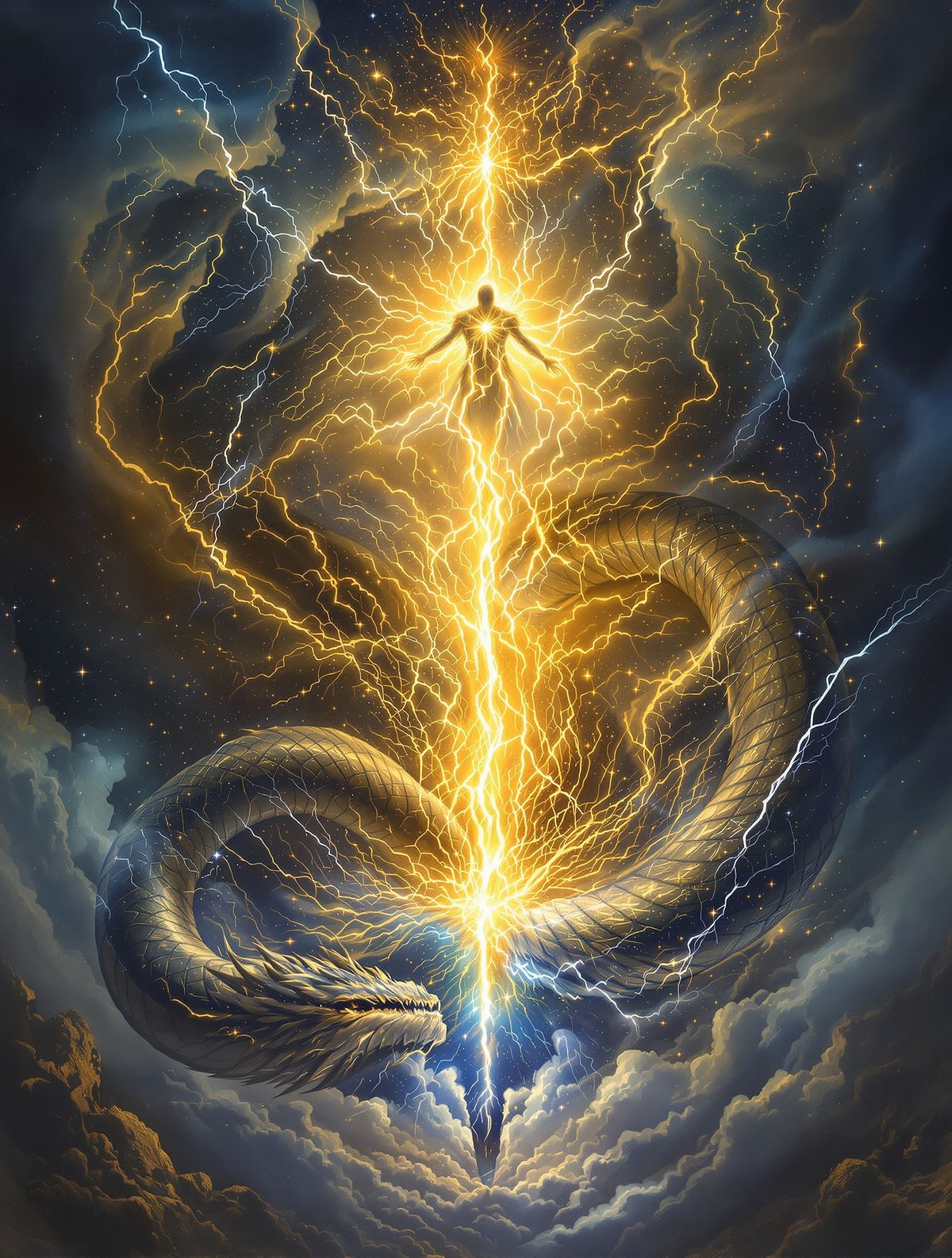
According to the Homeric Hymn to Demeter, composed around the 7th century BCE, the earth suddenly split open with a sound like thunder. From the gaping chasm emerged Hades in his golden chariot, pulled by immortal horses whose eyes burned like stars. Before Persephone could even scream, she was seized and dragged down into the darkness, the earth sealing itself behind them as if nothing had happened.
But something had happened—something that would echo across both mortal and divine realms. The few witnesses, too terrified to speak, scattered like leaves in a hurricane. Only the all-seeing Helios, god of the sun, observed the entire abduction from his celestial perch, though he chose to remain silent.
A Mother's Desperate Search
When Persephone failed to return home, Demeter's initial concern quickly transformed into frantic terror. For nine days and nine nights—the number nine being sacred in Greek tradition, representing completion and the divine—the goddess searched every corner of the earth. She questioned rivers that had run silent since the world's creation, interrogated ancient trees that had witnessed the rise and fall of civilizations, and pleaded with winds that carried secrets across continents.
Demeter's search was not conducted in her usual form. The goddess disguised herself as an elderly mortal woman, trading her golden robes for rough peasant garments. This detail, often overlooked in retellings, reveals something profound about ancient Greek values: even the mightiest deity had to humble herself completely when facing a parent's worst nightmare.
It was Hekate, goddess of magic and crossroads, who finally provided the first clue. She had heard Persephone's cries echoing from somewhere beneath the earth but hadn't seen the abductor. Together, the two goddesses approached Helios, whose daily journey across the sky meant he witnessed all things. Under pressure from two of Olympus's most formidable deities, he finally revealed the truth: Zeus had given Hades permission to claim Persephone as his bride.
The Earth Dies: Divine Wrath Unleashed
What happened next would redefine the very concept of divine retribution. Upon learning that Zeus—her former lover and Persephone's father—had essentially sold their daughter to his brother, Demeter's grief transformed into something far more dangerous: calculated rage.
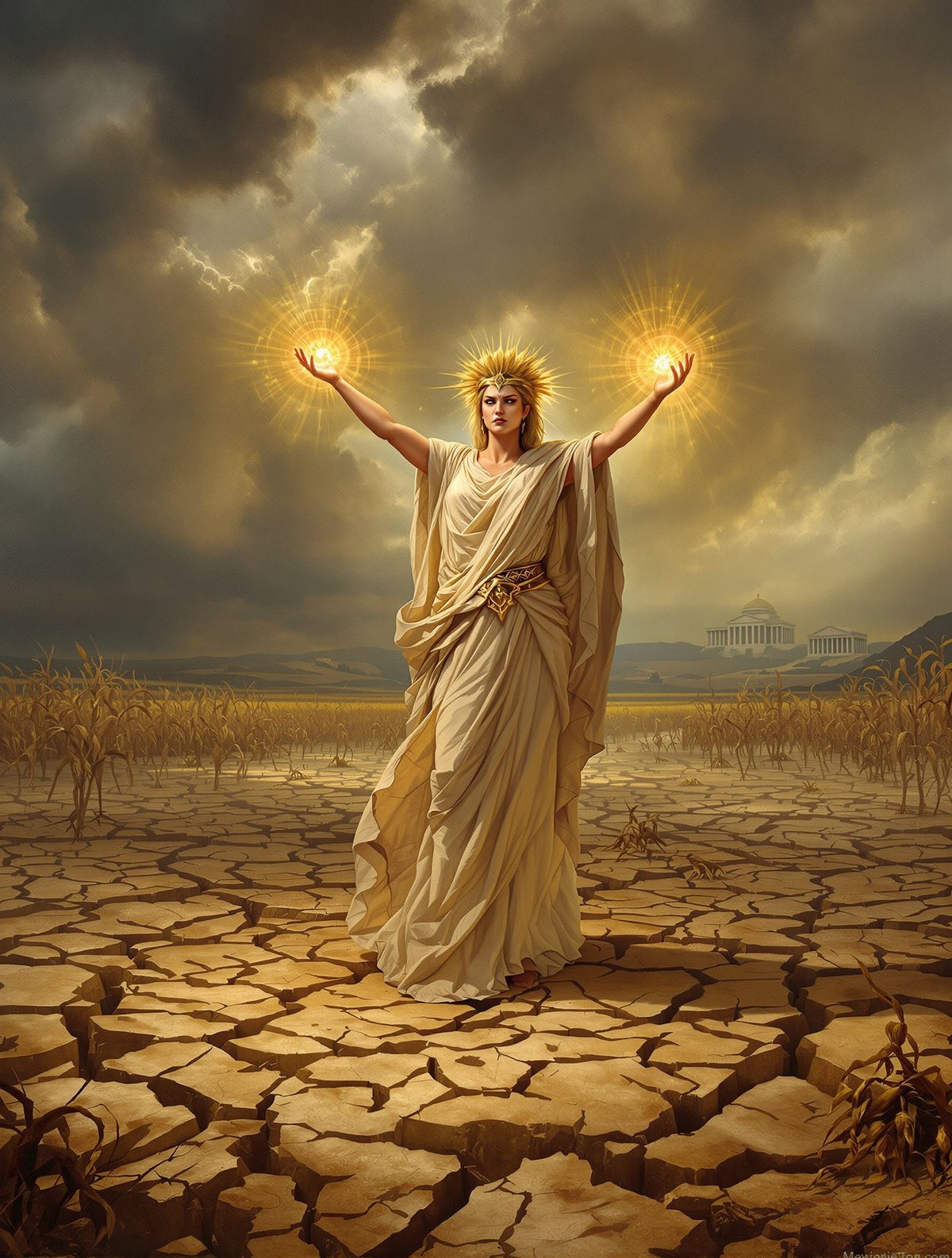
The goddess didn't simply stop tending to crops—she actively prevented anything from growing. Ancient texts describe her placing a curse upon the earth itself, making the soil as barren as stone. The Greek word used, loimós, doesn't just mean famine; it implies a supernatural pestilence that defies all natural law. Seeds would not sprout, existing crops withered overnight, and even wild plants began to die.
Archaeological evidence from Eleusis, Demeter's primary cult center about 14 miles northwest of Athens, suggests that this myth may have originated during a real period of severe famine around 1200 BCE, during the Late Bronze Age collapse. Whether inspired by historical events or not, the mythological famine was absolute in scope.
But here's what most retellings miss: Demeter's strike didn't just threaten mortals. The gods themselves depended on human sacrifices and offerings for sustenance. As people began starving, they stopped making offerings to the gods. Temples stood empty, altars grew cold, and the very worship that sustained Olympus began to fade.
Even Gods Can Starve
By the time mortals had begun dying en masse, panic had spread throughout the divine realm. Zeus, initially dismissive of what he saw as a mother's tantrum, suddenly found himself facing a crisis that threatened the cosmic order itself. Ancient sources describe desperate scenes of gods pleading with mortals to resume their sacrifices, only to be told that there was simply no food left to offer.
The situation became so dire that Zeus began sending other gods as emissaries to Demeter. First came Iris, goddess of the rainbow and divine messenger, bearing promises of honors and privileges. Demeter refused. Then came a parade of Olympians, each offering increasingly desperate bribes—new temples, expanded worship, even positions of greater power. The harvest goddess rejected them all.
Her demands remained absolutely non-negotiable: return Persephone, or watch both the mortal and immortal worlds starve into extinction. This wasn't just about a mother missing her child—it was about autonomy, consent, and the right of goddesses to protect their daughters from unwanted marriages, even when ordained by the king of the gods himself.
The Compromise That Saved the World
Faced with the collapse of civilization itself, Zeus finally capitulated—partially. He dispatched Hermes, the only god capable of traveling freely between all three realms (heaven, earth, and underworld), to negotiate Persephone's release. But Hades, cunning as always, had prepared for this possibility.
Just before releasing his bride, he offered her pomegranate seeds—seemingly a small gesture of hospitality. In the ancient world, accepting food from a host created an unbreakable bond. By consuming the seeds (accounts vary between four and seven), Persephone became forever tied to the underworld. She could return to her mother, but she would have to spend part of each year with Hades.
The compromise was as ingenious as it was tragic: Persephone would spend eight months of the year with Demeter (corresponding to the growing and harvest seasons) and four months in the underworld (during winter). Only when her daughter returned each spring would Demeter allow the earth to bloom again.
Why This Ancient Story Still Matters
The myth of Demeter and Persephone resonates today precisely because it doesn't offer easy answers or comfortable morals. Instead, it presents us with a world where even the most powerful institutions—represented by Zeus's patriarchal authority—can be brought to their knees by a mother's love and determination.
In our current era of climate change and environmental crisis, Demeter's ability to halt all plant growth feels less like fantasy and more like prophecy. The story reminds us that the natural world isn't merely a resource to be exploited, but a complex system that can withdraw its cooperation when pushed too far.
Perhaps most importantly, this ancient tale validates the profound connection between mothers and daughters while acknowledging the painful reality that children must eventually leave home. Demeter's victory was incomplete—she saved her daughter but couldn't prevent her from growing up and taking on adult responsibilities, even unwanted ones.
The Greeks who first told this story understood something we sometimes forget: that the most powerful force in the universe isn't the authority of kings or gods, but the love of a parent willing to destroy the world to protect their child. In the end, even Zeus learned to fear the wrath of a mother with nothing left to lose.