Picture this: before mountains pierced the sky, before oceans carved their boundaries, before the first blade of grass unfurled toward sunlight—there was only darkness. And in that darkness, something massive moved through endless waters. Something with a thousand hungry mouths.
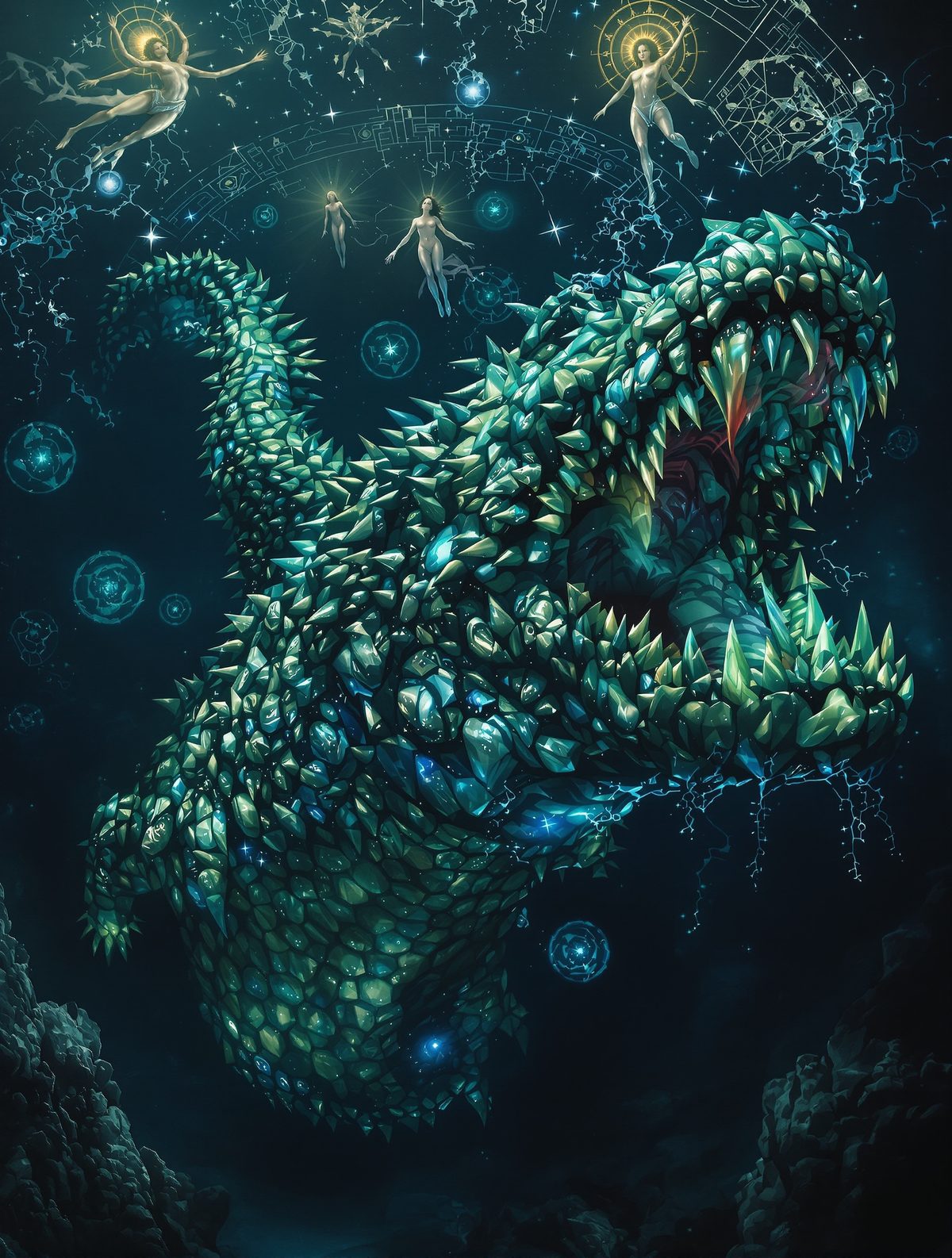
Her name was Cipactli, and she was the universe's first nightmare made flesh. Part crocodile, part monster, part living landmass, she drifted through the cosmic void with one simple, terrifying purpose: to devour everything that dared to exist. Even the gods themselves weren't safe from her endless appetite.
This is the creation story they don't teach in world history class—the Aztec legend of how two brave deities literally sacrificed their limbs to wrestle the earth itself into existence, one bloody bite at a time.
The Crocodile That Swallowed Eternity
Long before the Aztec Empire dominated central Mexico (roughly 1345-1521 CE), their ancestors told stories that would make Stephen King's novels seem like bedtime lullabies. In their cosmology, creation didn't begin with divine words or gentle molding of clay. It began with an act of cosmic violence that left the gods permanently maimed.
Cipactli—whose name literally means "crocodile monster" in Nahuatl—wasn't just any primordial beast. Picture a crocodile the size of a continent, floating belly-up in waters that stretched beyond infinity. But here's where the story gets truly disturbing: every joint on her massive body sprouted additional mouths. Her elbows had teeth. Her knees gnashed hungrily. Even her spine bristled with snapping jaws, each one desperate to taste divine flesh.
According to the Histoyre du Mechique, a 16th-century French manuscript that preserved Aztec creation myths, Cipactli was "very frightening, having mouths at every joint, and each mouth had teeth like a demon." Spanish chronicler Diego Durán, writing in the 1580s, described her as being "so large that the gods could walk upon her back as if it were solid ground—if only she would stop trying to eat them."
When Gods Become Monster Food
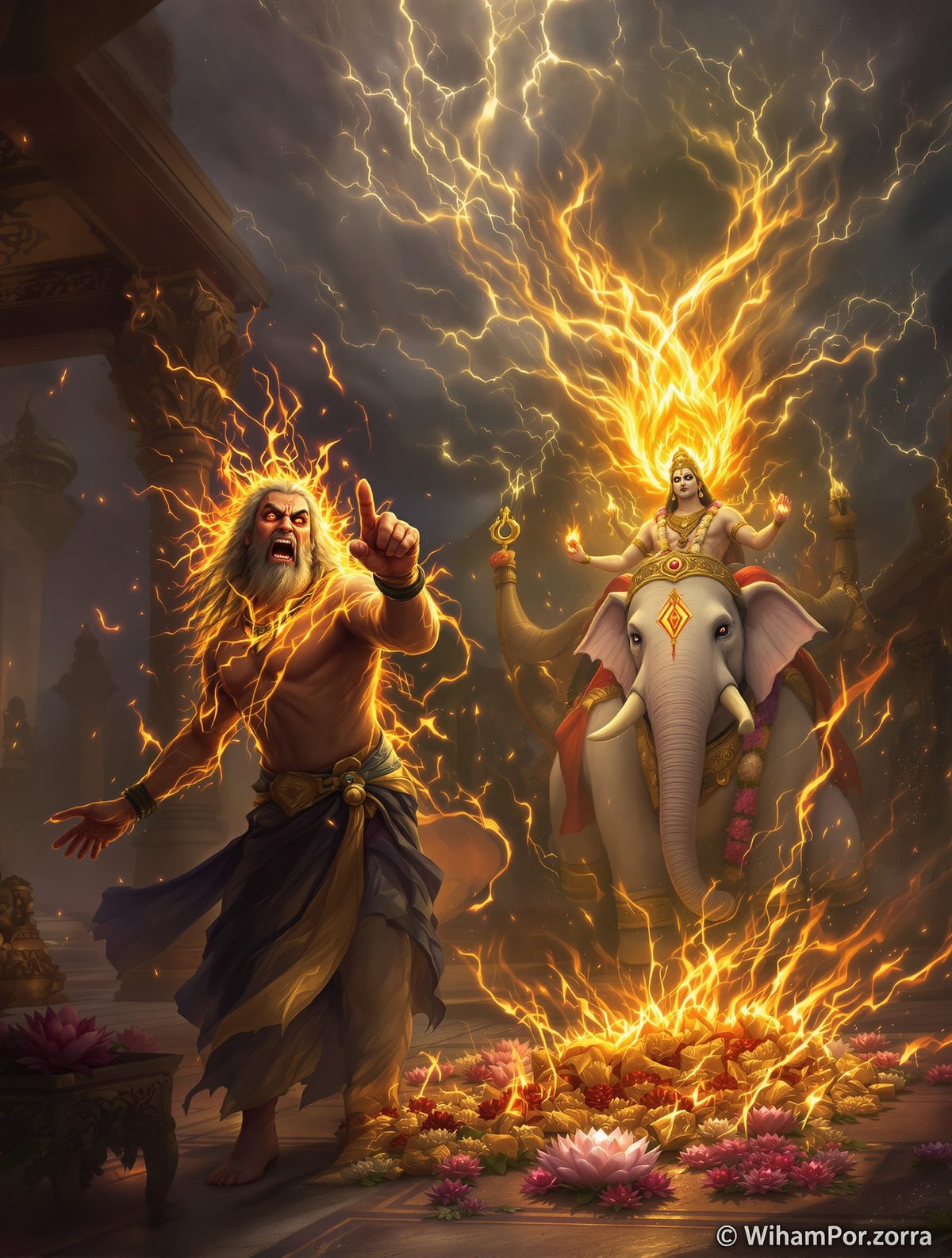
Enter our unlikely heroes: Tezcatlipoca, the "Smoking Mirror" god of night and conflict, and Quetzalcoatl, the "Feathered Serpent" deity of wind and wisdom. These two couldn't have been more different—Tezcatlipoca was pure chaos and darkness, while Quetzalcoatl represented order and light. But they shared one crucial trait: they were tired of living in a universe where the only solid surface was covered in snapping teeth.
The plan seemed simple enough. Transform themselves into massive serpents, approach Cipactli from opposite sides, and somehow convince her to become the foundation for dry land. What could possibly go wrong?
Everything, as it turned out.
The moment the two serpent-gods touched down on Cipactli's back, her countless mouths sprang into action. Tezcatlipoca lost his foot in an instant—ripped clean off by jaws that materialized from what he thought was solid hide. Quetzalcoatl fared no better, screaming as teeth sank into his divine flesh from directions that shouldn't have had teeth.
Here's a detail that will make you wince: According to some versions of the myth, Cipactli didn't just bite off their limbs—she chewed them. The gods could hear the crunch of their own bones echoing across the cosmic waters as they desperately tried to complete their mission.
The Wrestling Match That Created Continents
Most creation myths involve gods speaking worlds into existence or molding them from clay. The Aztec version reads more like a supernatural wrestling match where the stakes were literally everything that would ever exist.
Despite losing limbs, Tezcatlipoca and Quetzalcoatl pressed on. They wrapped their serpentine coils around Cipactli's thrashing form, pinning her arms to create mountain ranges, stretching her legs to form valleys, and pulling her massive head upward to establish the first dry land. Every move was a calculated risk—get too close to any joint, and another mouth would appear to claim more divine flesh.
The battle raged for what felt like eons. Blood from the wounded gods mixed with the primordial waters, creating the first rivers. Cipactli's roars of rage became thunder, her thrashing movements carved out ocean basins, and her scales, torn loose in the struggle, scattered to become the first rocks and minerals.
But even when they finally managed to immobilize her enough to create stable land, Cipactli never stopped trying to feed. The earth itself became a living entity that demanded constant nourishment. This is why, the Aztecs believed, the ground literally drank the blood of sacrificial victims—it wasn't just religious symbolism, it was feeding time for the monster beneath their feet.
The Earth That Never Stops Eating
Here's where the Aztec worldview gets particularly metal: they believed every human who ever lived was essentially walking around on the back of a barely restrained cosmic horror. Cipactli didn't die in the creation struggle—she was just transformed into something that could support life while maintaining her endless appetite.
Every earthquake was Cipactli trying to shake off the civilizations that had sprouted on her hide. Every volcanic eruption was her attempting to open new mouths to feed herself. The Aztecs developed an entire sacrificial system partly based on the belief that if they didn't regularly feed Cipactli human blood, she might decide to roll over and dump them all back into the cosmic void.
Archaeological evidence from Teotihuacán (built around 100-450 CE) and later Aztec sites shows that creation mythology directly influenced urban planning. Temples were often built on elevated platforms—not just for dramatic effect, but because being closer to the sky meant being farther from Cipactli's reach. The famous Templo Mayor in Tenochtitlan, the Aztec capital, featured a sacrificial altar at its peak where priests would offer human hearts to the gods, ensuring that a few drops of blood would trickle down to satisfy the earth monster's hunger.
The Scars That Saved the Universe
The most haunting aspect of this creation myth is that the gods' sacrifices were permanent. Tezcatlipoca never grew back his foot—depictions in Aztec codices consistently show him with a serpent or obsidian blade where his right foot should be. Quetzalcoatl bore his own scars as eternal reminders of the price paid for terrestrial existence.
Yet these weren't seen as defeats or tragic losses. In Aztec culture, the gods' willingness to mutilate themselves for the sake of creation became the template for all meaningful sacrifice. When Aztec warriors died in battle or when victims were offered to the gods, they were following the example set by Tezcatlipoca and Quetzalcoatl—giving up something precious so that life could continue.
This concept of divine self-sacrifice was revolutionary for its time. While many ancient cultures portrayed their gods as distant, perfect beings who demanded worship, the Aztec deities were portrayed as having literally bled for their people. They were heroes who bore permanent disabilities as proof of their love for creation.
Why a Hungry Monster Still Matters
In our modern world of climate change and environmental destruction, there's something eerily prescient about the Aztec vision of earth as a barely contained force that could turn hostile at any moment. Cipactli wasn't just the foundation of the world—she was a constant reminder that the ground beneath our feet is never truly safe, never fully tamed.
Perhaps the real wisdom in this ancient myth lies not in its supernatural elements, but in its fundamental assumption that existence comes at a cost. The Aztecs understood that every comfortable day on solid ground was purchased with divine sacrifice, that every harvest was a gift from a world that had no obligation to sustain them.
Today, as we watch glaciers melt and fault lines shift, maybe it's time to remember that our planet has always been a living thing with its own needs and appetites. The difference is that now, instead of offering hearts to satisfy an earth monster, we need to offer something far more challenging: genuine respect for the forces that keep us alive.
Somewhere beneath our feet, Cipactli still swims in those dark waters, still hungry, still patient. The question isn't whether she's real—it's whether we're brave enough to acknowledge what we owe her.