In the mists of ancient Ireland, where legend bleeds into history and gods walked among mortals, there existed a being so terrifying that his very gaze could extinguish life itself. Balor of the Poisonous Eye, the most feared of the Fomorian giants, possessed a weapon more devastating than any sword or spear—an eye so massive and deadly that it required four grown warriors just to lift its eyelid. But prophecies, as the ancient Celts knew well, have a way of fulfilling themselves in the most unexpected ways. And when the final battle came, it would be Balor's own flesh and blood who would turn that terrible eye against him in a moment of cosmic irony that would echo through Irish mythology for millennia.
The Curse of Balor's Eye: A Grandfather's Deadly Secret
Long before the Tuatha Dé Danann—the godlike tribe that would become Ireland's ruling pantheon—claimed dominion over the emerald isle, the land belonged to the Fomorians. These primordial beings, often depicted as giants with supernatural powers, represented the chaotic forces of nature: storm, darkness, and destruction. Among them, none was more feared than Balor, whose very name struck terror into the hearts of mortals and immortals alike.
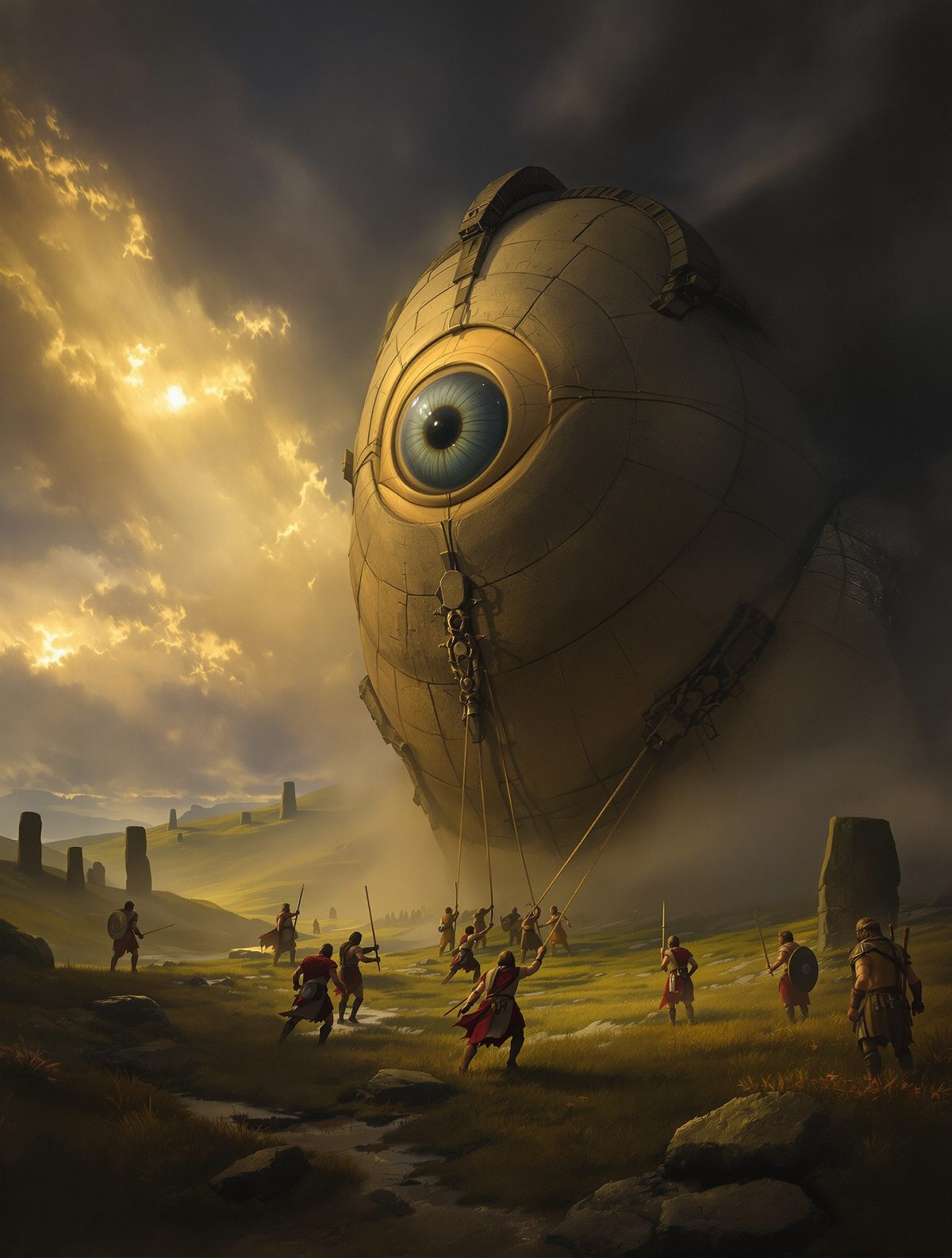
The origin of Balor's deadly eye reads like something from a dark fairy tale. As a young giant, Balor had peered through the window of his father's druids while they prepared a powerful poison. The toxic vapors from their cauldron seeped into his eye, transforming it into an instrument of death. From that moment forward, anything Balor looked upon with his poisoned eye would wither and die instantly. The eye grew so large and heavy that his eyelid drooped perpetually, requiring four strong men to lift it when Balor wished to unleash its deadly power.
But it wasn't just the physical transformation that haunted Balor—it was a prophecy that chilled him to his very core. The druids foretold that he would one day be killed by his own grandson. Determined to cheat fate, Balor imprisoned his only daughter, Ethniu, in a crystal tower on Tory Island off the coast of Donegal, ensuring she would never bear children. The tower, according to local legends that persist to this day, stood on the island's highest peak, surrounded by treacherous cliffs and guarded by twelve women who were sworn to keep all men away.
Love Finds a Way: The Birth of a Hero
Even the most carefully laid plans cannot thwart destiny, and Balor's would prove no exception. Cian, one of the Tuatha Dé Danann and a member of the divine craftsman family, fell deeply in love with the imprisoned Ethniu. With the help of the druidess Biróg, who possessed the power of shape-shifting and illusion, Cian infiltrated the crystal tower disguised as a woman.
The passionate union of Cian and Ethniu resulted in the birth of triplets—though some versions of the tale speak of just one child. Balor, discovering his daughter's pregnancy, flew into a terrible rage. He ordered the infants to be drowned in the whirlpool of Tory Island, but fate intervened once more. One child survived, rescued by Biróg and spirited away to be raised by Manannan mac Lir, the sea god, and later by the smith god Goibhniu.
This child would grow to become Lugh Lámhfada—Lugh of the Long Arm—perhaps the most celebrated hero in Irish mythology. Blessed with skills in every craft and art known to the gods, Lugh embodied the very antithesis of his grandfather's destructive nature. Where Balor brought death, Lugh brought light and life. Where Balor represented the old, chaotic order, Lugh symbolized hope for a new age.
The Second Battle of Magh Tuireadh: Gods at War
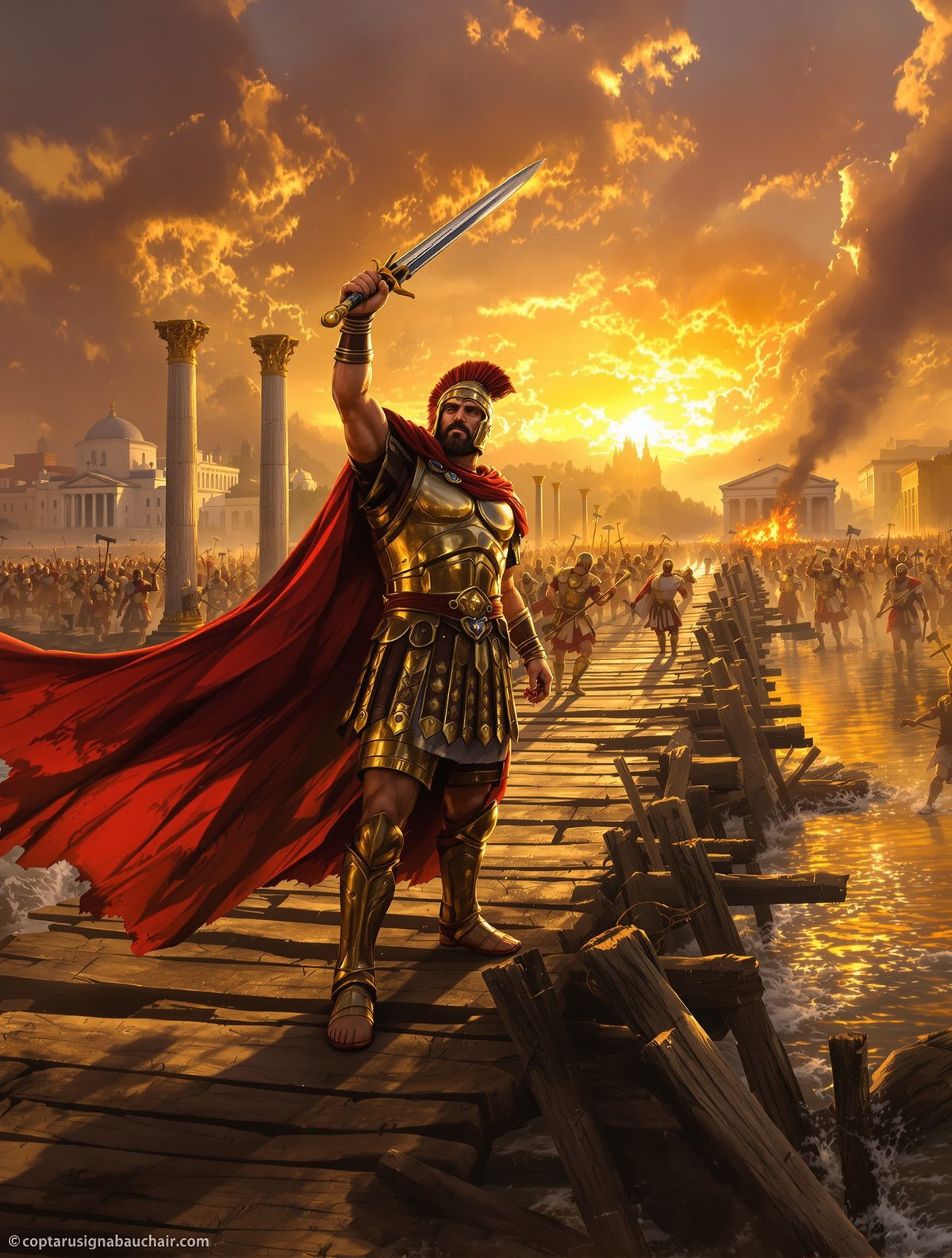
The inevitable confrontation between grandfather and grandson came during the Second Battle of Magh Tuireadh (Moytura), fought on the plains of County Mayo around what scholars estimate to be 1700-1500 BCE, during Ireland's Bronze Age. This wasn't merely a battle between two armies—it was a cosmic struggle between order and chaos, between the old world of the Fomorians and the new world of the Tuatha Dé Danann.
The battlefield stretched across the boggy plains near Lough Arrow, where megalithic monuments still stand today as silent witnesses to this ancient conflict. The Fomorian army was a sight to behold: giants with single eyes, others with single arms or legs, beings of such terrible aspect that their very appearance could break the courage of mortal warriors. Leading them was Balor himself, now ancient beyond measure, his deadly eye hidden behind an eyelid so heavy it hung like a curtain of flesh.
On the other side stood the radiant host of the Tuatha Dé Danann, led by their king Nuada of the Silver Arm and the young hero Lugh, who had only recently proven himself worthy to join their ranks. The contrast couldn't have been starker: where the Fomorians embodied primal chaos, the Tuatha Dé Danann represented civilization, craft, and the harmonious relationship between divine and mortal realms.
The Eye Opens: Death Walks the Battlefield
As the battle raged across the muddy plains, both sides suffered tremendous losses. The clash of supernatural beings shook the very foundations of the earth, and the sounds of their combat could be heard from the western sea to the eastern mountains. But the tide turned decisively in favor of the Fomorians when Balor decided to unveil his ultimate weapon.
The moment that would be forever etched in Celtic memory began when four of Balor's strongest warriors approached their leader. With great ceremony and evident fear, they positioned themselves around the giant's massive head. Using iron hooks and all their combined strength, they began the terrifying process of lifting Balor's poisonous eyelid.
What happened next was carnage on an unprecedented scale. As the deadly eye opened, its malevolent gaze swept across the battlefield like a scythe through wheat. Tuatha Dé Danann warriors fell by the dozens, their life force instantly extinguished by Balor's terrible stare. The very grass withered beneath his gaze, and the stones of the battlefield cracked and split. Even the clouds above seemed to darken and flee from the horror below.
The remaining Tuatha Dé Danann forces began to retreat in terror. It seemed that prophecy and fate meant nothing in the face of such overwhelming power. Balor's laughter boomed across the plain as he slowly turned his head, seeking more victims for his deadly eye. The old order would triumph after all—or so it seemed.
The Stone That Changed Everything: A Grandson's Desperate Gambit
But Lugh, the child who had escaped drowning by his grandfather's order, was not ready to accept defeat. Armed with a sling—the same humble weapon that would later serve another famous giant-slayer—Lugh positioned himself at a distance carefully calculated to avoid his grandfather's deadly gaze while remaining within range of his own weapon.
The sling stone Lugh selected was no ordinary projectile. According to the ancient texts, it was a tathlum—a ball made from the hardened brains of slain enemies, a type of ammunition that Celtic warriors believed carried supernatural properties. Some versions of the tale describe it as a stone from the sacred river Unius, blessed by the druids and imbued with the power to penetrate any defense.
As Balor's eye began to turn in his direction, Lugh let fly with perfect aim and devastating force. The projectile struck Balor's poisonous eye with such tremendous impact that it didn't merely wound the giant—it drove the massive eyeball completely through the back of his skull. The eye, still deadly even in its destruction, fell among the ranks of Balor's own Fomorian army, where its dying gaze killed twenty-seven of his warriors before its light finally faded forever.
Balor of the Poisonous Eye, the most feared of the Fomorian giants, collapsed with a crash that shook the earth from Tory Island to the Hill of Tara. The prophecy was fulfilled in the most literal way possible: he had indeed been slain by his own grandson, and his own deadly weapon had been turned against his followers in the final, cosmic irony of his violent life.
The Echo of Ancient Truths: Why Balor's Story Still Matters
The tale of Balor's defeat represents far more than just another mythological battle scene. In this ancient story, we find timeless themes that resonate as powerfully today as they did three thousand years ago on the hills of County Mayo. The futility of trying to escape destiny, the way violence ultimately consumes those who wield it, and the triumph of skill and courage over brute force—these are lessons that transcend culture and era.
Perhaps most striking is how the story presents the self-defeating nature of tyrannical power. Balor's attempt to prevent the prophecy by imprisoning his daughter directly led to the birth of the hero who would destroy him. His deadly eye, turned against his enemies throughout his life, ultimately annihilated his own forces in death. In our modern world, where we witness authoritarian leaders attempting to secure their power through increasingly desperate measures, Balor's fate serves as a potent reminder that oppression often carries the seeds of its own destruction.
The archaeological evidence from sites like Magh Tuireadh suggests that these stories preserved genuine cultural memories of Bronze Age conflicts, encoded in mythological language that made them both memorable and meaningful. When we stand today on Tory Island and look toward the mainland, or walk the ancient plains of Mayo where megaliths still mark the legendary battlefield, we're not just encountering fairy tales—we're touching the deepest roots of European civilization, where our ancestors first learned to tell stories about the price of power and the possibility of redemption.