Imagine the terror of knowing that each sunset might be your last. Picture a world where dawn was never guaranteed, where the very survival of existence hung on the outcome of a nightly battle between order and chaos in the realm of the dead. For the ancient Egyptians, this wasn't fantasy—it was the terrifying reality that played out every single night for over 3,000 years of their civilization.
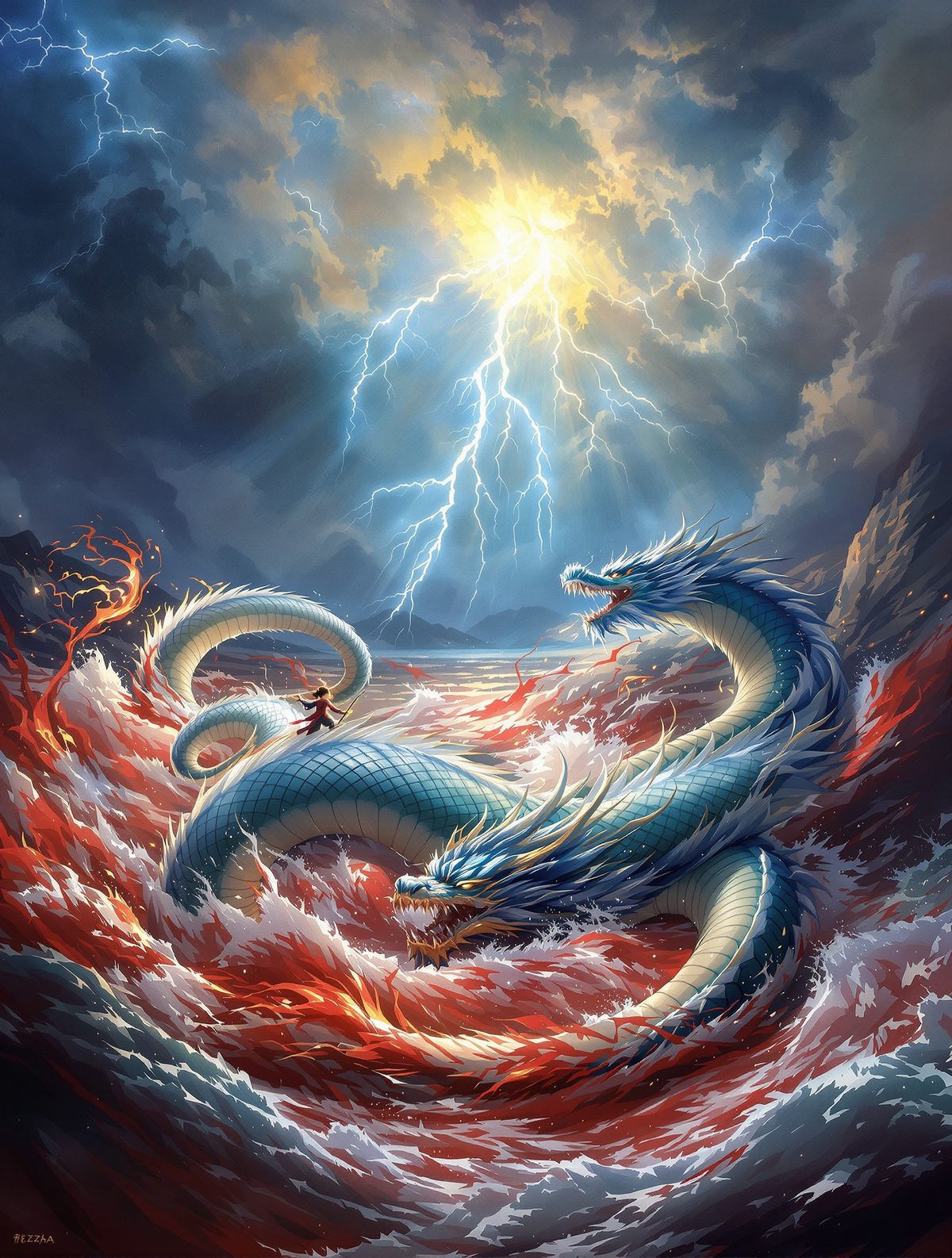
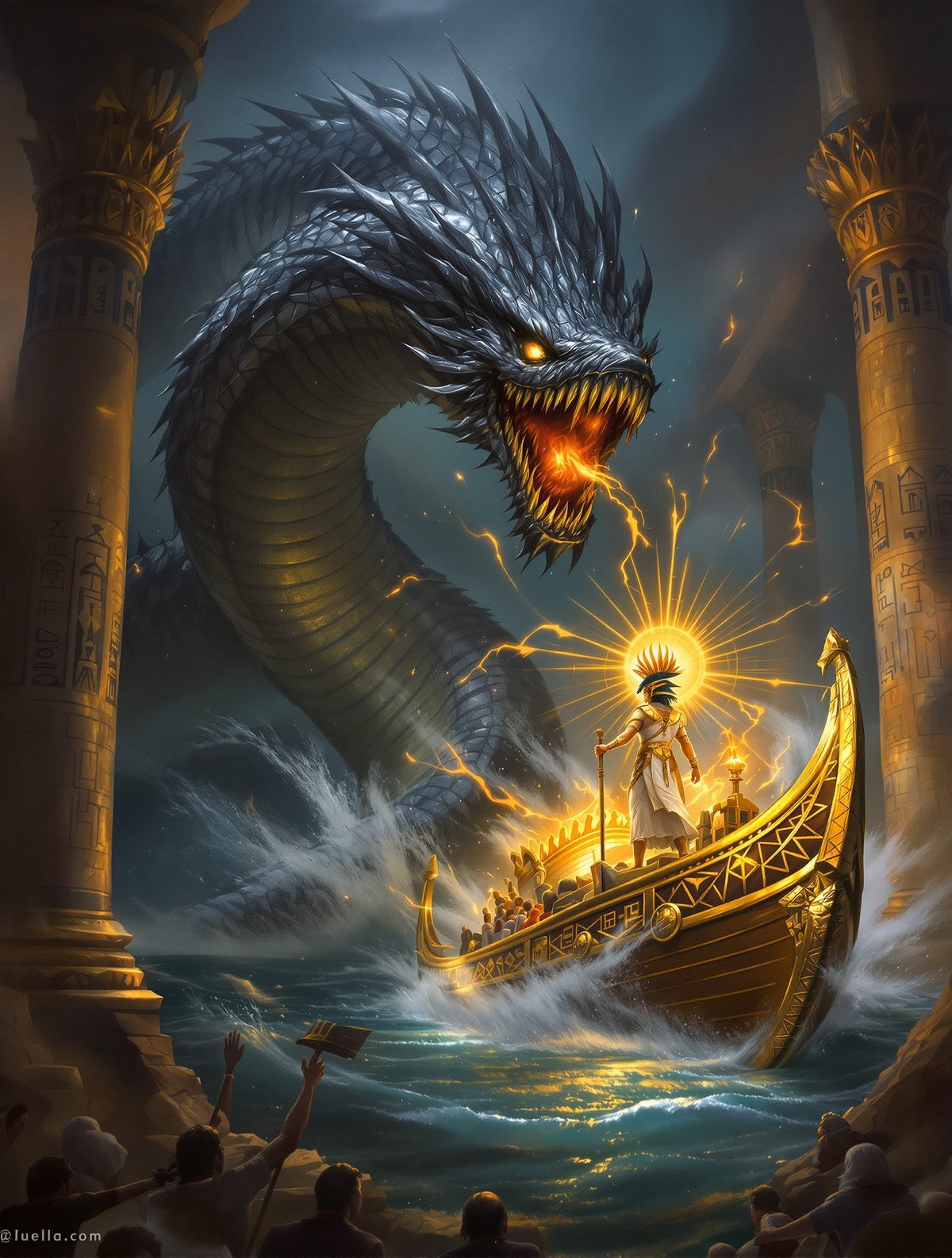
In the suffocating darkness of the Duat, the Egyptian underworld, a serpent of unimaginable proportions coiled in eternal hunger. Apep—whose name literally meant "to slither"—stretched longer than the Nile itself, his scales harder than granite, his jaws capable of swallowing the sun god Ra and plunging the world into everlasting night. Every evening, as Ra's golden solar barge descended below the western horizon, the most crucial battle in Egyptian cosmology began anew.
The Serpent of Primordial Chaos
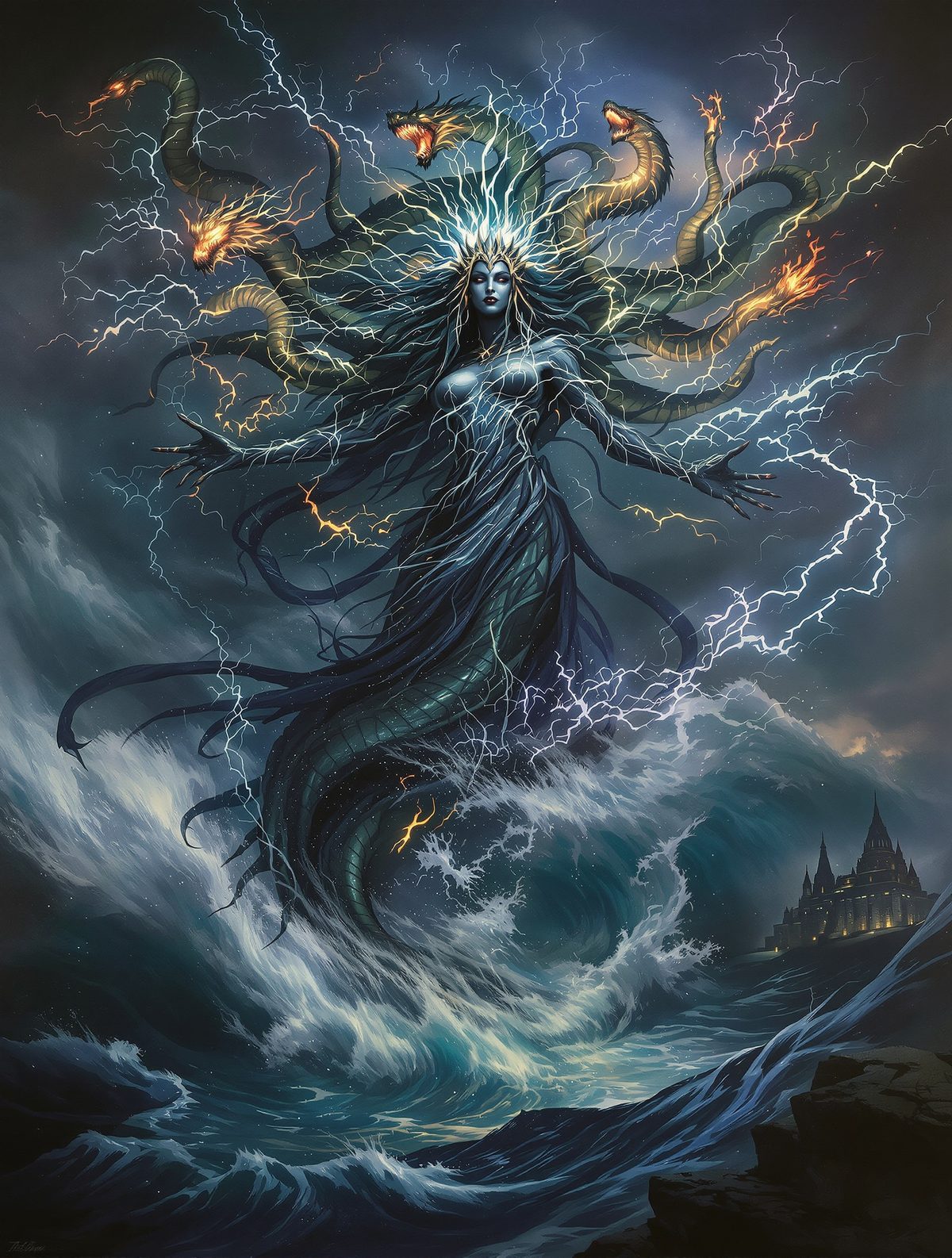
Apep wasn't just another monster in the Egyptian pantheon—he was chaos incarnate, older than the gods themselves. According to the Pyramid Texts dating back to 2400 BCE, Apep emerged from the primordial waters of Nun, the void that existed before creation. Unlike other Egyptian deities who could take human form, Apep remained eternally serpentine, a writhing embodiment of everything that threatened the ordered world the Egyptians held sacred.
The ancient texts describe Apep as being over 50 cubits long—roughly 75 feet of pure malevolence. But here's what most people don't know: Apep wasn't originally evil in the way we might understand it today. He represented the necessary chaos that existed before creation, the darkness that gave meaning to light. The Egyptians understood that without chaos, there could be no order—but they also knew that if chaos ever triumphed completely, existence itself would cease.
What makes Apep truly terrifying in Egyptian theology is that he couldn't be killed. Unlike other mythological monsters that heroes could slay once and for all, Apep regenerated each night, making the battle eternal. The serpent existed outside the cycle of death and rebirth that governed all other beings—he was, in essence, the antithesis of existence itself.
Ra's Perilous Journey Through the Twelve Hours
Every night at sunset, Ra began his treacherous journey through the Duat aboard his solar barge, the Mesektet. This wasn't a leisurely cruise—it was a desperate race against annihilation that lasted exactly twelve hours, with each hour presenting its own unique dangers. The ancient Book of the Dead and the later Amduat (literally "That Which Is in the Underworld") provide us with detailed maps of this nightly odyssey.
During the first few hours, Ra's barge sailed through relatively calm waters, but by the seventh hour, he entered Apep's domain. Here's a detail that might surprise you: Ra didn't face this journey alone. His barge carried a full crew of defender gods, including Set (yes, the same Set who murdered Osiris), who ironically became Ra's most fierce protector against the chaos serpent. The enemy of my enemy, it seems, even applied in ancient Egyptian theology.
The most critical moment came during the eighth hour, when Apep would rise from the depths of the underworld river. Ancient papyri describe the serpent's emergence in vivid detail: the waters would boil and churn, darkness would become absolute, and Apep's roar would shake the very foundations of reality. His goal wasn't just to devour Ra—it was to drink the sacred river itself, leaving the sun god stranded in absolute void.
The Arsenal Against Annihilation
The Egyptians didn't leave Ra's survival to chance. They developed an elaborate system of spells, rituals, and protective magic designed to ensure the sun god's victory each night. The Book of Overthrowing Apep, dating from around 350 BCE but based on much older traditions, contains specific instructions that priests performed in temples across Egypt every single day.
These rituals were remarkably detailed and, frankly, quite brutal. Priests would create wax effigies of Apep, then systematically destroy them while reciting curses. They would stab the wax serpent, burn it, cut it into pieces, and finally spit on the remains—all while chanting spells designed to weaken the real Apep in his underworld domain. The ritual had to be performed at dawn, noon, and sunset, creating a continuous magical assault on the chaos serpent.
But here's what's truly fascinating: these weren't just symbolic acts. The Egyptians believed their earthly rituals directly influenced the cosmic battle occurring in the Duat. Every priest stabbing a wax serpent was literally helping Ra fight for his life. Every correctly pronounced spell was another weapon in the sun god's arsenal. The survival of the world depended not just on divine power, but on human participation in the cosmic order.
When Darkness Nearly Won
Solar eclipses presented the ultimate terror for ancient Egyptians—visible proof that Apep had temporarily succeeded in his eternal quest. During the eclipse of 1223 BCE, recorded on the Ugarit tablets, Egyptian texts describe widespread panic as people believed they were witnessing the end of the world. Priests worked frantically, doubling their anti-Apep rituals while the populace engaged in elaborate ceremonies designed to help Ra escape from the serpent's belly.
The eclipse lasted just over six minutes, but Egyptian records suggest the religious ceremonies continued for days afterward. They understood that this was just a temporary victory for Apep—a preview of what would happen if their eternal vigilance ever faltered. Pharaoh Merneptah himself participated in the emergency rituals, demonstrating how seriously the royal court took this cosmic threat.
Archaeological evidence from this period shows a massive increase in protective amulets and anti-Apep inscriptions, suggesting that the eclipse had a lasting psychological impact on Egyptian society. For them, they had literally witnessed chaos swallow order and lived to tell about it—barely.
The Eternal Defenders
Ra's nightly battle wasn't a solo effort. The solar barge carried a divine crew specifically assembled to combat Apep's assault. Set, despite his reputation as a chaos god himself, wielded a massive spear from the prow of the boat, striking at Apep whenever the serpent approached. The goddess Isis used her powerful magic to create barriers of protection, while Thoth provided the strategic wisdom needed to navigate the treacherous waters.
But the most crucial defender was often overlooked in popular retellings: the god Aker, who manifested as two lions sitting back-to-back, guarded the entrance and exit points of the underworld. Aker's job was to ensure that even if Apep managed to damage Ra during the nightly journey, the sun god would still emerge in the east each morning. These lions literally held the gates of dawn open, making sunrise possible even after the worst attacks.
The ancient texts reveal something remarkable: this divine crew changed over the millennia. Different periods of Egyptian history emphasized different defenders, reflecting the evolving theological understanding of the threat Apep represented. During times of political chaos, Set's role as defender became more prominent. During periods of emphasis on magic and learning, Thoth took center stage. The myth adapted to serve the psychological needs of each generation.
Why the Serpent Still Matters
The battle between Ra and Apep represents something far more profound than ancient superstition—it's humanity's oldest recorded understanding of entropy, the scientific principle that systems naturally tend toward disorder. The Egyptians intuited what modern physics would later prove: that maintaining order requires constant energy input, and that chaos is always waiting to reclaim what order has built.
Every morning when we take sunrise for granted, we're essentially ignoring what the Egyptians understood viscerally: that existence itself is fragile, that the forces of dissolution are always at work, and that maintaining civilization requires eternal vigilance. Climate change, political upheaval, social disorder—these are our modern Apeps, serpents of chaos that threaten to swallow the ordered world we've built.
Perhaps most remarkably, the Egyptians understood that this battle could never be finally won—only fought again and again, night after night, generation after generation. In our age of seeking permanent solutions and final victories, there's profound wisdom in their acceptance that some struggles are eternal, and that the real victory lies not in defeating chaos once and for all, but in ensuring that order survives to fight another day.
The next time you watch the sun rise, remember: you're witnessing the daily miracle that terrified and inspired one of history's greatest civilizations. Ra has emerged victorious from the underworld once again, but tonight, the battle begins anew.