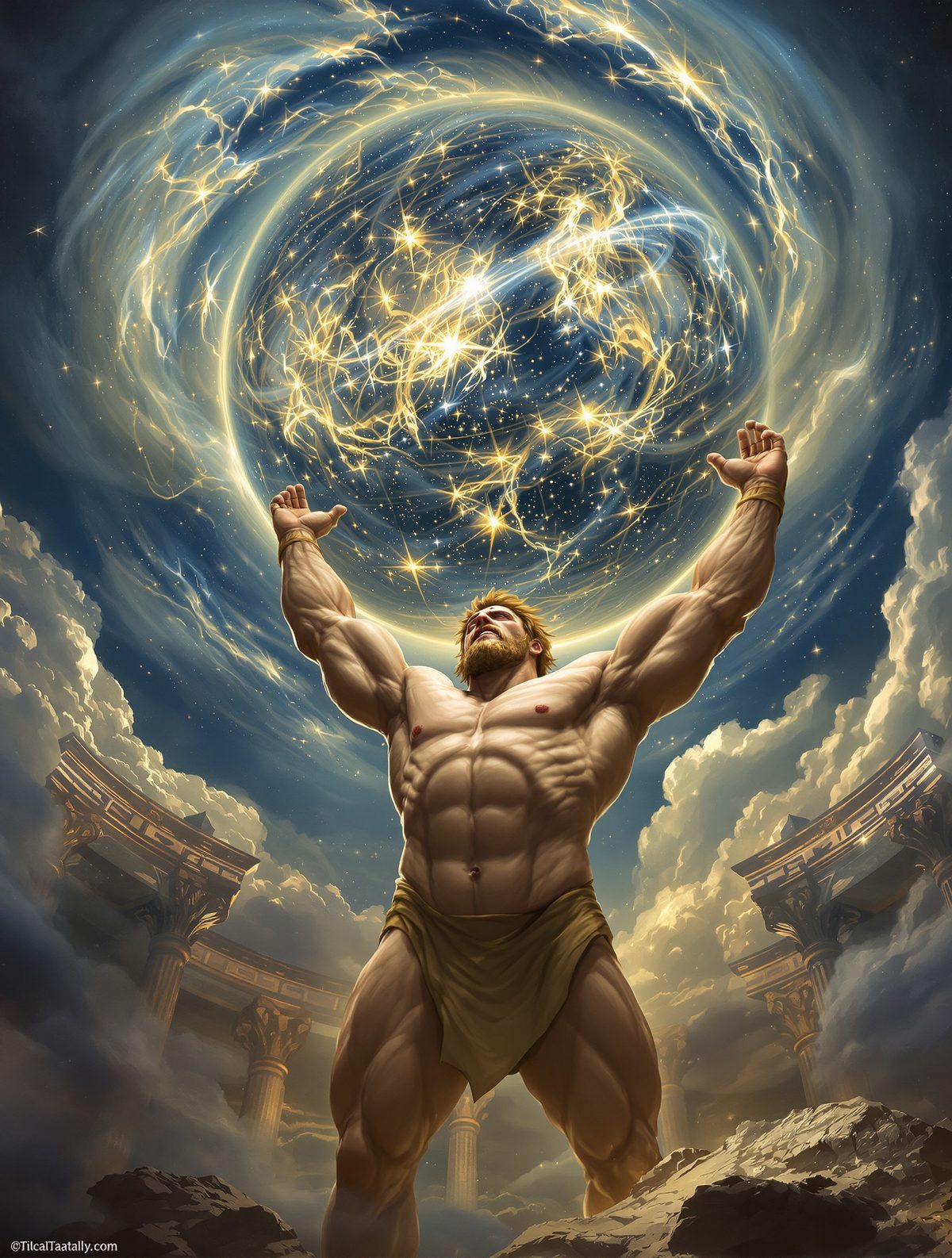
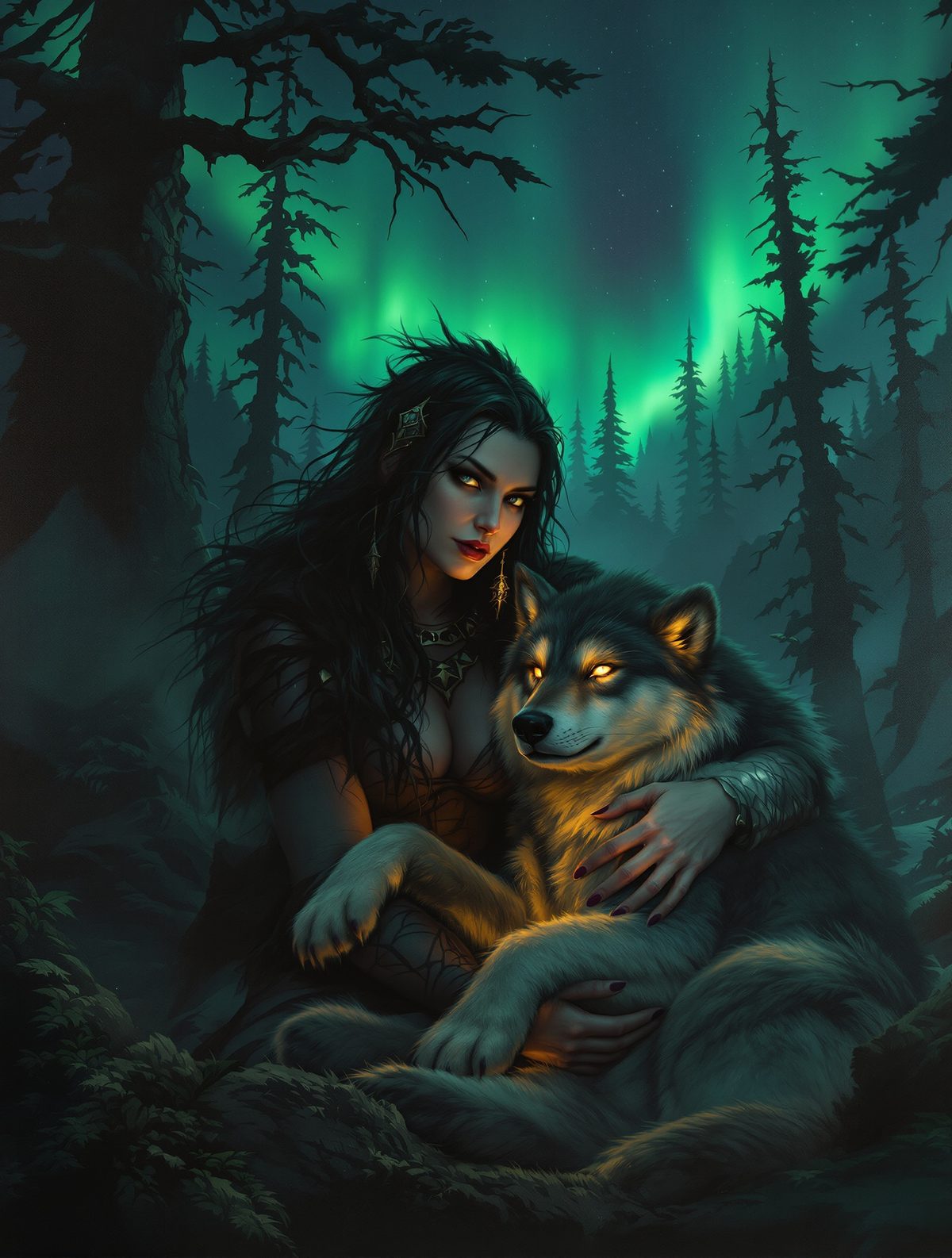
In the howling wilderness of Jotunheim, where iron trees clawed at perpetually gray skies, a giantess cradled her newborn son against her breast. Angrboda—whose name meant "bringer of anguish"—gazed down at the wolf pup in her arms, watching as his tiny ribs expanded with each breath. She could not have known that this moment of maternal tenderness would echo across the Nine Realms for millennia. Within her embrace lay Fenrir, the wolf destined to devour the All-Father himself and bring about the twilight of the gods.
What happened in those first precious days between mother and monster? The Prose Edda, compiled by Snorri Sturluson around 1220 CE, tells us of Fenrir's fate—but it barely whispers of Angrboda's role as the mother who nursed Ragnarok's destroyer. Her story reveals one of Norse mythology's most tragic maternal bonds, and perhaps its most politically charged family drama.
The Forbidden Union in the Iron Forest
Angrboda was no ordinary jötunn. Archaeological evidence from 9th-century Scandinavian settlements suggests that stories of powerful giantesses reflected real Viking-era anxieties about foreign alliances and the children they produced. In the cosmological landscape of Norse mythology, she ruled over a realm where metal trees sang prophecies and the very air tasted of doom.
When Loki first came to her iron forest, he was still counted among the Æsir, still trusted enough to sit at Odin's table. Their union was clandestine—not because Loki was married (the gods' sexual arrangements were famously fluid), but because Angrboda possessed the dangerous gift of prophecy. She could see threads of fate that even the Norns kept hidden.
Together, they conceived three children who would reshape the cosmos: Jörmungandr the World Serpent, Hel the half-dead goddess of the underworld, and finally Fenrir. But here's what the textbooks rarely mention—Angrboda didn't just birth these apocalyptic beings and disappear. She raised them, nurtured them, and most importantly, she warned them about what the gods would do.
The Wolf Who Outgrew the World
Fenrir's growth defied all natural law. Medieval Icelandic sources describe him doubling in size every day during his first week of life. By the time he was a month old, he stood taller than a grown warrior. His howl could shatter stone, and his paws left prints deep enough to form lakes.
Angrboda watched her son's transformation with a mixture of pride and mounting dread. She had seen his future in the flames of her prophetic fires—chains forged by dwarven hands, betrayal by those who claimed to love him, and ultimately, his terrible revenge at the world's end. The weight of this knowledge colored every lullaby she sang, every meal she provided.
Fenrir's rapid growth wasn't just physical. His intelligence expanded at an equally alarming rate. By his second month, he could speak the languages of gods, giants, and men. He debated philosophy with his mother and composed poetry that made the very mountains weep. This intellectual development makes the gods' later treatment of him all the more morally complex—they didn't chain a mindless beast, but a thinking being capable of understanding their betrayal.
When the Gods Came Calling
The knock came on Angrboda's door during Fenrir's third month of life. Odin himself stood in her threshold, flanked by his ravens and radiating the cold authority of Asgard. He hadn't come to negotiate.
"The wolf must come with us," the All-Father declared. "For the safety of all the Nine Realms."
What followed was a scene that Snorri's Edda glosses over but which held profound significance for Viking audiences. Angrboda demanded the right of trial combat—an ancient custom that allowed parents to fight for custody of their children. Odin refused, claiming divine authority superseded giant law. This legal precedent would echo through Scandinavian jurisprudence for centuries, establishing the principle that state security could override parental rights.
Angrboda's resistance was fierce but ultimately futile. The gods had come prepared with binding spells and threats against her other children. Faced with the possibility of losing all three offspring, she made the impossible choice that mothers throughout history would recognize—she sacrificed one to save the others.
The Mother's Prophecy
As the gods led Fenrir away from the iron forest, Angrboda called out one final prophecy that would haunt Asgard for generations: "You take my son in the name of preventing Ragnarok, but it is your fear and cruelty that will create it. The wolf you chain in love might have been your guardian—the wolf you chain in betrayal will be your destroyer."
This prophecy contains one of Norse mythology's most sophisticated insights into the nature of fate and free will. Modern scholars have identified this as an early example of what psychologists now call a "self-fulfilling prophecy"—the gods' attempts to prevent their doom actually ensured it would come to pass.
Angrboda's words proved devastatingly accurate. In Asgard, Fenrir was initially treated well. The god Tyr, in particular, formed a genuine bond with the young wolf, feeding him by hand and teaching him the arts of war. For a brief period, it seemed possible that Angrboda's first prophecy—that Fenrir could have been their guardian—might come true.
But as Fenrir continued growing, fear overcame friendship. The gods commissioned the dwarves to forge Gleipnir, a chain disguised as a silken ribbon but stronger than any iron. They challenged Fenrir to break it, claiming it was merely a test of strength. When the wolf, now wise to their ways, demanded one of them place their hand in his mouth as surety of good faith, only Tyr was brave enough to comply.
The Price of Maternal Love
Back in Jotunheim, Angrboda felt the moment when Gleipnir bound her son. She felt his howl of betrayal echo through the iron trees, felt Tyr's hand severed by his crushing jaws. From that moment forward, she began preparing for Ragnarok not as a distant possibility, but as an inevitable result of the gods' cruelty.
What many don't realize is that Angrboda became one of the most important figures in the events leading to the world's end. She spent the centuries between Fenrir's binding and Ragnarok's arrival gathering allies, sharing her prophetic knowledge, and preparing the other giants for the final battle. Her maternal rage became the organizing principle around which cosmic rebellion crystallized.
Archaeological finds from the 10th century suggest that Angrboda's cult was particularly popular among Scandinavian women who had lost children to warfare or political violence. Fertility amulets bearing wolf motifs have been found in women's graves across Norway and Iceland, suggesting that her story resonated with mothers who understood the pain of watching their children become casualties of larger conflicts.
Legacy of the Wolf Mother
When Ragnarok finally arrived, Fenrir broke free of his bonds with a roar that shattered mountains. He devoured Odin just as prophecy had foretold, but not before the All-Father looked into the wolf's eyes and saw not mindless malice, but the calculated justice of a son remembering his mother's tears.
Angrboda's story matters today because it illuminates the hidden costs of political fear. In our contemporary world of security states and preventive detention, her tale serves as a powerful reminder that the measures we take to protect ourselves from perceived threats often create the very dangers we sought to avoid. The wolf chained in love might indeed become a guardian—the wolf chained in betrayal will almost certainly become a destroyer.
Perhaps most importantly, Angrboda represents the mothers throughout history whose children have been sacrificed on the altar of political expediency. Her story asks uncomfortable questions about the price of safety and who gets to decide when that price is worth paying. In the iron forests of mythology, as in the contested territories of our own world, maternal love remains one of the most powerful and dangerous forces in the cosmos.
The next time you hear the word Ragnarok, remember: it wasn't just the twilight of the gods. It was a mother's justice, delivered by the son she raised to know the difference between protection and persecution.