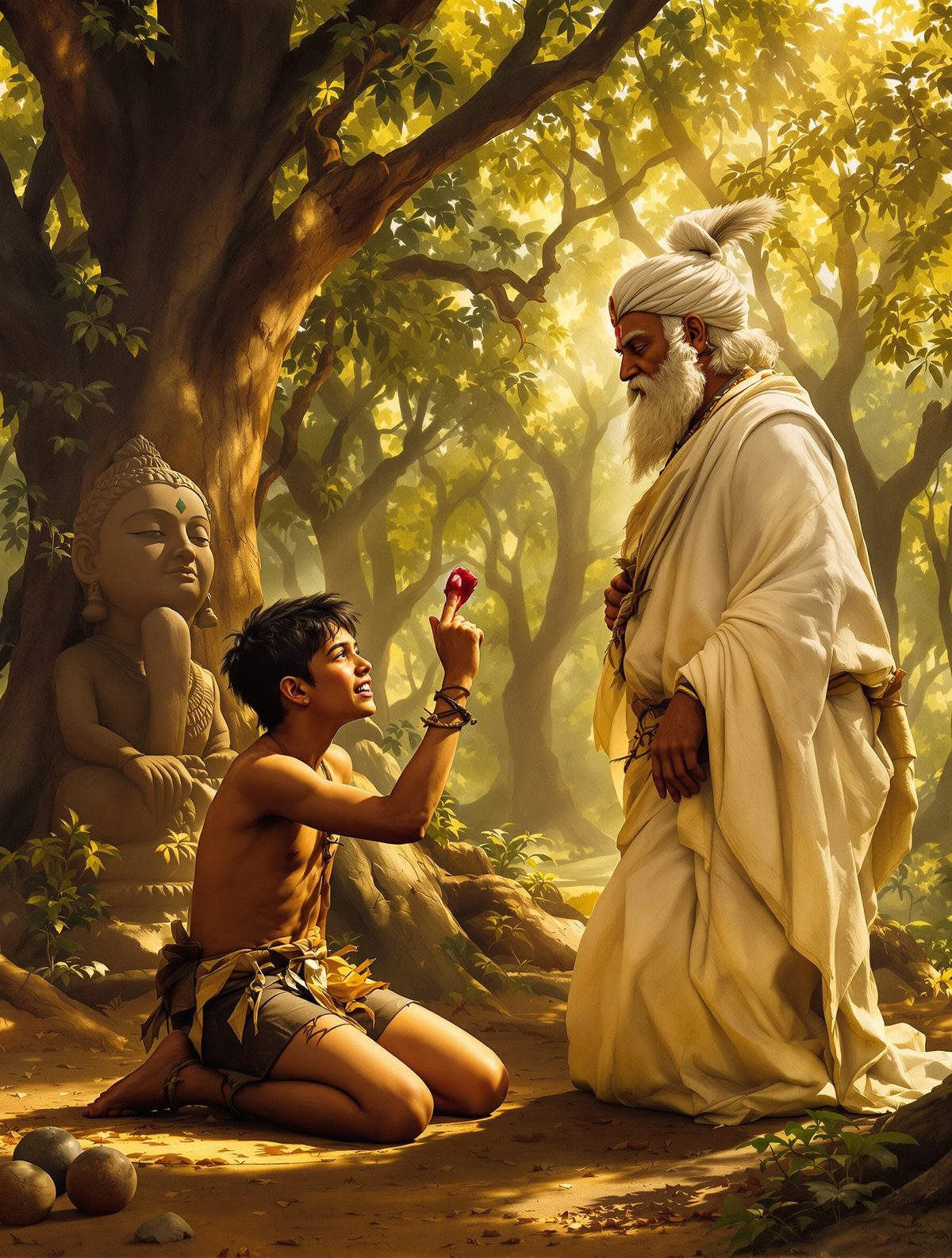
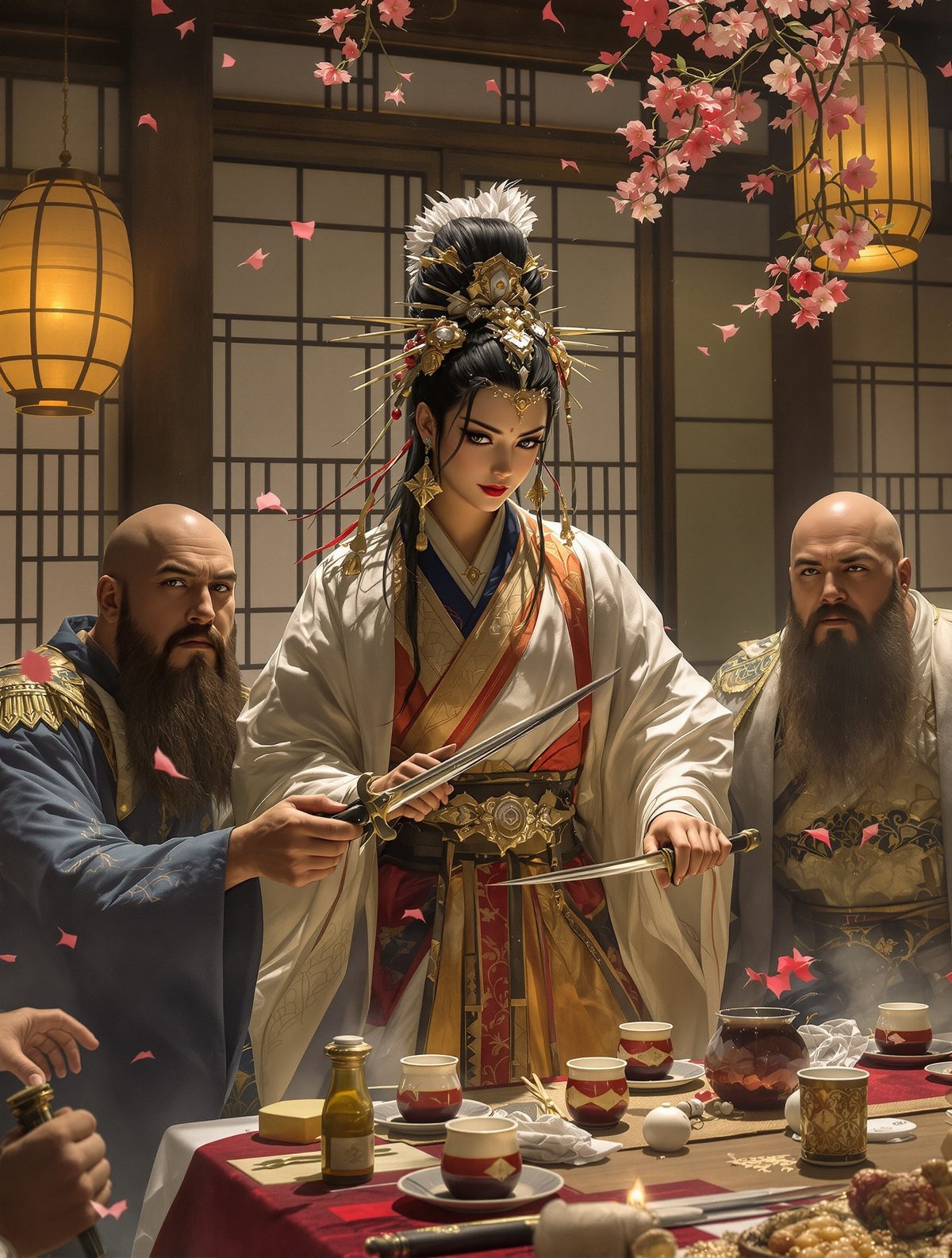
In the flickering torchlight of a Kumaso stronghold, two of ancient Japan's most feared warlords raised their sake cups in triumph. Their latest raids had been spectacularly successful, leaving villages across Kyushu in smoking ruins. What they didn't know was that the most beautiful woman at their victory feast—the one with the painted lips and flowing silk robes who had caught their lustful attention—was actually a prince sent by the emperor himself to end their reign of terror forever.
This is the story of one of history's most audacious acts of political assassination, where honor took a backseat to necessity, and where a royal prince discovered that sometimes the only way to defeat monsters is to become something unexpected yourself.
The Emperor's Impossible Command
The year was sometime in the late 1st century CE, during the legendary reign of Emperor Keiko, the 12th emperor of Japan according to the ancient chronicles. The Yamato court faced a problem that kept the emperor awake at night: the Kumaso brothers, Kumaso Takeru and Kawakamino Takeru, had turned the southern island of Kyushu into their personal kingdom of chaos.
These weren't ordinary bandits or rebels. The Kumaso brothers commanded what ancient texts describe as an army of ten thousand warriors, and their mountain fortress was considered utterly impregnable. They had successfully resisted three separate imperial expeditions, turning each one into a bloodbath that sent survivors limping back to the capital with tales of supernatural ferocity.
When Emperor Keiko called his youngest son, Prince Ousu—later known as Yamato-takeru—into his presence, the conversation was brief and brutal. "Kill them," the emperor commanded. "I don't care how you do it. The Kumaso brothers must die, or our authority means nothing."
What makes this moment so remarkable isn't just the impossible nature of the mission, but the fact that Prince Ousu was still a teenager—possibly as young as sixteen. Yet instead of protesting or requesting an army, the young prince simply bowed and began planning what would become one of the most psychologically sophisticated assassinations in ancient history.
The Art of Becoming Someone Else
Prince Ousu's plan was so audacious that it bordered on the insane. Rather than attempting another frontal assault or siege, he would infiltrate the Kumaso stronghold during their most vulnerable moment—not in battle, but at the height of their celebration.
The prince spent weeks preparing his transformation, and the details recorded in the Kojiki and Nihon Shoki chronicles are surprisingly specific. He didn't simply throw on women's clothing and hope for the best. Instead, he studied the arts of feminine presentation with the dedication of a method actor.
Working with palace women, he learned to walk with shortened steps, to modulate his voice to a higher register, and to use cosmetics so skillfully that even close inspection wouldn't reveal his true identity. The ancient texts describe him practicing dance movements and courtly graces until they became second nature. Most remarkably, he allowed his hair to grow out and learned to arrange it in the elaborate styles favored by noble women of the era.
The psychological preparation was just as intense. Prince Ousu had to mentally prepare himself to be touched, propositioned, and potentially assaulted by the very men he intended to kill. This wasn't just about wearing a costume—it was about completely inhabiting a different identity while maintaining the cold focus necessary for assassination.
Infiltrating the Fortress of Fear
The opportunity came during the Kumaso brothers' celebration of their latest victory. They had just completed a particularly devastating raid that had netted them enormous wealth and dozens of captives, including several young women intended as entertainment for their feast.
Prince Ousu arrived at the mountain fortress as part of a group of "tribute women" supposedly sent by a defeated chieftain seeking mercy. The ruse was perfect—the Kumaso brothers were accustomed to receiving such offerings, and their attention was focused on celebration rather than security.
Contemporary accounts describe the fortress as a marvel of defensive engineering, carved into the living rock of the mountain and accessible only through narrow passages that could be held by a handful of defenders. Inside, however, it was a place of surprising luxury, filled with stolen treasures from across Kyushu and decorated with silk tapestries that fluttered in the mountain winds.
The great hall where the feast took place was lit by dozens of oil lamps, creating a warm, flickering ambiance that would prove perfect for concealing the prince's true identity. The Kumaso brothers sat on elevated platforms, surrounded by their most trusted lieutenants, while musicians played and captured women danced for their entertainment.
The Dance of Death
What happened next reads like something from a fever dream. Prince Ousu, now fully embodying his feminine disguise, quickly became the center of attention at the feast. The ancient chronicles describe him as so convincingly beautiful that even the battle-hardened Kumaso warriors stopped their drinking to stare.
Both brothers were immediately smitten. Kumaso Takeru, the elder and more dominant of the pair, called the disguised prince to sit beside him. What followed was a careful game of seduction, with Prince Ousu playing his role to perfection—demure enough to seem innocent, but responsive enough to encourage the brothers' advances.
The prince had prepared for this moment with meticulous care. Hidden beneath his flowing silk robes were two curved daggers, specially crafted for concealment and positioned for quick access. But more importantly, he had studied his targets, learning their habits and preferences from captured Kumaso warriors.
As the evening progressed and sake flowed freely, the brothers grew bolder. When Kawakamino Takeru reached across his brother to touch the prince's arm, and Kumaso Takeru leaned in close enough that his breath touched the prince's painted cheek, the moment had arrived.
The strike was instantaneous and brutal. In one fluid motion, Prince Ousu drew both hidden blades and drove them deep into the brothers' chests, angling upward to pierce their hearts. The ancient texts record that Kumaso Takeru's final words were a gasp of recognition: "Who... are you?"
"I am Prince Ousu, son of Emperor Keiko," came the reply. "Your emperor sends his regards."
The Birth of a Legend
The aftermath was chaos. The Kumaso warriors, shocked by the sudden death of their leaders and confused by the bizarre nature of the assassination, were slow to react. By the time they recovered from their surprise, Prince Ousu had already fought his way out of the great hall, his feminine disguise abandoned in favor of the swift, brutal swordwork for which he would later become famous.
But here's where the story takes an unexpected turn that most versions leave out: Prince Ousu didn't immediately escape. Instead, he spent three more days systematically hunting down the Kumaso leadership structure, using the chaos following the brothers' deaths to eliminate their key lieutenants and ensure the complete collapse of their organization.
When he finally emerged from the mountains, he carried with him not just proof of his success, but something more valuable—a new understanding of the power of psychological warfare. The dying Kumaso Takeru had given him a new name in recognition of his courage: Yamato-takeru, meaning "Yamato the Brave," which became his title for the rest of his legendary career.
This mission established a pattern that would define Prince Yamato-takeru's approach to warfare throughout his life. Rather than relying solely on traditional military might, he became a master of deception, psychological manipulation, and unconventional tactics that consistently gave him advantages over seemingly superior enemies.
Why This Ancient Deception Still Matters
On the surface, this story might seem like just another tale of ancient violence, but it reveals something profound about the nature of power, identity, and survival that resonates powerfully today. Prince Yamato-takeru's willingness to completely abandon conventional notions of masculine honor in favor of effectiveness offers a fascinating glimpse into the pragmatic realities of leadership in the ancient world.
In an era where we're constantly examining the fluidity of gender roles and the performance of identity, this 2,000-year-old story feels surprisingly modern. The prince didn't just put on women's clothing—he temporarily became a woman so completely that he could navigate intimate social situations without detection. This wasn't mockery or appropriation; it was a profound act of transformation undertaken with deadly serious intent.
Perhaps most intriguingly, this story suggests that even in ancient Japan's supposedly rigid honor culture, there was recognition that survival sometimes requires abandoning conventional rules entirely. The emperor who sent his teenage son on this mission, and the chroniclers who preserved it for posterity, understood that true strength sometimes looks nothing like what we expect.
In our modern world of psychological warfare, social media manipulation, and cyber conflicts, Prince Yamato-takeru's approach to defeating an impossible enemy through pure audacity and psychological insight feels less like ancient history and more like a blueprint for understanding how power really works when everything is on the line.