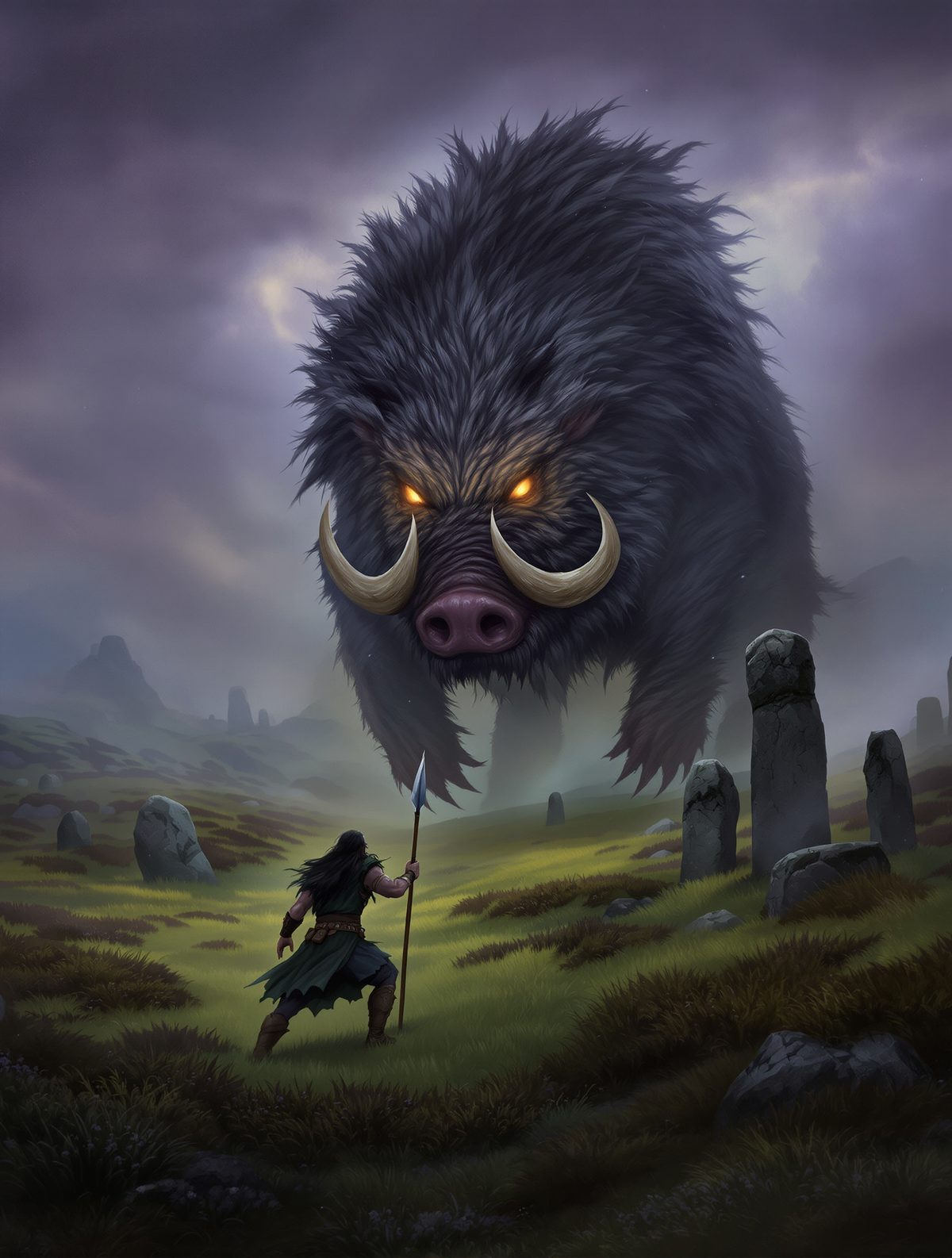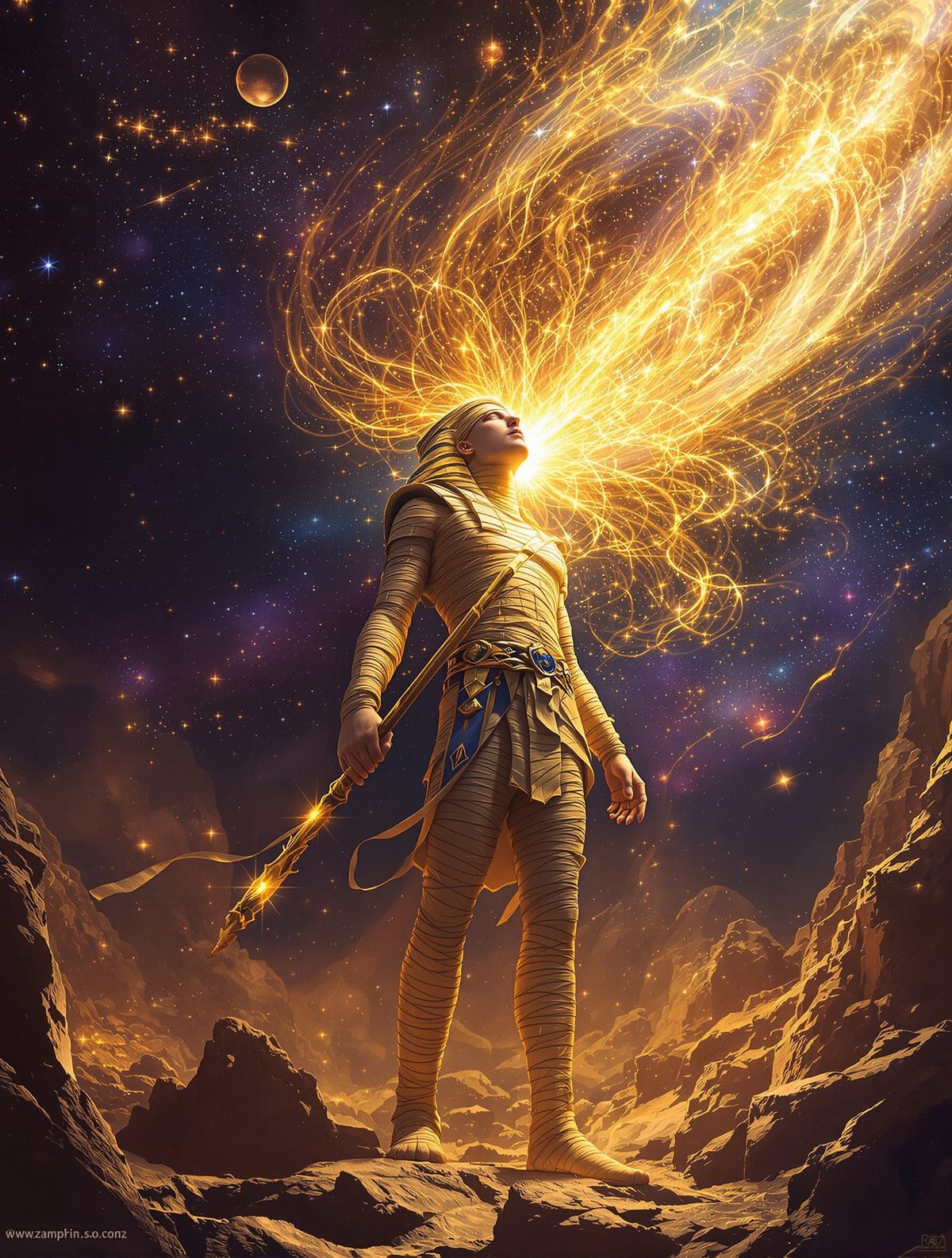
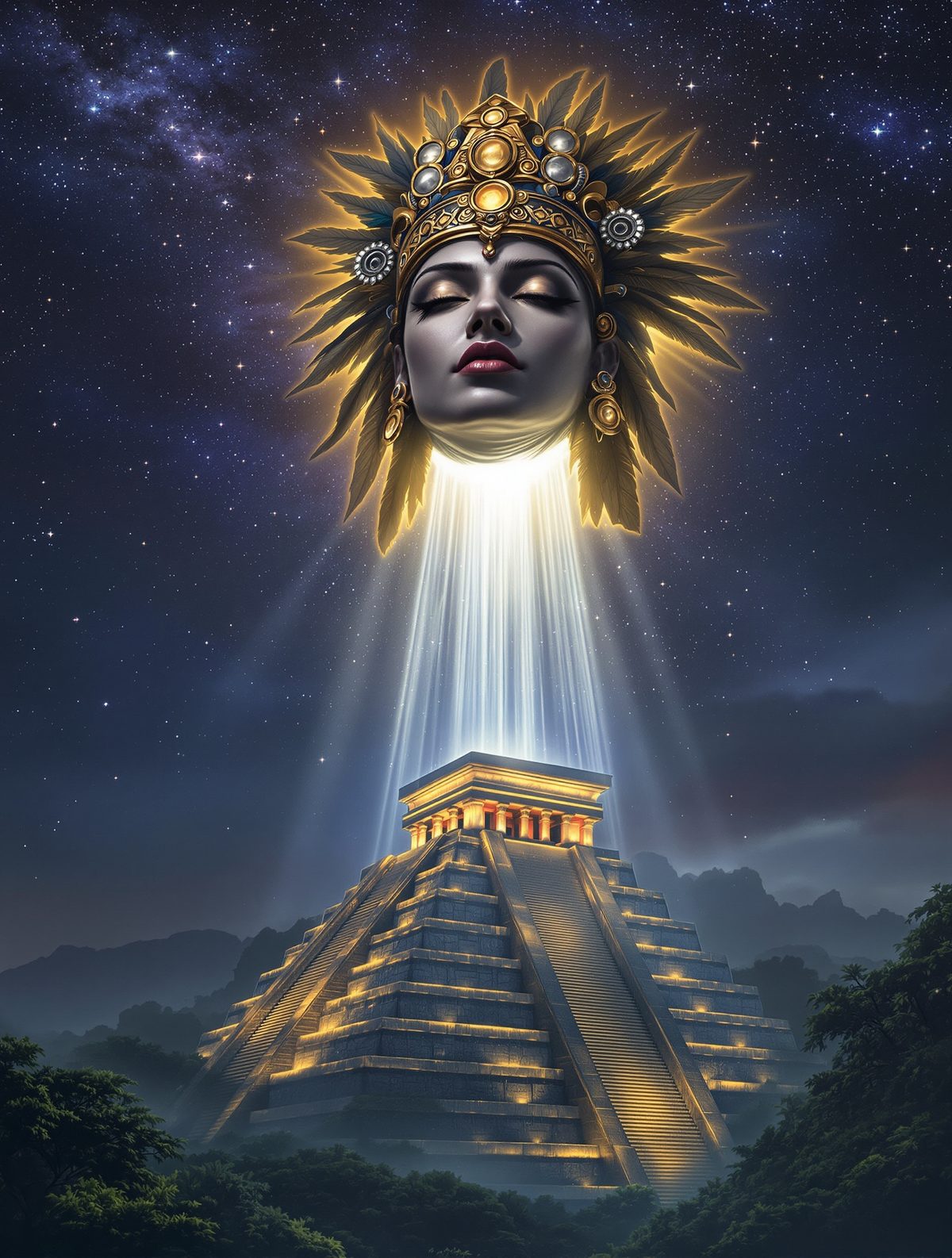
Picture this: a severed head spinning through the cosmos, trailing silver light across an obsidian sky, while below, the earth drinks the blood of gods. This isn't a fever dream from a modern horror film—it's the origin story of the moon itself, according to the Aztec people who ruled central Mexico from 1345 to 1521 CE. In their telling, our celestial companion wasn't born from cosmic dust and gravitational forces, but from an act of divine fratricide so brutal it would make Shakespeare's tragedies seem like children's bedtime stories.
The victim was Coyolxauhqui, whose name means "Golden Bells" in Nahuatl, the language of the Aztecs. Her killer? Her own brother Huitzilopochtli, destined to become the most feared war god in Mesoamerica. But this wasn't just any family squabble—it was a cosmic battle that would determine the fate of the sun, moon, and stars themselves.
The Divine Pregnancy That Sparked a War
Our story begins on Coatepec, the "Serpent Mountain," a sacred peak that the Aztecs believed stood at the center of their world. Here lived Coatlicue, "She of the Serpent Skirt," an earth goddess whose very name conjured images of writhing snakes and fertile soil. Coatlicue already had children—many of them. Her daughter Coyolxauhqui ruled as goddess of the moon, while her 400 sons, known collectively as the Centzon Huitznahua, commanded the southern stars.
But one day, while sweeping the temple atop Coatepec, Coatlicue encountered something extraordinary: a ball of hummingbird feathers, shimmering with otherworldly light. The moment she tucked this celestial gift into her clothes, she found herself miraculously pregnant. This wasn't just any pregnancy—it was a divine conception that would birth the god of war himself.
When Coyolxauhqui learned of her mother's mysterious condition, she felt something darker than mere sibling rivalry stirring in her heart. Here's a detail most people don't know: in Aztec mythology, gods weren't immortal in the way we might imagine. They could be killed, dismembered, and even eaten by other deities. Power in the divine realm was a zero-sum game, and Coyolxauhqui understood that a new god meant a potential threat to her own cosmic authority.
The Golden Bells of Conspiracy
Coyolxauhqui's solution was as brutal as it was direct: kill Coatlicue before the child could be born. She rallied her 400 star-brothers to her cause, and together they began their march up the slopes of Coatepec. Ancient codices describe her appearance in vivid detail—golden bells adorned her cheeks and arms, giving her the musical name that would echo through history. Her skin was painted with the sacred blue of the night sky, and feathers crowned her head like a celestial diadem.
But here's where the story takes an unexpected turn. One of the 400 brothers, Cuahuitlicac, began to have second thoughts about the matricidal plot. Racing ahead of his siblings, he whispered warnings to the unborn child in Coatlicue's womb. Yes, you read that correctly—in Aztec mythology, Huitzilopochtli could hear and speak while still in utero, receiving intelligence reports about his approaching doom.
As Coyolxauhqui and her star-army climbed higher up the sacred mountain, the sound of her golden bells created an otherworldly music that drifted across the landscape. Ancient sources describe this sound as both beautiful and terrifying—the soundtrack to an approaching apocalypse.
Birth of the War God
Just as Coyolxauhqui reached the summit and raised her weapon to strike down Coatlicue, the impossible happened. Huitzilopochtli burst forth from his mother's womb, not as a helpless infant but as a fully-grown warrior god, armed and armored for battle. The Aztecs described his dramatic entrance in terms that would make any Hollywood action director jealous: he emerged carrying a turquoise shield, his body painted blue, and yellow feathers adorning his head.
But his most fearsome weapon was the xiuhcoatl—the "fire serpent" or "turquoise serpent"—a cosmic blade that could slice through divine flesh as easily as obsidian cuts through skin. Some scholars believe this weapon represented a comet or meteor, a celestial sword wielded by the god of war.
What happened next was less a battle than a massacre. Huitzilopochtli struck down Coyolxauhqui with a single blow from his fire serpent, then systematically dismembered her body. The golden bells that had given her such a musical name were scattered across the mountainside, their ringing silenced forever. But the god's fury wasn't satisfied with just one death—he turned on the 400 star-brothers, cutting them down until their celestial light was extinguished.
The Ascension of the Severed Head
Here's where the story reveals its cosmic significance. As Coyolxauhqui's dismembered body lay at the base of Coatepec, her severed head began to rise. Not metaphorically, but literally—it lifted from the blood-soaked earth and ascended into the night sky, where it transformed into the moon itself. The Aztecs believed that the dark spots we see on the lunar surface are actually the shadows and scars from her dismemberment, a permanent reminder of that primordial battle.
This transformation wasn't just poetic—it had profound implications for Aztec cosmology. The monthly cycle of the moon represented Coyolxauhqui's eternal attempt to return and challenge her brother once more. Each night, she would gather strength, waxing toward full power. But inevitably, Huitzilopochtli's solar dominance would force her to retreat, waning until she nearly disappeared, only to begin the cycle anew.
The 400 star-brothers didn't escape their fate either. Their scattered remains became the stars of the southern sky, forever fleeing their triumphant brother. Ancient Aztec astronomers could point to specific constellations and name the individual warriors who had been transformed into stellar light.
Archaeological Echoes in Stone
The power of this myth wasn't confined to ancient storytelling—it literally shaped the architecture of the Aztec capital, Tenochtitlan. When Spanish conquistador Hernán Cortés first laid eyes on the Great Temple (Templo Mayor) in 1519, he was looking at a massive stone recreation of Coatepec mountain. The pyramid's dual staircases led to shrines dedicated to both Huitzilopochtli and the rain god Tlaloc, but it was at the base of Huitzilopochtli's side that archaeologists made a stunning discovery in 1978.
Workers digging in downtown Mexico City uncovered a massive stone disc, over 10 feet in diameter and weighing more than 8 tons. Carved into its surface was an intricate relief of Coyolxauhqui herself, depicted in the moments after her dismemberment. Her body is shown twisted and broken, her head severed, golden bells still adorning her lifeless form. This monumental sculpture, now housed in the Templo Mayor Museum, would have lain at the exact spot where sacrificial victims were thrown after having their hearts removed atop the pyramid—a chilling recreation of the goddess's fate.
The Eternal Dance of Sun and Moon
Why does this ancient tale of cosmic violence still matter today? Because it reveals something profound about how the Aztecs understood the fundamental forces that govern our universe. To them, the predictable cycles of day and night, the phases of the moon, and the seasonal movements of stars weren't just natural phenomena—they were the ongoing consequences of that primordial battle atop Coatepec.
Every sunrise represented Huitzilopochtli's daily victory over the forces of darkness and chaos. Every moonrise was Coyolxauhqui's attempt at revenge, her severed head marshaling the star-warriors for another assault on her brother's solar kingdom. The Aztecs saw themselves as active participants in this cosmic struggle, believing that their elaborate rituals and sacrifices helped ensure that the sun would continue to rise and defeat the forces of night.
In our modern world, where we understand the moon as a chunk of rock reflecting sunlight, it's easy to dismiss such stories as primitive superstition. But perhaps we've lost something in our scientific understanding—the sense of wonder and cosmic drama that our ancestors felt when they looked up at the night sky. When you see the moon tonight, remember Coyolxauhqui: the golden-belled goddess whose severed head became our celestial companion, forever locked in an eternal dance of light and shadow, war and peace, life and death.