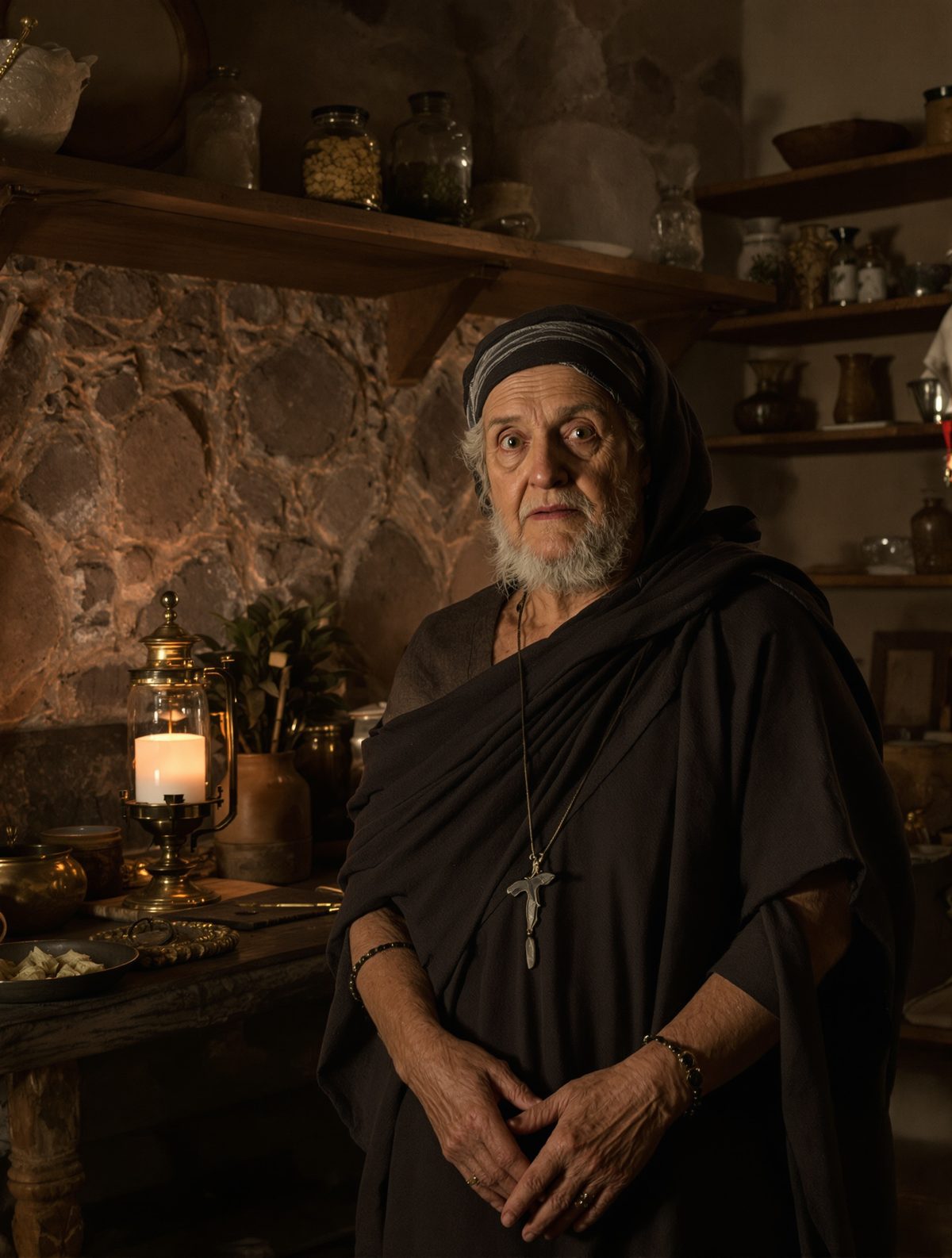
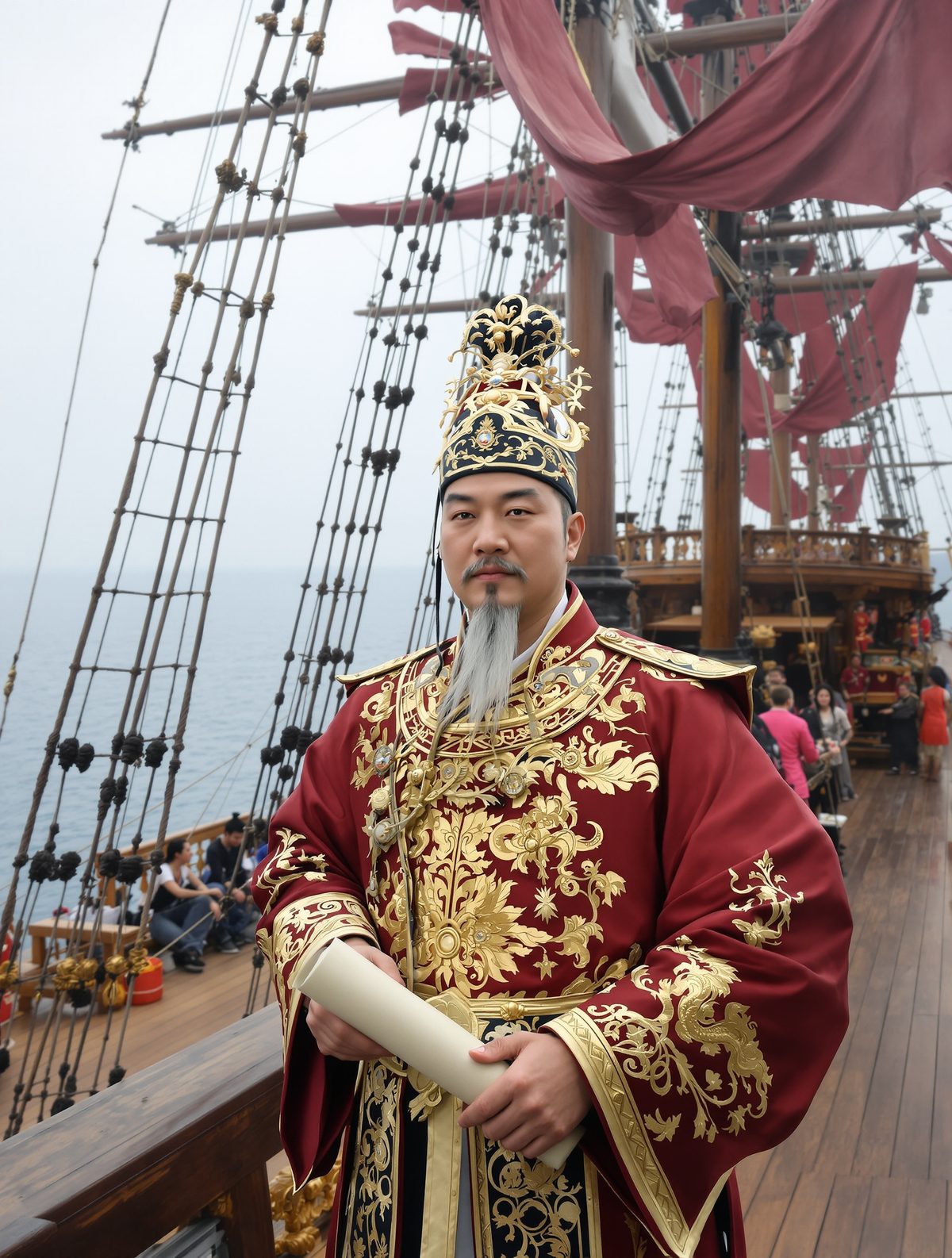
The sacred bull's nostrils flared as it pawed the polished limestone floor, its massive hooves echoing through the central court of Knossos. Ten thousand spectators held their breath as Asterion the Bold—the greatest bull-leaper in all the Minoan Empire—approached the magnificent beast. What happened next would haunt the Bronze Age world for generations: in full view of Crete's royal court, including King Minos himself, the champion athlete leaped toward the bull's horns and simply... disappeared. Not fell. Not stumbled. Vanished. Into thin air.
The year was 1450 BC, and this impossible moment would become one of history's most enduring mysteries—a tale so strange that even the Greeks, who conquered Crete centuries later, whispered about it in hushed tones around their fires.
The Sacred Art of Dancing with Death
To understand the magnitude of what witnesses claimed to see that day, you need to grasp just how central bull-leaping was to Minoan civilization. This wasn't mere entertainment—it was a sacred ritual that combined athletic prowess with religious devotion, performed in honor of the Great Mother Goddess and her sacred bulls.
The sport itself was breathtakingly dangerous. Athletes, known as taurokathapsia, would sprint directly at a charging bull weighing over 1,500 pounds. At the crucial moment, they'd grab the animal's horns and use the bull's upward head movement to catapult themselves into a somersault over the beast's back, landing gracefully behind its hindquarters. One mistimed movement meant certain death.
Archaeological evidence from Knossos reveals that bull-leaping attracted participants from across the Mediterranean. Frescoes in the palace show athletes of different ethnicities—Egyptians with their distinctive hairstyles, fair-skinned Europeans, and dark-skinned Nubians—all united in this deadly dance. The most skilled performers could earn their freedom and vast wealth, with star athletes like Asterion commanding audiences with Minoan royalty and foreign dignitaries.
But here's what most people don't know: the bulls weren't just any cattle. They were specially bred sacred animals, each one believed to house a fragment of divine power. The white bull that Asterion faced that day was particularly revered—a massive creature that had never been successfully vaulted by any athlete who had attempted it.
The Champion Who Defied Gravity
Asterion the Bold wasn't his real name, of course. In Minoan culture, successful bull-leapers earned epithets based on their signature moves and personality. "Asterion" meant "starry one," and contemporary accounts suggest he earned this name because spectators said he seemed to hang in the air like a constellation during his leaps.
Born in the bustling port city of Chania around 1470 BC, Asterion had been bull-leaping for nearly fifteen years by the time of his disappearance. Palace records, preserved on Linear A tablets that weren't fully deciphered until the 1970s, show he had completed over 200 successful vaults—an almost impossible number given the sport's mortality rate.
What made Asterion legendary wasn't just his survival rate, but his innovation. While most bull-leapers performed the traditional forward somersault, Asterion had developed a signature move: a double twist that he could execute while airborne. Witnesses described it as watching a man briefly transform into a bird.
The Egyptian ambassador to Crete, a man named Khaemwaset, wrote in a letter to Pharaoh Thutmose III: "The Cretan leaper moves as if the gods themselves guide his body through the air. I have seen him pause mid-flight, suspended as if time itself holds its breath."
The Day the Impossible Happened
The morning of the disappearance began like any other great bull-leaping festival. The central court of Knossos had been prepared with fresh sand, and the sacred white bull—a creature standing nearly six feet at the shoulder—had been brought from the palace's underground chambers where it lived between ceremonies.
King Minos sat in his throne overlooking the court, flanked by priests wearing their distinctive feathered headdresses. The crowd included Minoan nobles, foreign ambassadors, and thousands of common citizens who had traveled from across Crete for this special performance. The occasion was significant: a celebration of the spring equinox and a blessing for the coming year's harvests.
Asterion had announced that morning his intention to attempt something never before tried: a triple somersault over the sacred white bull. The crowd buzzed with excitement and terror in equal measure. Even his fellow athletes thought he'd gone mad.
At precisely noon, as determined by the palace's sophisticated sundial system, Asterion began his approach. Multiple witnesses later described the same sequence of events: he sprinted toward the bull with his characteristic grace, leaped at exactly the right moment, grabbed the creature's horns, and launched into his first rotation.
But then, according to every single account, something unprecedented occurred. Midway through his second somersault, roughly eight feet above the bull's back, Asterion simply faded from view like morning mist touched by sunlight.
The Witnesses and Their Impossible Testimonies
What makes this mystery so compelling isn't that one or two people claimed to see something strange. Every single witness—from the king to the serving girls—told identical stories. The consistency of these accounts, recorded by palace scribes within hours of the event, is what has puzzled historians for millennia.
The High Priestess Rhea described it thus: "The leaper rose into the air as he had done countless times before. But as he began his second turn, his body became transparent, like looking through clear water. Then he was simply... not."
More disturbing still was the reaction of the sacred bull itself. According to witnesses, the massive animal stopped mid-charge and looked around in apparent confusion, as if searching for the athlete who had simply vanished above its back. It then did something unprecedented: it lay down in the center of the arena and refused to move for three days, seemingly in mourning.
The Egyptian ambassador Khaemwaset, trained in careful observation, provided perhaps the most detailed account: "I watched the man's body become like smoke, starting from his extremities and moving inward. His face was the last to disappear, and I swear by Ra that he appeared to be smiling."
Teams of palace guards immediately searched every inch of the complex. They found no body, no blood, no trace of fabric or jewelry. It was as if Asterion the Bold had never existed—except for the ten thousand witnesses who would carry the memory of his impossible vanishing until their dying days.
Theories, Legends, and Archaeological Mysteries
Over the centuries, various explanations have been proposed for Asterion's disappearance. Some ancient Greeks believed the gods themselves had claimed him mid-leap, transforming him into a constellation (which may explain why several star patterns were associated with bull-leaping in later Greek astronomy).
Modern archaeological investigations at Knossos have uncovered some intriguing details. In 1987, excavations beneath the central court revealed an complex network of chambers and tunnels that weren't on any ancient palace plans. Some researchers have suggested these might have been used for elaborate stage effects during religious ceremonies.
However, this theory falls apart when you consider the physics involved. Asterion disappeared eight feet in the air, in broad daylight, witnessed by thousands from multiple angles. No ancient civilization possessed the technology to create such an illusion.
Perhaps most mysteriously, Linear A tablets discovered in the 1990s reference something called the "Star-Walker's Chamber"—a room that archaeologists have never been able to locate despite extensive searches. These tablets suggest the Minoans believed certain individuals could transcend physical reality during moments of perfect athletic and spiritual harmony.
Carbon dating of items found in Asterion's personal quarters—quarters that remained undisturbed for centuries after his disappearance—revealed something puzzling. Several objects, including a bronze knife and ceramic cups, showed signs of being much older than they should have been, as if they had existed for centuries longer than the twenty years of his lifetime.
The Mystery That Changed History
Asterion's vanishing had profound consequences for Minoan civilization. Within months of the incident, King Minos banned all bull-leaping ceremonies indefinitely. The sacred bulls were released to wander Crete freely, and many of the palace's greatest athletes left for other lands, carrying tales of the impossible disappearance with them.
Some historians argue this event contributed to the rapid decline of Minoan power. A civilization built on the demonstration of human courage in the face of divine power suddenly found itself confronting the possibility that reality itself might be far stranger and more fragile than anyone had imagined.
The story spread throughout the ancient world, evolving and growing with each telling. Some scholars believe elements of Asterion's tale influenced later Greek myths about heroes who transcended mortality, and even early Christian stories about saints who were assumed bodily into heaven.
What makes this mystery particularly relevant today is how it challenges our assumptions about ancient peoples and their relationship with reality. We often imagine our ancestors as more superstitious and less observant than ourselves. Yet here we have a carefully documented event, recorded by multiple educated witnesses from different cultures, describing something that defies every known law of physics.
Perhaps the real mystery isn't what happened to Asterion the Bold on that spring day in 1450 BC. Perhaps it's what his story reveals about the nature of reality itself—and whether there are still secrets about our world that we've forgotten how to see. In our age of constant digital documentation, would we even believe such an event if it happened today? Or have we simply lost the capacity to witness the truly impossible?
The sacred white bull lived for seven more years after Asterion's disappearance, never again participating in ceremonies, spending its days gazing at the sky above the central court as if still waiting for its partner to return from whatever realm had claimed him. When it finally died, palace records note that its final act was to look up at the stars and bellow once—a sound that echoes through history as a reminder that some mysteries are too profound for any age to fully comprehend.