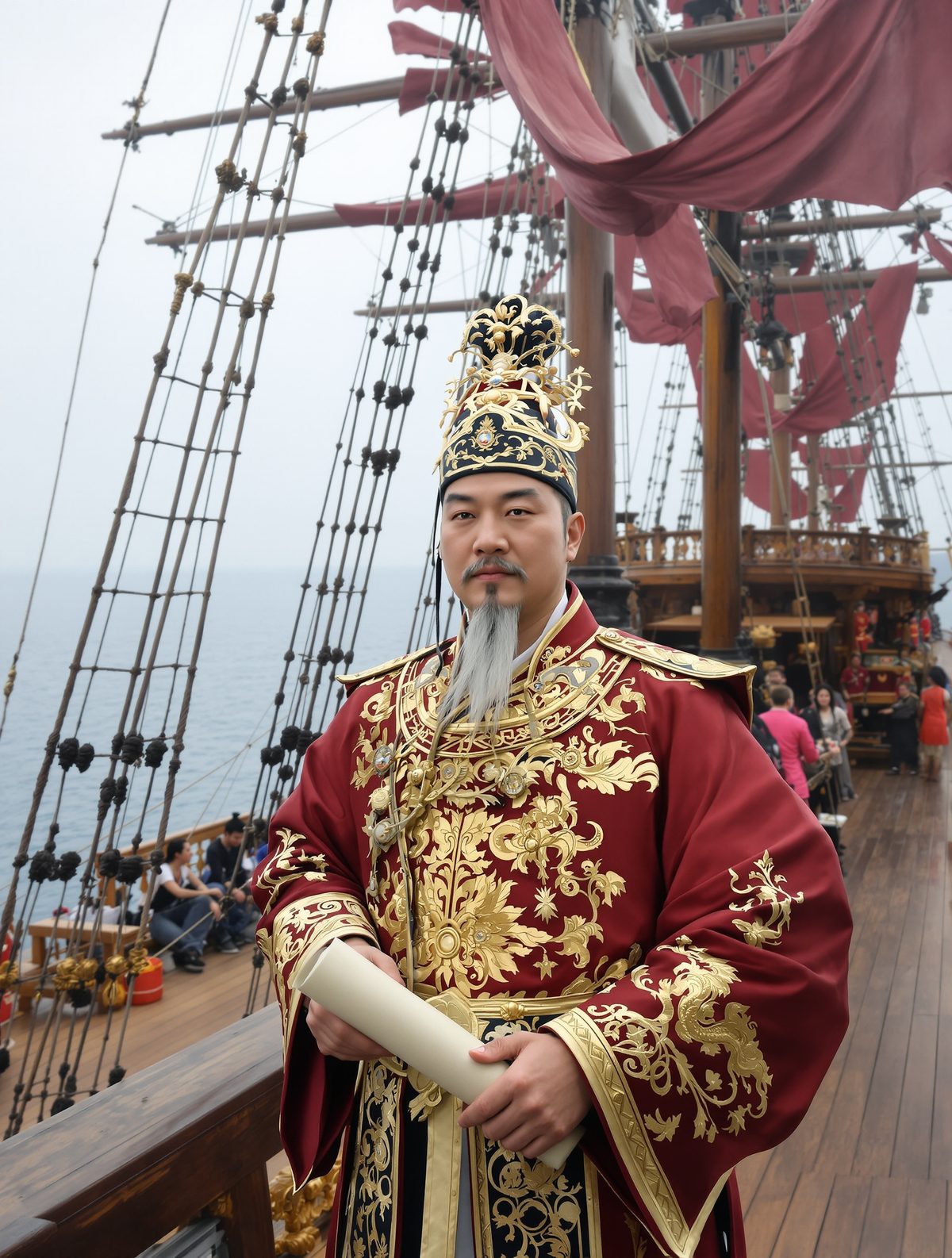

The morning mist hung thick over the Thames as Bishop Ælfheah climbed the wooden steps of London's highest watchtower. What he saw through the gray dawn made his blood run cold: dozens of Viking longships cutting through the water like sea wolves, their dragon-headed prows pointed straight at the heart of Saxon England. It was September 1016, and Cnut the Great's unstoppable fleet was hours away from London's walls. The bishop faced a choice that would haunt military strategists for centuries: destroy his own city to save it, or watch it burn under Viking torches.
What happened next was one of the most audacious defensive strategies in medieval history—and one that barely anyone remembers today.
The Viking Storm Approaches London
By 1016, England was a kingdom bleeding from a thousand cuts. For nearly two years, Cnut Sweynsson—later known as Cnut the Great—had been carving through Anglo-Saxon resistance like a hot blade through wax. This wasn't just another Viking raid for silver and slaves. This was conquest on an unprecedented scale, backed by the combined naval might of Denmark and Norway.
London in 1016 wasn't the sprawling metropolis we know today, but it was absolutely critical to England's survival. With a population of roughly 15,000 souls crammed within its Roman walls, it controlled the Thames crossing and served as the kingdom's commercial heart. More importantly, it was where young King Edmund Ironside—the last Saxon hope—had established his final stronghold after his father Æthelred the Unready fled to Normandy.
Bishop Ælfheah wasn't just any cleric watching this drama unfold. He was London's spiritual leader and, crucially, one of the few men who understood the ancient Roman engineering that still kept the city functional. The Thames that flowed past London's walls wasn't the same wild river we see today—it was controlled by an intricate system of dams, weirs, and channels that the Romans had built centuries earlier and the Saxons had maintained through sheer necessity.
As Cnut's fleet of over 200 ships approached London Bridge in September 1016, scouts brought terrifying news to the bishop: the Vikings had already bypassed or destroyed every river defense downstream. They would reach London's walls before the sun reached its peak.
The Impossible Mathematics of Medieval Warfare
Here's what made Ælfheah's situation so desperate: London's defenses were designed for land-based attacks, not amphibious assaults. The city's walls, first built by Romans and reinforced by generations of Saxon kings, were formidable obstacles to any army approaching on foot. But Viking longships could sail right up to those walls and land fresh troops directly onto London's wharves.
Each of Cnut's longships carried between 60 and 100 battle-hardened warriors. That meant roughly 15,000 to 20,000 Vikings were bearing down on London—potentially outnumbering the city's entire population. Even worse, these weren't desperate raiders looking for quick plunder. They were professional soldiers fighting for permanent conquest under one of the most brilliant military minds of the medieval period.
Bishop Ælfheah knew the mathematics were impossible. London's garrison, bolstered by Edmund Ironside's forces, might have numbered 3,000 fighting men at most. In a conventional siege, they could hold out for months behind those massive walls. But this wouldn't be a conventional siege. The Vikings could land troops directly inside the city's defenses and turn London's own walls into a trap.
Standing in that watchtower, watching dragon ships slice through the morning mist, the bishop made a calculation that would have seemed insane to anyone else: London's best chance of survival lay not in its walls, but in its waterways.
The Bishop's Devastating Gambit
What Ælfheah did next revealed an understanding of hydraulic engineering that most people assume didn't exist in medieval Europe. The Thames wasn't just London's highway—it was a carefully managed system that could be weaponized if you knew which levers to pull.
The bishop sent urgent messages to the keepers of London's upstream dams and weirs. His orders were precise and brutal: open every floodgate simultaneously. Release the massive water reserves that had been building behind Roman-era barriers for decades. Turn the Thames into a raging torrent that would make navigation impossible.
But here's the truly audacious part of his plan: Ælfheah didn't just want to make the river dangerous for Viking ships. He wanted to flood London itself. By overwhelming the Thames with upstream water while simultaneously opening the sluices that normally protected the city's low-lying areas, he could turn London's streets into impassable channels and strand any Vikings who had already landed.
The execution required split-second timing. Too early, and Cnut's forces could simply wait for the waters to recede. Too late, and the Vikings would already be inside London's walls, turning the flood into a disaster for the city's defenders rather than its attackers.
As Cnut's leading ships approached London Bridge around midday, Ælfheah gave the signal. From positions miles upstream, Saxon engineers began opening floodgates that hadn't been fully opened in living memory. The results were immediate and catastrophic.
When the Thames Became a Weapon
What happened next must have seemed like divine intervention to the terrified Londoners watching from their walls. The Thames, which had been flowing at its normal autumn level just hours before, suddenly began to rise with shocking speed. But this wasn't a gentle increase—it was a churning, debris-filled torrent that turned the river into a liquid battleground.
Cnut's longships, designed for coastal raids and river navigation, were suddenly fighting for their lives against a current that threatened to dash them against London Bridge's stone pillars or sweep them helplessly downstream. The Viking commanders, who had been planning their assault routes just minutes before, found themselves screaming orders just to keep their ships upright.
Meanwhile, inside London's walls, Ælfheah's gambit was creating chaos of a different kind. The city's streets, many of which sat barely above the Thames' normal water level, began flooding as the river overwhelmed its banks. Londoners fled to upper stories and higher ground, carrying what possessions they could salvage. The city's lower markets, workshops, and warehouses disappeared under muddy water that rose by the hour.
But the bishop's strategy was working exactly as he'd planned. Several of Cnut's ships that had managed to land troops before the flood struck found their warriors stranded on what were now islands of higher ground, cut off from their vessels and unable to coordinate any meaningful attack. The Vikings' greatest advantage—their mobility and ability to strike from unexpected directions—had been neutralized by turning London into a temporary Venice.
The Aftermath of an Aquatic Gamble
The immediate results of Ælfheah's flooding strategy were mixed but ultimately successful. Cnut's fleet, faced with impossible river conditions and unable to land troops effectively, was forced to withdraw downstream and seek alternative approaches to London. The immediate threat to the city was over, buying precious time for Edmund Ironside to consolidate his defenses.
But the cost was enormous. When the floodwaters finally receded several days later, London looked like a city that had been sacked without ever being conquered. Hundreds of buildings had suffered severe damage. Countless workshops, stored goods, and irreplaceable manuscripts had been destroyed. The economic disruption lasted for months, and some of London's merchants never recovered from their losses.
Yet Ælfheah's gambit had achieved something remarkable: it had forced one of history's most successful military commanders to completely rethink his approach to conquering England's most important city. Cnut, who would eventually become King of England through other means, later admitted that London's water defenses had caught him completely off guard.
The bishop himself became something of a legend among London's defenders, though his story was gradually overshadowed by the larger political drama of Cnut's eventual victory and the end of Saxon rule in England. Most medieval chroniclers focused on the battles and political maneuvering that followed, giving only brief mentions to the "great flood that saved London."
The Strategy That Time Forgot
Today, as we face our own existential challenges from rising sea levels and climate change, Bishop Ælfheah's story offers a fascinating glimpse into humanity's long relationship with water as both threat and salvation. His willingness to damage his own city to save it from conquest reveals a kind of strategic thinking that we might call "controlled destruction"—accepting certain losses to prevent total catastrophe.
Modern military strategists still study similar tactics: flooding fields to slow enemy advances, destroying infrastructure to deny its use to invaders, even controlled detonations to create defensive barriers. But few realize that these concepts were being applied with sophisticated engineering knowledge over a thousand years ago by a medieval bishop who understood that sometimes salvation requires sacrifice.
Perhaps most remarkably, Ælfheah's flood strategy worked because he understood something that many of his contemporaries didn't: that the landscape itself could be a weapon if you knew how to wield it. In an age when most people saw rivers, dams, and flood plains as unchangeable facts of nature, he saw them as tools that could be manipulated to achieve impossible victories.
The next time you cross the Thames or watch floodwaters threaten a modern city, remember the medieval bishop who saved London by drowning it—and consider what impossible solutions might be hiding in plain sight around us today.