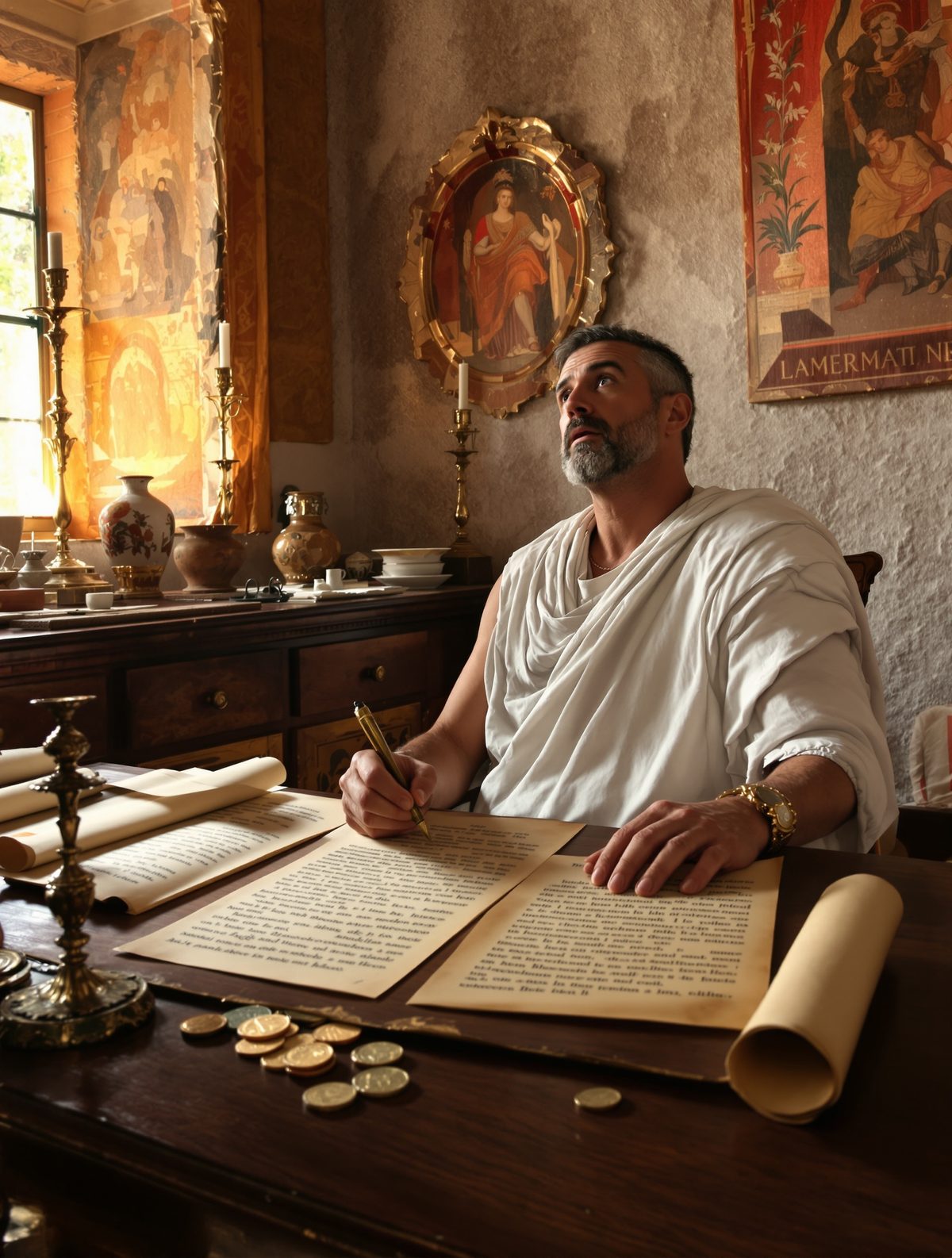
The Oregon forest was eerily quiet on the morning of September 9, 1942, when local fire warden Howard Gardner spotted something that would change history forever. Through his binoculars, he watched a small seaplane circle overhead before dropping what appeared to be bombs into the dense woodland below. In that moment, America experienced its first—and only—aerial bombing by a foreign enemy on the continental United States during World War II. The pilot responsible would later become one of the most unlikely American citizens in history.
The Samurai in the Sky
Warrant Flying Officer Nobuo Fujita was no ordinary pilot. Born into a family of samurai lineage, he carried the weight of 400 years of tradition on his shoulders as he climbed into the cockpit of his Yokosuka E14Y "Glen" floatplane that fateful September morning. Launched from the submarine I-25 lurking 50 miles off the Oregon coast, Fujita's mission was as audacious as it was desperate: ignite massive forest fires that would consume America's Pacific Northwest and force the U.S. military to divert precious resources from the Pacific theater.
The 31-year-old pilot had volunteered for what many considered a suicide mission. His tiny reconnaissance plane, designed for short scouting flights, was now loaded with two 170-pound incendiary bombs and just enough fuel for a one-way trip—if everything went perfectly. As he flew toward the Oregon coast, Fujita could see the dense canopy of Douglas firs stretching endlessly inland, a green carpet that seemed to whisper promises of devastating conflagration.
What Fujita couldn't have known was that the Pacific Northwest had experienced an unusually wet summer. The forests that should have erupted into towering infernos barely smoldered. His carefully planned aerial arson resulted in little more than a few scorch marks on the forest floor—a footnote that park rangers extinguished within hours.
A Second Strike and Fading Hope
Undeterred by the first mission's lackluster results, Fujita returned on September 29, 1942, for a second attempt. This time, he targeted a different section of Oregon forest, hoping that three weeks of additional summer heat might have dried the timber enough to catch fire. Once again, his incendiary bombs fizzled into insignificance, creating barely more than campfire-sized blazes that local firefighters quickly contained.
For Imperial Japan, Fujita's missions represented a propaganda victory but a strategic failure. The headline-grabbing achievement of bombing the American mainland made excellent copy for Tokyo newspapers, but the reality was sobering: Japan had expended enormous resources to singe a few trees in a remote forest. Meanwhile, the broader war in the Pacific was turning decisively against the Empire of the Rising Sun.
Fujita himself returned to conventional combat duties, eventually shot down over the Pacific and spending several harrowing days adrift in a life raft before rescue. The Oregon bombings might have remained a quirky historical footnote—except for what happened twenty years later.
An Invitation Across the Pacific
In 1962, the small town of Brookings, Oregon, did something extraordinary. Still the only American community ever bombed by aircraft during wartime, they extended a remarkable invitation to their former enemy: would Nobuo Fujita like to visit as an honored guest?
The invitation came through the Brookings Junior Chamber of Commerce, who had learned that the pilot was alive and working as a hardware store owner in Japan. What started as a publicity stunt for the town's annual Azalea Festival quickly transformed into something far more meaningful. The same newspapers that had once screamed about the "Japanese air raids" now buzzed with curiosity about this unprecedented reconciliation.
Fujita was initially mortified. In Japanese culture, the shame of his wartime actions—particularly the failure of his missions—had haunted him for two decades. He had expected to die in combat, following the samurai code that demanded death before dishonor. Instead, he had survived to see his country's devastating defeat and occupation. The thought of returning to the scene of his "failure" filled him with dread.
The Sword of Reconciliation
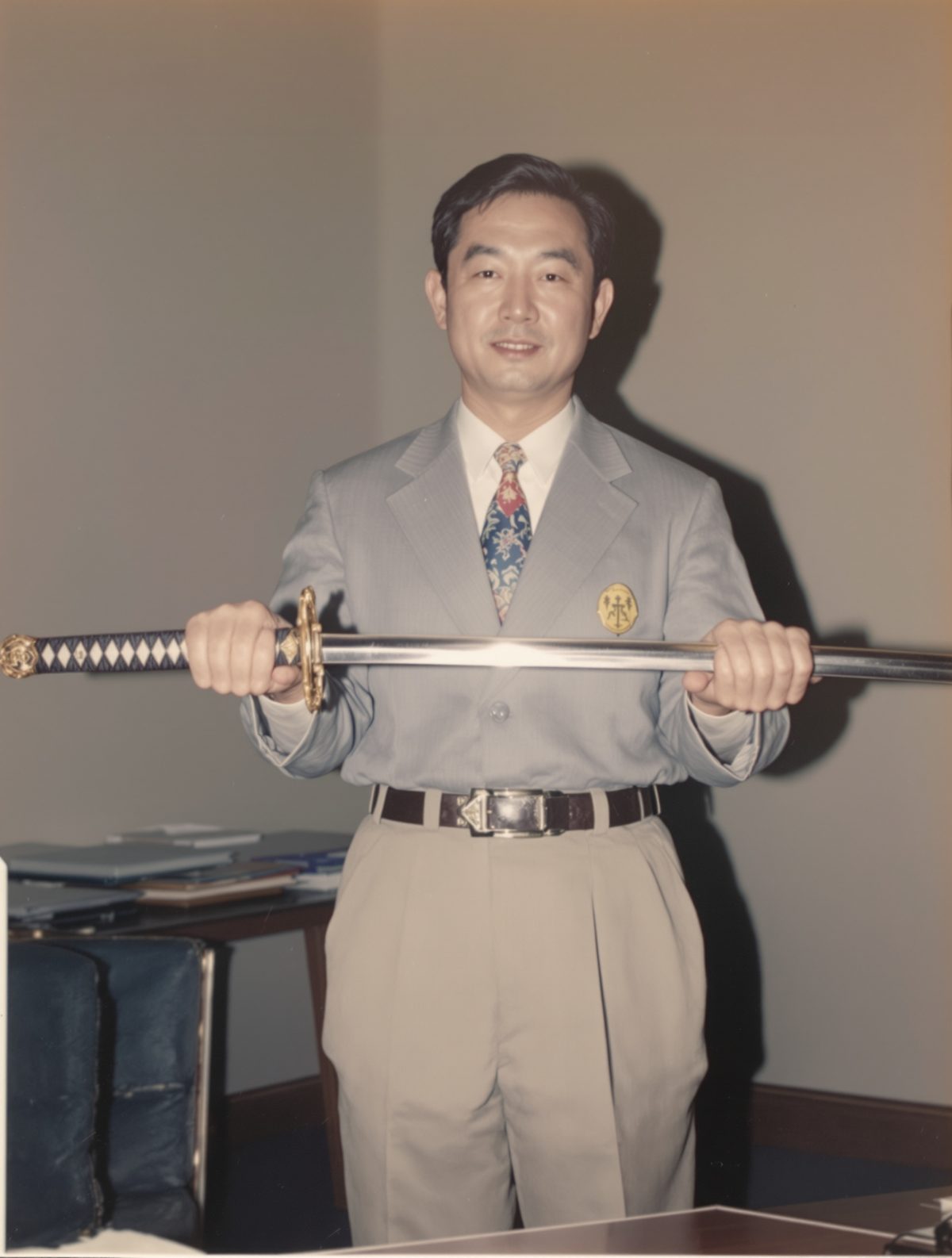
But Fujita's daughter convinced him that this invitation represented something unprecedented: a chance for true reconciliation. When he finally arrived in Brookings in October 1962, he carried with him the most precious possession his family owned—a 400-year-old samurai sword that had been passed down through generations of his ancestors.
The sword was no mere ceremonial blade. According to family tradition, it had been carried by Fujita's ancestors through centuries of Japanese history, from the age of warring states through the Meiji Restoration. For a Japanese family of samurai lineage, surrendering such a sword was the ultimate gesture of respect and submission—a symbolic act that spoke louder than any words.
Standing before the people of Brookings, many of whom had lived through the terror of those September days in 1942, Fujita did something that shocked everyone present. He fell to his knees and formally apologized, presenting the ancient sword as a gift to the town library. In broken English, he declared that he hoped the sword would serve as a symbol of peace between former enemies.
The crowd's response was equally remarkable. Instead of anger or resentment, the people of Brookings embraced their former enemy. They gave him a key to the city and invited him to plant a tree in the town park. Local veteran groups, including men who had fought against Japan in the Pacific, welcomed Fujita as a fellow warrior who had served his country with honor.
From Enemy to Citizen
Fujita's 1962 visit sparked a transformation that nobody could have anticipated. The former pilot became fascinated with American culture and democracy, eventually immigrating to the United States and becoming a naturalized citizen in 1971. The man who had once tried to burn down American forests became an American himself, working as a translator and cultural ambassador.
Perhaps most remarkably, Fujita returned to Brookings multiple times over the following decades, developing genuine friendships with the people he had once tried to terrorize. He established a scholarship fund for local students and even invited several Brookings residents to visit Japan as his personal guests. The reciprocal visits created lasting bonds between the Oregon town and Fujita's hometown in Japan.
The samurai sword he had gifted to Brookings became the centerpiece of a small but moving exhibit about reconciliation and forgiveness. Visitors from around the world came to see this tangible symbol of how former enemies could become friends, how the wounds of war could heal through understanding and respect.
Legacy of Unlikely Friendship
When Nobuo Fujita died in 1997, the people of Brookings mourned him as one of their own. His ashes were scattered in part over the same Oregon forests he had once tried to destroy—a final gesture that completed his transformation from enemy bomber to beloved American citizen.
Today, Fujita's story resonates with particular power in our increasingly polarized world. At a time when former allies become enemies overnight and ancient grudges seem impossible to heal, the tale of the Japanese pilot and the Oregon town offers a different model. It suggests that reconciliation is possible even after the most bitter conflicts, but only when both sides are willing to acknowledge past wrongs and embrace the possibility of forgiveness.
The 400-year-old samurai sword still rests in Brookings, a testament to the idea that honor lies not in perpetual warfare, but in the courage to make peace. In transforming an enemy into a friend, and eventually into a fellow citizen, the people of Brookings and Nobuo Fujita created something rarer than military victory: they created lasting peace through the simple but revolutionary act of choosing understanding over hatred.