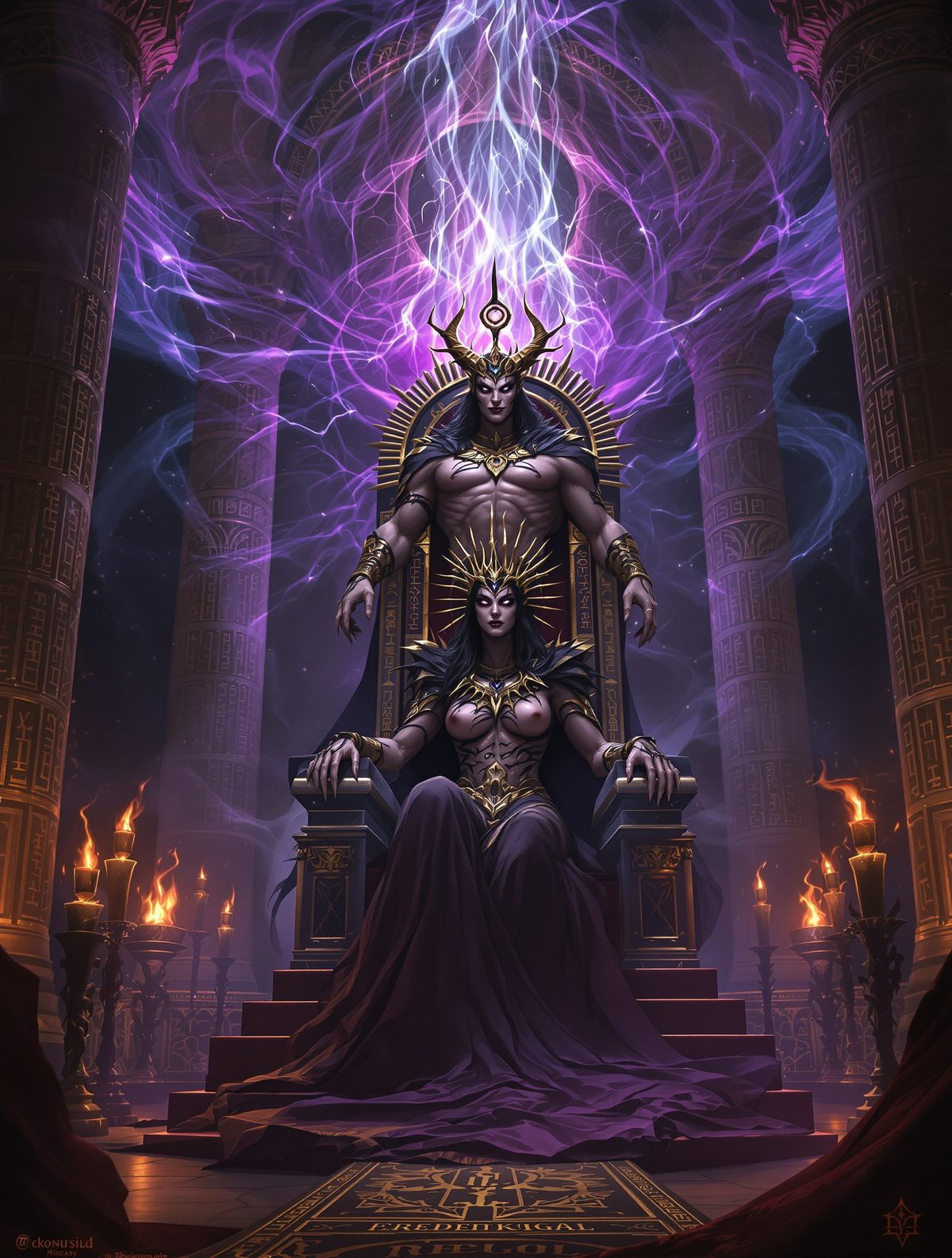
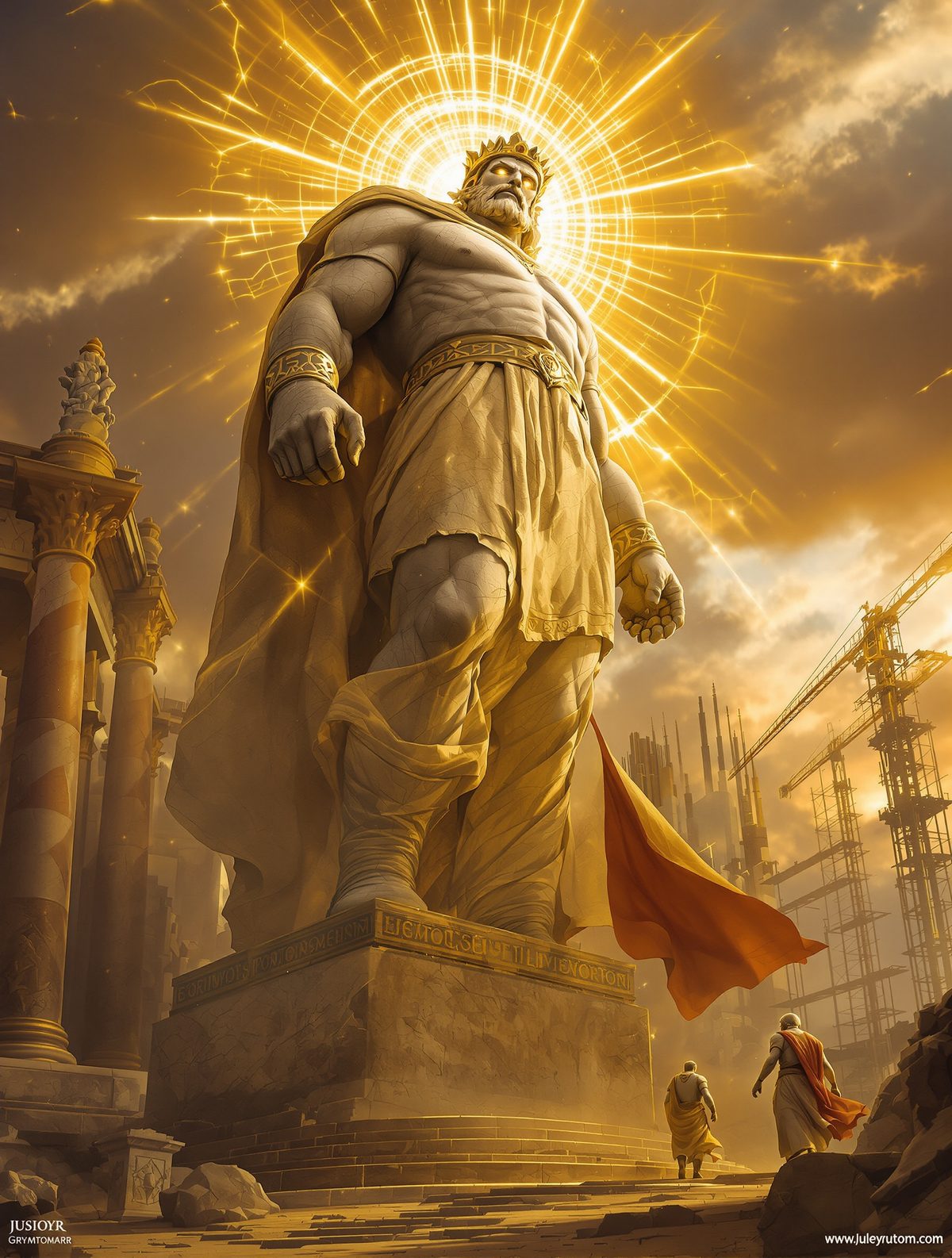
Picture this: You're the most powerful being in the universe, ruler of gods and mortals alike, and you've just announced plans for the most magnificent temple ever conceived. Every deity in your pantheon bows their head in deference, agreeing to relocate their sacred spaces to make room for your grand vision. Every deity, that is, except for one stubborn old god who looks you straight in the eye and says, "No." This isn't the plot of a Marvel movie—this is the true story of how Terminus, Rome's humble god of boundaries, defied Jupiter himself and won.
In the 6th century BCE, as Rome was transforming from a collection of hilltop villages into an empire that would rule the world, this divine standoff would become one of the most celebrated acts of defiance in Roman religious history. And remarkably, it's a story that most people have never heard.
The King's Divine Ambition
Around 509 BCE, King Tarquinius Superbus—whose name literally means "Tarquin the Proud"—conceived of a temple so magnificent it would dwarf anything the Greeks had ever built. The location he chose was no accident: the Capitoline Hill, the smallest but most sacred of Rome's seven hills, already crowned with shrines to multiple deities. This wasn't just real estate—this was the spiritual heart of Rome.
The planned Temple of Jupiter Optimus Maximus would be massive by ancient standards, measuring roughly 200 by 185 feet and rising high enough to be visible from miles away. Archaeological evidence suggests the temple's foundation alone required moving thousands of tons of earth and stone. But before construction could begin, there was a divine protocol to observe: every god currently occupying the sacred space had to formally agree to relocate.
This wasn't just political courtesy—it was cosmic law. In Roman religious practice, moving a deity's shrine without proper consent could bring catastrophic consequences. The augurs, Rome's elite college of priests who interpreted divine will through bird flights and other omens, would need to perform elaborate ceremonies to obtain each god's permission.
The Great Divine Exodus
One by one, the gods gave their blessing to Jupiter's grand plan. Mars, the war god so central to Roman identity, agreed to move. Minerva, goddess of wisdom and strategic warfare, consented. Even Juventas, the goddess of youth who had her own established cult following, graciously accepted relocation to make way for Jupiter's temple.
The augural ceremonies were spectacles in themselves. Priests would perform elaborate rituals at dawn, reading the flight patterns of eagles and hawks, interpreting the way sacred chickens ate their grain, and examining the entrails of sacrificed animals. According to the historian Livy, writing centuries later, the signs were consistently favorable. The gods were pleased to make way for their king's magnificent new home.
But then came Terminus.
When the augurs performed their sacred rites at the modest shrine of the boundary god, something unprecedented happened. The birds flew in chaotic patterns. The sacred chickens refused their feed. The sacrificial animals' entrails showed ominous markings that made even veteran priests pause in concern. The message was unmistakable: Terminus was not moving.
The God Who Wouldn't Budge
To understand why this was so shocking, you need to know who Terminus was—and perhaps more importantly, who he wasn't. Unlike the Olympian gods with their dramatic myths and larger-than-life personalities, Terminus was refreshingly straightforward. He was the god of boundaries, property lines, and treaties. His sacred symbols weren't lightning bolts or golden arrows, but simple stone markers called termini that Romans placed at the corners of their property.
Terminus had no elaborate mythology about seducing mortals or fighting monsters. Instead, Romans honored him with a charmingly modest annual festival called Terminalia, held every February 23rd, where neighbors would gather at their boundary stones, place garlands on them, and share cakes and wine. Children would sprinkle the stones with grain while adults offered prayers for peaceful coexistence with their neighbors.
Yet this seemingly humble deity possessed one quality that made him formidable: absolute integrity. Terminus represented the sacred nature of agreements, the inviolability of established boundaries, and the principle that some things simply should not be moved. Even for Jupiter.
According to Ovid's Fasti, when Terminus refused to budge, Jupiter himself appeared to negotiate. Picture the scene: the king of gods, wielder of thunderbolts, master of sky and storm, essentially trying to evict a deity whose entire identity was built around staying put. It was the unstoppable force meeting the immovable object, played out on a divine scale.
The Compromise That Shook Heaven
What happened next reveals something profound about Roman values. Rather than force the issue—and Jupiter certainly had the power to do so—the king of gods made an unprecedented decision. He would build his temple around Terminus.
The architectural solution was ingenious. When the Temple of Jupiter Optimus Maximus was finally completed around 509 BCE, it contained a remarkable feature: a hole in the roof directly above Terminus's shrine. The boundary god would remain in his original location, but now he'd be housed within Jupiter's temple, still able to see the sky as tradition demanded.
This wasn't just clever construction—it was a theological revolution. For the first time in recorded mythology, a supreme deity had publicly acknowledged limits to his own authority. Terminus hadn't just won his battle; he'd established a principle that would echo through Roman law for centuries: that some boundaries are truly sacred, not to be crossed even by ultimate power.
The compromise satisfied everyone. Jupiter got his magnificent temple, which would serve as the ceremonial heart of Roman religion for nearly a thousand years. Terminus kept his sacred spot and his integrity intact. And the Roman people gained a powerful symbol of the rule of law—the idea that even divine authority must respect certain fundamental limits.
The Boundary Stone That Built an Empire
The story of Terminus's defiance became one of Rome's foundational myths, but its impact was far from mythological. This tale helped shape Roman legal thinking in profound ways. The concept that boundaries—whether property lines, legal agreements, or constitutional limits—were sacred and inviolable became a cornerstone of Roman jurisprudence.
Roman boundary law was notoriously strict. Moving a neighbor's boundary stone was punishable by death. Treaty violations were considered offenses against the gods themselves. The Roman legal principle of pacta sunt servanda—agreements must be kept—can trace its philosophical roots back to Terminus's stubborn refusal to move.
Even more remarkably, the hole in the temple roof where Terminus resided became a symbol of governmental restraint. Roman writers like Cicero would invoke this story when arguing against executive overreach, reminding ambitious politicians that even Jupiter had limits.
The temple itself stood for nearly six centuries, surviving fires, invasions, and political upheavals. Each time it was rebuilt—and it was rebuilt several times—the architects carefully preserved Terminus's sacred space and his view of the sky. The boundary god's small shrine became one of the most enduring features of Roman religious architecture.
When Standing Your Ground Changes Everything
In our age of shifting boundaries—geopolitical, technological, and moral—the story of Terminus offers a surprisingly relevant lesson. Sometimes the most profound act of courage isn't dramatic resistance or violent revolution, but simply refusing to move when everyone expects you to step aside.
Terminus didn't defeat Jupiter through superior force or cunning strategy. He won through sheer moral consistency, by embodying so completely his essential nature that even divine authority had to respect it. In a world where compromise often means abandoning principles, this ancient god reminds us that some boundaries are worth defending, even when the pressure to move comes from the highest authority imaginable.
The next time you see a simple boundary stone or property marker, remember Terminus—the humble god who faced down the king of heaven and won, not through conflict, but by knowing exactly who he was and refusing to be anything else. In a universe full of gods eager to please Jupiter, he chose to be the one who simply, quietly, immovably stood his ground.
Perhaps that's the most divine act of all.