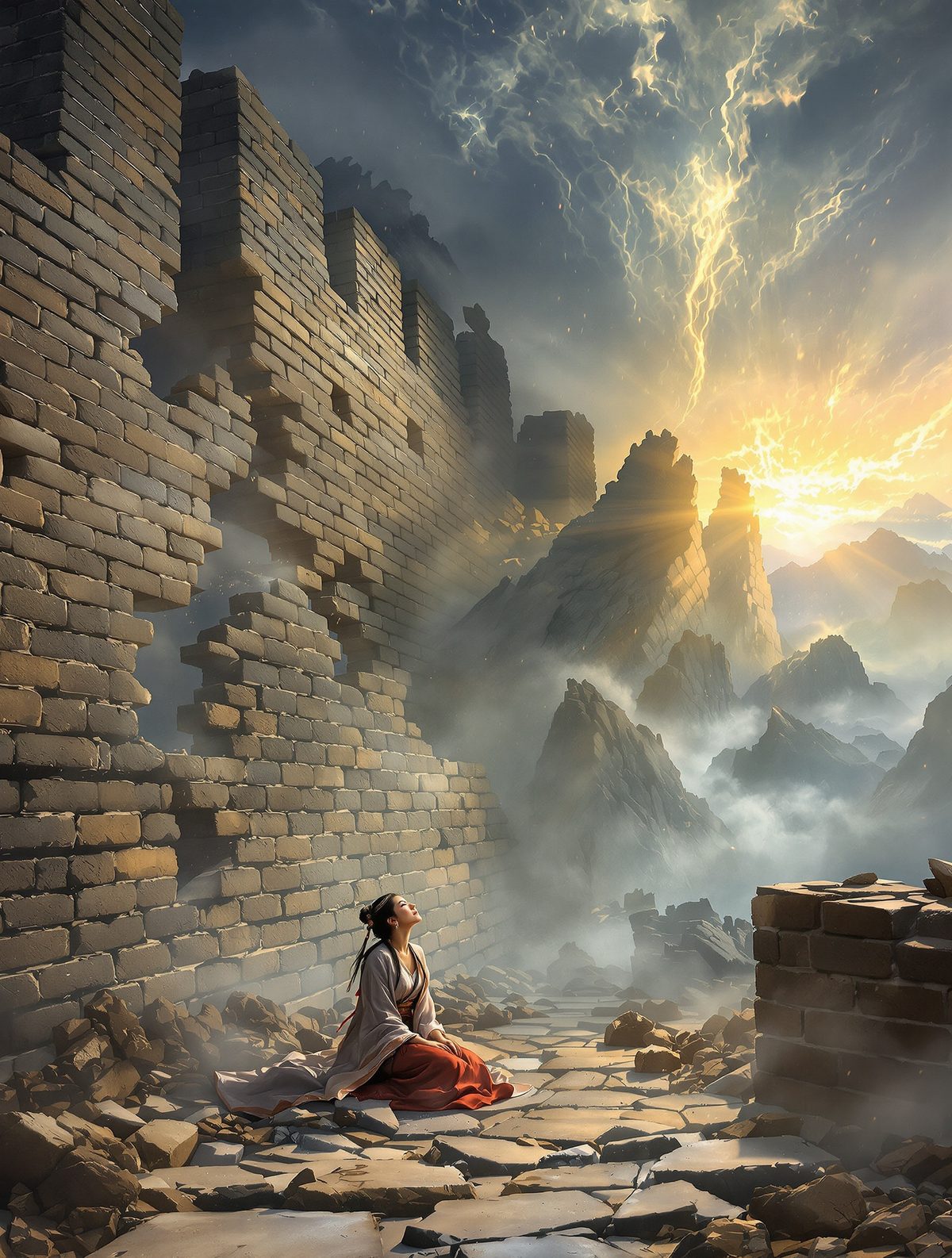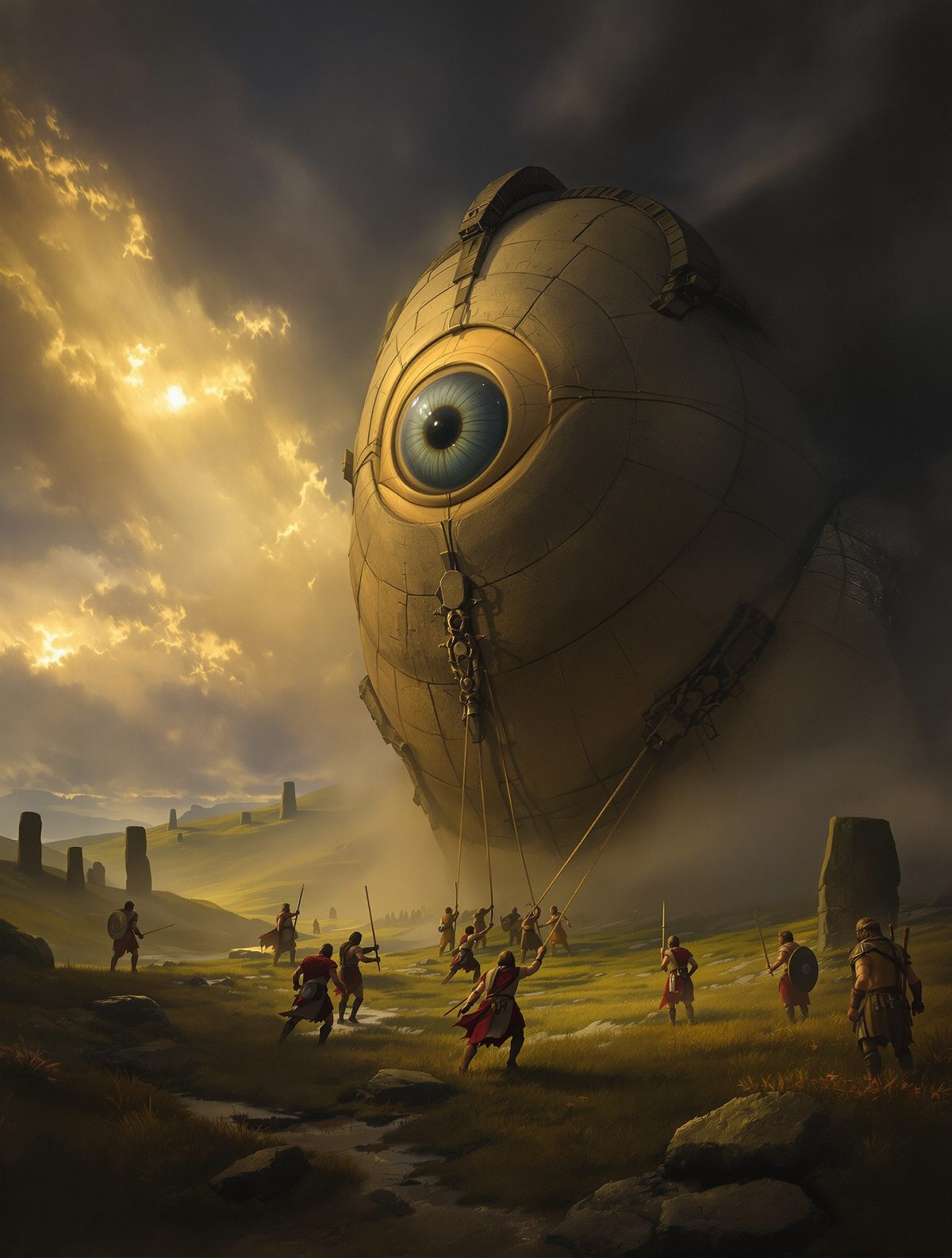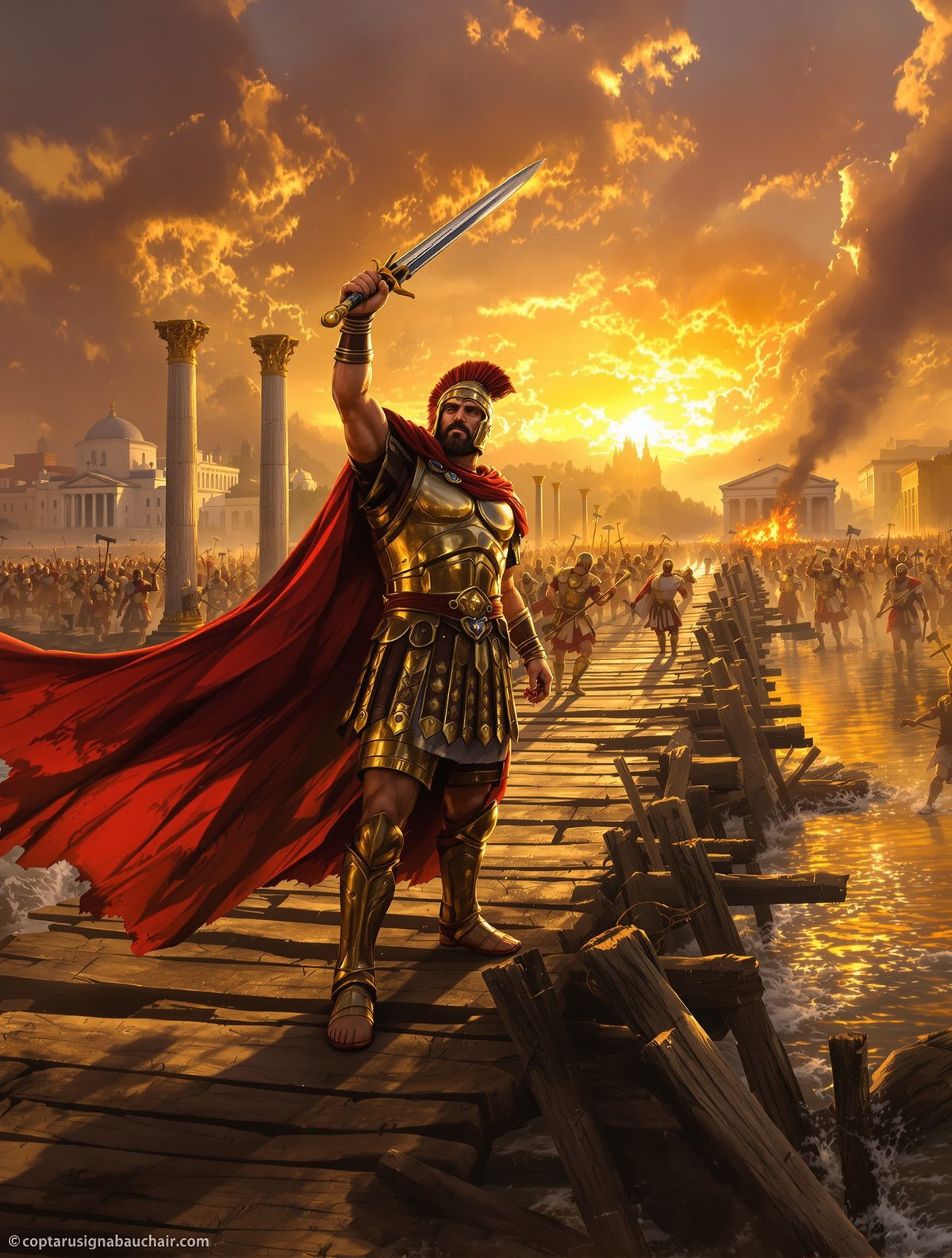
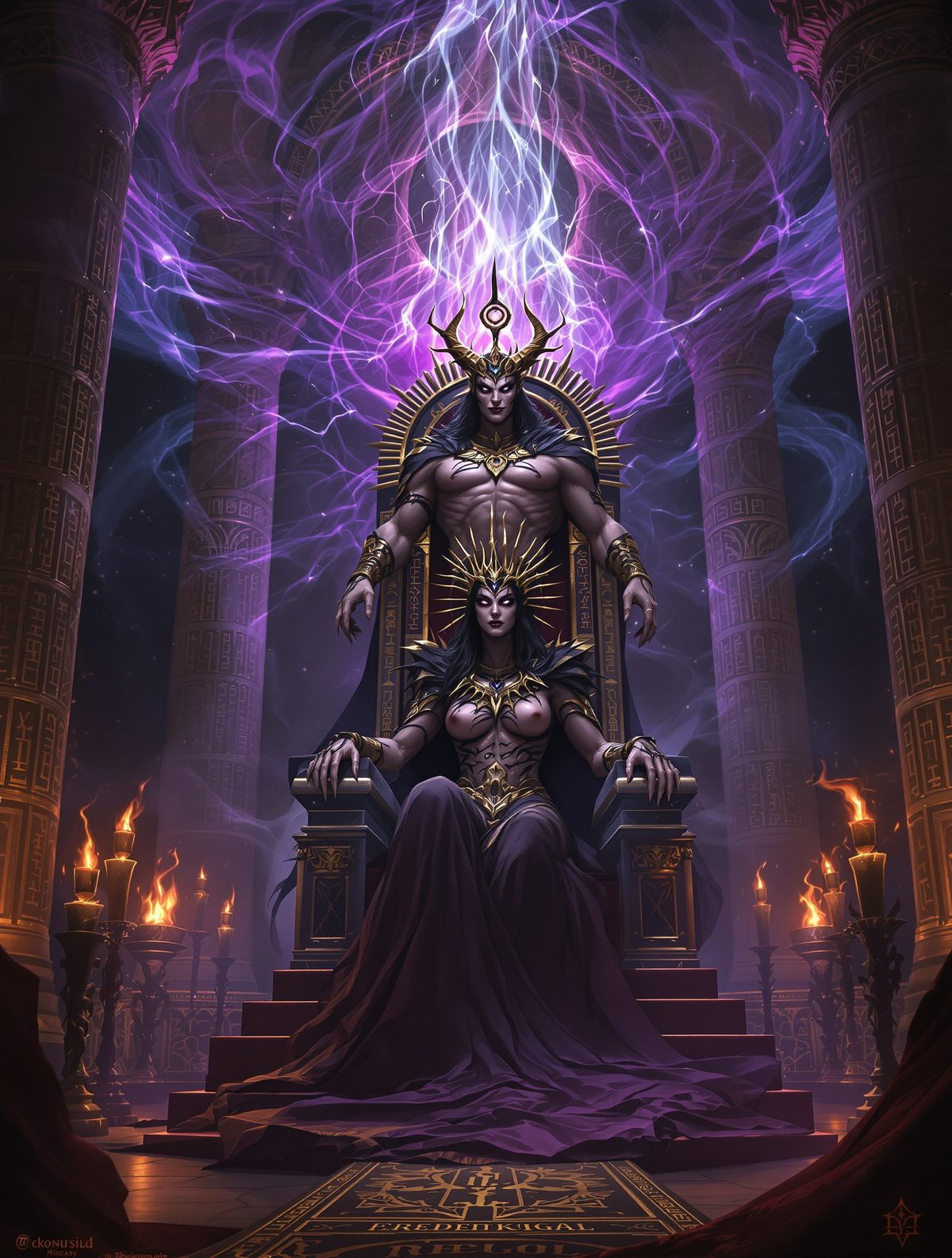
Picture this: the most feared god in the Mesopotamian pantheon storms through the gates of death itself, bringing an army of demons to terrorize the Queen of the Underworld. By every law of gods and mortals, this should end in his complete annihilation. Instead, it becomes one of history's most passionate love stories—a tale so scandalous that it survived on cuneiform tablets for over 4,000 years, yet somehow never made it into your mythology textbook.
This is the story of Nergal and Ereshkigal, where cosmic warfare transforms into cosmic passion in the depths of the ancient underworld.
The Insult That Started a War
Our story begins around 1600 BCE in the grand banquet halls of heaven, where the great gods of Mesopotamia have gathered for a feast. Every deity of importance receives an invitation—except one. Ereshkigal, Queen of the Underworld, cannot leave her dark domain, so she sends her messenger Namtar to collect her portion of the sacrificial offerings.
When Namtar arrives at the celestial feast, every god rises in respect—every god except Nergal, the brutal lord of plague, war, and the scorching summer sun. This isn't mere rudeness; in the rigid hierarchy of Mesopotamian divine politics, this is tantamount to declaring war on the underworld itself.
Ereshkigal's fury shakes the foundations of the earth. "Bring me this god who dishonored my messenger," she commands, "that I may put him to death!" But Nergal isn't some minor deity cowering in the heavens—he's a warrior god with an ego to match his power. Instead of apologizing or hiding behind the other gods, he does something unprecedented: he decides to invade hell itself.
Fourteen Demons and a Death Wish
What happens next reads like an ancient superhero movie. Nergal approaches Ea, the wise god of the depths, and receives fourteen demons as his companions—each one a specialist in destruction. Their names alone could terrify: Mukil-res-lemutti ("Holder of evil"), Lugal-Meslam ("King of the underworld"), and twelve others whose very presence could wither crops and stop hearts.
But here's where the story gets truly fascinating: Ea doesn't just give Nergal an army—he gives him a strategy that reveals the ancient Mesopotamians' detailed understanding of underworld geography. The underworld has seven gates, each guarded by a gatekeeper. Ea instructs Nergal to station two demons at each of the first six gates and keep two with him for the final assault on Ereshkigal's throne room.
Picture the scene: the god of plague and war descending through layer after layer of the underworld's defenses, his demon army seizing control of each gateway. The dead themselves flee in terror—not from the prospect of double death, but from the cosmic chaos of a living god invading their realm. This isn't just breaking and entering; it's rewriting the fundamental laws of existence.
The Queen Who Would Not Yield
When Nergal finally reaches the throne room, he finds Ereshkigal waiting for him—not cowering, not pleading, but radiating the terrible authority of one who has ruled the dead since time immemorial. In the Old Babylonian version of this myth, what happens next is swift and violent: Nergal drags her from her throne, intending to cut off her head.
But Ereshkigal does something that stops the god of war in his tracks. Instead of begging for mercy, she looks into his eyes and speaks words that will echo through the centuries: "Be my husband, and I will be your wife. I will let you hold dominion in the wide underworld."
This moment is revolutionary in ways that modern readers might miss. Ereshkigal isn't surrendering—she's proposing a merger of equals. In Mesopotamian mythology, the underworld is arguably the most powerful realm of all. Every living thing must eventually pass through Ereshkigal's domain. She's offering to share that ultimate power with the one god who proved capable of taking it by force.
Passion in the Palace of Shadows
What follows is described in cuneiform tablets with surprising frankness. The Assyrian version, dating to around 700 BCE, tells us that Nergal and Ereshkigal "kissed and embraced" and spent six days and nights making love in the underworld palace. Ancient scribes, normally reserved in their descriptions of divine romance, seem unable to contain their fascination with this cosmic coupling.
But this isn't just divine erotica—it's geopolitics on a mythological scale. By accepting Ereshkigal's proposal, Nergal becomes the first and only god to rule both above and below. He maintains his dominion over plague and war in the upper world while becoming King of the Dead alongside his bride. The god who broke every rule of divine conduct becomes the ultimate power couple with the goddess he tried to kill.
Here's a detail that most retellings miss: in some versions of the myth, Ereshkigal is described as having been alone in the underworld for eons before Nergal's arrival. Her offer isn't just political—it's the cry of someone who has been isolated by the nature of her power, finally finding an equal who isn't afraid of death itself.
The Tablets That Time Forgot
Archaeological evidence for this myth comes from multiple sources spanning over a millennium. The oldest versions were found at Tell el-Amarna in Egypt, dating to the 14th century BCE, suggesting this story was popular enough to travel across empires. Later Assyrian versions were discovered in Nineveh's royal library, carefully preserved alongside other "essential" texts of Mesopotamian culture.
What's particularly striking is how the story evolved. Earlier versions focus more on the political implications—the merger of war and death as divine domains. Later versions emphasize the romantic elements, suggesting that ancient audiences found the love story as compelling as the cosmic drama. Some tablets even include what appear to be annotations by ancient readers, proving that this myth sparked debate and discussion thousands of years ago.
One cuneiform tablet from the Neo-Assyrian period includes a fascinating detail: after their union, Nergal and Ereshkigal are said to have restructured the entire bureaucracy of death, with Nergal handling the violent and plague-related deaths while Ereshkigal managed natural deaths and the general administration of the underworld. Even in passion, the ancient Mesopotamians couldn't resist good administrative planning.
Why Love Conquered Death
In our modern world of dating apps and romantic comedies, it's easy to dismiss this as just another love story. But the myth of Nergal and Ereshkigal represents something far more profound—a recognition that even the most destructive forces can be transformed by connection and partnership.
Think about it: this is a story where toxic masculinity (literally embodied by a plague god) meets immovable feminine power, and instead of mutual destruction, they create something new together. Nergal's violence is channeled into protecting the underworld rather than threatening it. Ereshkigal's isolation ends not through submission but through finding a partner strong enough to match her.
Perhaps that's why this myth survived when so many others didn't. In a world where power often corrupts and love often disappoints, the ancient Mesopotamians imagined a relationship where two terrible forces became something greater together—not through changing each other, but through choosing to build something new from their combined strength.
The next time someone tells you that ancient myths are just primitive stories, remember Nergal and Ereshkigal. Four thousand years ago, anonymous poets were already exploring themes of power, consent, transformation, and the possibility that our greatest enemies might become our greatest loves—if we're brave enough to see past the surface to the lonely gods beneath.