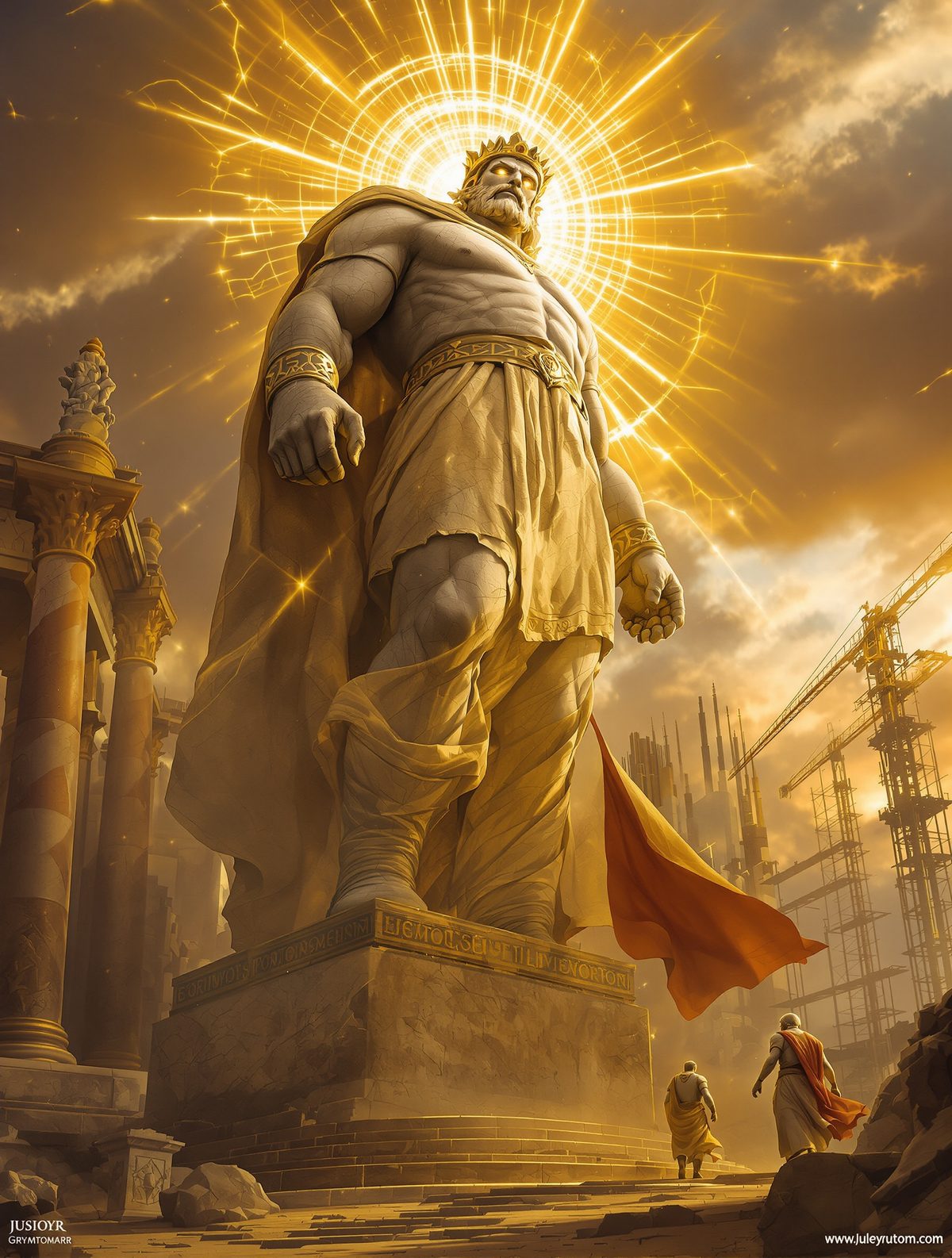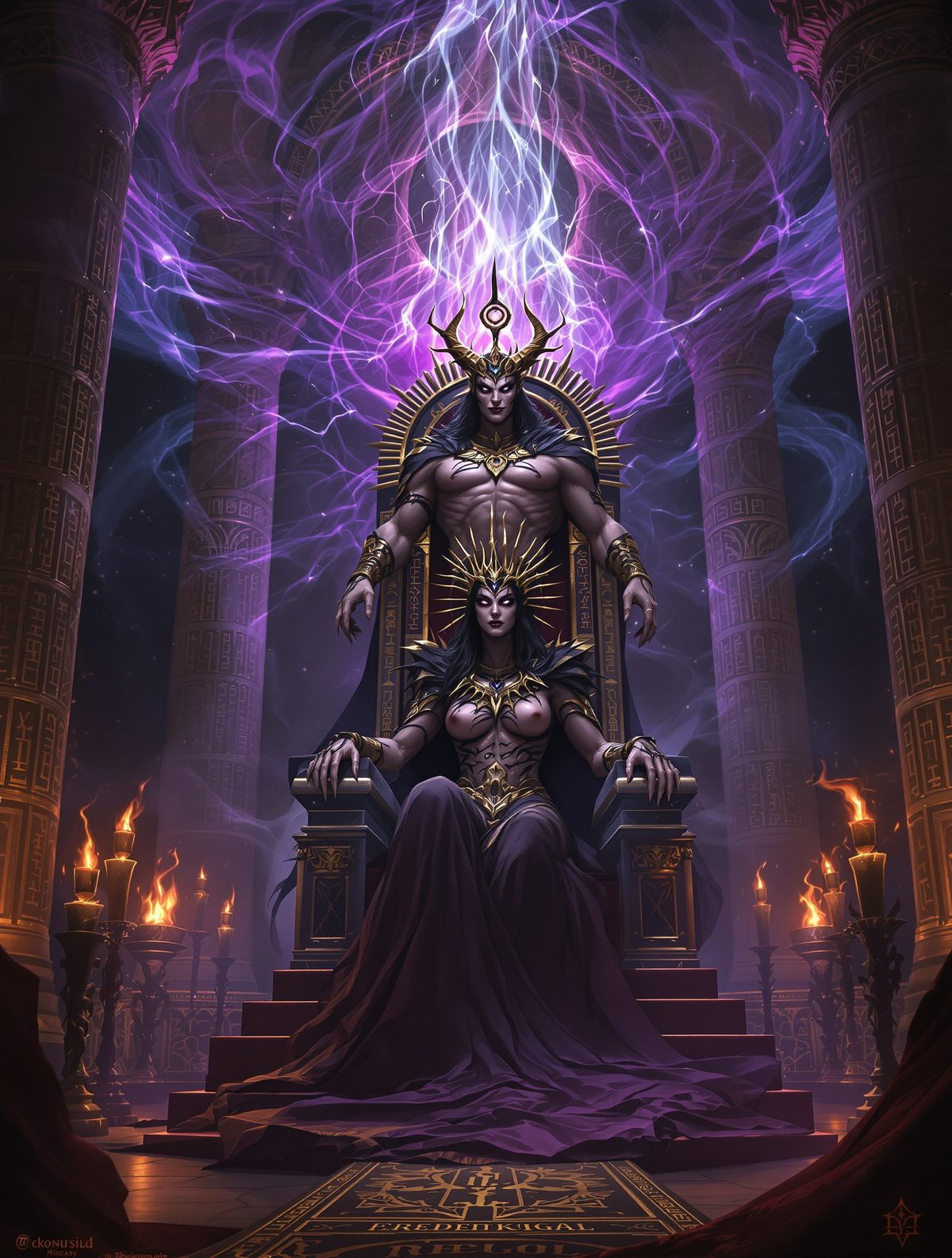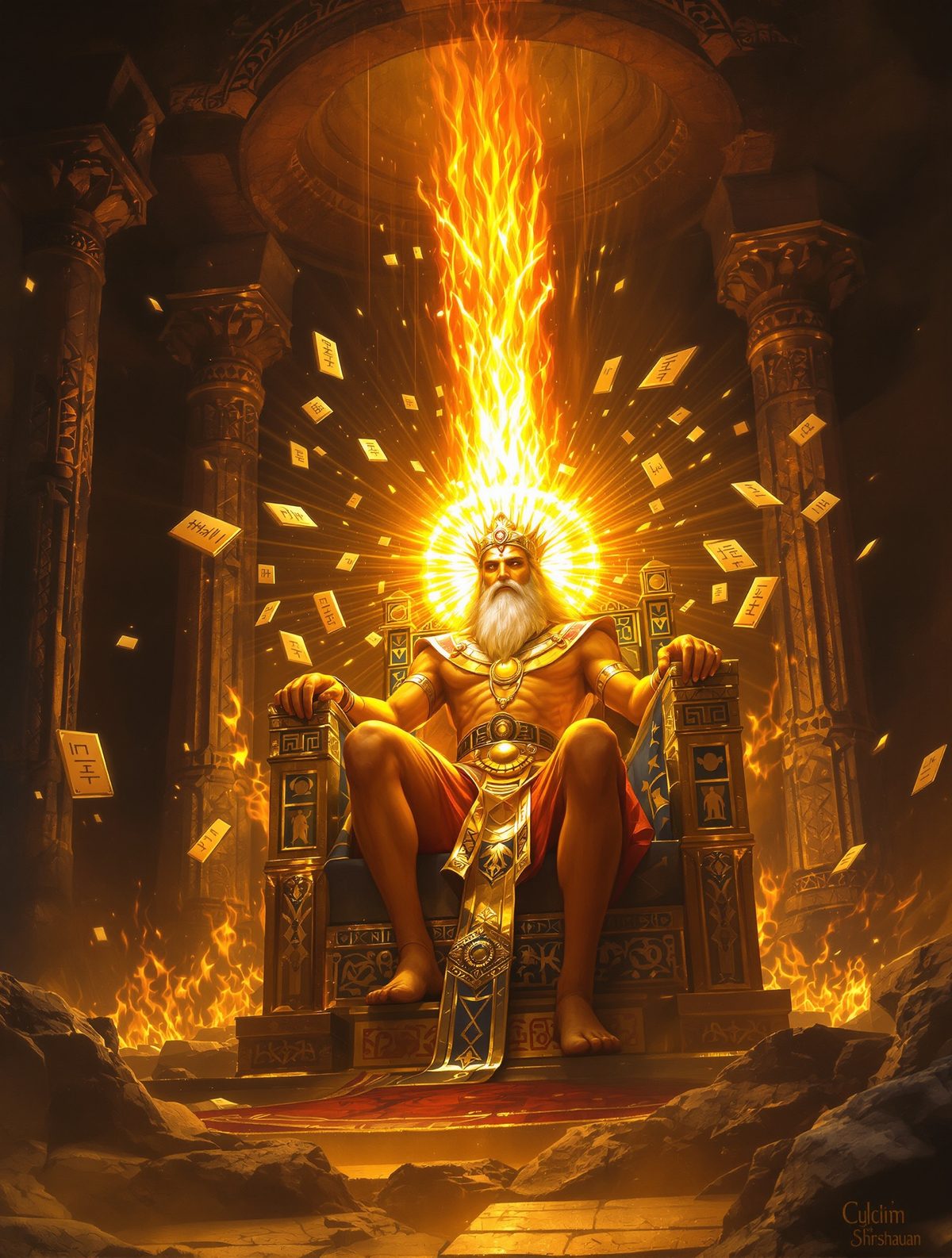
Picture this: while you sleep tonight, assuming you were an ancient Mesopotamian, the sun hasn't simply "set"—it has crashed through the solid earth beneath your feet like a cosmic drill, its divine flames boring through miles of rock and clay to reach the darkest realm imaginable. There, in the shadowy kingdom of the dead, the great god Shamash sits upon his throne of blazing light, his penetrating gaze judging souls that thought death might offer them escape from justice.
This wasn't just poetic metaphor to the people of ancient Babylon and Assyria. This was cosmic reality—a daily supernatural event that explained not just where the sun went at night, but how divine justice operated on a scale that dwarfed human comprehension.
The God Who Refused to Rest
Most ancient cultures imagined their sun gods sailing across heavenly waters or riding chariots through the sky, but the Mesopotamians conceived something far more dramatic. Shamash—whose name literally means "sun" in Akkadian—was no mere celestial traveler taking a pleasant nighttime cruise. He was a relentless force of cosmic order who burned through the very foundations of the world to ensure justice never slept.
Archaeological evidence from cylinder seals dating back to 2500 BCE shows Shamash wielding what appears to be a massive saw or cutting tool—not coincidentally the same symbol used for judgment and legal decisions. But this wasn't just any saw: it was the divine instrument that carved through solid earth each night, creating tunnels of fire through which the sun god's chariot could pass into the underworld.
The Epic of Gilgamesh, our oldest surviving work of literature, describes Shamash's nightly journey in vivid detail. When Gilgamesh and Enkidu must pass through the mountain of Mashu to reach Utnapishtim, they're actually following the same tunnel that Shamash burns through the earth every single day. The text tells us this passage is "twelve leagues" long—roughly 36 miles of solid rock that the sun god melts through with his divine fire.
The Underground Courtroom of Cosmic Justice
But here's where the story becomes truly extraordinary: Shamash wasn't just passing through the underworld—he was transforming it into the universe's supreme courtroom. While the living world slumbered in darkness, the realm of the dead blazed with the light of divine judgment.
Ancient Mesopotamian texts describe how Shamash would arrive in the underworld each night and immediately begin hearing cases. Not just the cases of the recently deceased, but every unresolved injustice that had ever occurred. Murders that went unpunished, thefts that were never discovered, lies that destroyed innocent lives—all of it came before Shamash's burning tribunal in the depths of the earth.
The goddess Ereshkigal, queen of the underworld, would present souls to Shamash for judgment, but she herself was subject to his cosmic authority. Ancient legal documents from the Old Babylonian period (roughly 2000-1600 BCE) often invoke Shamash as the ultimate judge whose verdicts could override even death itself. One remarkable tablet from Sippar, dating to around 1750 BCE, records a property dispute that explicitly states the matter will be "decided by Shamash in the depths" if no earthly resolution can be found.
The Technology of Divine Fire
How exactly did Shamash accomplish this supernatural feat? Mesopotamian priests developed remarkably detailed explanations that sound almost like ancient science fiction. According to the Enuma Anu Enlil, a massive collection of astronomical and mythological texts compiled around 1000 BCE, Shamash's chariot was equipped with wheels that generated intense heat through friction—so intense that they could melt through solid rock like it was butter.
But the real secret was Shamash's divine fire, described as being fundamentally different from earthly flame. While normal fire consumed material and then died out, Shamash's fire transformed matter, turning solid earth into a kind of cosmic glass that remained permanently passable. This is why, according to Mesopotamian belief, the same tunnels could be used night after night—they had been transformed into permanent passages between the world of the living and the realm of the dead.
Ancient astronomers tracking the sun's movements noted that it didn't always rise and set at exactly the same points on the horizon throughout the year. Their explanation? Shamash was constantly excavating new tunnels, expanding his network of underground passages to reach previously inaccessible corners of the underworld where injustice might be hiding.
The Souls That Couldn't Hide
Perhaps the most chilling aspect of this mythology was its implications for human morality. In most ancient cultures, death offered a kind of escape—whatever you had done in life, good or bad, was largely finished business once you crossed into the afterlife. But Shamash's nightly incineration of the earth meant that no soul could hide in darkness.
Mesopotamian funeral texts reveal a fascinating anxiety about this reality. Wealthy families would sometimes commission elaborate "justification scrolls"—papyrus documents listing all the good deeds their deceased relatives had performed, intended to be buried with the body as evidence for Shamash's underground tribunal. Archaeologists have found hundreds of these scrolls, some running to extraordinary lengths. One discovered near ancient Babylon contains over 2,000 individual entries documenting acts of charity, honesty, and justice performed by a single merchant over his 40-year career.
But there were also those who tried to cheat the system. Ancient texts describe elaborate burial rituals designed to "hide" souls from Shamash's penetrating light—bodies buried in lead containers, graves surrounded by mirrors intended to confuse the sun god's vision, even entire underground chambers lined with what appears to be early attempts at light-absorbing materials.
None of it worked, according to Mesopotamian belief. Shamash's divine fire burned through everything.
When Gods Worked Night Shifts
This mythology reveals something profound about how ancient Mesopotamians understood the relationship between cosmic order and human society. Unlike later religious traditions that would separate divine judgment into distant future events, Shamash's nightly journey made justice an ongoing, relentless process. Every single night, without exception, the moral accounts of the universe were being balanced in courts of fire deep beneath the earth.
It's worth noting that Mesopotamia developed some of the world's first sophisticated legal systems—the Code of Hammurabi, dating to around 1750 BCE, contains 282 detailed laws covering everything from property rights to family disputes. But even Hammurabi acknowledged that earthly law was limited. His famous law code explicitly states that its authority comes from Shamash and that final justice belongs to the god who "illuminates darkness and burns away falsehood."
Archaeological evidence suggests that some Mesopotamian cities built their courthouses directly above temples to Shamash, creating a symbolic connection between earthly and divine justice. In the ancient city of Sippar, excavations have revealed a remarkable structure: a courthouse built directly over what appears to be a ritual shaft extending deep into the earth—possibly representing Shamash's nightly passage to the underworld.
The Light That Still Burns
In our modern world, where surveillance cameras and digital records create the feeling that "someone is always watching," the mythology of Shamash feels surprisingly relevant. The ancient Mesopotamians imagined a universe where no injustice could ultimately hide, where cosmic forces actively worked to expose truth and deliver judgment.
But perhaps more importantly, they envisioned justice as requiring tremendous effort and sacrifice—even from the gods themselves. Shamash didn't judge the dead from a comfortable celestial throne; he burned through solid rock every single night to reach them. He literally carved tunnels of fire to ensure that darkness could never defeat light, that death could never silence the voice of justice.
In a time when justice often feels fragile and uncertain, when wrongdoing seems to hide behind complexity and power, there's something deeply appealing about the image of divine fire boring through every obstacle to illuminate truth. The ancient Mesopotamians believed that the very fact that the sun rose each morning was proof that Shamash had successfully completed another night of cosmic judgment, that the moral order of the universe remained intact.
Every sunrise, in other words, was a victory bulletin from the underground courts of cosmic justice—evidence that light had once again triumphed over darkness, and that some forces in the universe remain absolutely committed to the truth.