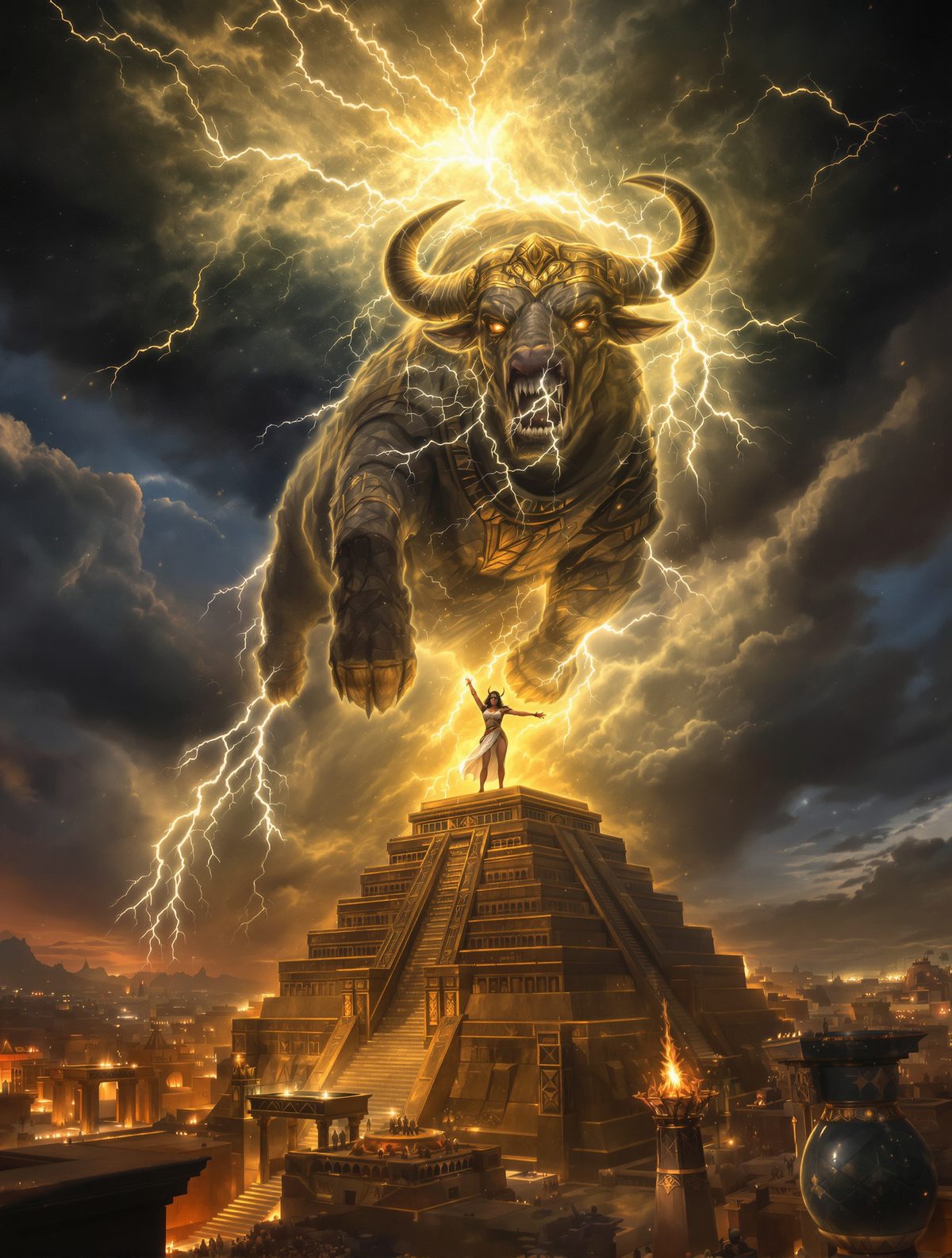
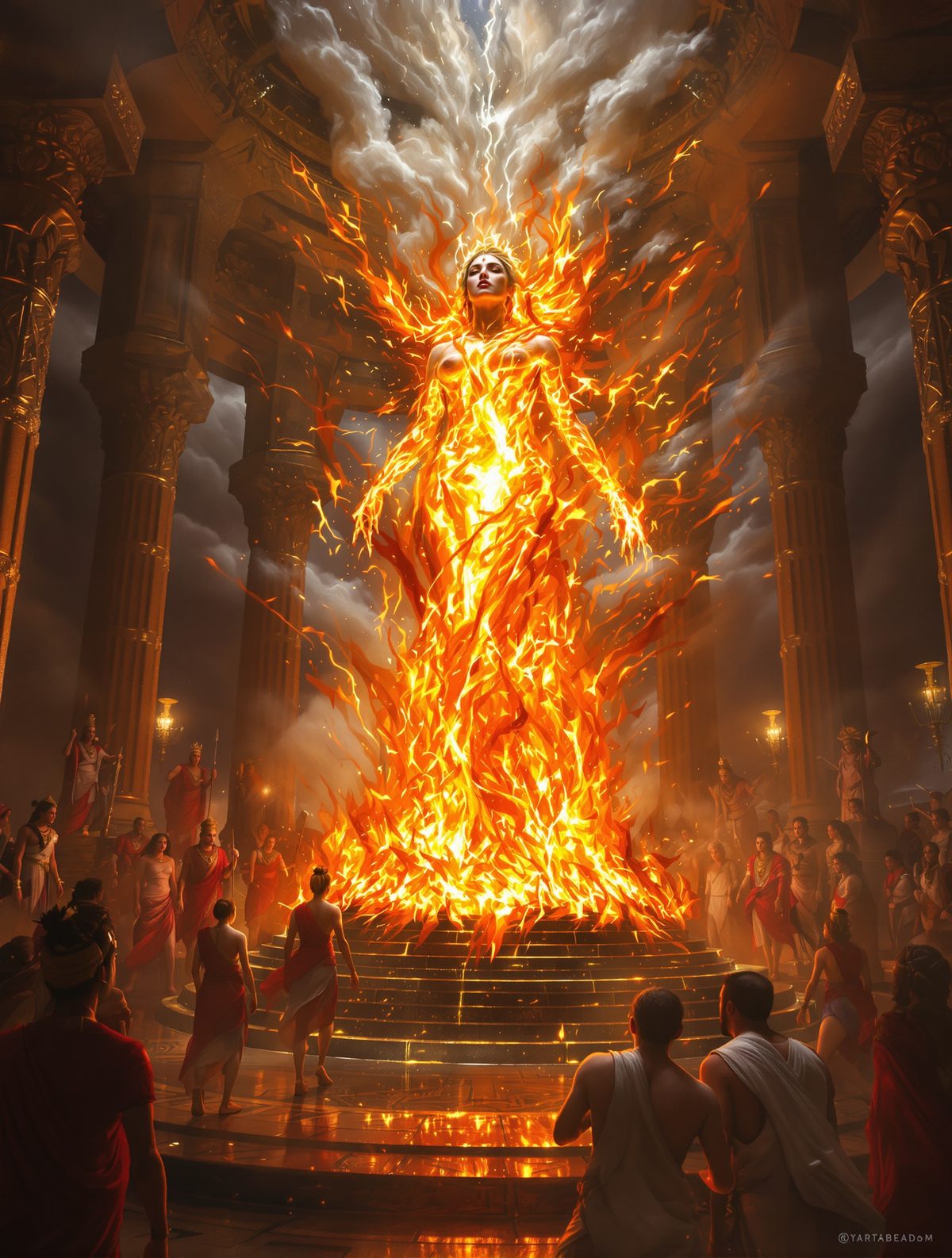
Hook: Fires crackled in the great hall as divine figures, radiant in their celestial glory, murmured in astonishment. There, amidst the swirling smoke and the chanting of mantras, an uninvited guest made her final stand. Sati, the daughter of King Daksha and wife of the mighty Shiva, stared into the sacred flames with unwavering resolve. Her descent into the fire would alter the cosmos, leaving an indelible mark across time that legends would echo for millennia.
The Ignored Invitation
In the ancient world of Vedic India, where the profound mingled with the mythical, the scene was set for an epic confrontation. The power of gods and goddesses reigned supreme, each deity steering the fates of mortals and the cosmos alike. Among them stood King Daksha, a Prajapati and one of the greatest progenitors, known for his pride and stringent adherence to ritual purity. His stature within the heavenly hierarchy was indisputable.
As the time approached for Daksha's grand yajna, a sacrificial rite seeking blessings and divine favor, the cosmic invitations were dispatched. The ether bore witness to the assembling of every notable god in the pantheon — all except one. Shiva, his son-in-law, and a paramount figure in Hindu mythology, found himself conspicuously unenlightened. The tension between Daksha and Shiva was infamous, a clash of order and asceticism, of formality versus untamed spiritualism.
This was no ordinary oversight. It was a deliberate slight, meant to insult the great ascetic who danced along the edge of chaos and righteousness. While the gods gathered, Shiva remained in meditation on the icy slopes of Mount Kailash, unaware or perhaps uncaring, until word reached Sati, his cherished consort.
The Unyielding Wife
Sati, the embodiment of loyalty and strength, faced an unprecedented inner conflict. Her heart ached at her father's brazen disregard for her husband, yet she longed to attend the sacred yajna — an event of cosmic significance. Despite Shiva's warnings, wisdom, and reluctance to stir conflict, Sati resolved to attend. She hoped her presence might restore harmony and honor to both her family and her husband.
The path to Daksha's domain was fraught with fearsome implications. Yet, with dignity and purpose, Sati traversed the heavens, her very arrival at the yajna an act of defiance and courage. The reception was cold and the atmosphere, electric with divine presence, did little to ease the tension. The hall glistened with opulence, reflecting the assembled gods' divine auras.
But for Sati, the splendor offered no solace. She confronted her father, demanding an explanation for Shiva's exclusion. Daksha, unrepentant and filled with disdain, hurled insults at both Shiva and Sati's choice of husband. It was a moment of profound realization for Sati — the familial ties she had hoped to mend were hopelessly sundered.
The Sacrifice that Changed the World
Overwhelmed by grief and fury, Sati made a decision that would echo through time. She stepped forth amidst the sacred offerings, exuding a calm resolve that silenced the crowd. Every breath drawn within that moment was heavy with anticipation, as Sati declared her determination to relinquish her mortal ties.
In an act as courageous as it was heartbreaking, she invoked the sacred fire — Agni, the purifier and dissolver — allowing the flames to envelop her. The gods watched in stunned silence, for Sati’s self-immolation was not merely personal sacrifice; it was a cosmic act that upended divine order. With no one able to intervene, she became one with the fire, choosing honor above all else.
This was not merely an ending but a harrowing prelude to a divine upheaval. The embers of Sati's sacrifice flickered with the unnerving promise of Shiva's grief-stricken wrath.
Shiva's Vengeance: The Dance of Destruction
News traveled with unsettling swiftness to Shiva, who emerged from his meditation at Kailash to face a world irrevocably altered. His anguish, profound and primal, gave rise to an unparalleled fury. In the throes of overwhelming emotion, Shiva performed the Tandava, the dance that traverses creation and destruction.
Sati's lifeless form was borne upon Shiva's shoulders as he stormed through the cosmos, inconsolable. This somber procession was more than the mourning of a shattered god; it was an act that threatened the very fabric of existence. The world trembled under Shiva’s unending grief, with destruction looming in his wake.
To save the universe from Shiva’s consuming rage, the other gods intervened. Vishnu, the preserver, in a moment of divine intervention, wielded his Sudarshana Chakra. With precision, he scattered Sati’s body across the earth, transforming her loss into a sacred act of creation. Each place where a part fell became a Shakti Peetha, a powerful site revered to this day as a center of divine feminine energy.
Legacy of Sati: Eternal Reverberations
The legend of Sati extends far beyond mythology, resonating deeply within the cultural and spiritual psyche of Hinduism. Her sacrifice symbolizes the profound themes of duty, honor, and transformation, even amidst personal devastation. The narrative warns against pride and the consequences of neglecting sacred familial bonds.
From a broader perspective, Sati’s story invites reflections on the power dynamics within relationships, both mortal and divine. It serves as a lens through which themes of gender, power, and identity — all deeply relevant today — are examined. Her tale transcends time, embodying resistance, resilience, and the transformative power of grief.
As the legend reminds us, to understand the past is not merely to recount events but to engage with the narratives that shape our present. The reverberations of Sati's love and sacrifice remind us of the potential within human and divine actions to reshape the world. In a time where stories define cultural ethos, Sati’s legacy remains a compelling call to honor, reflect, and aspire beyond the self.