A Glimpse into the Fury of the Divine
In the ancient lands of Mesopotamia, where the Tigris and Euphrates rivers snake through arid plains, a tale unfolds that has resonated through millennia. Imagine a sun-scorched landscape, the city of Uruk standing proud in the distance, its ziggurats reaching toward the heavens. Here, a formidable encounter took place between a mortal king and a deity whose power could rend the world. This is the story of Ishtar's rage, a legendary episode in the Epic of Gilgamesh, where divine wrath met human defiance, forever altering the course of history.
The Goddess Scorned
Ishtar, known as Inanna in Sumerian culture, was a force to be reckoned with. She was the goddess of love and war, revered and feared, capable of offering blessings of passion and prosperity or unleashing chaos and destruction. Her presence was vital in the ancient Near East, where fertility and battle were integral to daily life. But Ishtar was also capricious, and her temper was legendary. One fateful day, her desire was thwarted, setting in motion a chain of events that would echo through eternity.
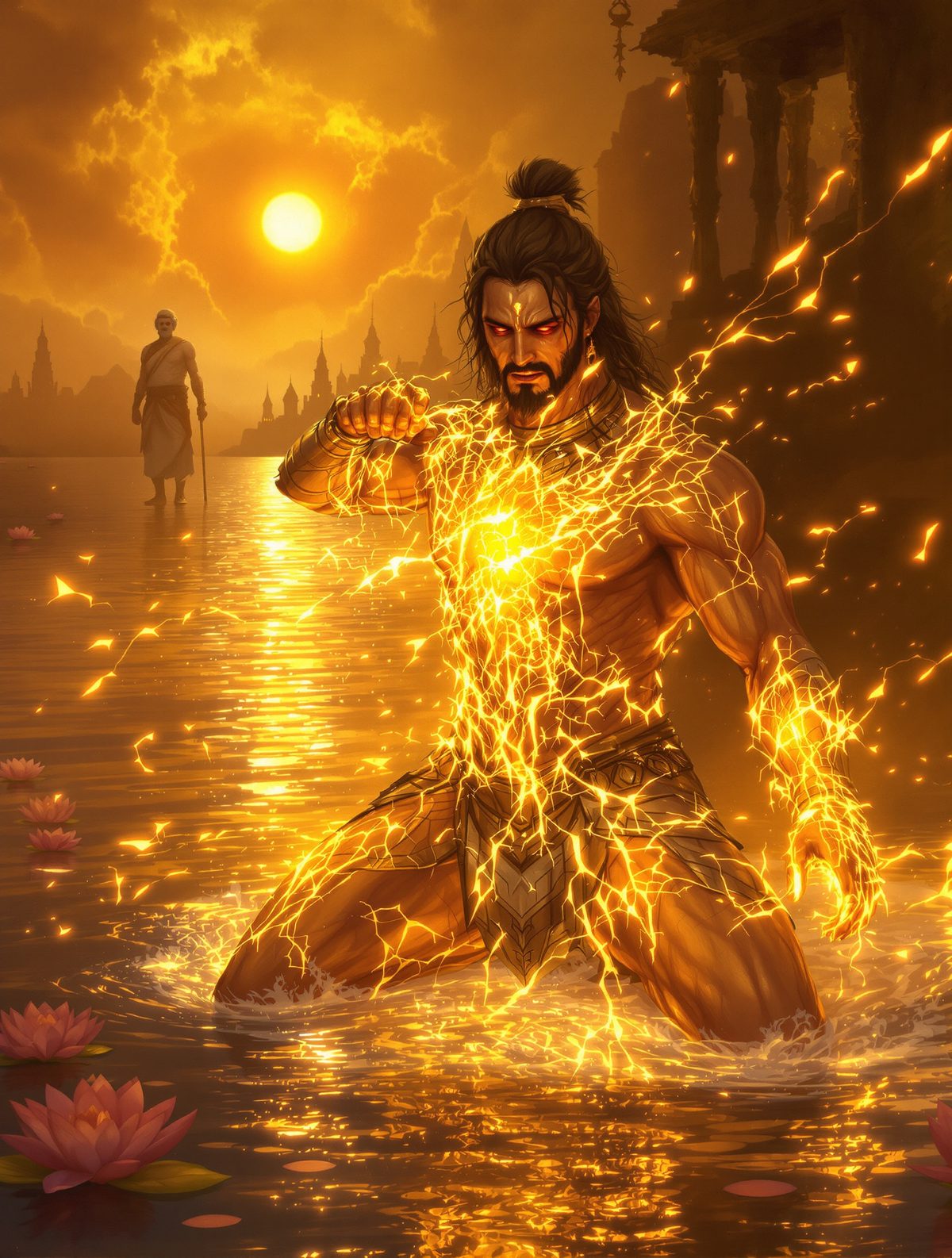
Enter Gilgamesh, the semi-divine ruler of Uruk, a historic city-state flourishing around 2700 BCE. His accomplishments were known far and wide, and his charisma was unparalleled. When Ishtar offered him a chance to become her consort, bestowing upon him her divine favor, Gilgamesh boldly refused. He cited the tales of her past lovers, all of whom met tragic ends—a shepherd turned predator, a farmer transformed into a bird, and the garden-dwelling ally who was struck down. Ishtar's affection, he claimed, was a prelude to ruin, and his rejection was a slight no deity had ever endured.
The Storm Brews
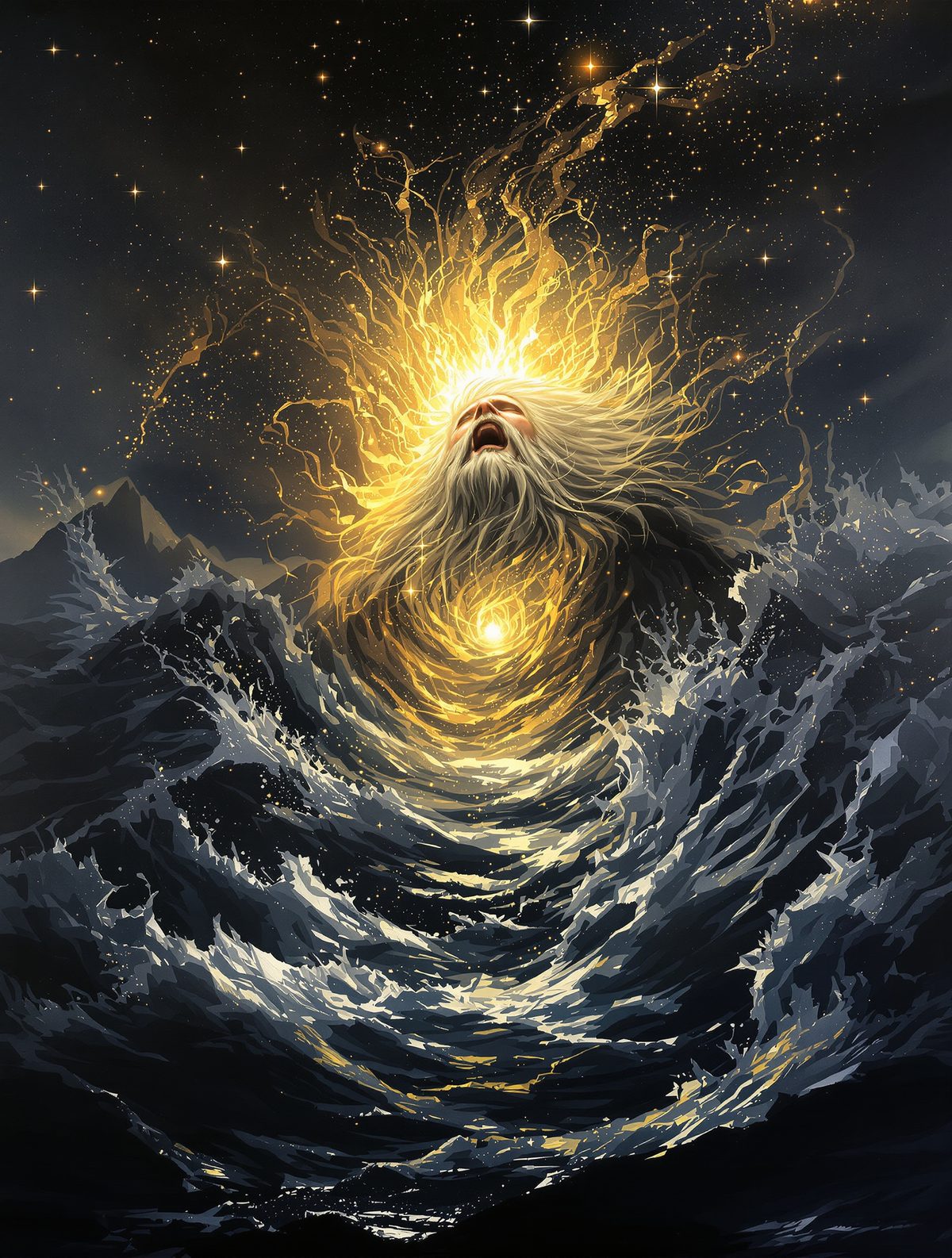
The impact of Gilgamesh's refusal was immediate and profound. Ishtar's rage was incandescent, a celestial fury untethered. Her voice thundered through the heavens as she ascended to meet her father, Anu, the supreme god. Mesopotamian texts from this era, particularly the Standard Babylonian version of the Epic of Gilgamesh, capture this moment with an intensity that captivates readers even today.
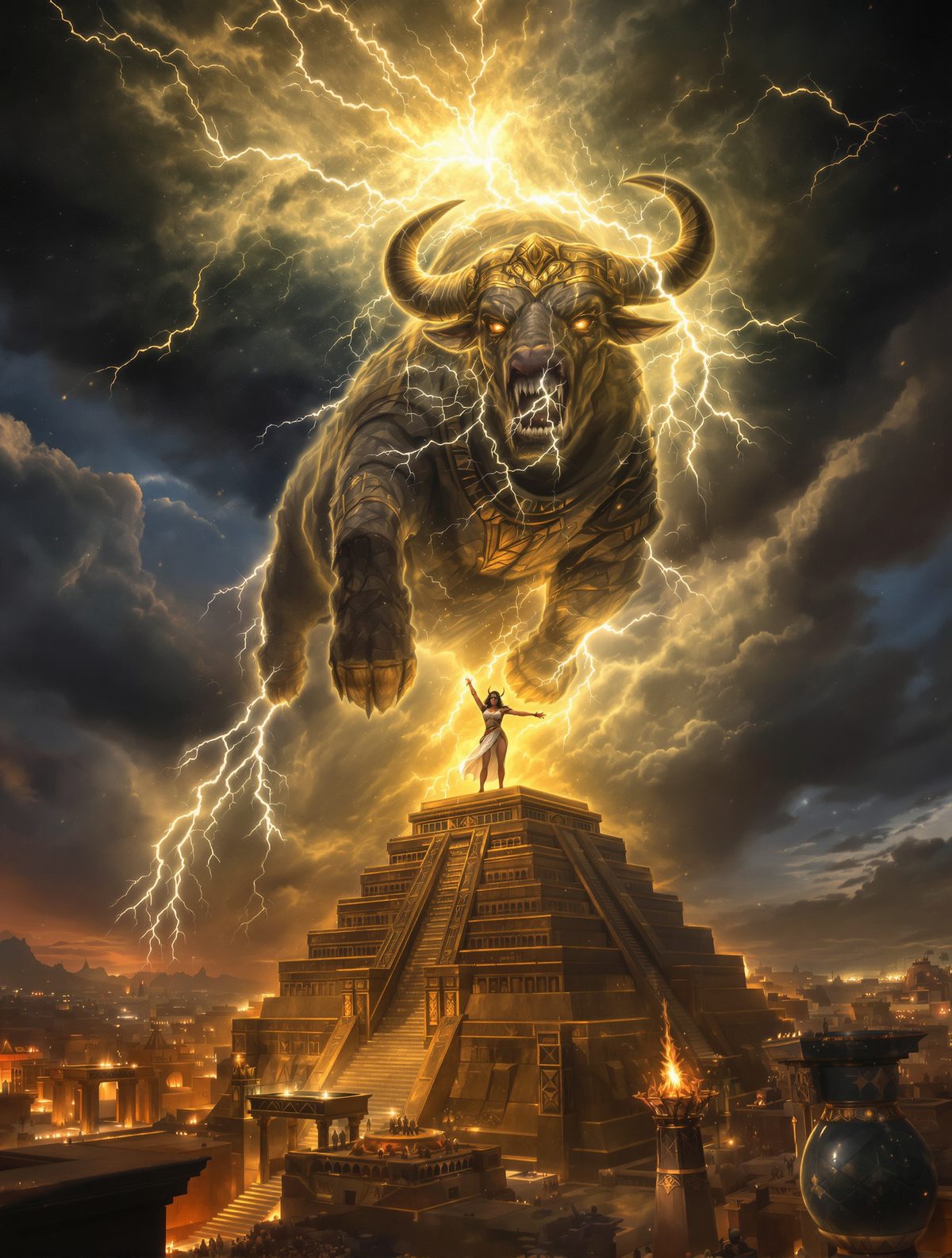
Faced with his daughter's wrath, Anu granted Ishtar a fearsome weapon: the Bull of Heaven. This creature was no mere beast; it embodied calamity itself, a divine plague capable of bringing famine and destruction to Uruk's gates. With a monstrous bellow, the Bull descended upon the earth, hooves striking fertile ground, turning abundance into desolation with every step.
A Struggle of Epic Proportions
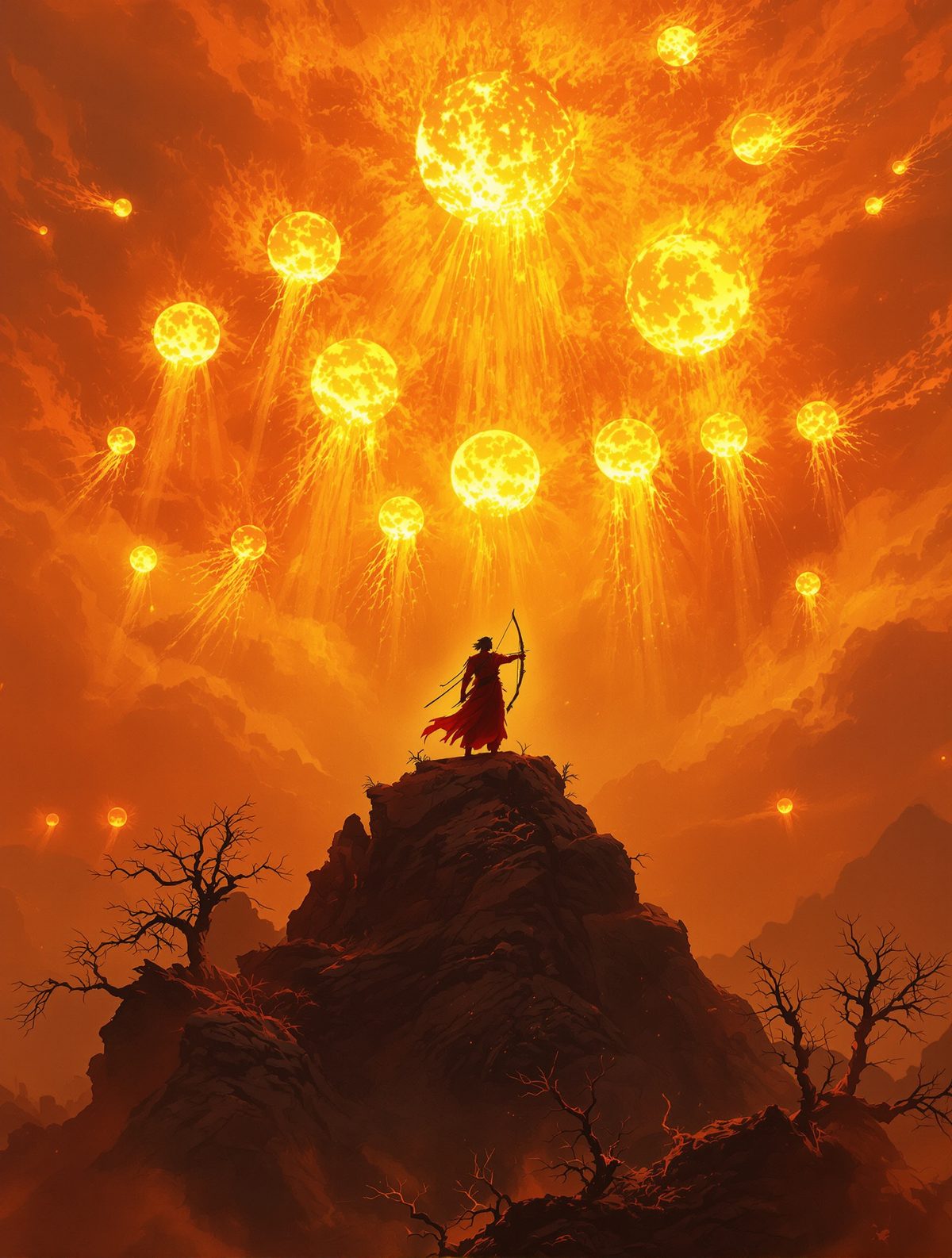
The Bull of Heaven proved formidable as it ravaged the land, but Gilgamesh would not stand idly by. Alongside his trusted companion, Enkidu, a being of the wilds as strong as the king himself, Gilgamesh faced the divine beast. Together they fought, dust swirling around them, their muscles straining under the weight of their Herculean task. With heroic effort, they managed to slay the creature, preserving Uruk from ultimate devastation.
Little known is the fact that earlier versions of this epic, like the Old Babylonian tablets dating back to 1800 BCE, only hint at this struggle, allowing later iterations to expand the narrative into the legendary tale we know today. The layers uncovered by modern archaeologists provide an intriguing glimpse into how ancient Mesopotamians perceived heroism and defiance.
The Cost of Averted Catastrophe
The triumph was not without consequence. Enkidu, who played a crucial role in saving Uruk, soon faced the wrath of the gods for his part in slaying the Bull of Heaven. His dreams foreshadowed doom, a chilling reminder of how closely ancient myths tied heroics to tragedy. He fell ill and, despite Gilgamesh's desperate attempts to save him, succumbed to his fate. As he lay dying, the once-mighty companion realized the fleeting nature of life—a theme that resonated deeply within the Mesopotamian understanding of mortality.
Enkidu's demise was a turning point for Gilgamesh, transforming him from a king of exploits to a seeker of eternal truths. The profound grief he felt delved into the human condition, prompting him to embark on an epic journey in search of immortality, a quest that formed the heart of the Epic of Gilgamesh.
The Timeless Echo of Ishtar's Rage
Why does this ancient tale matter today? In a world where human experience is often caught between love and conflict, power and vulnerability, the narrative of Ishtar's rage is as relevant now as it was three millennia ago. Her story serves as a poignant reminder of the consequences of hubris, the complexity of divine-human relationships, and the price of defiance.
Moreover, this myth highlights the intricate tapestry of Mesopotamian culture, illuminating a civilization that pioneered systems of writing, justice, and governance. In understanding Ishtar's rage, we gain insights into the ancients' psyche, their values, and their undying quest for meaning amidst the uncertainty of life.
As we stand amid the ruins of Uruk, we are invited to reflect on how much has changed and how much remains the same. The echoes of divine fury and human resilience continue to shape the stories we tell and the legends we leave behind. Perhaps, like Gilgamesh, we chart our paths between destiny and desire, always seeking, always learning—and that is a legacy worth cherishing.