In the Beginning Was Nyx
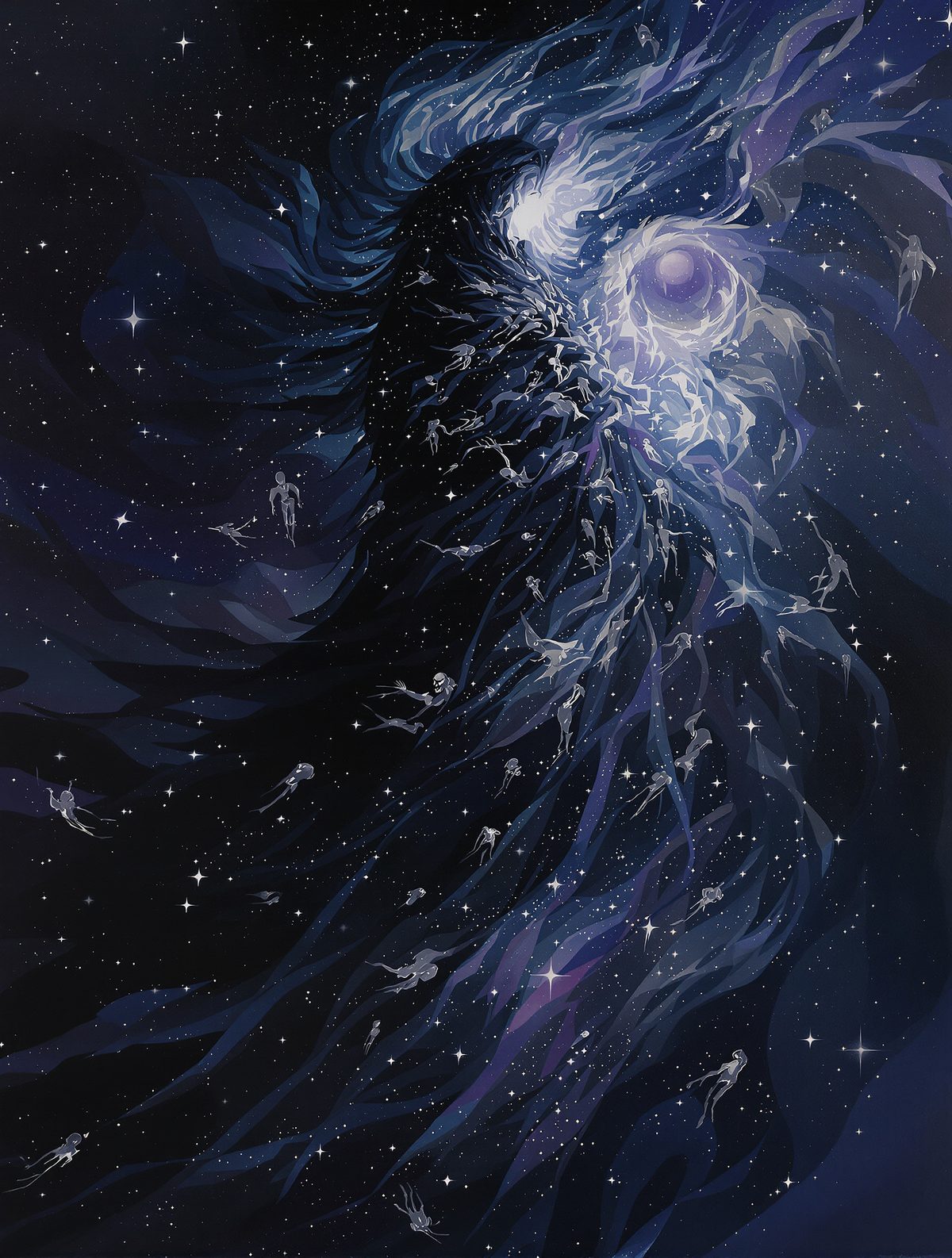
Before the majestic rise of Mount Olympus, before the thunderous birth of Zeus and the intricate weaving of the Titanomachy, there existed primordial deities whose power and mystery linger in the shadows of ancient mythology. Among them was Nyx, the embodiment of Night, who strode through the ancient void, cloaked in a velvety darkness that swallowed even the faintest hints of light. Nyx was not birthed from the chaos that stirred the universe into existence; she was *chaos*. In her midnight solitude, she conjured forth entities that would haunt gods and mortals alike for all eternity, leaving an indelible mark on the fabric of Greek mythology.
From Darkness She Came
According to Hesiod’s Theogony, a cornerstone of Greek mythological texts crafted around the 8th century BCE, Nyx was one of the ancient Protogenoi—primordial deities who emerged from the void of Chaos. In a time unmeasured by human calendars, Nyx walked the cosmos alone, without the need for a consort or counterpart. She was a living paradox—deadly silent, yet teeming with potential. Her presence was profound, an inky expanse unfathomable and mystical.
Nyx dwelled in the murky depths of the world, sharing her domain with Erebus, the personification of deep darkness. It was here, from this shrouded corner of existence, that she birthed a brood of formidable offspring. Foregoing the earthly needs of husbands or divine permissions, Nyx became the mother of beings that would come to dictate the fate, life, and very consciousness of all things living and divine.
Death Walks the Night
From Nyx’s shadowy domain came Thanatos, one of her most notable children. As personifications go, Thanatos encapsulates death no less than Nyx embodies night. Despite being envisioned as a young figure with a gentle, serene aspect—quite different from his later medieval depictions as a macabre reaper—Thanatos was relentless, answering to none but the destinies spun by the Fates, his siblings. His existence became a cornerstone of existential dread, giving mythologies an impersonal yet unnerving form of inevitability.
Thanatos was hardly Nyx’s sole progeny to confront the divine and mortal realms with existential challenges. Beside him emerged Hypnos, the god of Sleep. Born from the same godly womb, Hypnos wielded a strangely regenerative counterpart to his brother's eternal finality, offering solace and respite under death’s looming shadow. In vivid narratives, Hypnos was often appeased by both deities and mortals, seeking his gentle touch to momentarily escape the weariness of waking life.
The Unyielding Thread of Fate
In a family as formidable as the ones Nyx bore, the Moirai—The Fates—stood uniquely out with their insurmountable power over life and time. These divine sisters, Clotho, Lachesis, and Atropos, spun, measured, and snipped the thread of life. The Fates were unyielding, their decisions immutable even by the mightiest of gods. Not even Zeus dared to meddle with the weavings predestined by these daughters of Night.
Such was the profound respect for their designs that poetic and religious texts across history emphasized the futility of contending against fate—a narrative as much philosophical as it was religious. In imagined scenes, they appear forebodingly with their spindle, measuring staff, and shears, charting destinies in the shadows, a testament to Nyx’s enduring maternal imprint over existence itself.
Nemesis: The Avenger
From the penumbral domain of Night also came Nemesis, the spirit of retribution and divine balance. Nyx's narrative wove her offspring into moral cautionary tales, where Nemesis played judge and executioner, ensuring that hubris faced its due reckoning. Often depicted with a wheel or a pair of scales, Nemesis represented cosmic justice, keeping the self-indulgent whims and excesses of gods and mortals firmly in check.
More than mere vengeance, Nemesis symbolized equilibrium, a much-needed counterbalance to the excess in the capricious world of Greek myth. Through her, the very essence of justice—rooted in fairness and balance—was birthed from darkness, underscoring Nyx’s profound artistic touch in creation.
Beyond the Veil of Night
Nyx’s children, spawned from the swirling darkness of her essence, wove narratives vast and eternal. Their roles transcend mere myth and touch on human understanding of mortality, inevitability, and cosmic justice—a testament to the timeless storytelling of the Greeks that still stirs modern imaginations.
Today, these forces represented by Nyx’s offspring still capture our cultural and philosophical discourses. We grapple with the concept of fate and destiny in the tapestry of our own lives, deeply etched by the Moirai's mystical image. Sleep and death are ever-present borders between states of existence, while the idea of retributive justice thrives in theological and secular paradigms alike.
The legacy of Nyx persists as a reminder of the shadows from which existence often derives meaning—an acknowledgment that from the depths of darkness, extraordinary forces emerge, shaping worlds and divine dramas alike. In reflecting upon Nyx’s mythos, we consider our own narratives intertwined through destiny and darkness, forever tracing the outlines of our lives under the eternal night sky she personifies.