
Imagine looking up at the sky and seeing it crack like an eggshell. Not metaphorically—literally. A jagged tear stretches across the heavens, revealing an endless void beyond the blue. Through this cosmic wound, celestial waters pour down in torrents that dwarf any earthly flood. The very pillar that holds up creation has shattered, and the world is drowning in divine chaos.
This wasn't science fiction or a fever dream—this was reality according to ancient Chinese mythology, when the goddess Nüwa faced the ultimate cosmic emergency. Around 2600 BCE, Chinese oral traditions tell us, the world nearly ended not with fire or ice, but with the collapse of heaven itself. What happened next would cement Nüwa's place as perhaps the most resourceful deity in any pantheon, armed with nothing but rainbow stones and unshakeable determination.
When Heaven Fell Apart
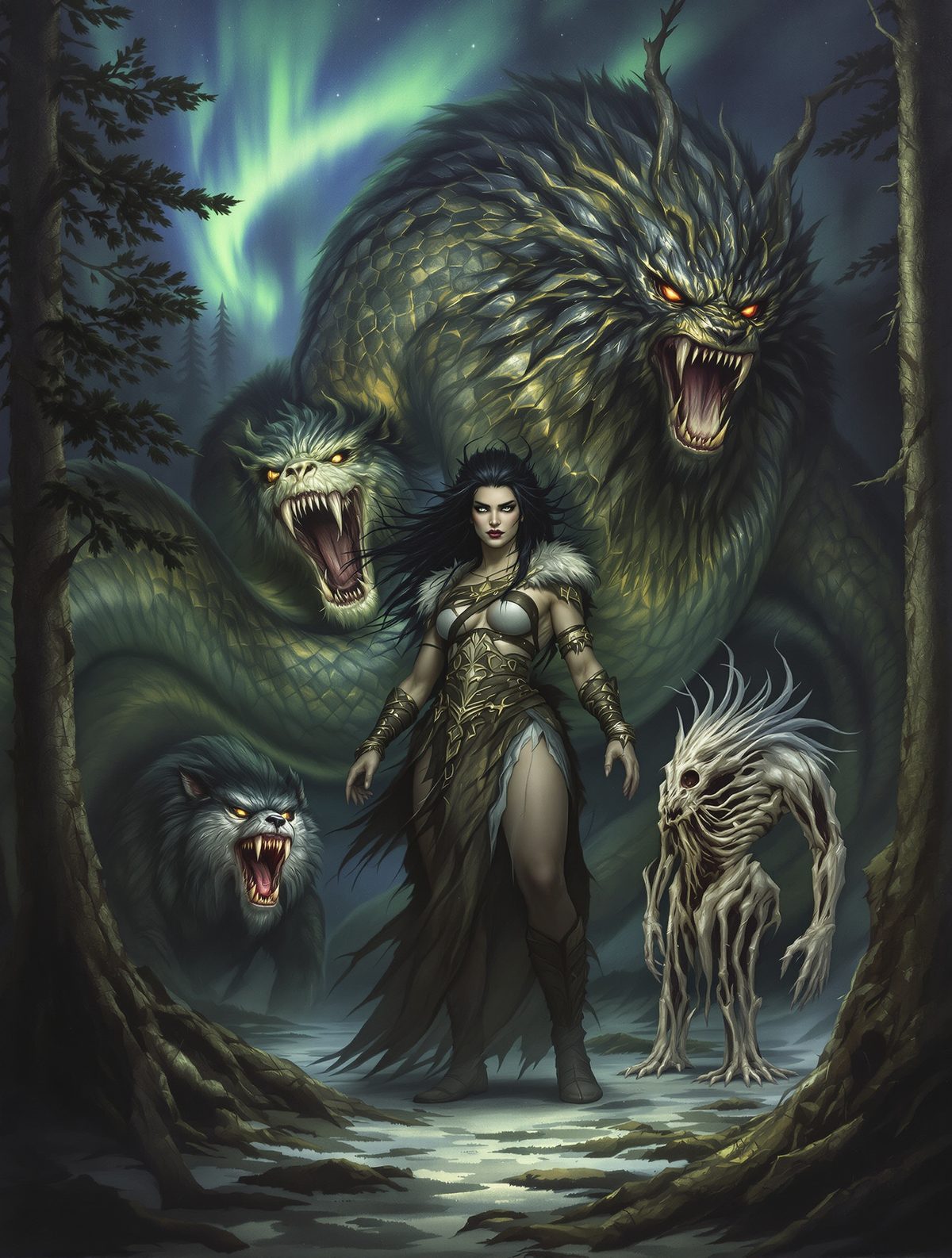
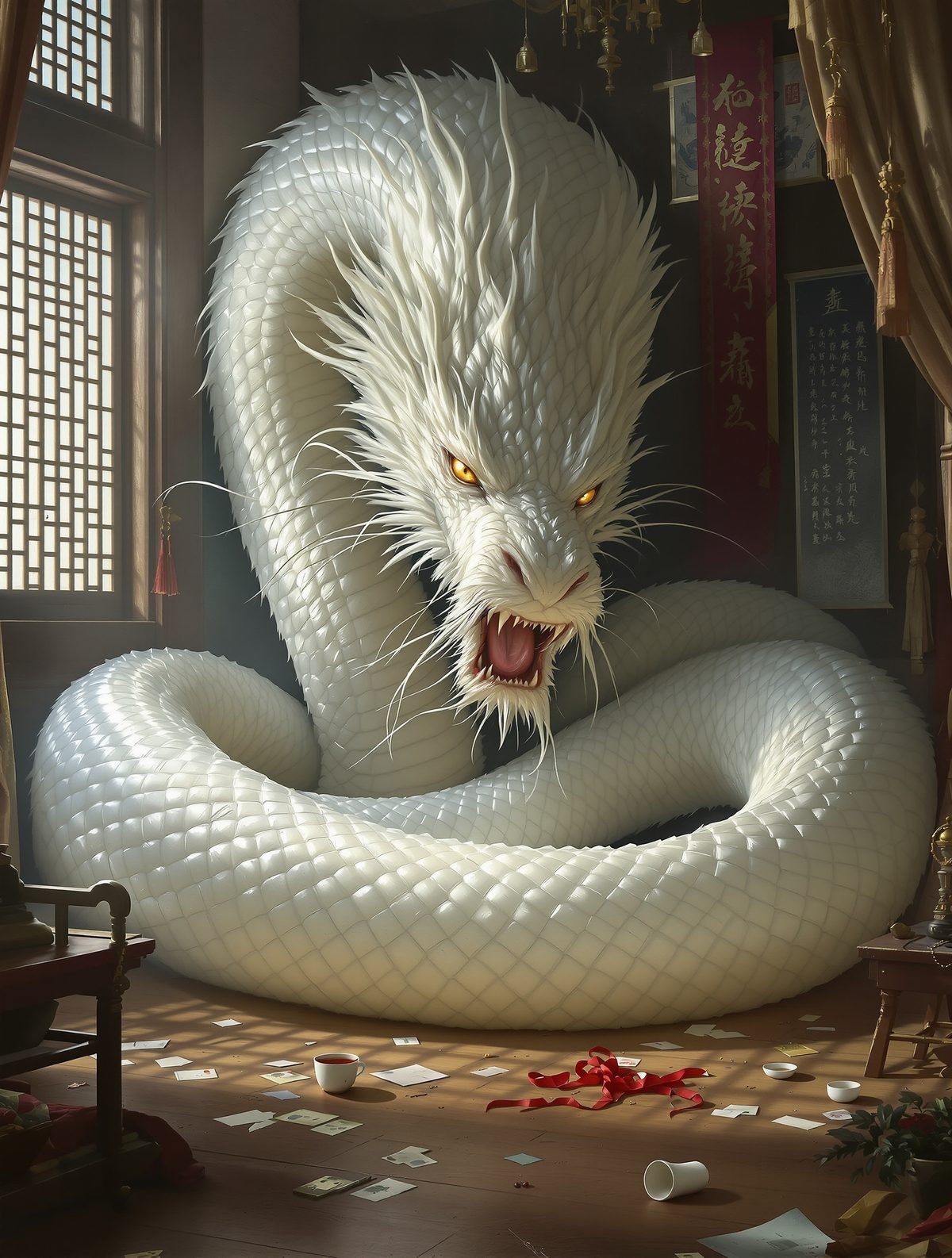
The catastrophe began with a war that shook the foundations of existence itself. Gonggong, the water god with the head of a human and body of a serpent, had grown tired of his rival Zhurong, the fire god who controlled the celestial realm. Their battle raged across the cosmos with such fury that mountains crumbled and seas boiled. But Gonggong's rage knew no bounds—when he realized defeat was inevitable, he threw himself against Buzhou Mountain with suicidal fury.
Buzhou Mountain wasn't just any peak. Standing in the remote northwest, it served as one of the four pillars supporting the heavens, a cosmic load-bearing beam that kept the sky from crushing the earth. When Gonggong's massive form struck it, the mountain didn't just crack—it disintegrated. Ancient texts describe the sound as "ten thousand thunders crying at once," a noise so terrible that dragons fled to the deepest ocean trenches and phoenixes fell silent in their nests.
With the northwest pillar destroyed, the sky tilted like a broken table. The perfectly ordered cosmos, which Chinese philosophy held as the foundation of all harmony, became a chaotic mess. Stars tumbled from their positions, the sun and moon wandered drunkenly across the heavens, and most catastrophically, the sky itself began to tear. Through these growing rips poured the waters of the celestial realm—not ordinary water, but the primordial essence that existed before creation began.
The Goddess Who Wouldn't Give Up
While other deities fled or fell into despair, Nüwa stepped forward. Already renowned as the creator goddess who had molded the first humans from yellow clay along the Yellow River, she possessed something her fellow gods lacked: an unbreakable connection to the earth and its creatures. Chinese texts describe her as having the head of a human and the powerful coiled body of a dragon, able to transform herself seventy times in a single day.
But raw power wouldn't solve this crisis—it required unprecedented ingenuity. Standing knee-deep in the rising floods, watching the sky continue to crack like old pottery, Nüwa conceived a plan that would have been considered impossible by any other deity. She would quite literally patch the heavens, mending the cosmic tear with stones transformed by sacred fire.
What makes Nüwa's story particularly fascinating is how it differs from other creation myths. Most cultures tell stories of gods who create through divine commands or mystical words. Nüwa got her hands dirty. She was, in essence, the universe's first cosmic engineer, approaching an impossible problem with practical solutions and meticulous craftsmanship.
The Five Sacred Colors of Creation
Nüwa's first challenge was gathering the right materials. According to the Huainanzi, a collection of essays from around 139 BCE that preserves much older oral traditions, she needed stones of five specific colors: blue, yellow, red, white, and black. These weren't arbitrary choices—each color corresponded to one of the fundamental elements that Chinese philosophy recognized as the building blocks of existence.
Blue stones represented wood and the east, embodying growth and renewal. Yellow symbolized earth and the center, providing stability and foundation. Red channeled fire and the south, bringing energy and transformation. White connected to metal and the west, offering structure and precision. Black represented water and the north, ensuring flow and adaptability. Together, these five elements could theoretically recreate the cosmic balance that Gonggong's rampage had destroyed.
But here's where the story becomes truly remarkable: Nüwa didn't just collect any stones of these colors. Ancient sources suggest she gathered exactly 36,501 stones—a number that held deep significance in Chinese cosmology, representing the complete cycle of celestial movements multiplied by the sacred number of transformation. For weeks, she scoured the earth, diving into deep caves, scaling impossible peaks, and venturing into realms where mortal feet had never trod.
Divine Alchemy in Sacred Fire
Collecting the stones was only half the battle. To repair heaven itself, Nüwa needed to transform these earthly materials into something that could exist in the celestial realm. This required sacred fire—not ordinary flames, but the fundamental force of transformation that existed at the heart of creation.
Ancient texts describe her constructing a furnace that reached temperatures beyond mortal comprehension. Some versions suggest she used her own dragon-fire breath, while others propose she harnessed the fury of lightning itself. The Shan Hai Jing (Classic of Mountains and Seas), compiled around 300 BCE but containing much older material, hints that she may have descended to the earth's molten core, where the boundary between matter and energy dissolves.
For five days and nights, Nüwa fed stones into this cosmic furnace. One by one, the rigid minerals melted and flowed together, their distinct colors swirling and combining into something entirely new—neither solid nor liquid, but a rainbow-hued substance that pulsed with the rhythm of creation itself. Chinese alchemists of later periods would spend centuries trying to recreate this divine transmutation, believing that understanding Nüwa's process held the key to immortality.
Mending Heaven with Rainbow Light
With her molten rainbow stones ready, Nüwa faced her greatest challenge: actually repairing the sky. This wasn't a matter of simply throwing patching material upward and hoping for the best. The cosmic tears existed in a realm beyond normal physical laws, where time flowed differently and space itself could fold and twist.
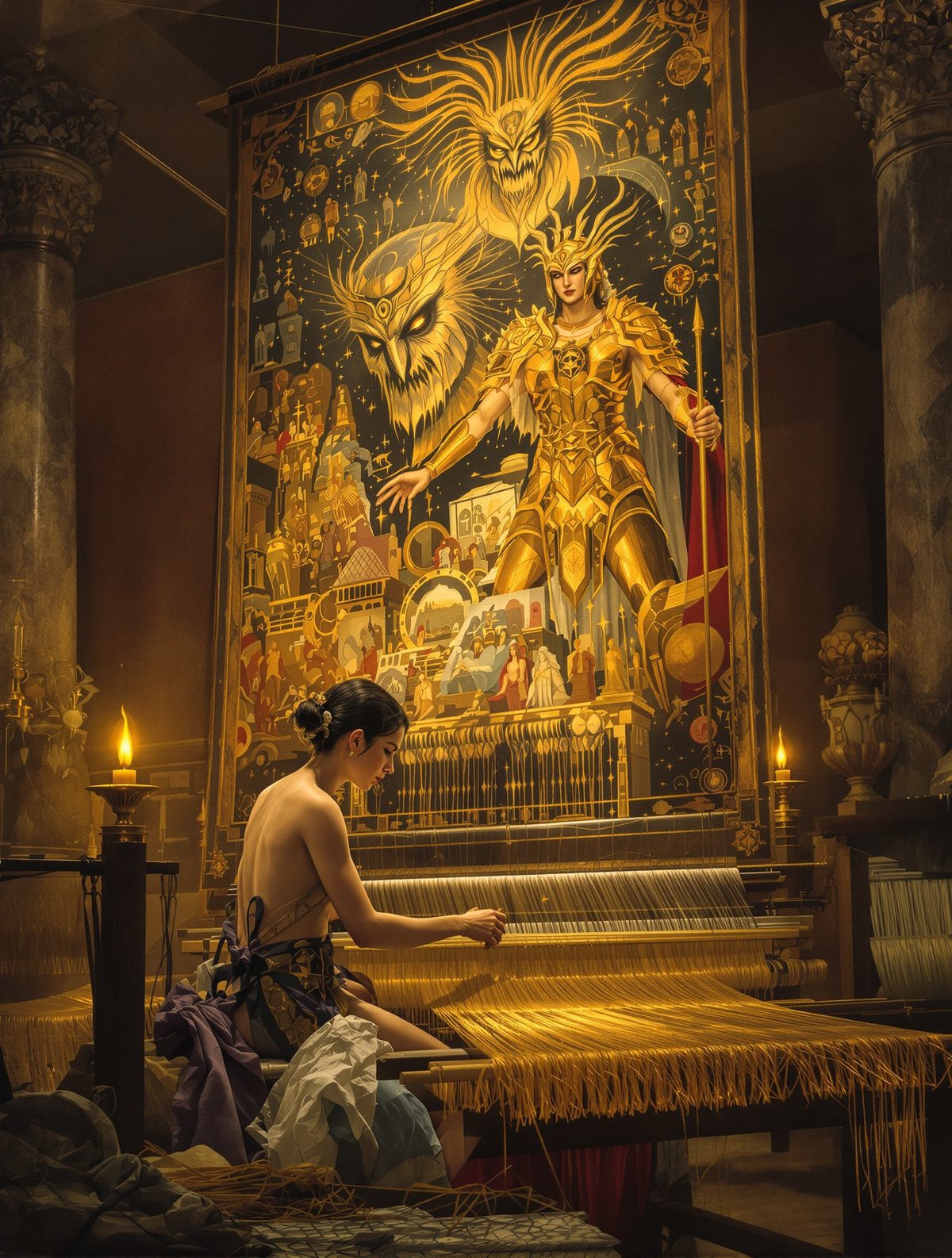
Drawing upon her power of transformation, Nüwa extended her dragon body upward, growing larger and larger until she could reach the broken heavens directly. Ancient artwork depicts this moment with breathtaking imagery—the goddess stretching between earth and sky, her serpentine form coiled around mountains, while rainbow light flows from her hands to fill the cosmic wounds.
The repair work required impossible precision. Each crack had to be sealed in exactly the right sequence to restore the cosmic balance. Too much pressure in one area might cause new tears elsewhere. Too little, and the fundamental forces holding reality together might collapse entirely. For three days, Nüwa worked without rest, her rainbow stones flowing like liquid light to fill every gap and fissure.
But even her incredible supply of 36,501 stones wasn't quite enough. When the last crack was sealed except for a small gap in the northwest—directly above where Buzhou Mountain once stood—Nüwa faced a terrible choice. She could leave this final flaw, accepting an imperfect but functional heaven, or sacrifice something precious to complete the work.
The Lasting Legacy of Divine Engineering
According to most versions of the myth, Nüwa chose perfection over self-preservation, using the last of her divine essence to seal that final crack. The result was a sky more beautiful than before—no longer the uniform blue of the original heavens, but streaked with subtle colors that shift and dance in certain light. Chinese astronomers claim this is why sunsets show such spectacular colors, and why the aurora borealis appears in northern skies.
But Nüwa's story resonates far beyond its mythological origins. In a world facing seemingly insurmountable challenges—climate change, political upheaval, technological disruption—her tale offers a different model of heroism. She didn't solve the cosmic crisis through brute force or divine authority, but through careful planning, innovative thinking, and meticulous craftsmanship.
Perhaps most importantly, Nüwa's myth suggests that even the most fundamental systems—the very "sky" of our assumptions about reality—can be repaired when they break. It requires gathering the right materials, understanding the underlying principles, and being willing to work with patience and precision. In an era when many feel that our own world's foundations are cracking under pressure, the goddess who mended heaven with rainbow stones reminds us that even cosmic-scale problems have solutions—if we're brave enough to attempt the impossible repair.