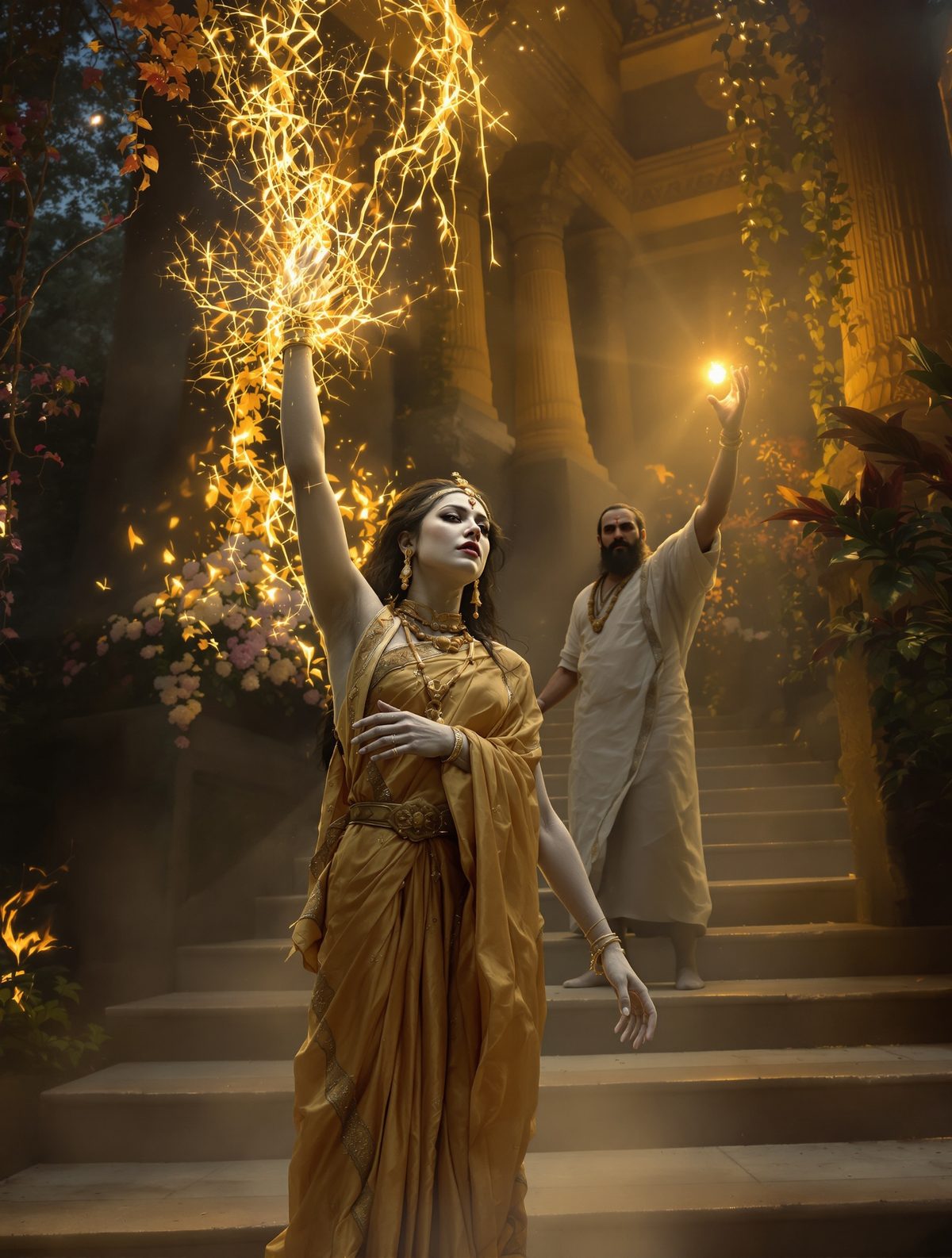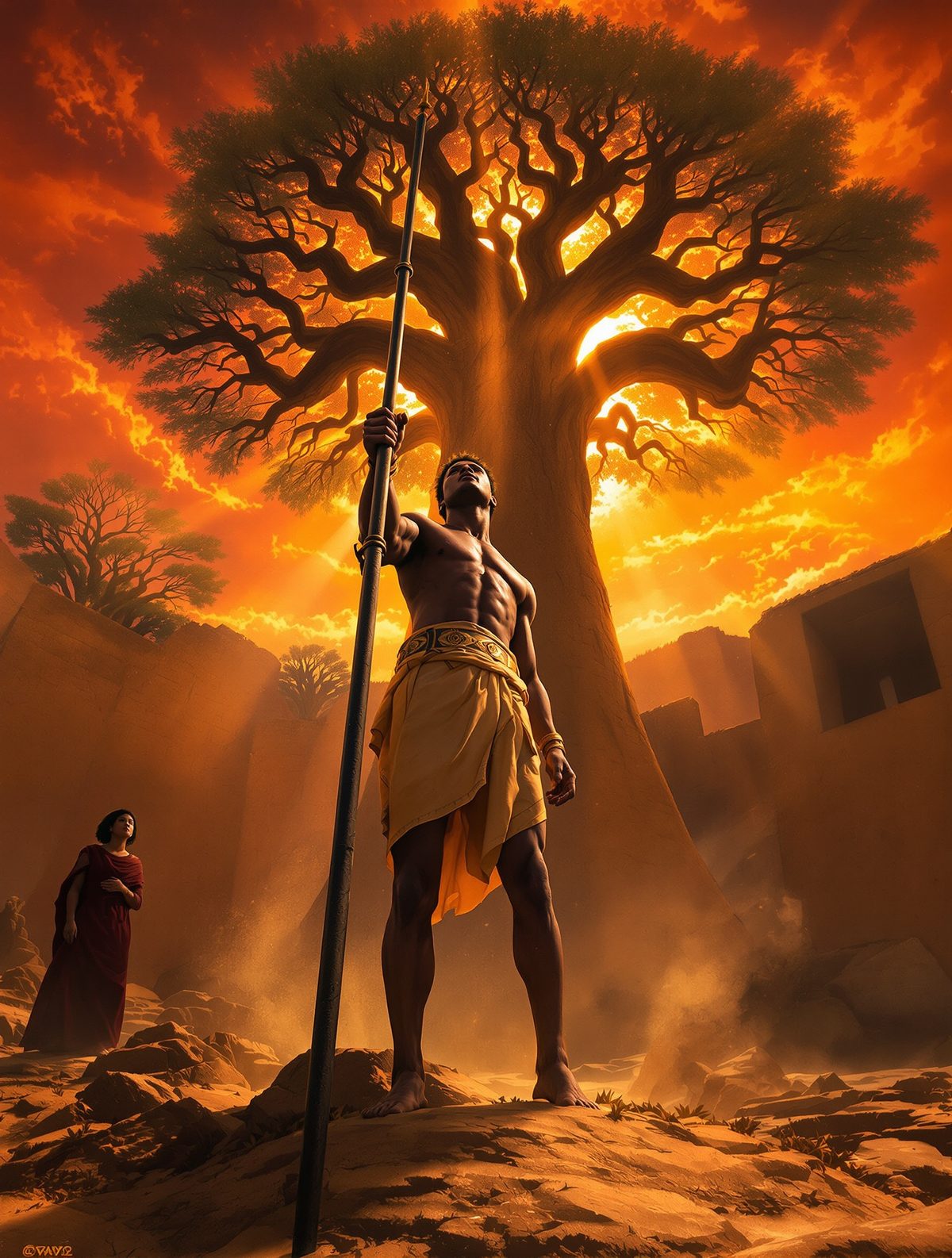
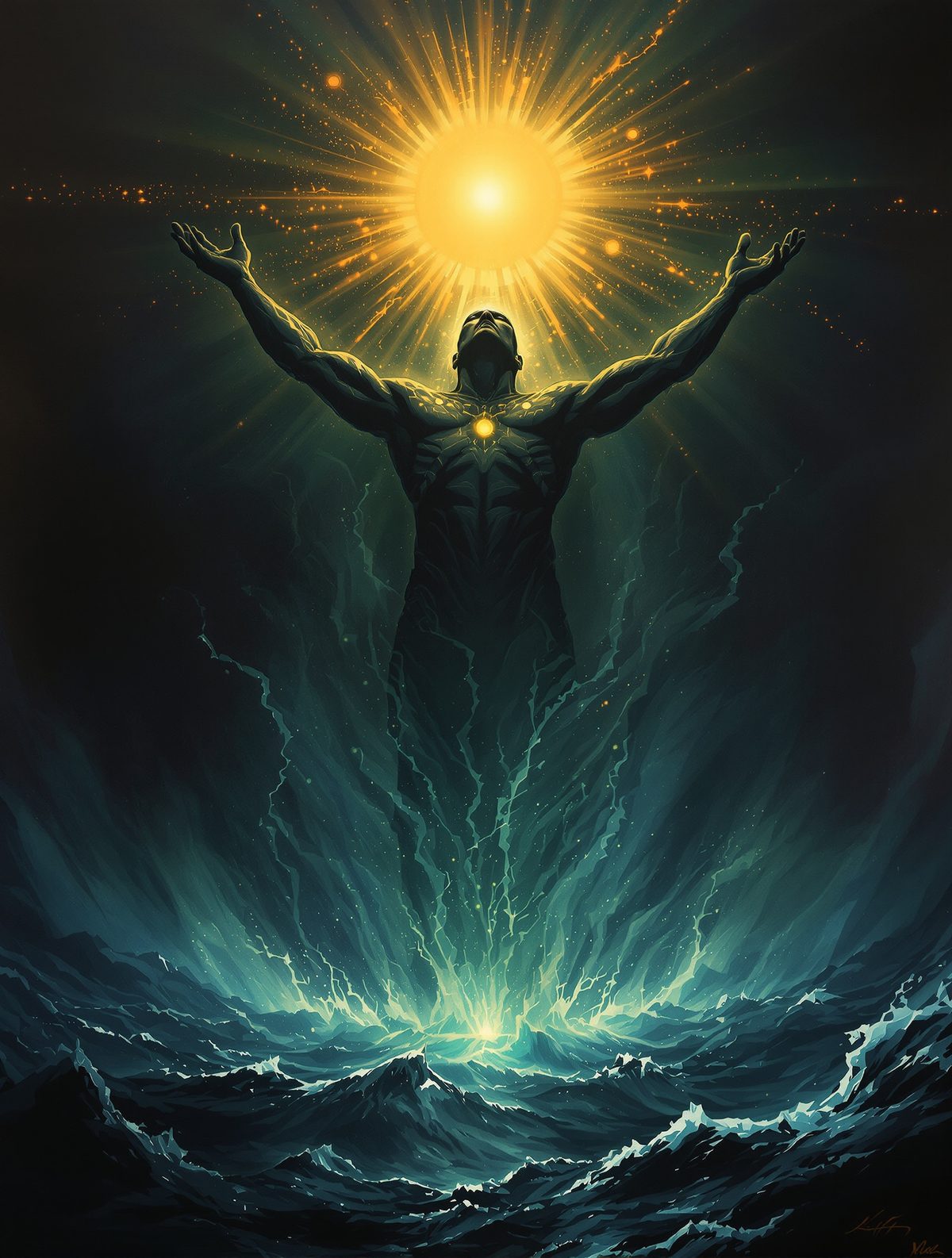
Imagine yourself standing at the edge of nothingness. There's no air, no sky, no ground beneath your feet. You're enveloped in a vast, unfathomable darkness — silent, infinite. This was the universe before the universe, an endless sea called Nu. According to ancient Egyptian mythology, this primordial ocean was the very fabric of creation. How did a cosmos arise out of such void? Join us as we dive into the depths of Nu to uncover an origin story that still ripples through history.
The Stillness Before Time
Before the Ancient Egyptians looked to the stars or erected monumental pyramids in the sand, they believed in an initial state of nothingness — a void wrapped in water. Nu, or Nun as it is sometimes called, was the formless and chaotic abyss that preceded creation. It’s not just a sea; it's the state of the universe before any other reality existed.
Imagine a serene, endless ocean devoid of life, where neither the sun nor moonlight ever cast a reflection on the waters. Legend has it that this ocean was not a creation but an eternal state. Nu was not barren, though; it was pregnant with possibility. Like a still forest before a storm, it held within its depths the potential for all life. If you look back around 4,000 years ago, when this mythology began to take shape, one might say it was the Egyptian's answer to the question "What existed before time itself?"
The Awakening: When Ra Emerged
Within the silent embrace of Nu, something miraculous happened. *Imagine*, if you will, the surface of this eternal ocean stirring for the very first time. The waters of Nu parted, and from the heart of this abyss rose the very first god: Atum, later associated with Ra, the sun-god. According to the Pyramid Texts of the 5th dynasty (circa 2400 BCE), Atum willed himself into existence without father or mother — an act of sheer divine determination.
As Atum stood atop the primordial hill known as Benben, he surveyed the limitless waters and decided to craft the universe. In some interpretations, it is said that Atum sneezed, laughed, or even shed tears, actions that led to the creation of other deities and, eventually, the world as we know it. The transformation of stillness into the bustle of reality had begun.
The Cosmic Order: Gods and Humanity Arise
From Atum came Shuu (air) and Tefnut (moisture), who together created the sky and earth — Geb and Nut. This coupling gave birth to Osiris, Isis, Set, and Nephthys, figures central to Egyptian myths and the embodiment of the forces governing the natural world. It’s a symbology inspiring in its complexity and simplicity; each god and goddess a bouncing-off point for new concepts and elements that mesh together to form a coherent cosmic order.
Surprisingly, the Egyptians did not perceive this as a chronology but rather as states of existence. Each deity remained intrinsically linked to the waters of Nu, and even the creation of humans stems from the intertwining elements introduced by Atum's descendents. This symbiotic relationship with Nu continued to influence Egyptian culture and religion for millennia.
The Eternal River: Nu in Daily Life
The concept of an eternal sea was more than just mythology to the Egyptians; it shaped every facet of their reality. To them, each day brought a renewed risk of slipping back into chaos, should the world fall out of Maat (cosmic order). Hence, the annual flooding of the Nile, a major life-source, wasn’t just a natural phenomenon, but a replaying of creation itself, a recalibration with the primordial waters of Nu.
In constructing their cities, temples, and tombs, the Egyptians sometimes even incorporated artificial lakes and waterways intended to mirror the original abyss, offering a symbolic and physical connection to the forces at play when the gods first emerged. Hence, the waters of Nu were not just mythic seas of the past, but living entities ingrained into the lifeblood of Egyptian society.
Nu's Legacy Today
Why does the story of Nu's primordial waters puzzle and fascinate us even today? This concept reaches across boundaries of time and culture, mirroring motifs like the primordial ooze of Darwinian theory or the Big Bang in modern cosmology. These myths may provide humanity with comfort and an understanding of our place in the universe. The idea that out of darkness can come light, and out of chaos, order, resonates across time.
The timeless allure of Nu invites us to consider the unnerving yet beautiful possibility of creation emerging from the unknown. It reminds today's thinkers, scientists, and spiritualists to wonder how many undiscovered oceans of existence might lie in wait within the shadows of the greater universe.
The tale of Nu, while ancient, remains a meditative lens through which the origins of the cosmos can be contemplated. We may never fully grasp the mystery and depth of such primordial seas, yet in our exploration, even the most unimaginable waters continue to ripple through the collective imagination, offering questions more profound than answers.