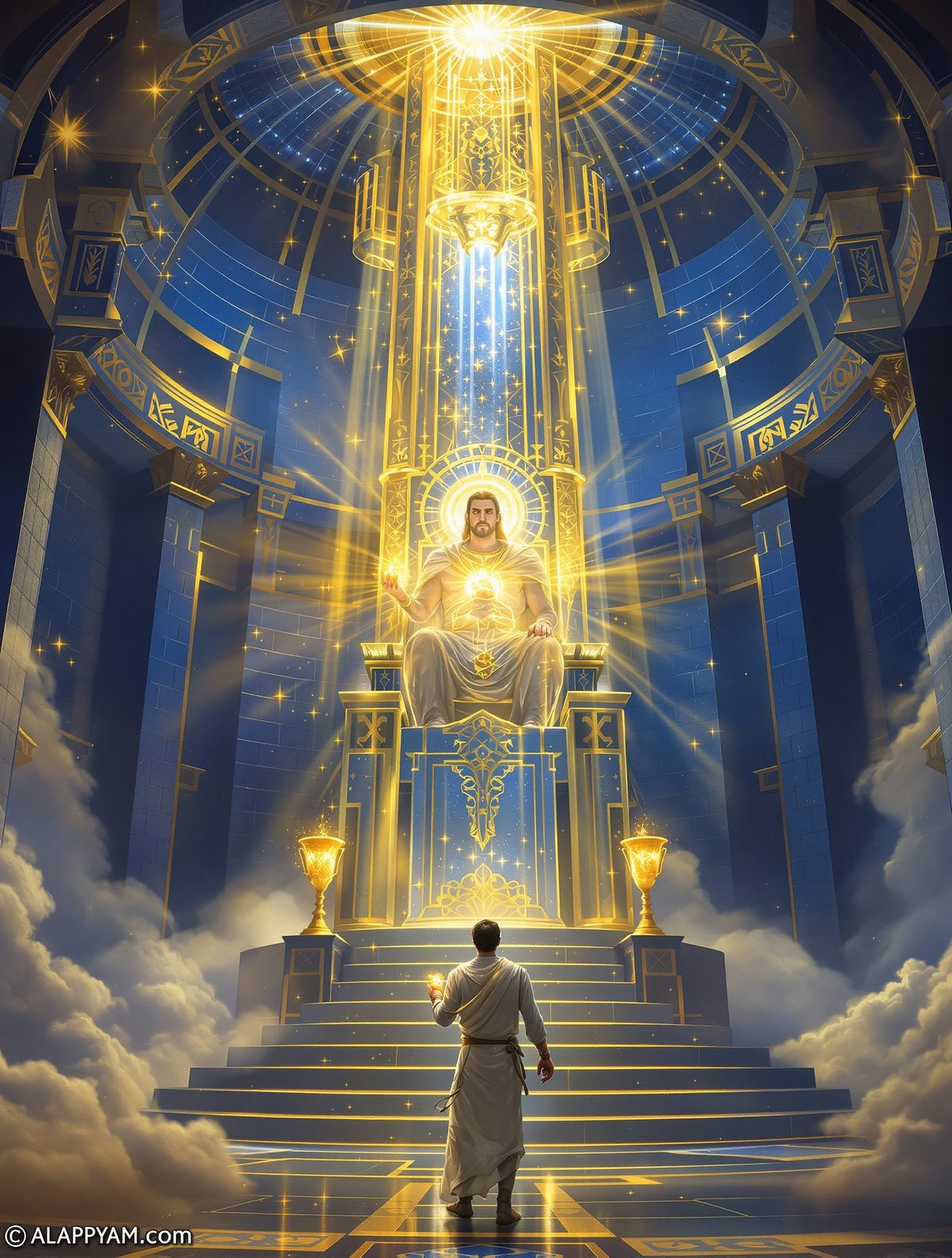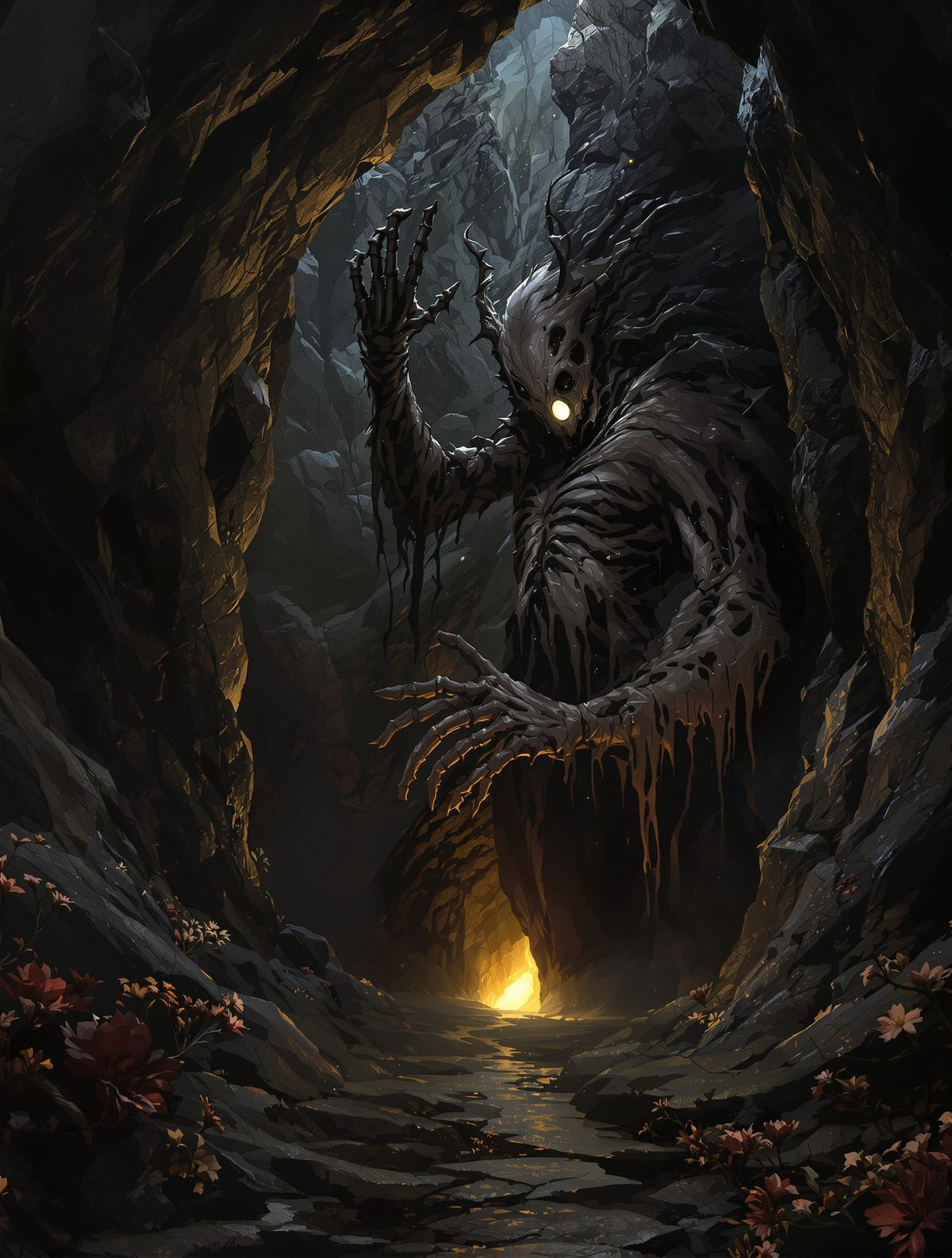
Deep in the shadowy cavern of the underworld, a tale of love, betrayal, and an eternal curse was inscribed into the essence of Japanese mythology. It is an account of two divine beings whose tumultuous end brought forth a cycle that would forever intertwine death with life. The ancient saga of Izanami and Izanagi is not just a creation myth of islands and gods; it is a narrative of unending impact, as relevant today as it was when first told.
The Divine Architects
In the time before time, the cosmos was a swirling chaos. From this primordial soup, the celestial deities Izanami and Izanagi emerged. Tasked by their celestial elders, they stood upon the Heavenly Floating Bridge, stirring the ocean below with a jeweled spear. When Izanagi lifted the spear, drops of brine fell back into the sea, solidifying into the very first land—Onogoro Island. With this act, the divine duo became the architects of the Japanese archipelago, laying the foundation for all life that would follow.
Together, they descended to their newborn home and began the sacred ritual of creation. The couple circled the heavenly pillar, each from opposite directions. Yet, their first union was flawed—a deviation from prescribed celestial rites that resulted in malformed offspring. Correcting their approach, they perfected the ritual, and from their divine consummation emerged the islands of Japan. Townsfolk throughout the islands — from Hokkaido to Kyushu — know their land's birth was one birthed by gods themselves.
The Descent into Yomi
Tragedy entered their realm when Izanami gave birth to Kagutsuchi, the fire god. The newborn deity's flames scorched Izanami, mortally wounding her. As she lay dying, new gods sprang forth from her tears and bodily fluids, turning her very essence into that of a mother of hundreds, if not thousands, of deities. Consumed by grief, Izanagi pursued her into Yomi, the shadowy underworld, to retrieve his beloved. Here, Japan's creation myth takes a darker turn; for Yomi, the land of the dead, is a labyrinthine realm marked by decay and endless night.
Venturing far beyond the reach of sunlight, Izanagi called for Izanami. Bound by devotion, she could not bear to show herself, warning him not to look upon her. Overcome by longing, Izanagi defied her request and lit a fire to see his beloved. The sight was horrifying: the once-radiant goddess was transformed, her flesh rotting, maggots crawling across her desecrated body. Terrified, Izanagi fled, pursued by the wrathful spirit of his wife and her armies of monstrous spirits who obeyed her commands like devout soldiers.
A Curse That Shapes Mortality
As Izanagi gained distance from the horrors of Yomi, he reached the mouth of the underworld and sealed it with a monumental boulder. Izanami, trapped on the other side, screamed in vain, her cries echoing through the forsaken realm. No tears of love; instead, a vehement vow escaped her lips—a curse that would haunt humanity forever. "Every day," she swore with unyielding fury, "I will take one thousand lives from the world above."
In desperation and regret, Izanagi countered his wife's curse with his own divine decree: "Then I shall bring forth one thousand five hundred lives every day." Thus, the cycle of death and rebirth was irrevocably woven into the fabric of existence, shaping the principles of life and mortality known to every sojourner upon the earth. The curse of Izanami was not merely vengeance; it was a divine construct that explained illness, mortality, and the natural balance of life and death in the Shinto worldview.
Legacies Carved in Divine Stone
Past the mythic boundaries, this saga has tangible imprints on Japanese culture. Izanami's resting place, Mount Hiba, became a revered site, a spiritual domain where her presence can still be felt. Indeed, the very elements of Shinto sacrificial rites and purification rituals draw inspiration from Izanagi's own purification after his return from the underworld. It is said that from the purifying waters he used, several gods emerged, reflecting the continuous interplay between creation from defilement and purity.
Even today, the concept of *harae*—ceremonial washing to rid impurities—is observed across Japan, from small shrines in village corners to the grandeur of major temples, encapsulating the eternal respect for the cyclical dance of life that began with a curse uttered in darkness.
A Timeless Cycle in the Modern World
The tale of Izanami and Izanagi, beyond its mythological allure, provides a metaphysical lens through which to view life's impermanence and the inevitability of death. It's a poignant reminder that creation and destruction, though seeming opposites, are two sides of the same divine coin. As humans, we are continually born anew—both as individuals and as a species—while we also carry the message of life's fleeting nature.
Today, as humanity stands at technological and philosophical crossroads, reflecting on such timeless narratives can guide us toward greater empathy and understanding. Izanami's vow, far from being a mere tale of wrath, encapsulates a profound truth about existence that resonates across eons, urging us to ponder how we navigate the ever-turning wheel of life and death.
In the end, the ancient stain of that curse is a gentle reminder—embedded in the very cycles of existence—that our deeds have ripples across generations, shaping the destiny of our worlds in ways both known and hidden.