The forests of Greece whispered secrets of gods, nymphs, and mortals, their stories entwined in nature's own tapestry. Yet some tales were meant to remain untold — until a curious eye dared to see too much. Welcome to the tragic myth of Actaeon, the hunter whose greatest prize led to his undoing.
The Hunt Begins: Actaeon, Prince of Thebes
In the golden era of Greek mythology, when gods walked alongside mortals, Actaeon stood as a beacon of hunting prowess. Born a prince of Thebes, the son of Aristaeus and Autonoe, Actaeon's reputation stretched afar. Trained by the centaur Chiron at the same time as countless other heroes of lore, including Achilles and Hercules, Actaeon's skills were legendary. His hounds, numbering fifty strong, were as famous as their master — each as fiercely loyal and skilled as the gods themselves.
Yet, this tale is not one of triumph. Actaeon's story walks the fine line between man and beast, a saga painted with fatal curiosity beneath the towering trees of Mount Cithaeron.
Voyeur's Curse: A Moment that Sealed Fate
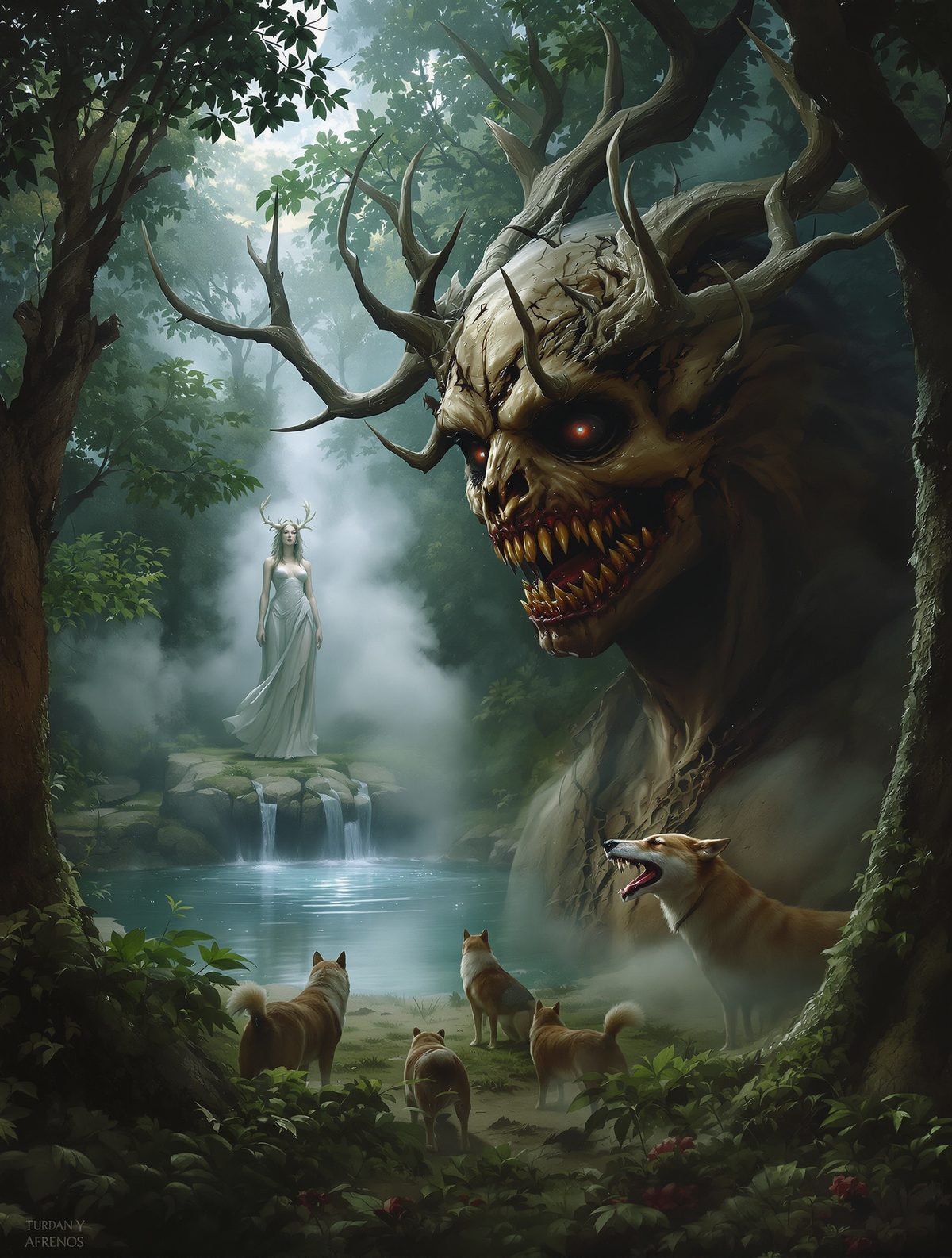
On a day like any other, Actaeon sought the thrill of the chase, unaware that his prey lay not in the form of beast, but in a divine moment he was not meant to witness. Amidst a sun-dappled clearing, the goddess Artemis, daughter of Zeus and Leto, bathed with her attendant nymphs. Known for her chastity and fierce protection of her divine modesty, Artemis was not a figure to be seen uninvited.
Accident or fate, Actaeon's eyes caught what no mortal should behold — the unguarded beauty of a goddess. Before he could retreat, the huntress reached towards him, her wrath as sharp as her arrows were swift. Yet she needed not a physical weapon to enact retribution. With a mere touch to the brow, a single source states the transformation began, rewriting Actaeon’s destiny in the very sinews and tendons of his own being.
Transformation: From Man to Stag
Imagine the horror of realizing your own form betrays you. Where once stood a man of regal bearing now rose a stag, magnificent yet marked by terror. Actaeon's cries for help remained trapped within the confines of his new throat, a vocal prison that permitted only the frightened bleating of a deer. His once mighty hands, suited to stringing a bow, now pawed the earth with elegant hooves.
In this tragic metamorphosis, neither Actaeon's identity nor Artemis' punishment could be undone. As different sources relay, this myth inspires countless interpretations — was it a cautionary tale about respecting divine boundaries, or an allegory of man's transformation through unchecked curiosity? The truth remains entrapped within the annals of myth, as elusive as the stag itself.
Devoured by Devotion: The Hunter's Own Hounds
It is said that the very hounds Actaeon raised from pups turned upon him, sensing prey where once was master. The pack, known as Oresitrophos, Leucon, Labros, and others with equally fearsome names, pursued him with the relentless fervor bestowed by Chiron's training. They were oblivious to the identity cloaked beneath the stag's hide. Their loyalty, paradoxically, led them to enact the final, fatal justice on Actaeon's transformed form.
Therein lies the legend’s heart-wrenching irony: the most skilled hunter of Greece, undone not by beast, god, nor error, but by the allegiance of his own beloved hounds. As they tore at their quarry, some myths say Actaeon remained conscious enough to recognize them each by name, adding a layer of unspeakable grief to his demise.
Lessons Amid the Pines: Legacy and Reflection
The story of Actaeon bridges the mortal and the divine with a poignant lesson: the cost of trespass. It serves as a narrative about recognizing and respecting boundaries, whether man-made or divinely decreed. That his downfall came on the heels of such inadvertent error is a reminder of nature's and destiny's unpredictabilities.
Moreover, Actaeon's tale continues to resonate across the corridors of time, captured in countless works of art, literature, and philosophy. It questions the cost of curiosity and challenges human impulse against the restraint of reverence. The hunter's fate underscores the ancient world's respect for the mysteries of nature and the cosmos, portraying curiosity not solely as a virtue but as a potential catalyst for sorrow.
As we reflect upon Actaeon’s journey, we ponder: how often do we, in contemporary times, fail to see the figurative forest for the trees? Are we too, guilty of overstepping bounds, only to face unforeseen consequences? Just like the myths left out of textbooks, these stories hold mirrors up to our most hidden truths, begging us to learn from them.
In the end, Actaeon's legacy endures not just as cautionary folklore, but as an enduring reminder of the intersection of fate, folly, and the fatal beauty of forgotten legends.