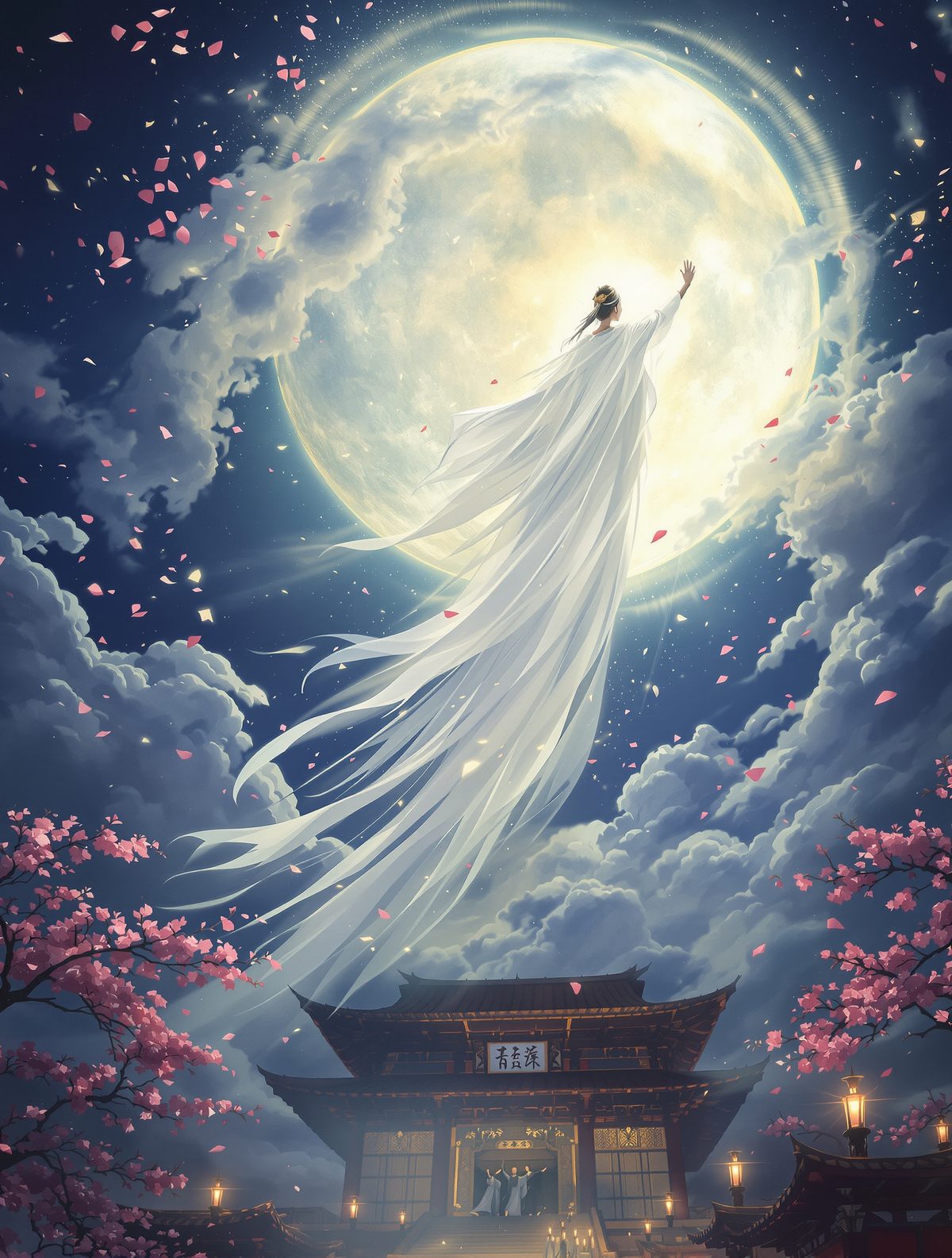
In the sacred tapestry of Japanese mythology, woven with gods and monsters, lovers and warriors, perhaps no story unfurls with more haunting resonance than that of Izanami and Izanagi. Their love gave birth to the very islands of Japan, but it was a love destined to be shattered across the yawning chasm between life and death. As we delve into this ancient tale, we uncover a curse that challenges the boundaries of the mortal world, a promise of death that resonates through time — an aspect of their legend that textbooks often eclipse. Prepare to journey through the dark corridors of history and myth, where the screams of the forsaken echo eternally.
The Divine Love and Creation
The saga of Izanami and Izanagi begins amidst celestial clouds, where they, as divine siblings and lovers, sanctioned by the elder gods, brought life to the nascent world. With graceful precision, they stirred the oceans with their jeweled spear, creating the first landmass, Onogoro Island. There, under the dewy embrace of the primeval cosmos, they consecrated their union, and thus the Japanese islands and a pantheon of deities were born. Yet, within this divine romance lay the seeds of mortality and the inexorable pull of the underworld.
Little-known fact: According to the ancient records of the Kojiki, a central text of Japanese mythology completed in the early 8th century, the very first island, Awaji, was born following an accidental ritual misstep by Izanami, a theme that highlights the gods' fallibility — an echo of human imperfection.
Descent into Darkness
Beneath this divine narrative lurks a shadow of tragedy. Charged with the creation of more gods, Izanami brought forth the god of fire, Kagutsuchi. In a cruel twist of fate, the flames that heralded the infant god's entrance scorched her, leading to her untimely death. Stricken with grief, Izanagi followed her spirit to Yomi, the land of the dead, a shadowy realm seen as Japan's underworld located in the current Shimane Prefecture.
No mortal reflection can capture the gathering despair as Izanagi sought to retrieve his beloved from eternal darkness. But as he neared Izanami, the tragic scope of his quest engulfed him. She had already eaten the fruit of the dead, irrevocably binding her to the realm.
The Fugitive Husband
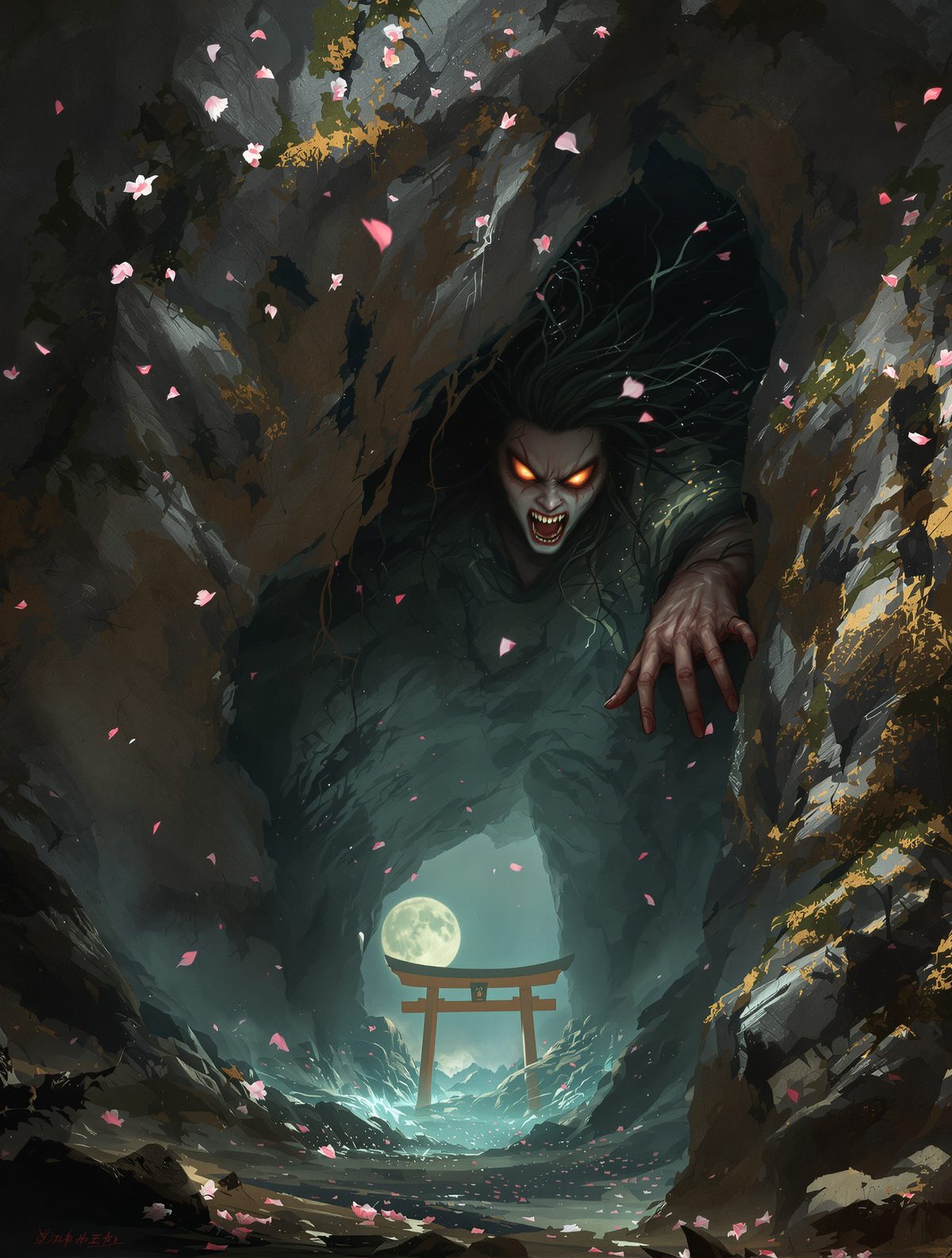
Izanami implored Izanagi not to look upon her decaying form as she attempted to negotiate her release. But driven by desperation, Izanagi couldn't resist lighting a torch to see his beloved. The sight was ghastly; Izanami had become a rotting and furious specter, her body teeming with creatures of decay.
Upon this revelation, Izanagi fled in terror, pursued by the very legions of the dead under Izanami's command. With each frantic footfall, the echoes of her wrath, now legendary across millennia, followed him through the desolate landscape of Yomi.
Did you know? The myth suggests Izanagi's flight inspired the ancient Japanese custom of using purifying rituals to ward off spiritual corruption, a tradition observed in Shinto practices even today.
The Curse and the Stone
In a climax both tragic and epic, Izanagi reached the entry to the living world, blocking it with a massive boulder, known as the Chigaeshi-no-Ōkami. This act created an unbreachable divide between the realms of life and death. From the indigo shadows, Izanami's voice thundered a curse that would forever alter the fate of humanity: to claim the lives of a thousand people each day as retribution for her forsaken love and union.
Izanagi, in a heartbroken counter, declared he would ensure the birth of fifteen hundred to keep the cycle of life flourishing. In this gloomy compromise, the perpetual dance of life and death within the human condition was enshrined.
A Haunting Legacy
Even now, as the sun rises over the archipelago of Japan, the tale of Izanami's curse remains indelibly etched into the fabric of cultural consciousness. It serves as a reminder of the deep connections between love and loss, creation and destruction. The cyclical nature of life and death that Izanami and Izanagi established in their mythic struggle resonates with the cycles of nature observed and respected in Japanese cultural practices.
Understanding these stories offers more than mythology; it provides a window into the worldview of ancient Japan, where the divine and the terrestrial are closely interwoven, and human emotions mirror those of the gods. This resonance forms a bridge from the past into the intricate tapestry of the present, where the values and beliefs of antiquity continue to shape consciousness and tradition.
The tale of Izanami's curse invites us to reflect on our own existence — on love’s power to create and destroy, the inevitability of change, and the enduring mystery that binds the realms of life and death. Through this ancient myth, we're reminded of our place within the immortal cycle, echoing the past within each heartbeat, across every generation.