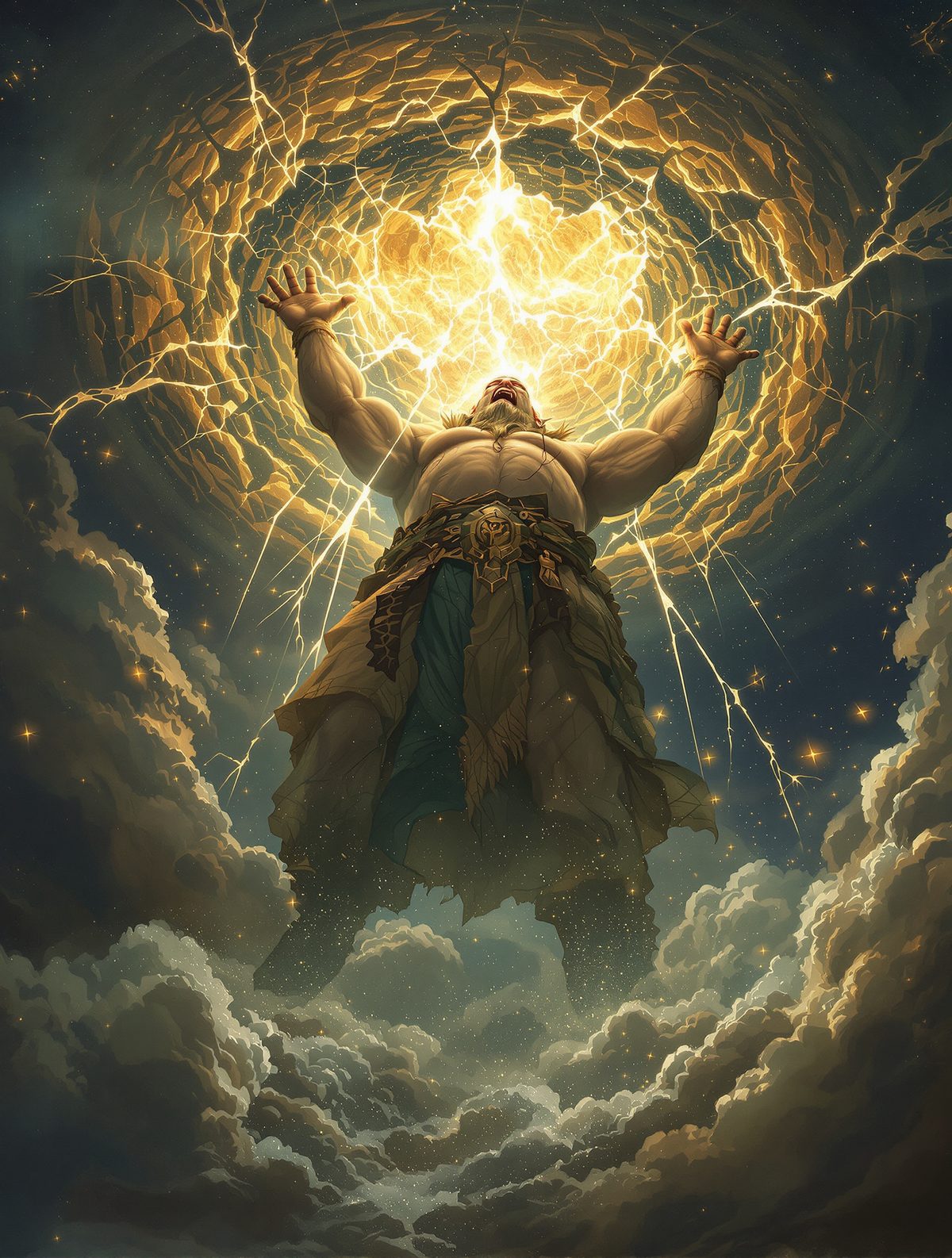
Imagine standing at the very edge of existence, enveloped by the vast void of nothingness beneath, save for a boundless ocean. Above, one steps out on the ethereal plank from heaven, known only as the Floating Bridge of Heaven. It was here that two divine beings looked out and began a transformative creation, a process whose echoes are felt across time and place. In this mythic tale, it was not mere humans, nor animals, but the gods Izanagi and Izanami who orchestrated the birth of a land unlike any other. With a jewelled spear in hand, they embarked on a fateful chore that would define what we now celebrate as Japan.
In the Beginning: The Setting of Creation
Long before the genesis of any earthly monarchy, and even before the landmasses themselves, Japanese mythology tells of a time when the cosmos resembled a vast, unending sea. This sea wasn’t the lively splendor we recognize but more a shapeless mass, a primeval chaos afloat under the Floating Bridge of Heaven – a mystical pathway existing between the realms of gods and the unborn earth. In this cosmos, the command for creation was whispered by the ancestral deities, urging Izanagi, "He who Invites," and Izanami, "She who Invites," to bring forth land from the void.
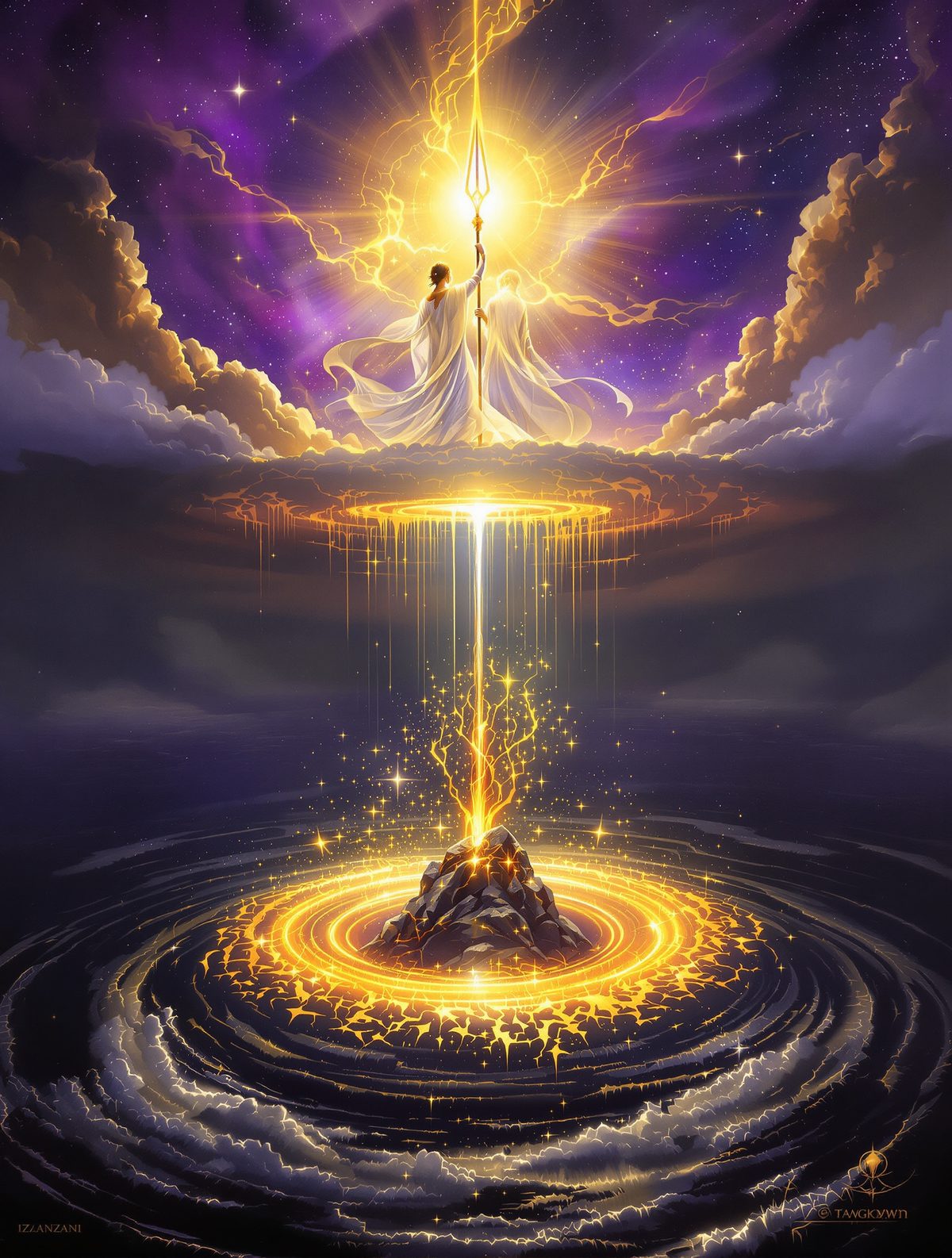
The two gods, portrayed as youthful and cloaked in celestial garments, gazed downwards, entrusted with the task of stirring the embryonic ocean to forge something new. Their divine venture was as much a ritual as an act of faith in the potential residing within the cosmic chaos.
The Divine Plunge: Stirring the Waters of Creation
It was a moment almost cinematic in its grandeur; Izanagi and Izanami took the jewelled spear presented by their celestial predecessors and plunged it into the unformed waters below. As the spear descended, it shimmered with the colors of an otherworldly rainbow, its jewels capturing light that streamed from beyond the heavens. With a careful, deliberate twist, the spear found its role in the celestial choreography.
When Izanagi pulled the spear from the waters, pearly droplets formed along its shaft, reluctant to remain bonded to the spear's glittering surface. These droplets descended from the spear’s tip, trailing back to the sea. There, upon touching the undefined waters, they began to solidify. These crystallized drops gradually molded an island—the first of many that would soon commence the archipelago now known as Japan.
Awakening Islands: From Specks to Civilization
The first island born from this divine act was called Onogoro-shima. In its wake, more landmasses emerged, collectively crafted by the divine pair into a sequence fittingly dubbed the eight great islands of Japan, including Awaji, Shikoku, and Kyushu. In Japanese mythology, each island's birth was an illustration of divine cooperation and intentional design, with geography springing from divine intention as opposed to natural happenstance.
Importantly, the formation of these islands wasn’t just about the physical territory. With land came life, social structures, and eventually culture. From the slopes of these first islands arose the first generation of kami, or spirits, followed swiftly by the ancestors of the imperial family, bridging mythology with recorded history.
The Choicest of Spears: A Jewel of Eternal Significance
Often overlooked in retellings is the spear itself, a vital player in this cosmic drama. This was no ordinary instrument; it was the jewelled spear Ame-no-Nuboko, a token of divine craftsmanship adorned with sparkling gems. The weapon’s symbolic representation reaches beyond its sculptural beauty, signifying the merger of divine order with the raw elements of chaos. Its presence as a progenitor tool ensured that every act of creation carried the intent and potency of the divine visionaries who wielded it.
The spear’s singular, multifaceted role illustrates the Japanese penchant for imbuing everyday items with spiritual significance, a concept that reveals itself enduringly in Shinto philosophy where objects of nature are venerated alongside celestial beings.
Why This Matters Today: Legacy of the Landmakers
At its core, the legend of Izanagi and Izanami stands as a monumental narrative about creation, order, and coalescence from chaos. It’s a poignant reminder that what appears insignificant—the drop of water slipping back into the sea—can seed traditions, cultures, and histories that span centuries. Japan’s mythology isn’t just a tale of its past; it’s a frame of reference for many aspects of modern Japanese identity—from understanding natural phenomena to appreciating cultural persistence.
For some, this tale might drive an appreciation for the delicate relationship contemporary society maintains with nature—echoing calls for stewardship and a harmonious footprint. The narrative insists on recognizing the divine in the mundane and appreciating transformation through diligence, patience, and creativity.
The next time you gaze at the impressive Japanese landscape, or ponder Japan’s resilient culture, remember a single drop of divine aspiration, and see in it the beginning of endless possibilities, all born from the courage to create.
Thus, what began as a dutiful plunge with a jewelled spear on the Floating Bridge of Heaven continues as an enduring legacy, imbuing both land and legend with meaning made grand by those who first *invited* its inception.