Imagine the most terrifying game of your life—where losing doesn't just mean embarrassment, but eternal damnation. Now imagine that halfway through, your teammate's head gets chopped off by a razor-winged bat, and you have to keep playing... using his severed skull as the ball. Welcome to the cosmic ball court of Xibalba, where the Maya Hero Twins faced the ultimate test of brotherhood, cunning, and sheer audacity.
This isn't just another myth gathering dust in an archaeology textbook. This is the story of Hunahpu and Xbalanque, whose death-defying match in the underworld became one of the most visceral and psychologically complex tales in all of Mesoamerican literature—a story that reveals how the ancient Maya understood sacrifice, resurrection, and the thin line between victory and catastrophe.
The Lords of Death Issue Their Challenge
The trouble began, as it often does, with noise complaints. The Hero Twins had been playing ball on Earth with such enthusiasm that the thunderous bouncing of their rubber ball shook the very foundations of Xibalba—the Maya underworld. The death lords, led by the ominously named One Death and Seven Death, were not amused by this celestial commotion echoing through their dark realm.
These weren't your average underworld bureaucrats. The lords of Xibalba bore names that would make a horror novelist weep with envy: Scab Stripper, Blood Gatherer, Demon of Pus, and Demon of Jaundice. Each ruled over specific forms of human suffering and death, from disease and starvation to accidents and violence. They had already dispatched the twins' father and uncle years earlier through a similar challenge, turning their heads into trophies after defeating them in the cosmic ball game.
The invitation to Xibalba arrived as these things do in Maya mythology—through owl messengers whose words carried the weight of divine command. "Come down and play ball with us," the message declared, seemingly innocent enough. But Hunahpu and Xbalanque knew exactly what this meant: a game where the stakes were literally life, death, and everything beyond.
The House of Razor Bats
What many don't realize about the Hero Twins' journey is that the ball game wasn't their first trial. The death lords, masters of psychological warfare, subjected their guests to a series of increasingly diabolical tests housed in themed torture chambers that would make Saw movies look quaint.
First came the House of Gloom, where absolute darkness pressed against them like a living thing. Then the House of Knives, where obsidian blades whispered through the air, seeking flesh. The House of Cold brought bone-numbing temperatures that could freeze blood in veins, while the House of Jaguars unleashed the underworld's most fearsome predators, their eyes glowing like amber coals in the darkness.
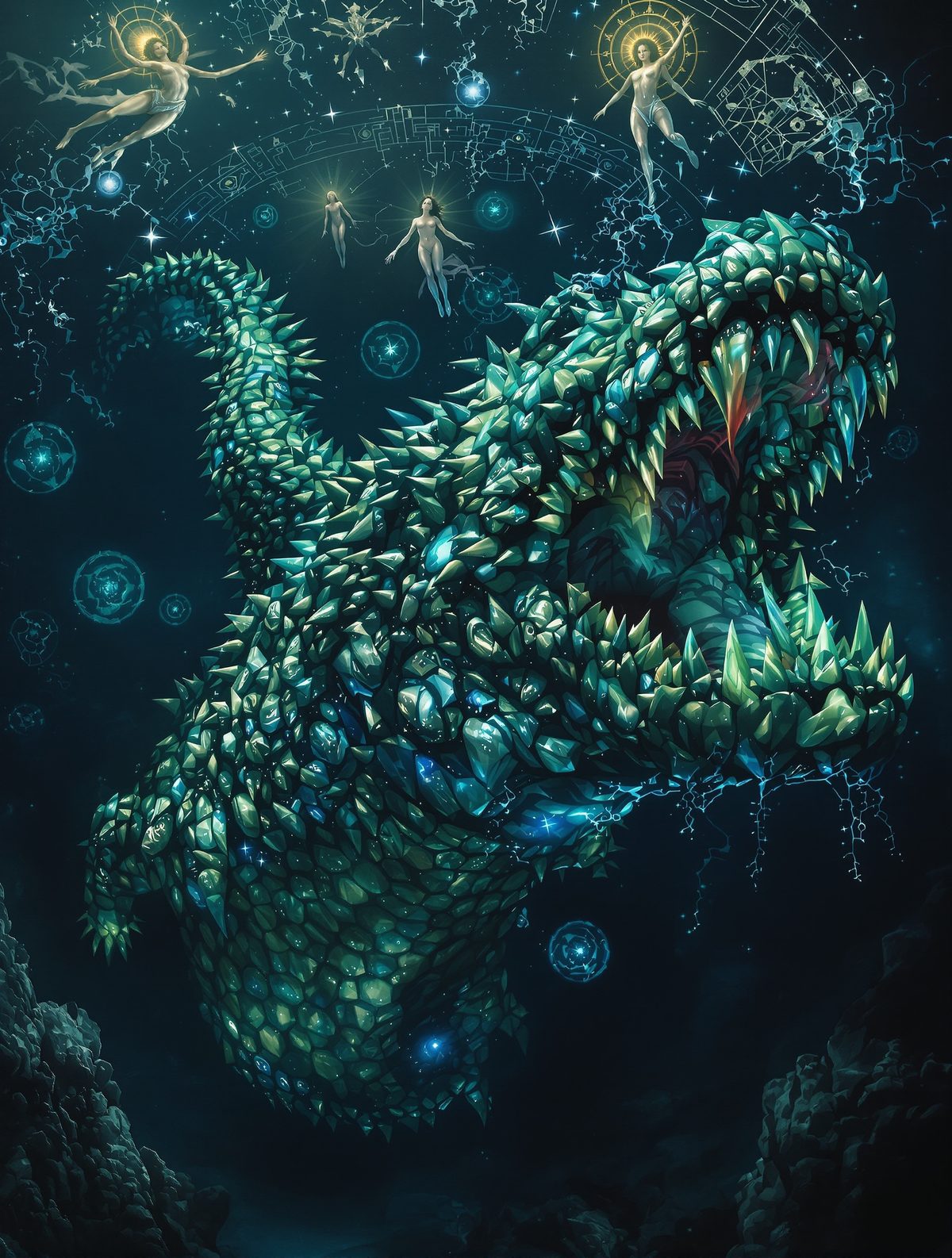
But it was the House of Bats that proved most treacherous. Here dwelt creatures called Camazotz—not mere bats, but razor-winged death spirits whose very name meant "death bat" in the Maya language. These weren't the small, harmless creatures fluttering around your evening garden. Ancient Maya depictions show them as monstrous beings with knife-sharp wings capable of decapitating a person in a single swoop.
The twins huddled inside their blowguns for protection, waiting for dawn. But as the first hints of light appeared, Hunahpu made a fatal mistake—he peeked out to see if it was safe to emerge. In that instant, a Camazotz struck with surgical precision. The great hero's head was severed so cleanly it continued rolling across the underworld's stone floor like a grotesque ball.
The Game Must Go On
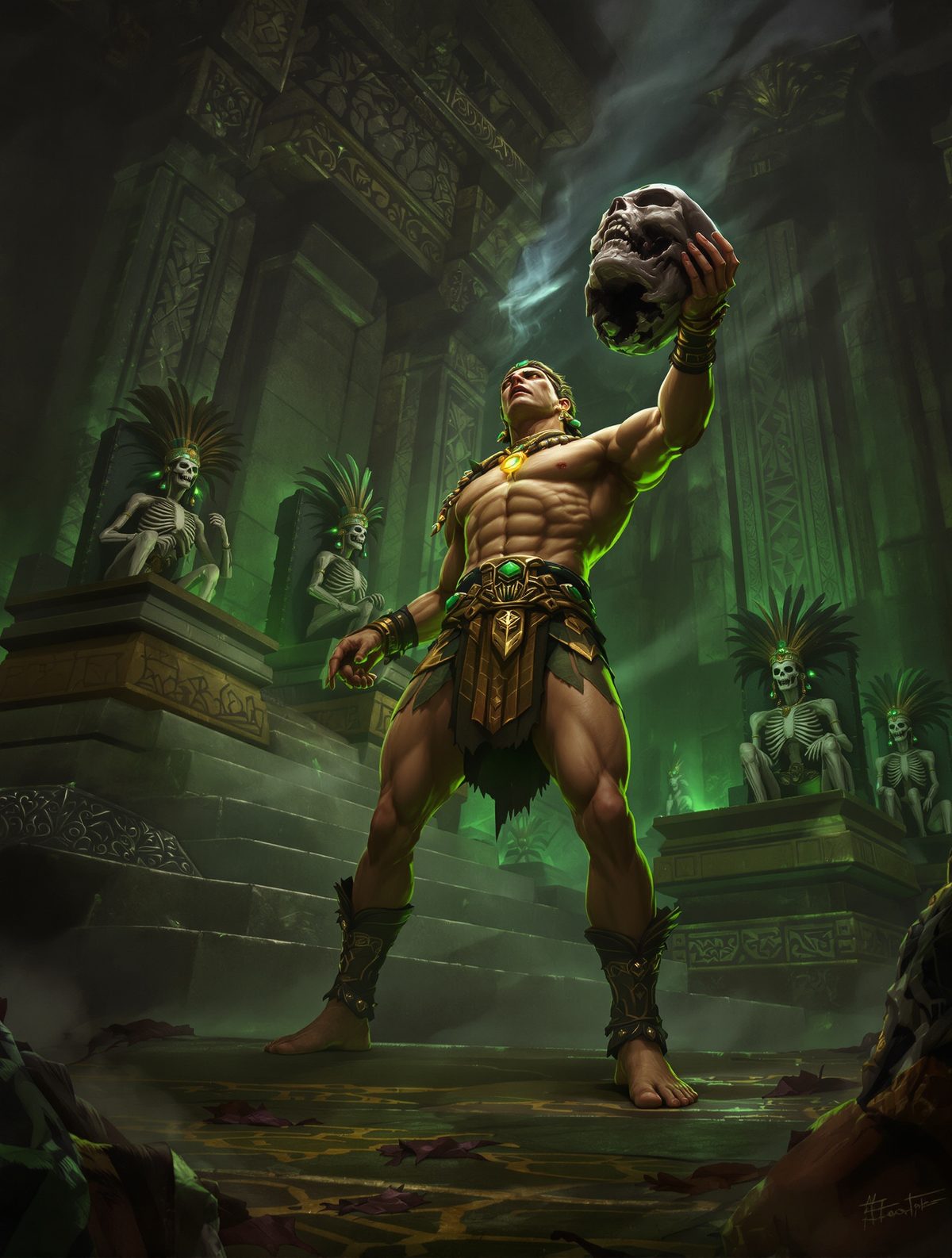
Here's where the story takes a turn that separates Maya mythology from sanitized fairy tales. The death lords, delighted with this turn of events, seized Hunahpu's head and announced it would serve as the ball for their upcoming match. They hung it in the cosmic ball court as both trophy and taunt—a reminder of what awaited anyone who dared challenge the lords of Xibalba.
For Xbalanque, the surviving twin, this created an impossible situation. Maya ball courts weren't just sports venues—they were sacred spaces representing the cosmic battle between order and chaos, light and darkness. The rubber ball itself symbolized the sun's journey through the underworld each night. To refuse to play would mean abandoning not just his brother, but the cosmic order itself.
Archaeological evidence from actual Maya ball courts reveals the deadly serious nature of these games. At sites like Chichen Itza and El Tajin, stone reliefs depict players being sacrificed, their heads severed, blood flowing like rivers to nourish the earth. The Hero Twins weren't just playing a game—they were participating in a cosmic ritual where the very continuation of the world hung in the balance.
So Xbalanque did what any devoted brother would do in the face of impossible odds: he fashioned a temporary head for Hunahpu from a squash, somehow reanimated his twin's body, and prepared to play ball using his brother's actual severed head as their playing piece.
The Most Macabre Match in Mythology
Picture this scene: in a ball court carved from the living rock of the underworld, lit by the eerie glow of phosphorescent fungi, two brothers—one with a gourd for a head—face off against the assembled lords of death and disease. The ball they're playing with? Hunahpu's own severed skull.
Maya ball courts followed specific architectural principles that amplified sound in supernatural ways. Players could hear whispers from across the court, and the thud of the rubber ball created echoes that seemed to come from everywhere and nowhere. Imagine the acoustic horror of playing with a human skull—each impact producing not just the expected thud, but the hollow rattle of bone against stone.
The rules of the cosmic ball game were deceptively simple but brutally difficult to execute. Players could only touch the ball with their hips, forearms, and shoulders—never their hands or feet. They had to keep the ball in constant motion, bouncing it off slanted walls, attempting to pass it through stone rings mounted high on the court walls. Miss too often, and you lose more than the game—you lose your life.
But Xbalanque had inherited more than just athletic prowess from his divine lineage. He possessed nahualism—the ability to transform and manipulate reality itself. As the death lords gleefully batted around his brother's head, the surviving twin secretly worked magic that would turn their victory celebration into their ultimate downfall.
Resurrection and Cosmic Revenge
What happened next reveals the sophisticated theological thinking behind Maya mythology. The twins didn't simply overpower their enemies through brute force—they outsmarted them through a carefully orchestrated display of death and resurrection that exploited the death lords' own arrogance.
Xbalanque secretly replaced his brother's real head with a replica, hiding the original until he could properly reattach it. Then, in a move that would make Houdini jealous, the twins allowed themselves to be captured, killed, ground up, and their bones scattered in a river. But death, as they well knew, was just another transformation.
They returned disguised as traveling performers, entertaining the death lords with increasingly spectacular tricks. They burned down houses and instantly rebuilt them, sacrificed animals and brought them back to life, and finally—in the act that sealed the death lords' fate—they killed and resurrected each other as part of their performance.
The death lords, drunk on the illusion of power and desperate to experience such magic themselves, demanded to be killed and brought back to life. The twins were happy to oblige with the first part of that request. They did not, however, follow through with the resurrection.
Why This Matters: Sacrifice, Brotherhood, and Cosmic Balance
In our modern world of individual achievement and personal success stories, the tale of Hunahpu's severed head offers a radically different perspective on heroism and sacrifice. This isn't a story about lone wolves conquering evil through superior firepower—it's about the willingness to literally become the very instrument of cosmic balance, even when that means your brother has to play ball with your skull.
The Maya understood something we're still grappling with today: that meaningful victory often requires the kind of sacrifice that transforms not just the outcome, but the very nature of what's being fought for. When Hunahpu's head became the ball, he didn't just endure the ultimate humiliation—he became the cosmic sun itself, the celestial sphere that travels through the underworld each night and emerges victorious each dawn.
This story survived the Spanish conquest, colonial suppression, and centuries of cultural assault because it speaks to something deeper than entertainment—it reveals how ancient peoples understood the interconnectedness of sacrifice, transformation, and renewal that governs not just individual lives, but the cosmos itself. In our age of climate crisis and global interconnection, perhaps we need more myths that remind us: sometimes saving the world requires becoming part of the game in ways we never expected.