
The year was 362 BCE, and Rome was about to learn that sometimes the gods demand more than gold to heal a wounded city. In the heart of the bustling Forum Romanum, where senators debated and merchants hawked their wares, the earth suddenly split apart with a thunderous crack that echoed off the seven hills. What emerged wasn't just a hole in the ground—it was a chasm so deep that no torch could illuminate its bottom, so wide that grown men couldn't leap across it, and so ominous that even the bravest Romans whispered it was a gateway to the underworld itself.
The citizens of Rome had faced barbarian armies, political upheaval, and plagues, but nothing had prepared them for this. As they peered into the abyss that had swallowed part of their most sacred space, they realized they were witnessing something that would test not just their engineering prowess, but the very soul of their civilization.
When the Earth Swallowed Rome's Heart
The Forum Romanum in 362 BCE was already becoming the magnificent center of Roman life we know from history. Located in the valley between the Palatine and Capitoline hills, it served as the city's commercial, judicial, and social hub. Imagine the chaos when this vital space was suddenly bisected by what ancient sources describe as a lacus—a chasm so vast it seemed to have no bottom.
According to Livy, Rome's great historian, the chasm appeared without warning, defying every attempt to fill it. The practical Romans—ever the engineers—first tried the obvious solution. They hauled countless cartloads of earth, stone, and rubble to the site. Slaves and citizens formed human chains, passing baskets of dirt from dawn to dusk. But everything they threw into the abyss simply vanished, as if the earth itself were devouring their offerings without satisfaction.
What made this geological anomaly even more terrifying was its timing. Rome was in the midst of recovering from decades of conflict with neighboring tribes and internal strife. The city had only recently begun to establish itself as the dominant power in central Italy. A gaping wound in their forum wasn't just an inconvenience—it was a potential sign that the gods had abandoned them entirely.
The Oracle's Cryptic Demand
When conventional solutions failed, the Romans did what any sensible ancient civilization would do: they consulted the gods. The city's priests, augurs, and soothsayers gathered to interpret this supernatural phenomenon. After examining the flight patterns of birds, studying the entrails of sacrificed animals, and consulting the sacred books, they delivered a pronouncement that would puzzle the Romans for days.
The oracle's message was both simple and maddeningly vague: the chasm would only close when Rome offered up its greatest treasure—the thing that made the city strongest. This wasn't unusual for ancient prophecies, which seemed designed to test human wisdom rather than provide straightforward answers.
The wealthy citizens of Rome immediately assumed they knew what the gods wanted. Surely the greatest treasure meant gold, silver, or precious gems. The city's elite began a procession of offerings that would have made Midas envious. Golden coins by the thousands were hurled into the darkness. Elaborate jewelry, silver plates, and precious statues followed. Rich Romans competed to show their devotion by offering ever more valuable items.
But the chasm remained unmoved. Each precious offering disappeared into the void without so much as causing the earth to tremble. Days passed, and the hole seemed as hungry and bottomless as ever. The Forum remained split, commerce ground to a halt, and the people of Rome began to whisper that perhaps their city was truly cursed.
A Young Soldier's Revelation
It was then that Marcus Curtius stepped forward—a young Roman soldier whose name would echo through history precisely because he understood something that all the wealthy, educated citizens had missed. Unlike the senators and merchants who had been throwing material wealth into the abyss, Curtius looked at the problem through the eyes of a warrior.
What made Rome truly great? What was the city's most precious treasure? It wasn't gold that had carved out Roman territory in Italy—it was the courage and martial valor of young Roman men willing to die for their city. Rome's greatest treasure wasn't something they owned; it was something they were.
The historical sources paint Curtius as the ideal Roman soldier: young, brave, and utterly devoted to the city's welfare. But what's remarkable about his story is how quickly he grasped what everyone else had missed. While others were calculating the monetary value of their offerings, he was thinking about what actually made Rome powerful.
According to Valerius Maximus, another ancient historian, Curtius declared to the assembled crowd: "What good thing do the Roman people possess greater than arms and valor?" It was a statement that cut to the heart of Roman identity—they were, above all else, a warrior people whose strength came from the willingness of individuals to sacrifice for the collective good.
The Ultimate Sacrifice
What happened next has become one of the most powerful images in all of Roman literature. Marcus Curtius didn't simply walk to the edge of the chasm and throw himself in like some desperate suicide. Instead, he staged his sacrifice as a final act of Roman military pageantry.
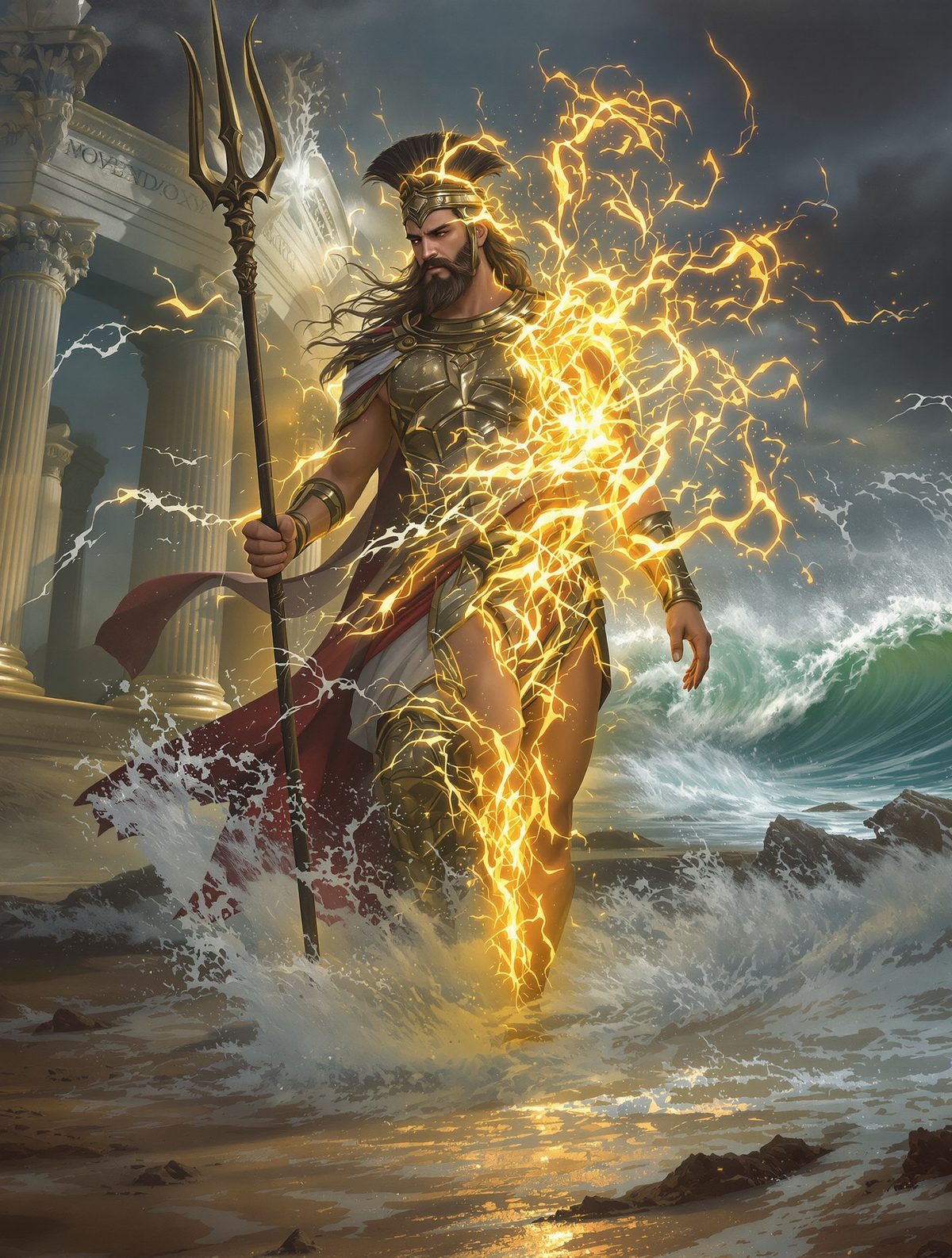
The young soldier appeared in the Forum dressed in full military regalia—his bronze armor polished to a mirror shine, his scarlet cloak flowing behind him, his weapons marking him unmistakably as a Roman warrior. But the most important detail was his warhorse, a magnificent animal trained for battle and clearly as valuable as any treasure that had been offered to the gods.
Picture the scene: the entire population of Rome gathered around the edges of the mysterious chasm, watching as this young man prepared to test his interpretation of the oracle's demand. The silence must have been deafening as Curtius mounted his horse and positioned himself at the edge of the abyss.
Then, without hesitation, he spurred his horse forward. Horse and rider leaped together into the darkness, disappearing into the depths that had swallowed so much Roman gold. And according to every ancient account, the moment they vanished from sight, the earth trembled, shifted, and closed over them forever.
The Power of Symbolic Truth
Modern historians debate whether Marcus Curtius was a real person or a legendary figure created to embody Roman values. The story appears in multiple ancient sources, but with variations that suggest it may have been refined over generations of retelling. Some versions place the event in different years, others provide different details about Curtius's family background.
But here's what makes the story fascinating regardless of its literal truth: it perfectly captures something essential about how Romans saw themselves and their society. The tale of Curtius wasn't just entertainment—it was a teaching tool that explained why Rome succeeded when other cities failed.
The Romans weren't the wealthiest people in the ancient Mediterranean. Greek cities often surpassed them in learning and artistic achievement. But what Romans had in abundance was a culture that celebrated individual sacrifice for collective benefit. The story of Curtius embodied this principle in its most extreme form.
What's particularly clever about the legend is how it contrasts material wealth with human valor. All those rich Romans throwing gold into the chasm represent the obvious, superficial answer—the kind of solution that people always try first. Curtius represents the deeper truth that civilizations are built on the willingness of individuals to give everything for something larger than themselves.
Why Ancient Legends Still Matter
In our modern world, where we often measure success in economic terms, the story of Marcus Curtius offers a different perspective on what makes societies strong and enduring. The Romans who told and retold this story understood something that we sometimes forget: that the greatest treasures of any civilization aren't material objects but the character and commitment of its people.
The chasm in the Forum wasn't really about geology or divine intervention—it was about identity. What defines us? What would we be willing to sacrifice to preserve what matters most? These are the questions that every generation must answer, and the Romans used stories like Curtius's leap to explore those answers.
Today, when we face our own chasms—whether they're political divisions, social challenges, or global crises—the legend reminds us that the solutions often require more than throwing money at problems. Sometimes they require individuals willing to risk everything for principles larger than personal gain.
Marcus Curtius, whether he was real or mythical, represents the Roman belief that true strength comes from within—from courage, sacrifice, and an unwavering commitment to the common good. In a world that sometimes seems to have lost sight of these values, his leap into the abyss still has something important to teach us about what makes civilizations truly great.