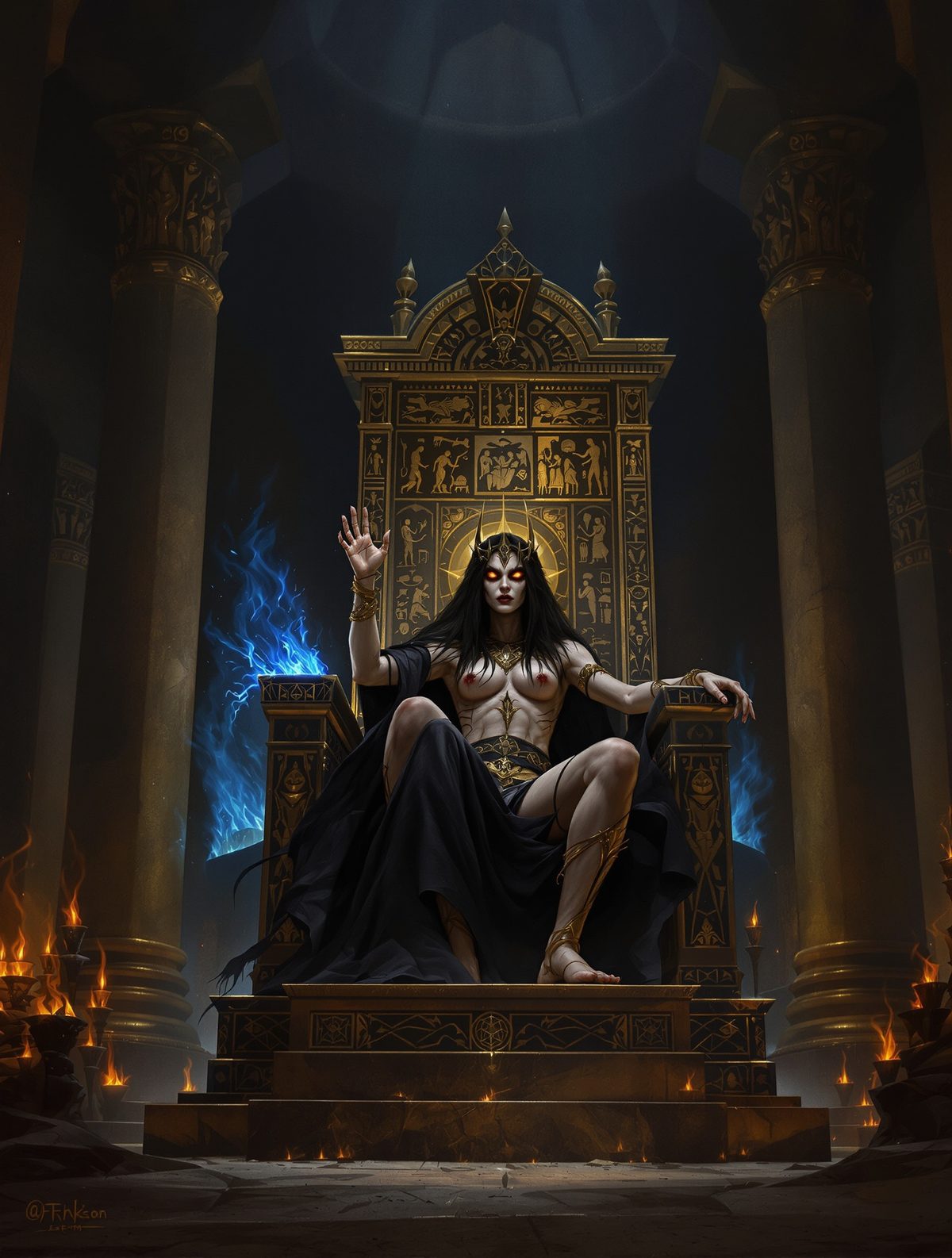
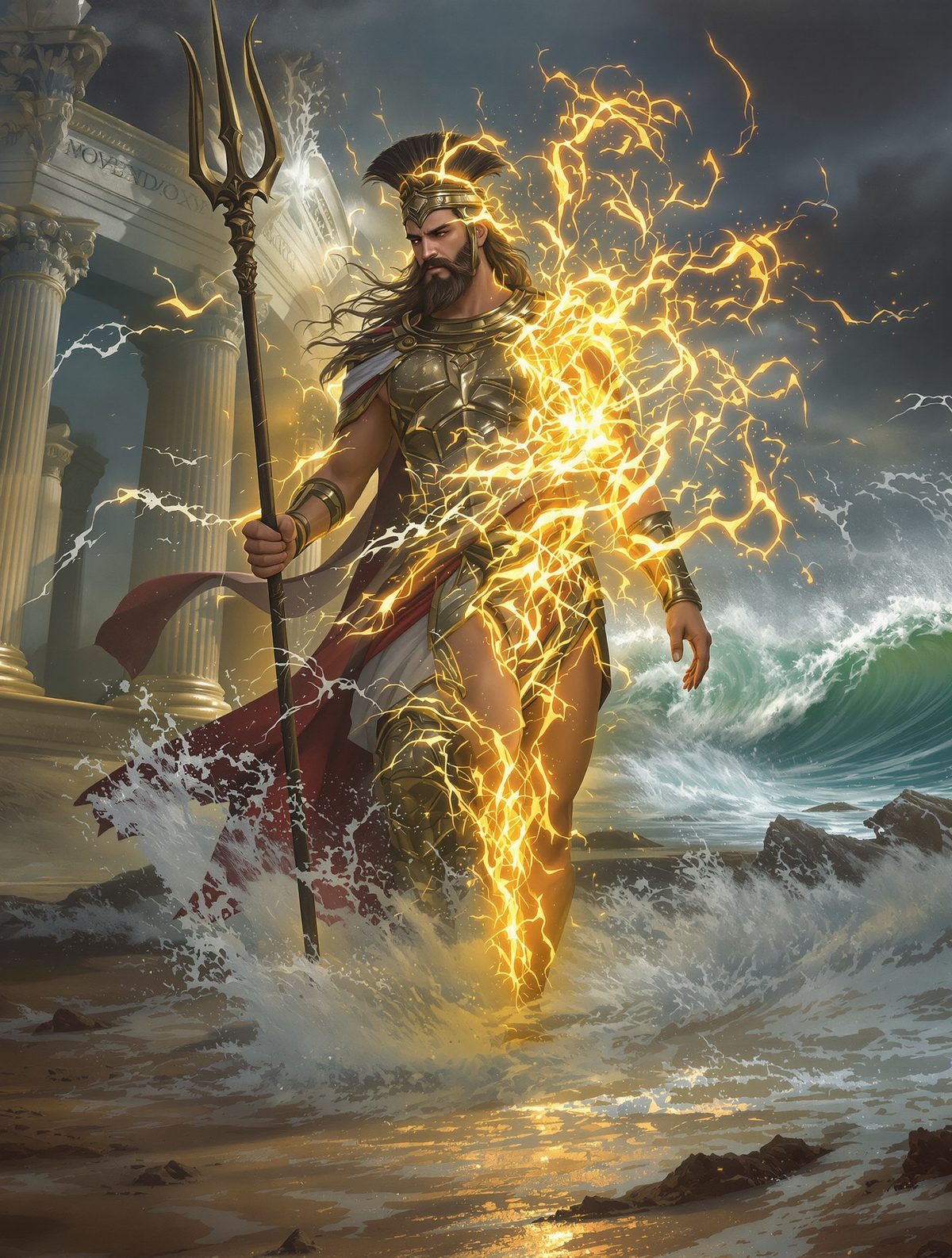
Picture this: a young woman stands alone on the windswept shores of ancient Thessaly, salt spray stinging her face as she stares down the most powerful deity of the seas. She has just endured unspeakable violence at his hands, but instead of cowering or pleading for mercy, she makes a demand so audacious it would make mortals tremble. "Transform me," she declares, "into a man whom no weapon can ever harm." What happens next defies every expectation of divine retribution and mortal submission, creating one of mythology's most complex tales of trauma, transformation, and the ultimate price of invincibility.
The Maiden by the Sea: When Gods Take What They Want
Her name was Caenis, daughter of Elatus, and she lived in the rugged coastal regions of Thessaly during an age when gods walked freely among mortals. Ancient sources, including Ovid's Metamorphoses written around 8 CE, describe her as extraordinarily beautiful—a detail that would prove both blessing and curse. In the world of Greek and Roman mythology, divine attention was rarely benevolent, especially when it came to mortal women who caught the wandering eye of the gods.
Neptune, known as Poseidon to the Greeks, ruled not only the vast oceans but commanded respect as the second most powerful deity in the pantheon, brother to Jupiter himself. When he spotted Caenis walking alone along the Thessalian coastline, gathering shells or perhaps offering prayers to the sea, he saw not a person deserving of respect, but an object for his gratification. What followed was a brutal assault that ancient writers often euphemistically called "ravishment," but which we must acknowledge for what it truly was: an act of divine sexual violence.
The beach that witnessed this crime likely lay along the Pagasetic Gulf, where the legendary Argo would later be launched. Here, where waves crashed against weathered stones and seabirds cried overhead, the unthinkable occurred. But Caenis's story was far from over—it was just beginning.
The Impossible Bargain: Demanding Payment from a God
What happened next shatters every expectation of how such encounters typically unfolded in ancient mythology. Most divine assault victims either fade into obscurity, bear divine children, or suffer further punishment for attracting divine attention. Not Caenis. As Neptune prepared to return to his underwater realm, she confronted him with shocking boldness.
According to Ovid's account, she didn't ask—she demanded. The exact words vary across ancient sources, but the essence remains consistent: she wanted compensation for her suffering, and not just any compensation. She demanded complete transformation into a male form, coupled with skin so invulnerable that no weapon forged by mortal or divine hands could ever penetrate it again. The psychological reasoning behind this specific request reveals profound insight into trauma and powerlessness. She sought not just physical invulnerability, but a complete escape from the vulnerability that had made her a target.
Neptune, perhaps stunned by her audacity or feeling genuine remorse for his actions, agreed. Some scholars suggest this moment represents one of mythology's earliest examples of divine accountability—a god actually acknowledging wrongdoing and attempting restitution, however inadequate. The sea god raised his trident, and the transformation began.
Birth of the Invincible: Caeneus Emerges
The metamorphosis was instantaneous and complete. Caenis's feminine form dissolved like seafoam, replaced by the powerful physique of a male warrior. Her new name became Caeneus, derived from the Greek "kainos," meaning "new" or "strange"—fitting for someone who had undergone such an unprecedented transformation. But the physical change was only half the miracle.
Neptune had granted her request for invulnerable skin with divine precision. Caeneus's flesh became harder than bronze, more resilient than the finest armor ever forged in the workshops of Hephaestus. Sword blades would shatter against his skin like pottery against stone. Spear points would bend and break rather than pierce his hide. Even arrows fired by the legendary archers of Crete would bounce harmlessly away.
Word of this invincible warrior spread quickly throughout the ancient world. Caeneus became a figure of legend even within his own lifetime, joining the ranks of heroes whose exploits would be sung by bards for generations. He established himself as a king in Thessaly, ruling with the confidence that comes from knowing no assassin's blade could ever find its mark.
The Centaur War: When Invincibility Meets Its Match
Caeneus's most famous exploits occurred during the legendary battle between the Lapiths and Centaurs at the wedding feast of Pirithous, king of the Lapiths, around the mythological equivalent of the 13th century BCE. This wasn't merely a skirmish—ancient sources describe it as one of the most savage conflicts in mythological history, a primal clash between civilization and chaos.
The centaurs, those half-human, half-horse creatures known for their violent impulses and lack of self-control, had been invited as guests to the wedding. Predictably, they became intoxicated and attempted to assault the female guests, including the bride herself. What followed was a massacre that would inspire countless works of art, from temple friezes to Renaissance paintings.
Caeneus fought with terrifying effectiveness. Centaur after centaur fell before his unstoppable advance. Their weapons—clubs, rocks, even bronze swords—proved utterly useless against his divine protection. Ancient accounts describe him wading through the battlefield like a force of nature, untouchable and inexorable. The centaurs' growing desperation was palpable as they realized their greatest warriors couldn't even scratch this seemingly mortal opponent.
But the centaurs were cunning in their brutality. If they couldn't pierce Caeneus's skin, they would try something else entirely.
The Ultimate Test: How Do You Kill the Unkillable?
Here's where the story takes its most fascinating turn, revealing the terrifying ingenuity of desperate enemies. The centaurs realized that while Caeneus's skin was invulnerable, he still needed to breathe. Led by the cunning centaur Monychus, they devised a strategy that exploited the one weakness in Neptune's gift—Caeneus might be invulnerable, but he wasn't immovable.
Working together, dozens of centaurs began hurling massive tree trunks, boulders, and anything heavy they could find. Not at Caeneus, but on top of him. Ancient sources describe a horrifying scene: the invincible warrior slowly disappearing beneath a growing mountain of debris, unable to break free despite his supernatural strength. They couldn't wound him, but they could bury him alive.
Some accounts suggest that Caeneus, realizing his fate, called out to his father Elatus or even to Neptune himself, but the gods remained silent. The weight continued to accumulate—entire trees, massive stones, even the bronze armor and weapons of fallen warriors. The psychological horror of this death cannot be overstated: to be invincible yet helpless, protected from every weapon yet vulnerable to simple physics.
According to some versions of the myth, witnesses claimed to see a golden-winged bird emerge from beneath the pile of debris—Caeneus's soul finally freed from its earthly prison, transformed once more as it ascended to whatever realm awaited such a unique being.
The Price of Invulnerability: What Caeneus Teaches Us Today
The story of Caenis and Caeneus resonates across millennia because it confronts uncomfortable truths about power, trauma, and the limitations of even our greatest protections. Here was someone who achieved the ultimate fantasy—complete physical invulnerability—yet still found that safety remained elusive. The centaurs' solution reveals a harsh reality: there's always another way to be hurt.
In our modern world, where we build ever more sophisticated security systems, develop new forms of protection, and seek control over our vulnerable bodies and minds, Caeneus's fate serves as a sobering reminder. True security isn't just about building better armor; it's about addressing the underlying systems that create danger in the first place. The centaurs who killed Caeneus were the same creatures whose violent, entitled behavior had started the conflict—defeating individual symptoms of a problem doesn't eliminate the problem itself.
Perhaps most importantly, Caeneus's story validates the experiences of trauma survivors who understand that healing isn't just about becoming "stronger" or more "protected." Sometimes the very adaptations we develop to survive—like emotional invulnerability or social isolation—become their own forms of burial, cutting us off from the connections that make life meaningful. The maiden Caenis demanded transformation to escape vulnerability, but Caeneus discovered that even gods can't grant us perfect safety in an imperfect world.
The beach in Thessaly where this story began has long since changed, worn smooth by countless tides. But the questions raised by that confrontation between victim and perpetrator, mortal and god, continue to challenge us: What price are we willing to pay for safety? What do we lose when we armor ourselves completely? And perhaps most crucially—in a world where gods still assault maidens on beaches, how do we create real protection for the vulnerable without losing our essential humanity?