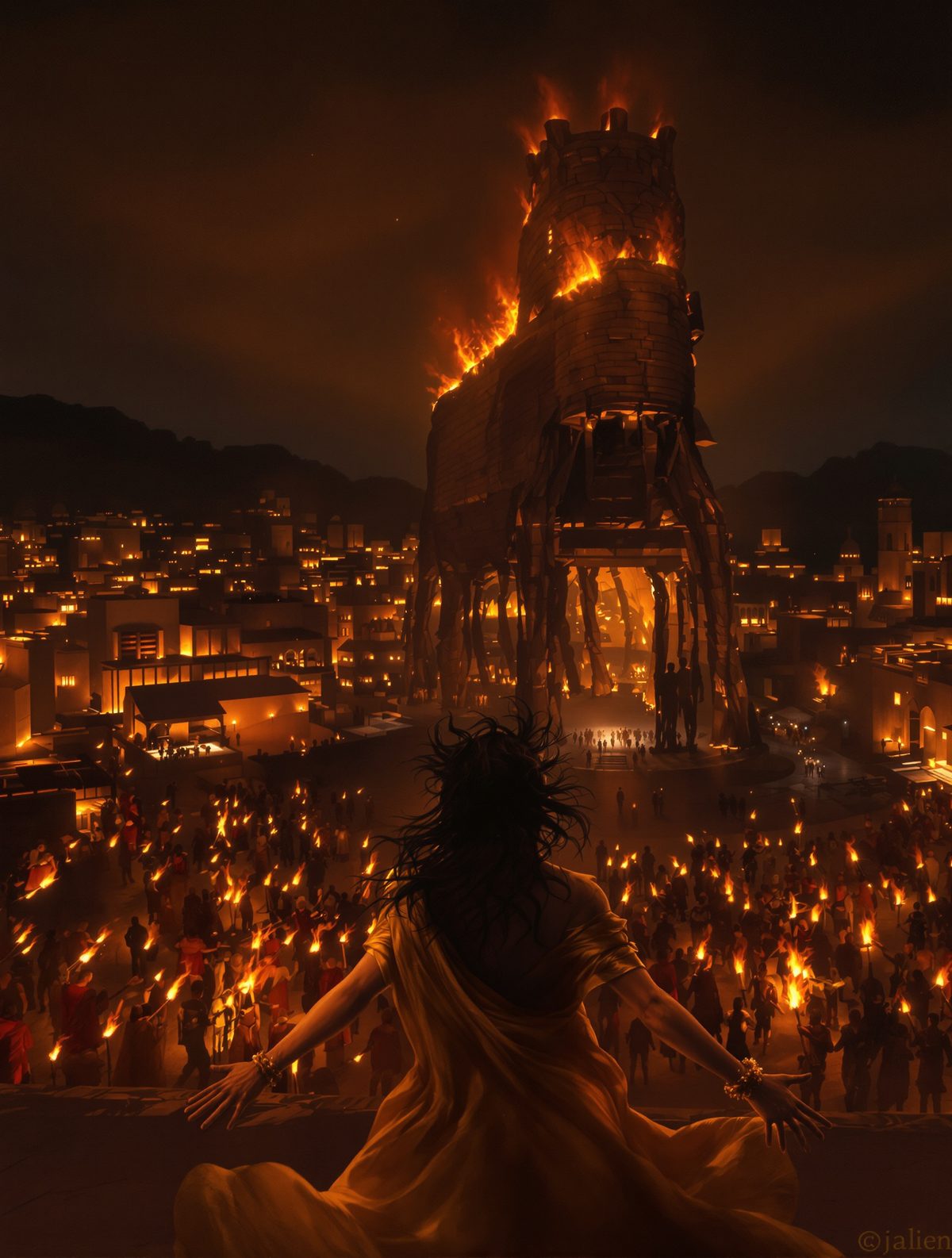
The streets of Troy were alight with the burgeoning blaze of destiny, a cacophony of iron on iron and cries piercing the air like arrows. In the midst of this living nightmare stood a lone figure, her voice lost in the tumult—a seer who had seen it all. Cassandra, daughter of King Priam, screamed warnings with a truth so profound, yet damned to silence by a god’s scornful promise. Her words, charted with desperation and clarity, carried the burden of foresight destined to fall upon deaf ears. A wooden horse teetered on the edge of the city's doom, and with it, history began its inexorable march towards immortality.
The Gift of Prophecy
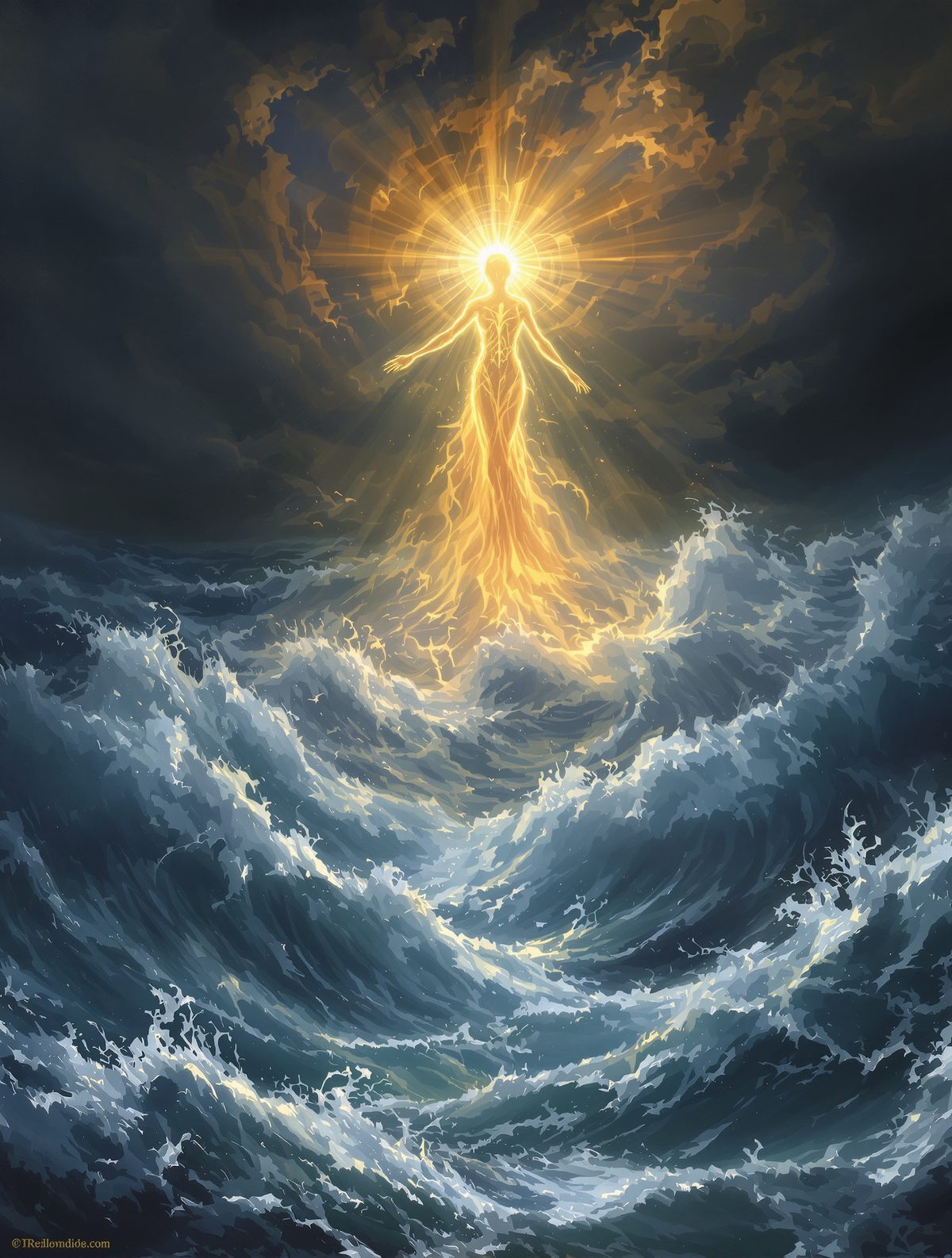
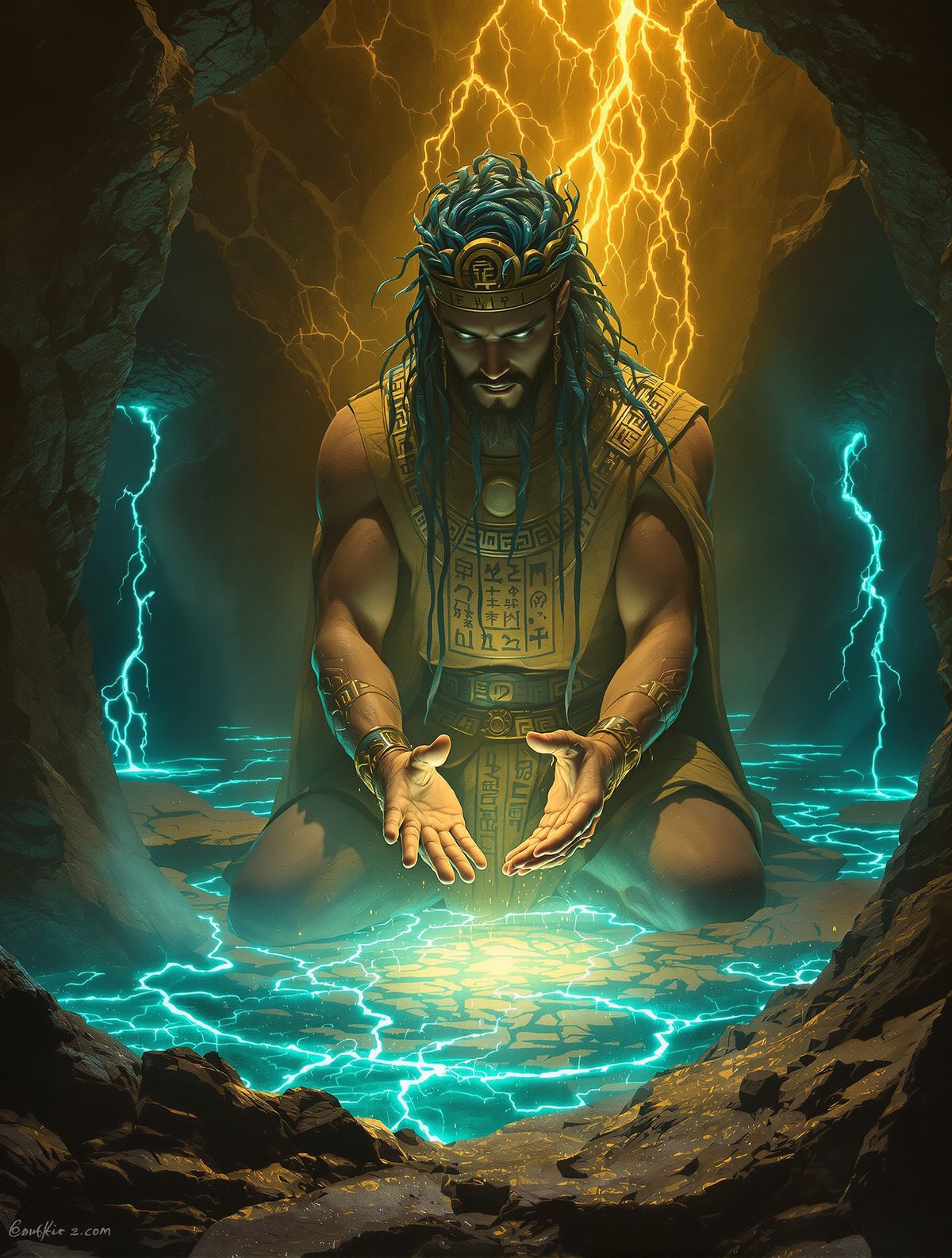
Once upon a time, amid the marbled sanctuaries of Delphi, Apollo—the radiant deity of the Oracle—granted Cassandra a gift that men craved and kings vied for: the gift of prophecy. But the gift was offered at a price that Cassandra would not pay. She refused Apollo’s advances, and where gods are wont to bless, they too can curse. In a fit of betrayed desire, Apollo twisted his gift—a perennial truth forever wrapped in disbelief. Henceforth, Cassandra was fated to foretell disasters with unerring accuracy, yet sentenced to a story of being perpetually ignored.
In myth, prophecy is rarely without its axes and paradoxes, but few fates are as tragic as Cassandra’s. Nowhere in the sacred texts would you find her bitter story scrawled with exactitude. We mortals were meant to understand that knowledge is both power and peril. Yet, the haunted figure of Cassandra serves as a poignant reminder that her prophecy—pure as spring water and equally terrifying—was a gift swiftly unraveling into a prison.
Troy—A City on the Brink
Troy, a beacon of ancient wisdom and architecture, was not just a city but a burgeoning symbol of civilization. Anchored on the coast of what is now northwest Turkey, the city was renowned for its impregnable walls, the treasury of Priam's sovereignty. Dated back to as early as the 13th century BC, Homer sang its glorious tales of heroes and battles long after its fabled fall. Here, in this fortressed city, lived Cassandra—a princess not by choice but by birthright she could not escape.
As the tenth year of the Trojan War dragged on, a ruse took form—etched into the sands of time—a colossal wooden horse. It glinted in the sunlight, a seemingly innocuous offering, yet it held within it a phalanx of Greeks poised for havoc. Cassandra saw it all, each calculated betrayal of martial prowess encased within wooden ribs. Her cries of warning rung through the streets as forlorn whispers, swallowed by the breeze of ignorance.
The Horse, the Scream, and the Silence
In a plot stark for its simplicity yet brilliant in its genius, the Greeks retreated, leaving behind Sinon's deceptive tale and with it, doom clad in timber. Cassandra had seen the future as clearly as if it was the present. She stood in the king's court, her eyes wild with vision, imploring her father, the impeccable Priam, not to grant safety to this pagan idol from the seas. Yet, Apollo’s curse ensured her words were swept aside like drying sandcastles against surging tides.
As the mammoth structure was wheeled into the heart of Troy's citadel, her screams tore through the heart of the city—a symphony of sanction that no one would heed. While celebratory fires blazed throughout, a stark irony hung in the air; it was not the flames of their perceived victory, but of their impending destruction, Cassandra saw igniting. The revelry, of course, served as the Greeks’ disguise, seeped in the sins of man’s hubris.
A Lesser-Known Truth
Many tales of Cassandra focus solely on her prophecy and its downfall in Troy's epic demise, but few speak of the fleeting empathy she found in the embrace of Agamemnon. Her life’s second chapter bore her to Mycenae, a city where her prescient lament fell once more to greed and betrayal. She became the companion to Agamemnon, Trojan glory eclipsed by a love doomed from its inception. In Mycenae, Cassandra foresaw her own death alongside Agamemnon’s, slaughtered by Clytemnestra and Aegisthus, the queen and her lover entangled in a web of retribution.
Legend states that Cassandra's children, twins, lay slain before her eyes—a last cruel twist to a life lived in unseen certitude. Such tales whisper through corridors of ancient ruins and shadowed histories, reminding us of humanity’s perpetual dance with fate and folly. It was only in death that Cassandra’s predictions bore silent witness—too late for reverence, yet echoing eternally.
Legacy of Tragic Truth
What lessons do we derive from the tortured tale of Cassandra, her foresight fabled yet unheeded? Her legend urges us to ponder the price of truth and the inevitability of human folly. Echoes of her tragedy reverberate throughout the annals of time, symbolic warnings of the intrinsic gap between knowledge and belief, courage and consequence.
Today, Cassandra’s story serves as a clarion call, a reminder of the prophets and prodigies who may dwell amongst us. In a modern era plagued by misinformation and disbelief, Cassandra’s name evokes poignant consideration. Would we recognize a Cassandra if her screams mingled with our own? Or would her echoes remain trapped, awaiting an apocalypse only she can see?
Perhaps, in contemplating her agonizing vision, we stand to rekindle an age-old understanding—that to see the future is a gift both divine and terrible, crafted as much in beauty as in suffering. It compels us to listen, to seek truth even when it wavers like shadows at dusk—ever vigilant, for history has often shown it listens not through convenience, but necessity.