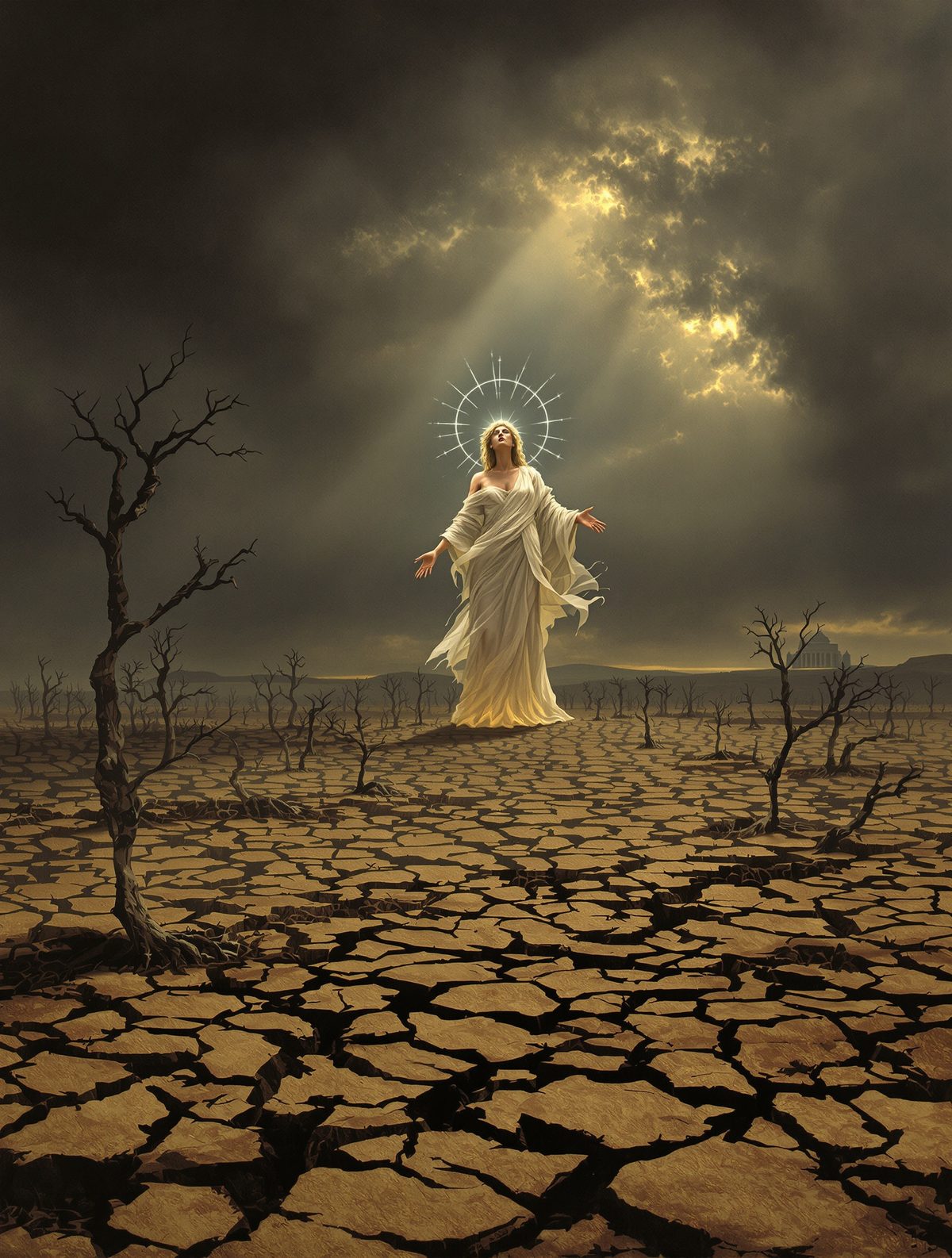
Imagine the sun simply... stopping. Not setting, not dimming—stopping. No dawn breaking over the Nile delta. No golden light warming the limestone blocks of the Great Pyramid. Just endless, absolute darkness stretching across the known world. For the ancient Egyptians, this wasn't the stuff of science fiction—it was their deepest, most primal terror. And every single night for over 3,000 years, they believed it nearly came to pass.
Deep beneath the world of the living, in the primordial waters of the Duat—the Egyptian underworld—an impossible battle raged in complete darkness. Ra, the sun god whose golden barge carried the light of creation itself, faced his eternal nemesis: Apophis, a serpent so massive that his coils could encircle mountains, whose very existence threatened to drag all of reality back into the void from which it came.
This wasn't just mythology to the ancient Egyptians. This was breaking news, reported fresh every morning by the simple fact that the sun had risen again.
The Primordial Serpent: Born from Chaos Itself
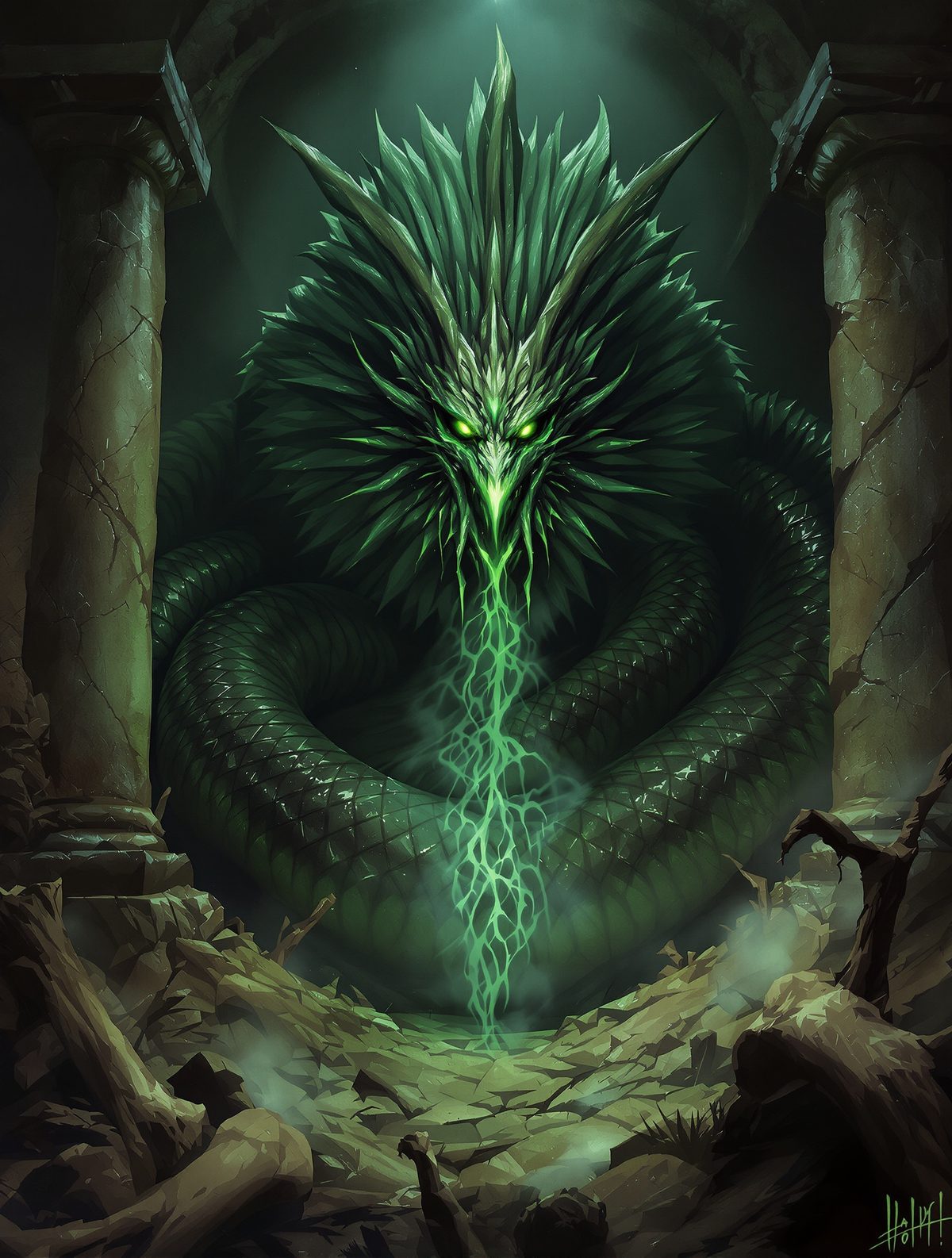
Apophis—known in ancient Egyptian as "Apep"—wasn't just another monster lurking in the underworld. According to texts dating back to the Old Kingdom period (2686-2181 BCE), this serpent was the physical manifestation of chaos itself, born from the spittle of the primordial god Nu when the universe was nothing but dark, endless water.
The descriptions of Apophis found in tomb paintings and papyrus scrolls are genuinely terrifying. Temple inscriptions from Edfu, dating to the Ptolemaic period, describe him as stretching 50 cubits in length—that's roughly 75 feet of pure malevolence. His eyes blazed like stars, his scales were harder than granite, and his roar could shatter the bones of gods. But perhaps most unsettling was his hunger: Apophis didn't want to rule creation—he wanted to unmake it, to swallow light and order and return everything to the primordial darkness from which it came.
What makes Apophis particularly fascinating is that he represented something the Egyptians understood all too well: entropy. The desert that surrounded their green Nile valley, the floods that could destroy as easily as nourish, the way order constantly threatened to collapse into chaos. Apophis wasn't an abstract evil—he was the very real force of dissolution that every Egyptian farmer, priest, and pharaoh fought against daily.
Ra's Nightly Journey: The World's Most Dangerous Commute
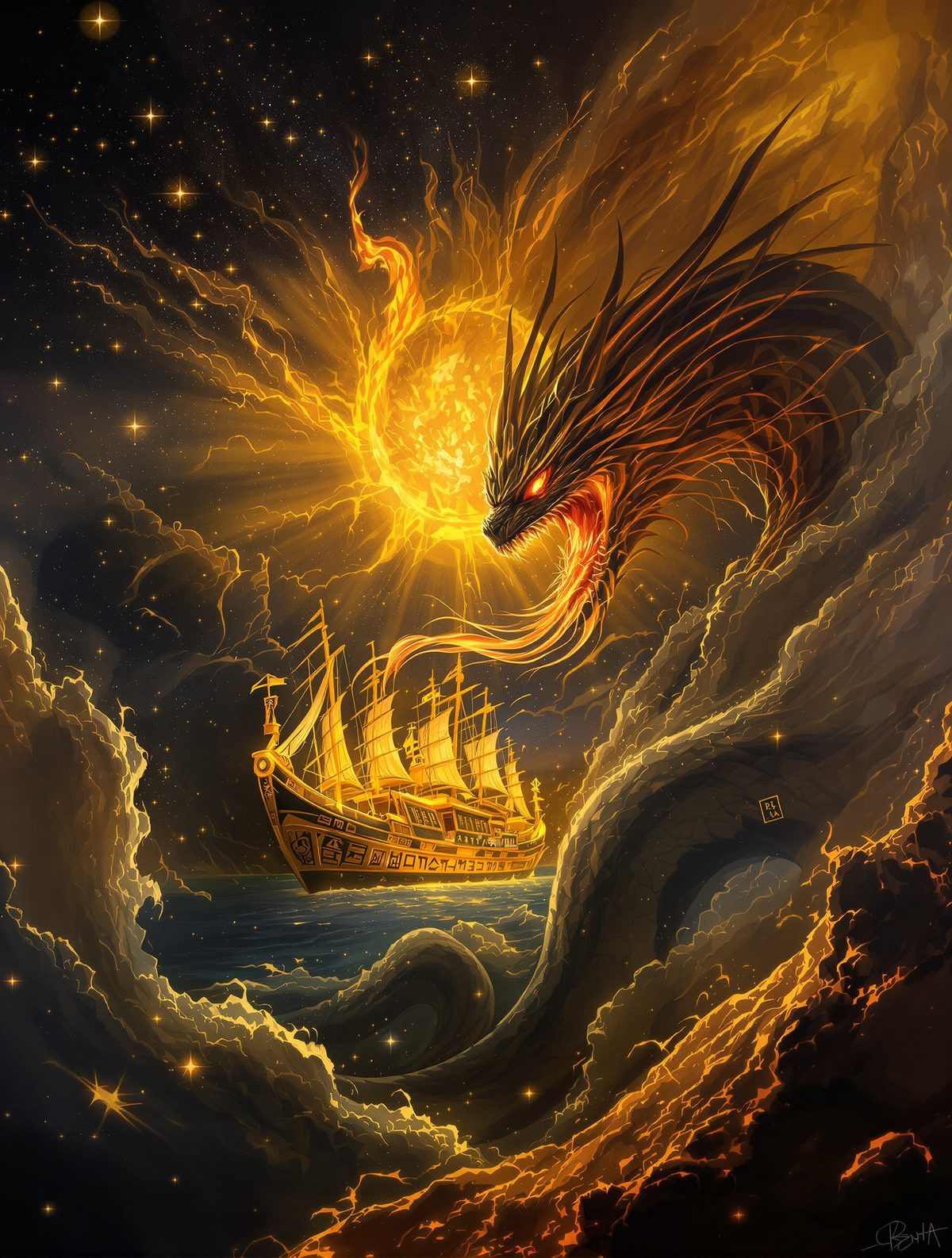
Every evening, as the sun disappeared behind the western horizon, Ra began the most perilous journey imaginable. His solar barge—called the "Mesektet" or "Night Barge"—would transform from its daytime glory into a vessel built for war. The golden hull gleamed with protective spells, and Ra himself took on his ram-headed form, Khepri, prepared for battle.
The journey through the Duat took exactly twelve hours, corresponding to the twelve hours of night. Ancient texts like the "Book of Gates" and "Book of the Dead" provide incredibly detailed maps of this underworld voyage, complete with the names of guardians, the passwords needed to pass through gates, and the specific challenges Ra would face in each hour.
But it was in the seventh hour—the deepest point of night—that the real terror waited. Here, in a place called "the Valley of the Serpent," Apophis lay coiled in the darkness, his massive form blocking Ra's path like a living mountain of scales and malice. The texts describe this moment with visceral intensity: the serpent's jaws opening wide enough to swallow the entire solar barge, his breath creating hurricanes of chaos that could tear apart the fabric of reality itself.
What's remarkable is how specific these accounts are. The "Book of Overthrowing Apophis," found in tombs dating to the New Kingdom (1570-1070 BCE), doesn't just describe the battle—it provides exact spells, ritual actions, and even the precise words Ra must speak to defeat his enemy. This wasn't vague mythology; this was a detailed military briefing for the most important battle in the cosmos.
When Darkness Won: The Solar Eclipse Crisis
Of course, there were nights when Ra didn't emerge victorious on schedule. Solar eclipses sent Egyptian society into absolute panic, because they seemed to prove that Apophis had finally succeeded in swallowing the sun. But even more terrifying were the times when Ra appeared weakened—during dust storms that dimmed the sun, or during the annual flood season when thick clouds could block sunlight for days.
Historical records from the reign of Ramesses II (1279-1213 BCE) describe a particularly severe dust storm that darkened the sky for three days. Temple priests worked around the clock, performing the "Rituals of Overthrowing Apophis"—elaborate ceremonies involving the creation of wax serpent figures that were stabbed, burned, and buried while priests chanted protective spells. The pharaoh himself participated, because the king was considered Ra's earthly representative, and his divine authority depended on the sun god's continued victory.
These weren't just religious ceremonies—they were state-sponsored crisis management. When the sun appeared weak or disappeared entirely, it suggested that Ma'at (cosmic order) was failing, which could justify rebellions, invasions, or social collapse. The priests weren't just protecting the sun god; they were protecting the entire political and social structure of ancient Egypt.
The Divine Dream Team: Ra's Supernatural Backup
What many people don't realize is that Ra rarely fought alone. His solar barge carried a crew of divine defenders, each with specific roles in the nightly battle against chaos. Set, the god of storms and violence, stood at the prow with his spear ready to strike Apophis's heart. Isis used her powerful magic to bind the serpent with chains of starlight. Even stranger allies joined the fight: the cat goddess Bastet, who was said to use her claws to tear at Apophis's eyes, and the baboon god Thoth, whose wisdom provided the strategic knowledge needed to outmaneuver the serpent's attacks.
But perhaps the most surprising defender was the god Khepri, the scarab beetle deity who represented rebirth and transformation. Ancient texts describe how Khepri would literally push the sun through Apophis's coils when the serpent managed to wrap around Ra's barge, using the same rolling motion that scarab beetles use to move balls of dung—a connection that modern readers might find humorous but which the Egyptians saw as profoundly sacred.
The battle itself was described in terms that sound almost like a cosmic wrestling match. Apophis would coil around the solar barge, trying to crush it, while Ra's defenders hacked at the serpent's scales with weapons forged from starlight and divine fire. The sound of the battle was so intense that it could be heard in the world above as thunder, and the serpent's writhing caused earthquakes that shook the foundations of temples.
The Eternal Return: Why Apophis Can Never Truly Die
Here's the most fascinating—and terrifying—aspect of the Apophis myth: the serpent could be defeated, wounded, even dismembered, but he could never be permanently killed. Every morning brought Ra's victory, but every sunset meant the battle would begin again. Apophis represented entropy itself, and entropy, as any physicist will tell you, always wins in the end.
This created a theology of eternal vigilance. The "Brooklyn Papyrus," dating to around 300 BCE, contains detailed instructions for rituals that must be performed every single day to support Ra in his battle. These weren't special holy day ceremonies—they were daily maintenance of reality itself. Priests would create elaborate models of Apophis from wax and clay, then destroy them while reciting the serpent's 99 secret names (speaking all of them was said to give power over the creature).
What's particularly striking is how this mythology influenced Egyptian attitudes toward death and the afterlife. If the sun god himself had to fight for survival every night, then human souls faced the same challenge. The elaborate burial practices, the detailed maps of the afterlife found in tomb paintings, the careful preservation of bodies—all of this was preparation for the same journey Ra took, through the same dangerous underworld where Apophis waited.
The Serpent's Shadow: Why Ancient Fears Still Matter
In our modern world of light pollution and 24-hour news cycles, it's easy to forget how utterly dependent we are on forces beyond our control. The ancient Egyptians built one of history's greatest civilizations while living with the daily awareness that everything they'd created could vanish into darkness without warning. Their mythology of Apophis wasn't primitive superstition—it was a sophisticated response to the fundamental uncertainty of existence.
Today, we have our own versions of Apophis: climate change, antibiotic-resistant bacteria, asteroid impacts, the gradual cooling of the sun itself. Like the ancient Egyptians, we've built elaborate systems to monitor these threats and fight against them. Our scientists and engineers play the role of Ra's divine defenders, using knowledge and technology instead of magic spells.
But perhaps the most relevant lesson from the Apophis myth is this: the battle against chaos requires constant vigilance. The ancient Egyptians understood that order isn't the natural state of things—it's an achievement that must be earned again and again, every single day. Three thousand years later, as we face our own cosmic serpents, that wisdom feels more relevant than ever. Every morning the sun rises is still, in its own way, a victory worth celebrating.