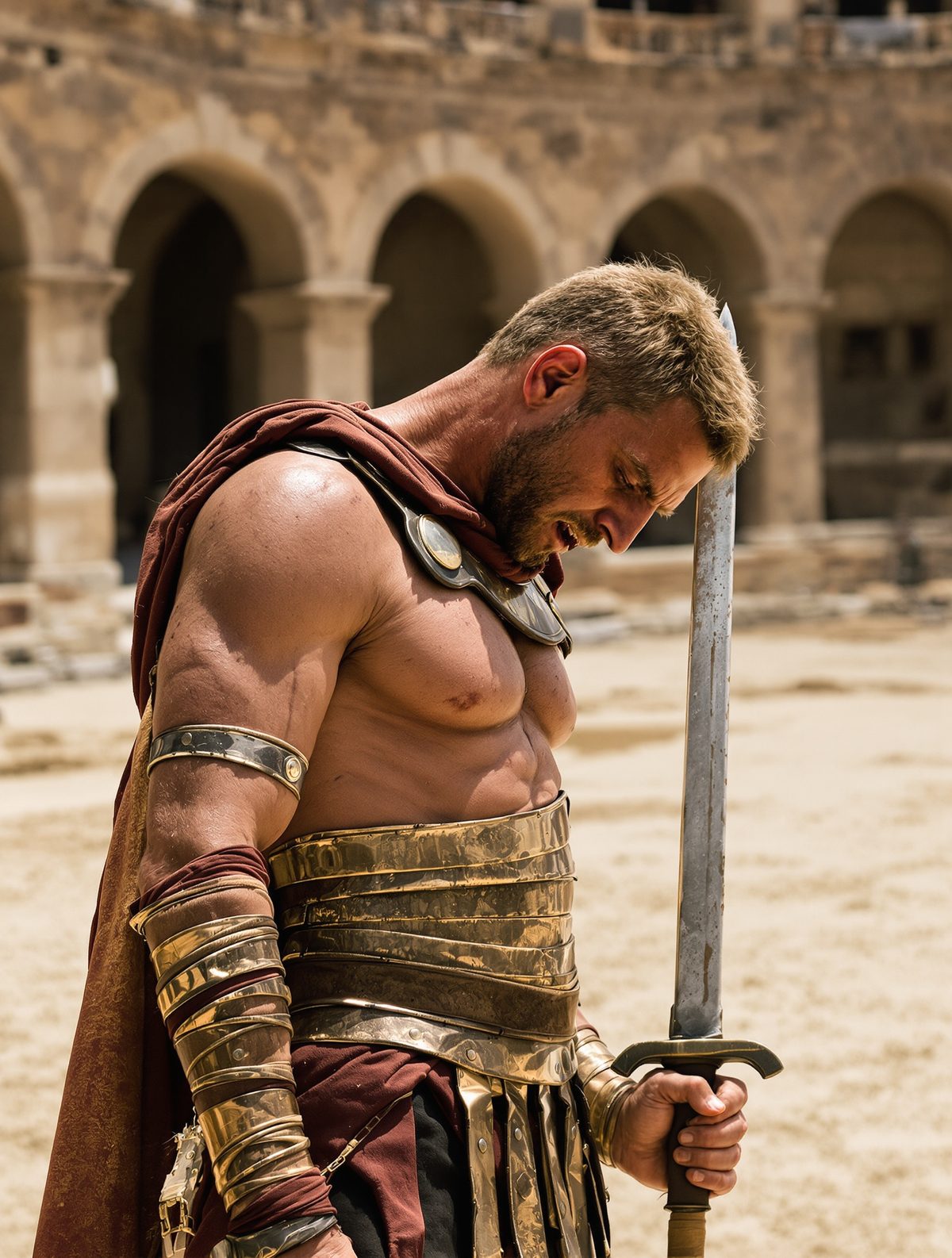

The great hall echoed with the sounds of victory—horns clashing in toasts, warriors boasting of their conquests, and the crackling of fires that cast dancing shadows on blood-stained shields hanging from the walls. Jarl Sigurd the Mighty sat at the head of his feast table, surveying his domain with the satisfaction of a predator who had just claimed new territory. The Orkney Islands were his now, won through steel and cunning. But as he raised his drinking horn for another toast, Sigurd had no idea that his greatest enemy wasn't the warriors he'd defeated in battle—it was the man quietly preparing his next course in the kitchen.
The Mighty Conqueror of the Northern Seas
In the year 982 AD, when Viking longships ruled the northern seas and kingdoms rose and fell with the swing of an axe, few names struck more fear into the hearts of enemies than Sigurd Eysteinsson, known throughout the Norse world as Sigurd the Mighty. As the second Jarl of Orkney, he commanded not just a handful of islands, but a strategic maritime empire that controlled the vital sea routes between Norway, Scotland, and Ireland.
Sigurd had inherited his position from his brother Rognvald, but inheritance meant little in the Viking world without the strength to defend it. The Orkney Islands—a cluster of roughly 70 islands off the northern coast of Scotland—were a prize worth killing for. They offered sheltered harbors for longships, fertile farmland for settlements, and most importantly, a perfect base for launching raids across the British Isles.
What made Sigurd particularly formidable wasn't just his prowess with sword and axe, but his cunning political mind. He understood that lasting power came not just from conquest, but from the delicate art of knowing when to fight, when to negotiate, and when to eliminate threats entirely. This philosophy had served him well as he expanded his influence across the northern archipelago, but it would also plant the seeds of his destruction.
Blood and Betrayal in the Island Campaign
The campaign that would seal Sigurd's fate began like so many Viking conquests—with opportunity disguised as conflict. Rival claimants to various islands had been challenging his authority, and local Scottish nobles saw the divided loyalties as a chance to reclaim territory from Norse control. What started as isolated skirmishes quickly escalated into a full-scale war for dominance over the entire Orkney chain.
Sigurd's response was swift and merciless. He assembled a fleet of longships, each carrying battle-hardened warriors who had learned their craft in the unforgiving raids across Europe. The archaeological record suggests these weren't the primitive vessels often depicted in popular culture, but sophisticated warships up to 100 feet long, capable of carrying 60-80 warriors while still being light enough to be carried overland when necessary.
The fighting was brutal, even by Viking standards. Norse sagas speak of battles where the sea itself turned red, and where Sigurd personally led charges that left entire enemy formations scattered like leaves in a storm. One by one, the islands fell to his forces. Those who surrendered were often spared and incorporated into his growing army—a pragmatic approach that swelled his ranks with each victory.
But Sigurd made a crucial error that many successful conquerors have repeated throughout history: he mistook military victory for total victory. While his enemies' armies were destroyed, their desire for revenge remained very much alive.
The Celebration That Became a Trap
With the last pocket of resistance crushed in late 982 AD, Sigurd declared the campaign over and ordered preparations for a victory feast that would be remembered for generations. This wasn't merely a celebration—it was a carefully orchestrated display of power designed to cement his authority over the newly conquered territories.
The feast was to be held in the great hall of his primary stronghold, likely located on what is now known as the Mainland, the largest of the Orkney Islands. Archaeological excavations have revealed that these halls were impressive structures, sometimes over 100 feet long, with raised platforms for the most important guests and elaborate decorations that showcased the wealth and power of their owners.
Sigurd spared no expense. Cattle and sheep were slaughtered by the dozen. Barrels of imported wine joined the ever-present supply of mead and ale. Bards were summoned to compose songs celebrating the victory, and artisans worked furiously to create new treasures that would be distributed as gifts to secure loyalty among his followers.
What Sigurd didn't know was that among his household staff was a cook whose family had been killed in the recent campaign. Historical records from this period are fragmentary, but later sagas suggest the man had initially fled the fighting, only to return when he learned of his loved ones' fate. Rather than seeking an honorable death in battle, he chose a path that his culture would have considered deeply dishonorable but undeniably effective—he sought service in Sigurd's own kitchen.
Poison at the Victory Table
The night of the feast arrived with all the pageantry Sigurd had envisioned. Warriors filled the benches, their weapons hung on the walls as tradition demanded, while serving staff moved between the tables carrying platters of roasted meat and horns filled with drink. The air was thick with smoke from the central fire and the sounds of celebration.
Medieval sources suggest that the poison used was likely derived from local plants—possibly water hemlock or aconite, both of which grew wild in the Orkneys and were known to local inhabitants for their deadly properties. These weren't exotic toxins from distant lands, but readily available substances that a knowledgeable person could prepare with materials at hand.
The cook's method was devastatingly simple. Rather than poisoning a single dish that might be shared or tasted by others, he contaminated Sigurd's personal drinking horn—a treasured possession that would only touch the jarl's lips. Viking culture placed enormous importance on such personal items, often decorating them with intricate carvings and precious metals, making them easily identifiable and unlikely to be shared.
As the evening progressed and the celebration reached its peak, Sigurd raised his horn in what would be his final toast. The poison acted quickly. According to the surviving accounts, he began choking almost immediately, his body convulsing as the toxin attacked his nervous system. In a matter of minutes, the mighty conqueror who had seemed invincible in battle was dying on the floor of his own hall, surrounded by the very treasures he had fought so hard to win.
The Cook's Desperate Gamble
What happened next reveals much about the brutal realities of Viking justice. The cook made no attempt to flee or deny his actions. Some historians suggest this was because escape was impossible—the hall would have been surrounded by Sigurd's most loyal warriors. Others argue that it represented a deliberate choice, a man who had already lost everything he cared about and sought only to take his enemy with him into death.
The cook's fate was swift and predictable. Viking law recognized the concept of holmgang—trial by combat—but poisoning was considered such a cowardly and dishonorable act that it warranted immediate execution. He was likely killed on the spot, probably in a manner designed to serve as a warning to others who might consider similar betrayals.
Yet in death, both men achieved a form of immortality. Sigurd's conquest of the Orkneys became the foundation for centuries of Norse rule in the region, while the cook's act of revenge became a cautionary tale told throughout the Viking world about the dangers of believing that military victory alone could guarantee security.
Legacy Written in Blood and Betrayal
Sigurd the Mighty's death sent shockwaves throughout the Norse world that extended far beyond the Orkney Islands. His brother Ljot inherited his title, but the circumstances of Sigurd's demise created a crisis of confidence in Norse rule. If such a formidable leader could be brought down by a single enemy's desire for revenge, what did that say about the security of the entire system?
The story resonates today precisely because it illustrates a timeless truth about power and conquest. Military might can seize territory and defeat armies, but it cannot eliminate the human desire for justice—or revenge. Every empire in history, from Rome to the modern superpowers, has grappled with the same fundamental challenge: how do you turn conquest into legitimate rule?
In our contemporary world, where conflicts often seem to end with military victory but continue to simmer in the form of insurgencies, terrorism, and political instability, Sigurd's fate offers a sobering reminder. The most dangerous enemies aren't always the ones who meet you on the battlefield with sword and shield. Sometimes they're the ones who serve your food, tend your household, or work quietly within your own system while nursing grievances that military victory alone cannot address.
The great hall where Sigurd celebrated his triumph has long since crumbled to dust, but the lesson remains as relevant as ever: true security comes not from the strength of your sword arm, but from the wisdom to understand that how you treat the defeated may ultimately determine whether your victory becomes a lasting legacy or a poisoned chalice.