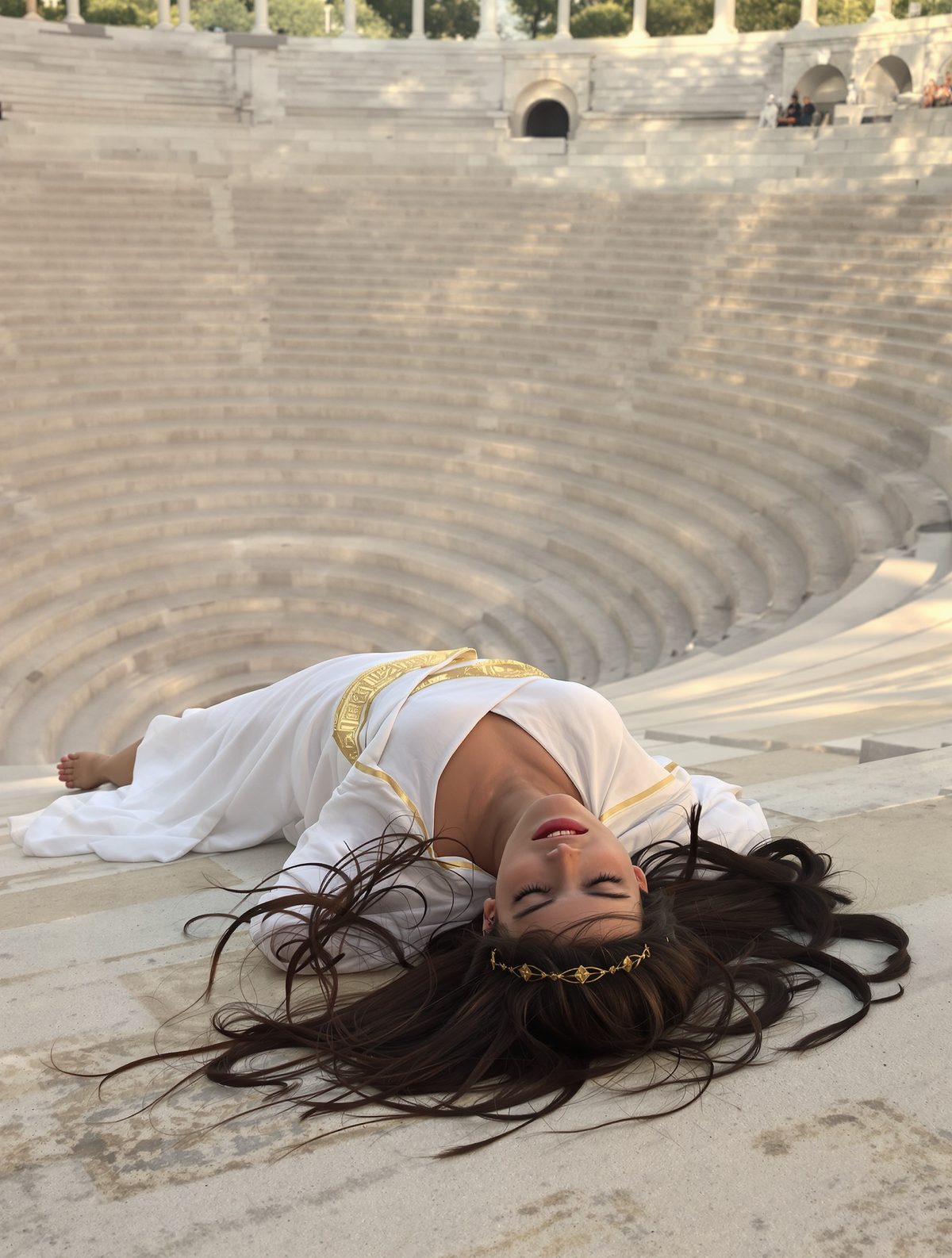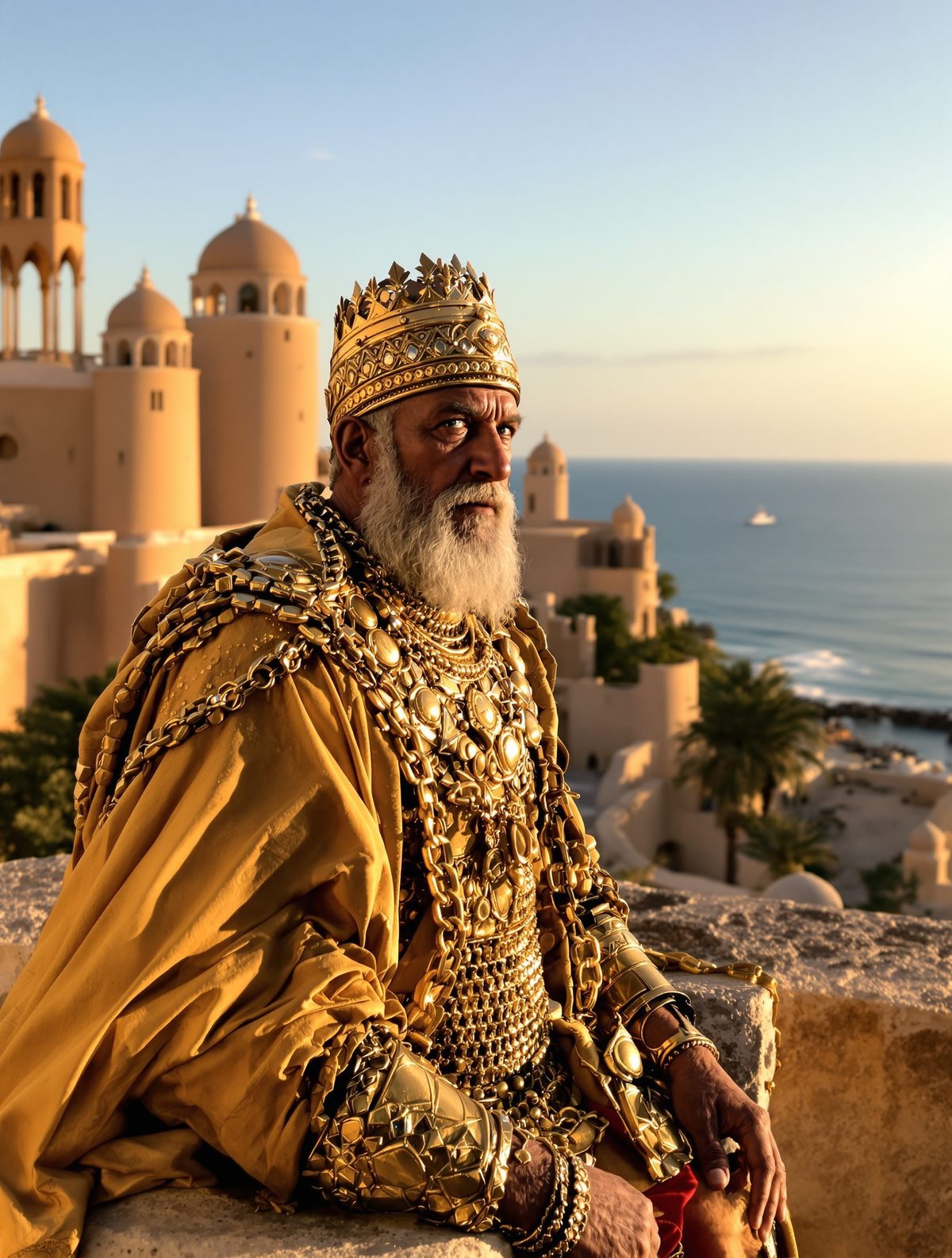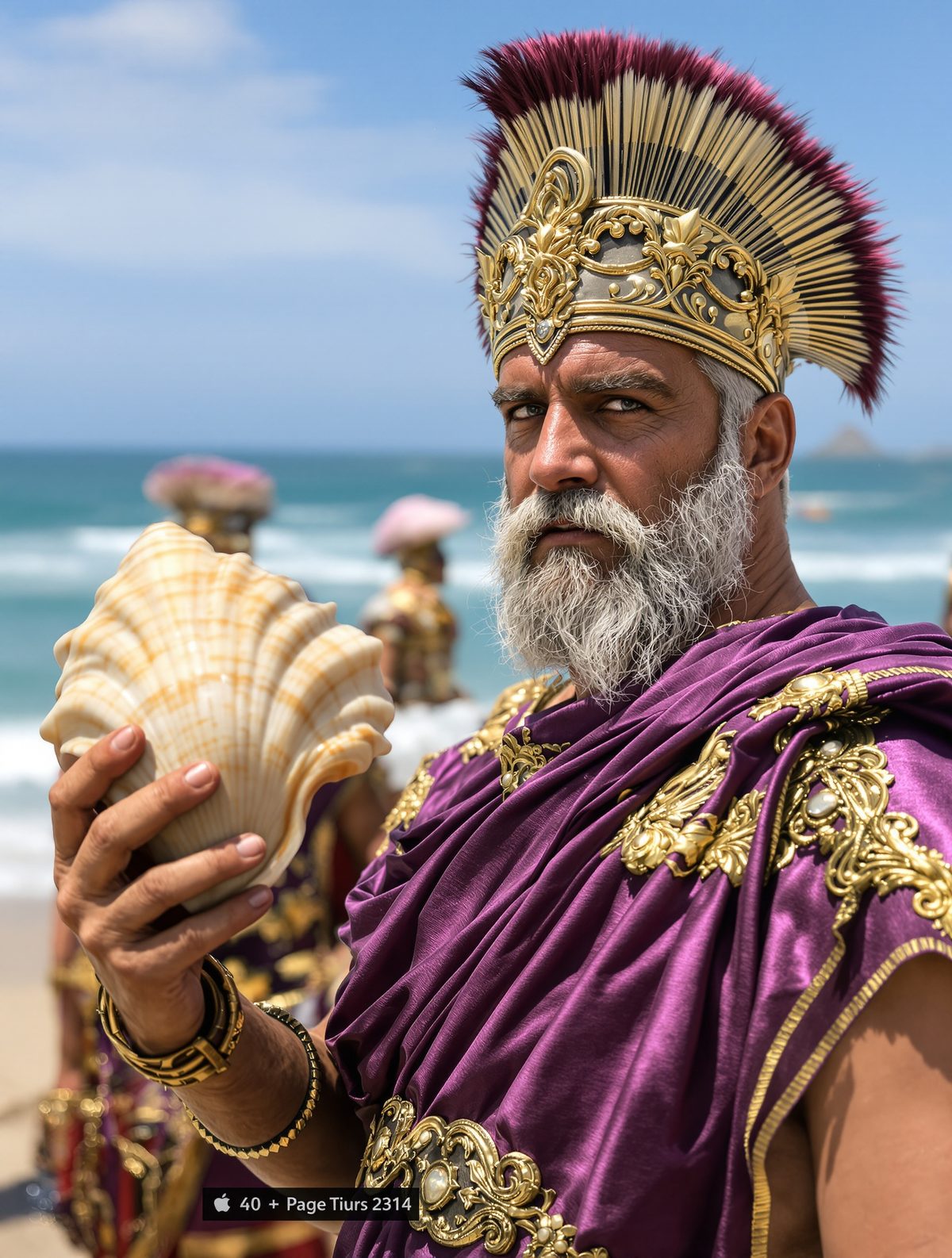
Picture this: 200,000 Roman legionnaires standing in perfect formation along the windswept beaches of northern Gaul, their bronze armor glinting in the pale morning sun. At their commander's signal, they raise their spears in unison and charge—not toward enemy lines, but into the foaming waves of the English Channel. Their battle cry echoes across the water as they stab wildly at the sea itself, declaring war on Neptune, god of the ocean.
This wasn't a fever dream or the plot of a satirical play. This was a real military operation ordered by Gaius Julius Caesar Augustus Germanicus—better known to history as Caligula, the most unpredictable emperor Rome ever produced. In 40 AD, he marshaled the largest army the empire had seen in decades, marched them hundreds of miles north, and commanded them to do battle with the waves themselves. And somehow, against all logic, Rome celebrated it as a glorious victory.
The Mad March to the Sea
The campaign began in typical Roman fashion—with meticulous planning and massive logistical undertaking. In the spring of 40 AD, Caligula ordered mobilization on a scale that dwarfed most legitimate military operations. Legions were pulled from garrisons across the empire: the battle-hardened troops from the Rhine frontier, auxiliary units from Hispania, and even the prestigious Praetorian Guard from Rome itself.
Contemporary accounts suggest the force numbered around 200,000 men—roughly equivalent to eight full legions plus support troops. To put this in perspective, Julius Caesar conquered all of Gaul with just four legions. The sheer cost of moving, feeding, and equipping such a massive force would have strained even Rome's considerable treasury.
The soldiers themselves had every reason to believe they were embarking on a legitimate campaign. Rumors swirled through the ranks that they were finally going to invade Britain—that mysterious island beyond the channel that had long tantalized Roman ambitions. Some whispered they might even push further north, into the unexplored lands of Caledonia. The troops were eager for the glory and plunder that came with conquering new territories for Rome.
But as the massive column wound its way through Gaul toward the northern coast, strange orders began filtering down from the emperor's tent. Officers were instructed to requisition unusual supplies: not just the standard siege equipment and provisions, but thousands of empty sacks and baskets. When questioned, Caligula's staff offered only cryptic responses about "collecting tribute from the conquered."
The Emperor's Descent into Divine Madness
To understand this bizarre campaign, we must first understand the man who ordered it. Caligula had been emperor for less than three years, and his reign had already taken a dramatic turn from promising beginning to absolute chaos. Initially beloved by both the Senate and the people, he had started his rule by releasing political prisoners, staging magnificent games, and giving generous bonuses to the Praetorian Guard.
But something changed in late 37 AD when Caligula fell seriously ill. Ancient historians debate whether it was encephalitis, epilepsy, or some other neurological condition, but when he recovered, he was a different man entirely. The charming young emperor had been replaced by someone who believed he was literally divine—not in the ceremonial sense that Romans traditionally deified their emperors after death, but as a living god walking among mortals.
He began demanding that people worship him while he was still alive, erected statues of himself in temples, and claimed to have regular conversations with other deities. Most disturbingly for his military commanders, he developed an obsession with Neptune, whom he alternately claimed as his ally and denounced as his rival. Roman historians Suetonius and Cassius Dio both record instances of Caligula raging at the sea during storms, shouting challenges at the waves as if they could hear him.
This divine delusion reached its peak when Caligula became convinced that Neptune was actively opposing his will by preventing a planned invasion of Britain. In the emperor's increasingly warped worldview, the choppy waters of the English Channel weren't just bad weather—they were a deliberate act of defiance by a rival god who needed to be taught a lesson.
When Legions Waged War on Waves
The actual "battle" took place near modern-day Boulogne-sur-Mer, where Caligula had established his base camp. On the appointed day, the emperor appeared before his troops wearing a breastplate that he claimed had been taken from the tomb of Alexander the Great (though this was almost certainly a fabrication). He delivered a rousing speech about the glory that awaited them in their upcoming campaign against Rome's greatest enemy.
What followed was one of the most surreal scenes in military history. At Caligula's command, the legions formed their standard battle formation and marched into the surf. Officers shouted orders as if directing a real assault: "Advance! Hold the line! Drive them back!" The soldiers, trained from birth to follow orders without question, waded into the waves and began attacking the water with their spears and swords.
For hours, the bizarre spectacle continued. Rank after rank of Rome's finest warriors stabbed at the foam, their military precision intact even as they fought an enemy that couldn't fight back. Some accounts describe the soldiers chanting battle hymns and victory songs as they "pressed their advantage" against the retreating tide.
But the strangest part was yet to come. Once Caligula declared that Neptune had been sufficiently humbled, he ordered his troops to collect their spoils of war. Soldiers who had conquered Gaul and Germania found themselves crawling along the beach, filling baskets with seashells, smooth stones, and pieces of coral. These "treasures of the deep" were carefully catalogued and loaded onto wagons as if they were golden torques stripped from defeated Celtic chieftains.
A Triumph Built on Shells and Delusion
If the battle itself was absurd, the victory celebration that followed was even more spectacular. Caligula ordered a full Roman triumph—the highest honor the empire could bestow on a conquering general. This wasn't just a parade; it was a sacred ritual reserved for commanders who had significantly expanded Roman territory and killed at least 5,000 enemy soldiers in a single campaign.
The procession that wound through Rome's streets in late 40 AD defied all precedent. Wagons groaned under the weight of seashells presented as precious spoils. Captured "prisoners of war" were represented by a few bewildered Britons who had been fishing near the Gallic coast when Caligula's forces arrived. Most bizarrely, the emperor had several of his own soldiers dress as Tritons and sea nymphs to represent the mythological beings he claimed to have defeated.
The Roman people, already growing wary of their increasingly erratic emperor, watched in stunned silence as this mockery of their most sacred military traditions paraded past. Senators who had witnessed genuine triumphs celebrating real victories over Carthage, Gaul, and Egypt now found themselves required to applaud baskets of shells as if they were chests of enemy gold.
Caligula himself rode in the traditional triumph chariot, wearing a crown of seaweed instead of the customary laurel wreath. Contemporary accounts describe him stopping frequently to address the crowd, regaling them with tales of his personal combat against Neptune and promising even greater victories to come. He announced plans for future campaigns against other deities, though these thankfully never materialized.
The Cost of Madness
While Romans could laugh nervously at their emperor's eccentricities, the "war against Neptune" had serious consequences that rippled throughout the empire. The financial cost was staggering—historians estimate that mobilizing and maintaining 200,000 troops for several months, plus staging the elaborate triumph, consumed roughly a quarter of Rome's annual military budget.
More damaging was the effect on military morale and discipline. Roman legions prided themselves on their professionalism and their role as conquerors of the civilized world. Forcing them to perform what was essentially an elaborate piece of theater undermined their sense of purpose and dignity. Veterans who had fought in real battles against Germanic tribes or Parthian cavalry now found themselves mocked by their enemies as "conquerors of seashells."
The campaign also revealed just how completely the Roman system depended on the emperor's sanity. No general, senator, or advisor dared to openly question orders that were obviously the product of a deranged mind. The same military machine that had conquered the Mediterranean was helpless to prevent its resources from being squandered on a madman's fantasy.
Perhaps most troubling, the episode demonstrated how thin the line was between divine authority and absolute tyranny in the Roman system. Caligula's claim to godhood wasn't just megalomania—it was a logical extension of the imperial cult that gave emperors quasi-religious status. Once a ruler convinced himself that he was literally divine, what check could mortal institutions possibly impose on his behavior?
Echoes Across the Ages
Caligula's war on the ocean might seem like nothing more than an amusing historical footnote, but it raises profound questions that echo through the corridors of power even today. What happens when absolute authority meets mental instability? How do institutions respond when their leader's grip on reality begins to slip? And what does it say about human nature that thousands of soldiers followed orders they must have known were insane?
The Roman Empire survived Caligula—barely. He was assassinated by his own Praetorian Guard just six months after his triumph over Neptune, though the conspirators were motivated more by his threats against the Senate than by his maritime adventures. His successor, Claudius, quietly had the seashells removed from the imperial treasury and never spoke publicly of his predecessor's aquatic conquests.
But the precedent had been set. Future emperors like Nero and Commodus would push the boundaries of acceptable behavior even further, secure in the knowledge that the Roman system had few mechanisms for restraining an emperor who claimed divine sanction for his actions. In a sense, every tyrant who has ever wrapped himself in the mantle of divine authority owes a debt to the man who first convinced an army to wage war on the waves.
The next time you walk along a beach and watch waves crash against the shore, remember those 200,000 Roman soldiers standing in the surf with their spears raised against Neptune himself. Their story reminds us that power unchecked by reason can lead even the mightiest civilizations into the realm of the absurd—and that sometimes the most dangerous enemies of empire are the fantasies that live inside an emperor's mind.